
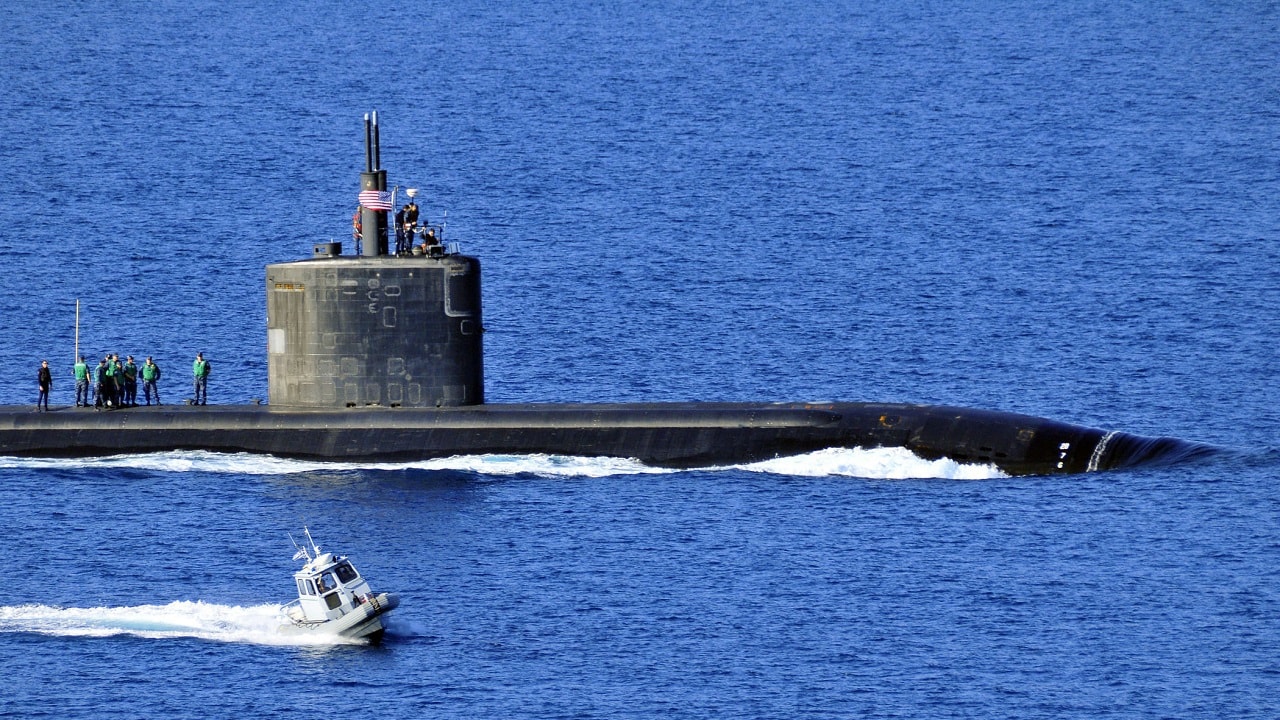
Summary and Key Points: Dr. James Holmes, a top maritime strategy expert at the U.S. Naval War College, evaluates the sinking of the IRIS Dena by a U.S. nuclear-powered attack submarine (SSN).
-Executed 40 miles off Sri Lanka using a Mark 48 ADCAP torpedo, the strike represents a significant “horizontal escalation” of Operation Epic Fury.
-This 19FortyFive report analyzes the potential friction with India’s “Monroe Doctrine” and the “Modi Doctrine” championed by Michael Rubin.
-Holmes concludes that the combat debut of modern heavyweight torpedoes marks a fundamental shift in the character of undersea warfare, pitting advanced sensors against legacy surface targets.
Return of the Silent Service and Iran Is the Target: Analyzing the First U.S. Submarine Torpedo Strike Since 1945
On Wednesday, Secretary of Defense Pete Hegseth announced that the Iranian frigate IRIS Dena had suffered a “quiet death” at the hands of a torpedo-firing U.S. nuclear-powered attack submarine. I’m not sure how quiet it was for the frigate’s crew, but death from below it certainly was. There is a reason the U.S. Navy submarine force refers to itself as the “silent service.”
Two major observations come to mind as a snap response to the news out of the Indian Ocean.
First, look at the diplomacy surrounding undersea warfare. The sinking of Dena marks a significant “horizontal,” or geographical escalation on the nautical chart. To date, U.S. forces prosecuting Operation Epic Fury had confined their assault on Iranian naval shipping to waters hugging Iranian shores.
By contrast, Sri Lanka lies east of the southern tip of the Indian subcontinent, far from Iranian shores. How political and military chieftains in New Delhi react to seeing the U.S. offensive expand to waters they regard as an Indian preserve remains to be seen.
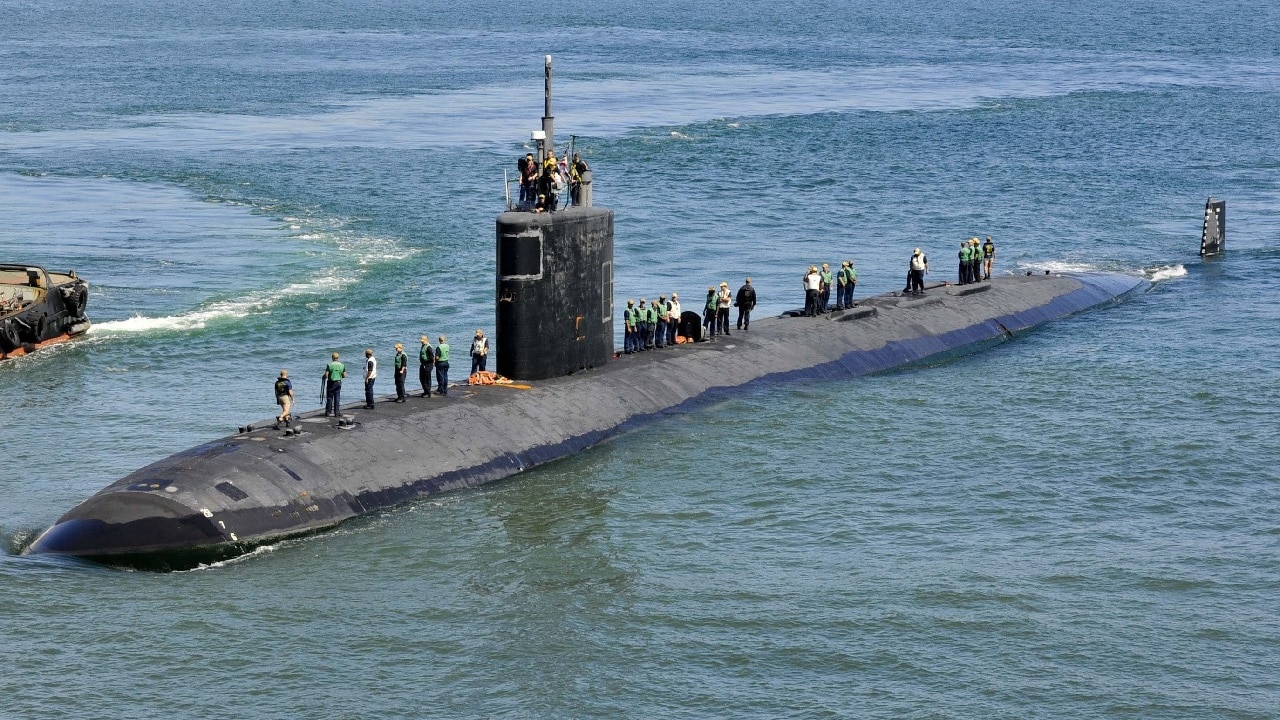
PUERTO PRINCESSA, Philippines – (Dec. 9, 2018) – The Los Angeles-class attack submarine USS Greenville (SSN 772) prepares to moor alongside the submarine tender USS Emory S. Land (AS 39), Dec. 9. Emory S. Land is a forward-deployed expeditionary submarine tender on an extended deployment conducting coordinated tended moorings and afloat maintenance in the U.S. 5th and 7th Fleet areas of operations. (U.S. Navy photo by Mass Communication Specialist 2nd Class Daniel Willoughby/RELEASED)
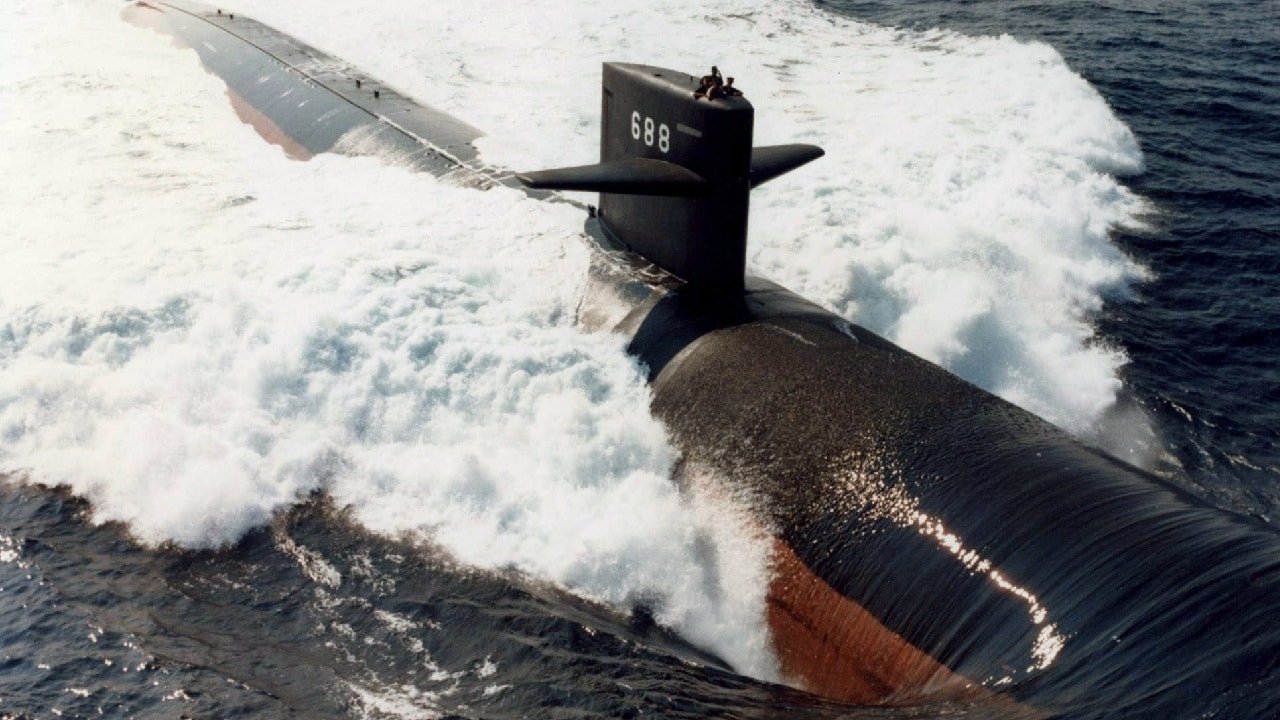
Los Angeles-class attack submarine. Image Credit: Creative Commons.
How they will react remains to be seen. Bear in mind that since 1961, Indians have asserted a policy of Indian primacy in the Indian Ocean modeled on the United States’ venerable Monroe Doctrine—a doctrine that has made a comeback during the Trump presidency. Way back in 2008, Toshi Yoshihara and I reviewed the history and present status of—and future prospects for—an Indian Monroe Doctrine. We pointed out that the United States interpreted the Monroe Doctrine quite differently at different stages during the century after President James Monroe and John Quincy Adams unveiled it in 1823. The strategic setting in the Western Hemisphere degenerated during the nineteenth century, even as U.S. economic, military, and thus diplomatic power to manage hemispheric affairs waxed.
Thus, the Monroe Doctrine hands observers a measuring stick to gauge Indian maritime diplomacy and strategy.
India could likewise reinterpret its doctrine as the surrounding environment changes around the subcontinent and India ascends to the status of a regional great power. Prime Minister Jawaharlal Nehru, the father of the Indian Monroe Doctrine, went before the Indian parliament in 1961 to make the case for booting Portugal out of its coastal enclave at Goa, where the Portuguese had been ensconced since the age of Vasco da Gama.
Nehru gave sharper edges to the Indian Monroe Doctrine than Monroe and Adams did when they penned the original Monroe Doctrine. Prime Minister Nehru justified his foreign-policy doctrine in terms of unifying the Indian subcontinent. Nothing shocking there. But he also proclaimed that India would brook no outside interference with India or, by implication, with its zone of maritime primacy in regional waters.
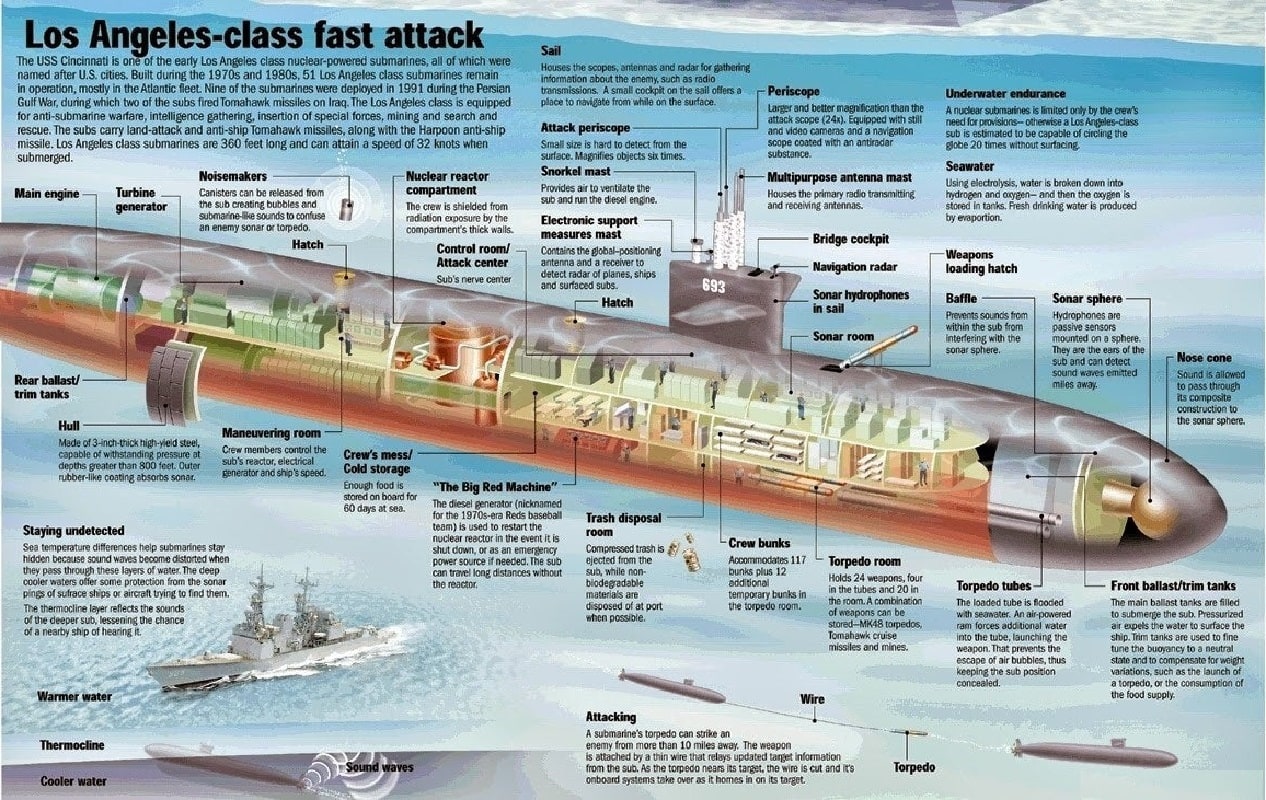
Los Angeles-Class diagram. Image Credit: US Navy.
It would enforce Nehru’s doctrine to the utmost of its power.
New Delhi has been rather quiet about its Monroe Doctrine in recent years. Until now. Recently an American commentator, the American Enterprise Institute’s Michael Rubin rekindled the sentiments underlying the doctrine when he published an article that set social media abuzz in India. Rubin espoused a “Modi Doctrine” inspired by the Monroe Doctrine that would span the entire Indian Ocean region. Officialdom has not formally embraced Rubin’s concept as Indian policy, but it does seem to be gathering momentum among Indian elites.
China, the chief extraregional interloper, would be the doctrine’s focus. Properly understood, a Modi Doctrine would shield smaller Indian Ocean nations from Chinese predations such as debt traps—much as the United States, for most of the Monroe Doctrine era, regarded its foreign-policy doctrine as a defense of Latin American republics that had won their independence against a return of European empires to the Western Hemisphere.
So, let’s monitor how New Delhi responds to warmaking in the subcontinent’s maritime environs.
Second, everything old is new again. Submarine warfare is back. The assault on IRIS Dena marks the first submarine attack on shipping since the Falklands War of 1982. It’s the first U.S. Navy submarine assault since World War II, when the U.S. Pacific Fleet silent service assailed the Japanese merchant fleet and Imperial Japanese Navy without surcease. But while submarine combat is nothing new at this stage in history—subs have been part of naval fleets for well over a century now—the implements of submarine combat have galloped ahead over the past eight decades. The character of undersea warfare has changed with gee-whiz technology, accompanied by evolving tactics, techniques, and procedures.
The Mark 48 Torpedo Has a Moment
In particular, this week’s sinking marked the combat debut of the U.S. Navy’s Mark 48 “advanced capability” heavyweight torpedo, standard in the navy’s inventory since the late 1980s. The Mark 48 is barely even part of the same species as the relatively rudimentary, relatively short-range World War II torpedoes that helped bring the Japanese Empire to its knees.
Acoustic homing was a late-war addition to U.S. torpedoes; the “fish,” slang for torpedoes, disgorged by U.S. Navy platforms ran straight for most of the conflict. By contrast, the Mark 48 can make use of wire guidance, or not, and can bear down on its targets using active or passive homing. It can also reengage targets multiple times if it misses. It’s faster, and can attack across longer ranges.
Again: ultramodern torpedoes bear scant resemblance to their forbears.
The Mark 48 also adds a new dimension to subsurface warfare relative to its World War II ancestors. Sub-on-sub combat was not really a thing during the Pacific War.
Diesel-electric submarines raided surface shipping, which fought back using acoustic sensors, depth charges of various types, and gunnery.
Today, though, any U.S. submariner will tell you the finest submarine hunter is another submarine. Advances in sensors and weaponry, not to mention the advent of naval nuclear propulsion, have changed the art and science of submarine warfare that much.
Combat really does happen in the depths nowadays, pitting boat against boat as well as boat against surface warship.
Strategic competition and war are human endeavors, and thus their nature never changes. But their character morphs all the time with changes in martial technology, political, social, and cultural circumstances, and myriad other factors in flux.
Sometimes a small-seeming event like sinking an Iranian frigate speaks volumes about bigger things.
About the Author: Dr. James Holmes, U.S. Naval War College
Dr. James Holmes is J. C. Wylie Chair of Maritime Strategy at the Naval War College and a Distinguished Fellow at the Brute Krulak Center for Innovation & Future Warfare, Marine Corps University. He is the coauthor of the third edition of Red Star over the Pacific, hot off the presses. The views voiced here are his alone.