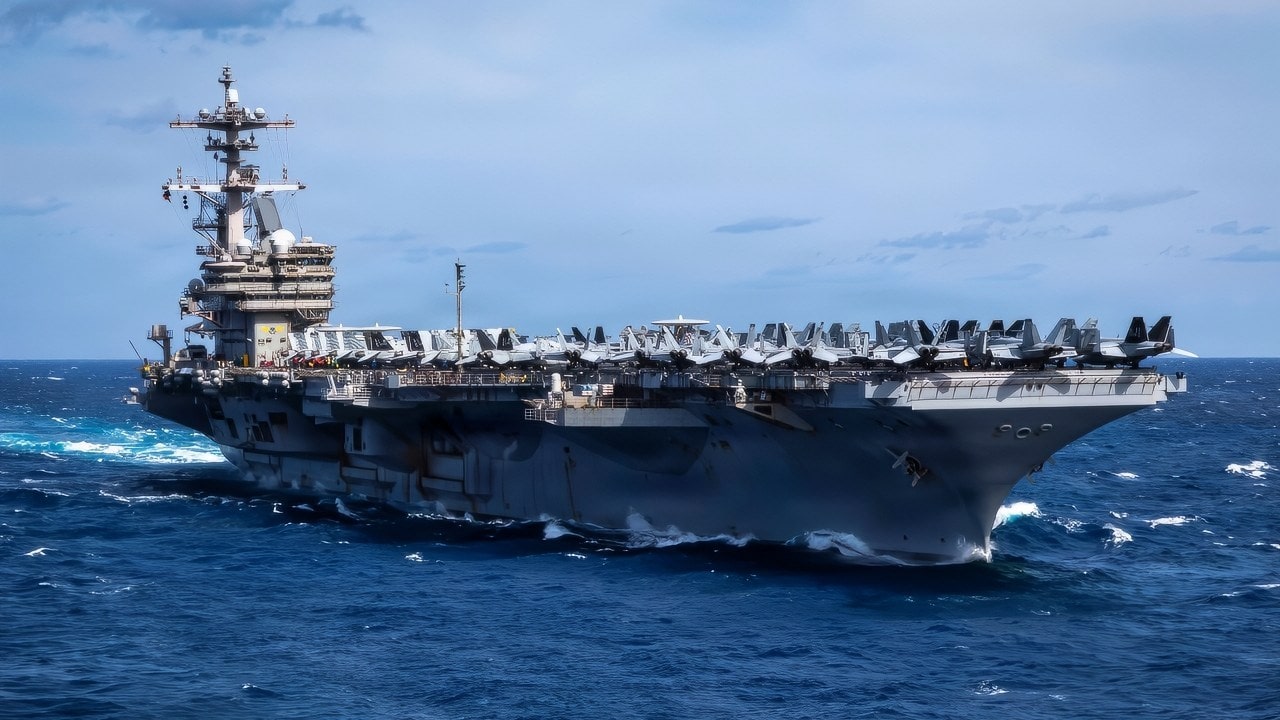
Why Aircraft Carrier USS Nimitz Won’t Be Retired: Summary and Key Points
- Caleb Larson — former POLITICO Europe Defense Reporter and Ukraine war correspondent — reports that USS Nimitz, the U.S. Navy’s oldest nuclear aircraft carrier, will remain in service until 2027 as the Iran war stretches America’s aircraft carrier fleet to its limits.
- USS Gerald R. Ford has now surpassed ten months of deployment in the Red Sea supporting Operation Epic Fury, while USS Abraham Lincoln operates in the Gulf of Oman.
- The USS John F. Kennedy, the second Ford-class aircraft carrier, has experienced repeated delays integrating its Advanced Weapons Elevator and Advanced Arresting Gear systems.
- Meanwhile, President Donald Trump is assembling an international naval coalition — including the United Kingdom and the Gulf Cooperation Council — to escort commercial shipping through the Strait of Hormuz.
USS Nimitz: The U.S. Navy’s Oldest Aircraft Carrier Is Getting a Surprise Service Life Extension
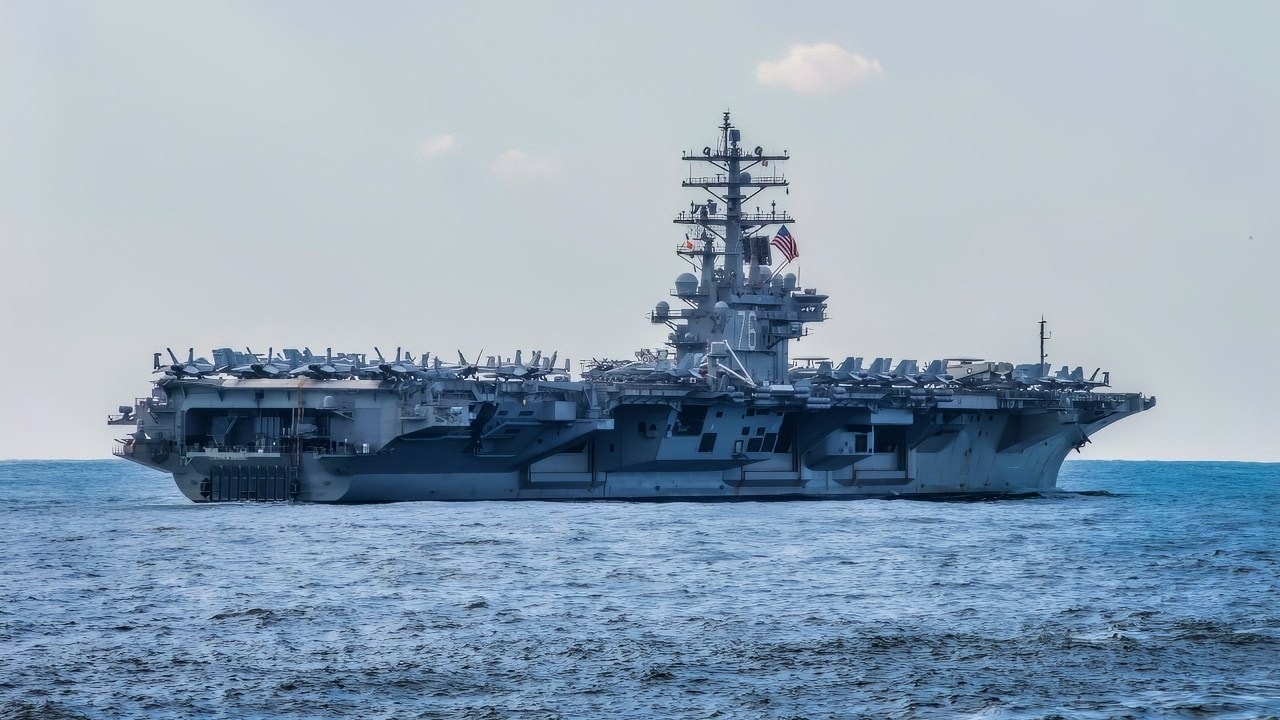
WESTERN PACIFIC (Nov. 12, 2017) The aircraft carrier USS Theodore Roosevelt (CVN 71) transits the Western Pacific during a three-carrier strike force photo exercise. The USS Ronald Reagan (CVN 76), USS Theodore Roosevelt (CVN 71) and USS Nimitz (CVN 68) Strike Groups are underway and conducting operations in international waters as part of a three-carrier strike force exercise. The U.S. Navy has patrolled the Indo-Asia Pacific region routinely for more than 70 years promoting regional security, stability and prosperity. (U.S. Navy photo by Mass Communication Specialist 3rd Class Kelsey J. Hockenberger/Released)
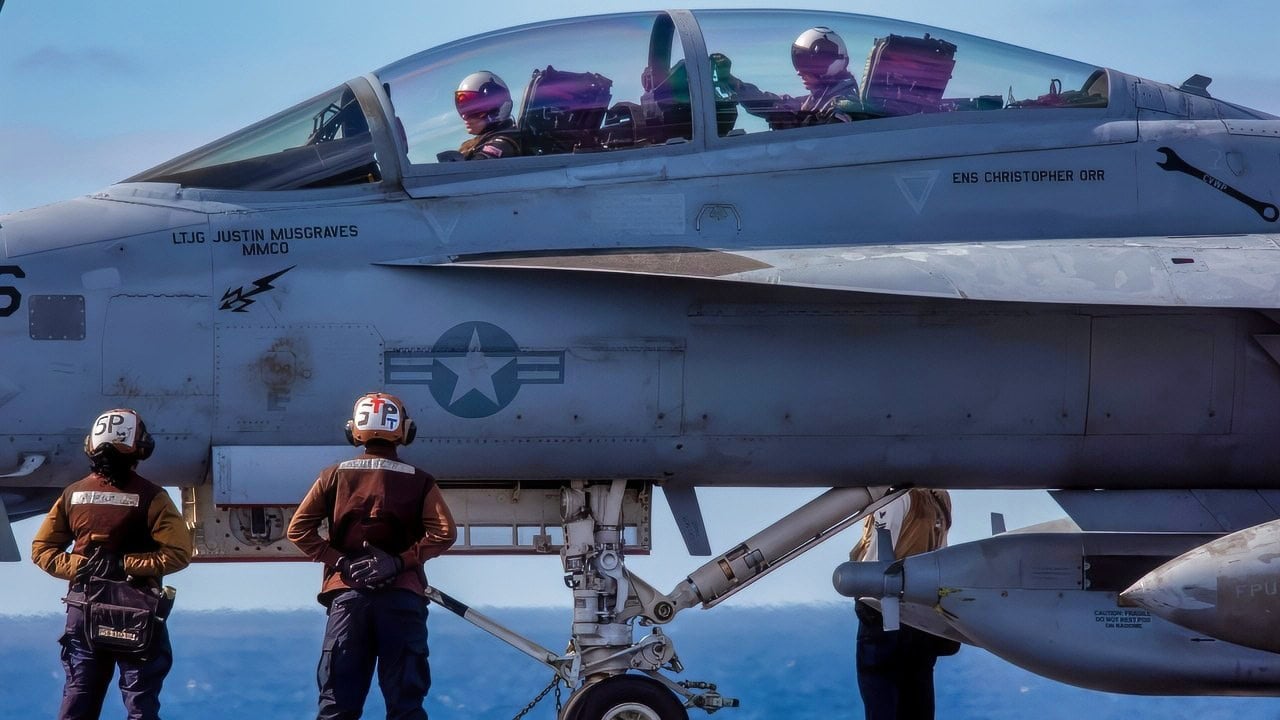
U.S. Navy Sailors prepare to taxi an EA-18G Growler, attached to Electronic Attack Squadron (VAQ) 133, on the flight deck of Nimitz-class aircraft carrier USS Abraham Lincoln (CVN 72) on Nov. 24, 2025. USS Abraham Lincoln (CVN 72), flagship of the Abraham Lincoln Carrier Strike Group, is underway conducting routine operations in the U.S. 3rd Fleet area of operations, demonstrating the U.S. Navy’s long-term commitment to a free and open Indo-Pacific. (U.S. Navy photo by Mass Communication Specialist Seaman Daniel Kimmelman)
The USS Nimitz aircraft carrier will remain in service until 2027, thanks largely to the strain placed on the U.S. Navy carrier fleet by the ongoing war in Iran.
Breaking Defense, a prominent defense website, reported that the ship will remain active until March next year.
The USS Nimitz is the Navy’s oldest aircraft carrier.
“Accordingly, the U.S. Navy plans to inactivate the ship in 2027,” a U.S. Navy official explained to USNI News over the weekend.
The new retirement date coincides with the entry into service of the second Ford-class aircraft carrier, the USS John F. Kennedy.
Last month, USNI News reported that the USS John F. Kennedy had completed builder’s trials and was back in port following its first time underway.
Although the build progress on the Kennedy appears to be going smoothly for now, the ship’s service entry date has slipped several times. Rather than backfitting the carrier to accommodate the F-35C after receiving the ship, the Navy opted instead to have that capability active when it accepted the ship.
But integrating some of the Ford-class’s new technology — particularly its Advanced Weapons Elevator and Advanced Arresting Gear — has proven challenging.
A law passed in 2011 mandates that the U.S. Navy maintain 11 operational aircraft carriers at all times, a figure which includes aircraft carriers that are unavailable due to “routine or scheduled maintenance or repair.”
Extended Deployments
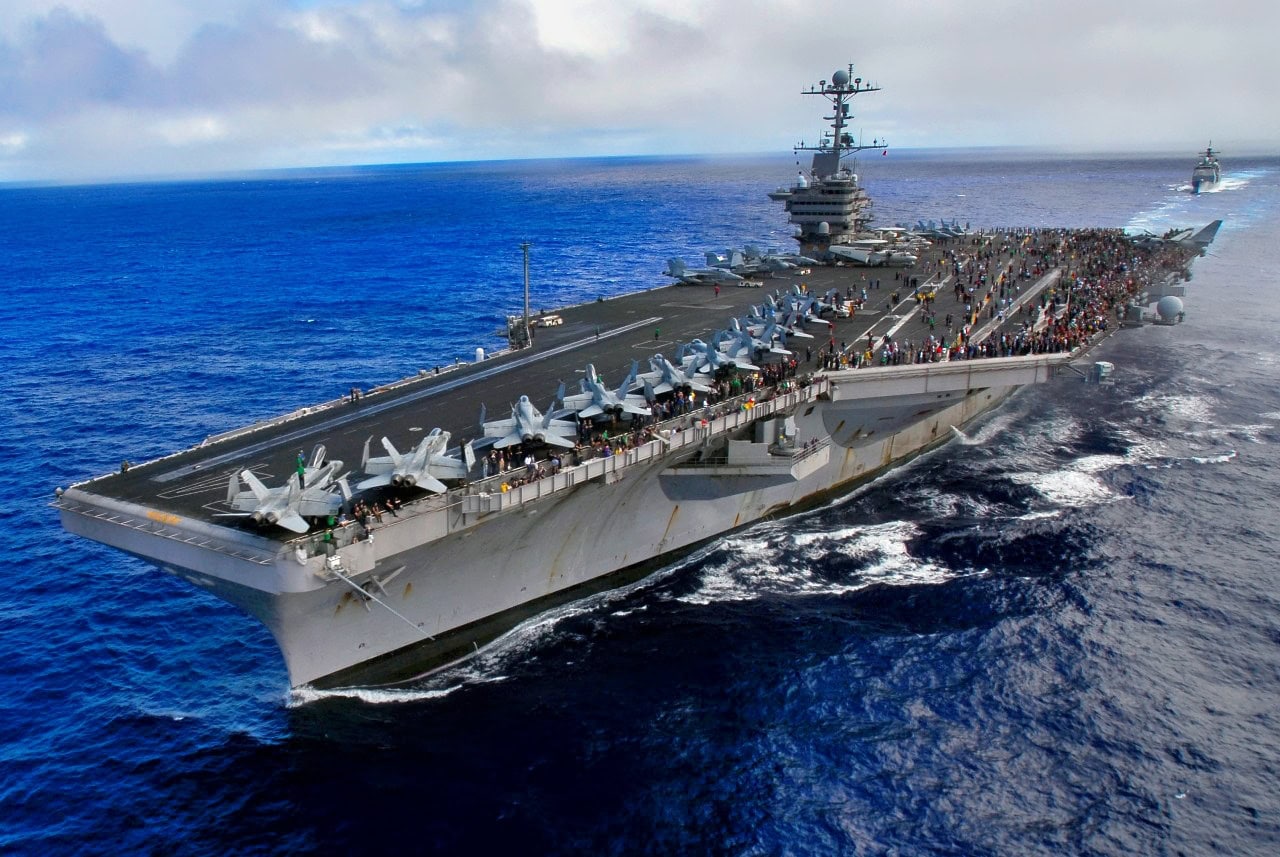
Nimitz class aircraft carrier USS John C. Stennis (CVN 74) leads guided-missile cruiser USS Antietam (CG 54) prior to conducting an air power demonstration. The air power demonstration showed the capability of Stennis and Carrier Air Wing 9 to service members’ family and friends who were invited to get underway with the ship. Stennis is returning to the United States after a 7 month long deployment promoting peace, regional cooperation and stability, and supporting the global war on terrorism.
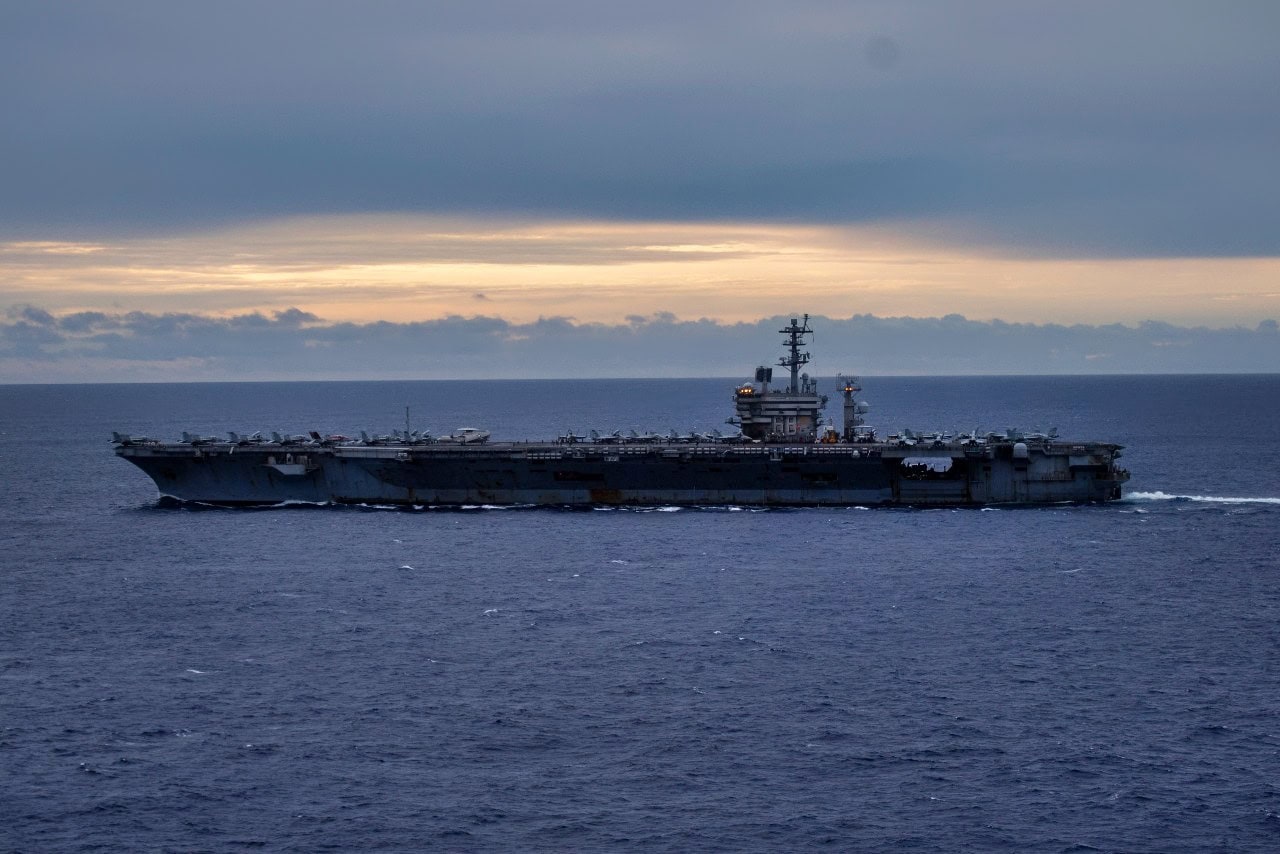
PACIFIC OCEAN (May 30, 2023) The aircraft carrier USS Nimitz (CVN 68) steams through the Pacific Ocean. Nimitz is in U.S. 7th Fleet conducting routine operations. 7th Fleet is the U.S. Navy’s largest forward-deployed numbered fleet, and routinely interacts and operates with allies and partners in preserving a free and open Indo-Pacific region. (U.S. Navy photo by Mass Communication Specialist 3rd Class Kenneth Lagadi)
The USS Nimitz’s service life extension comes at a time of strain for the United States Navy’s aircraft carriers, many of which have experienced longer, more intense deployments.
The USS Gerald R. Ford, the lead carrier of the new Ford-class carriers, is currently in the Red Sea, and the USS Abraham Lincoln is in the Gulf of Oman.
Both carriers are supporting Operation Epic Fury as part of the ongoing campaign against Iran. That operation is called Operation Roaring Lion in Israel.
Although aircraft carrier deployments usually last for around six to seven months, the USS Gerald R. Ford’s deployment has been particularly extended, and is now in its tenth month.
The high operational tempo placed significant strain on the aircraft carrier crews. Compounding the danger sailors are facing from drone and missile attacks, those berthed on the USS Gerald R. Ford face another operational challenge — from their toilets.
A report from the Government Accountability Office, a U.S. government watchdog, found that the Ford-class’ toilet plumbing was poorly designed, and often clogged.
An investigation by NPR found that the Ford’s toilets broke down seemingly at random due to high use.
The culprit seems to be the ship’s Vacuum Collection, Holding and Transfer (VCHT) system. Derived from a similar system used on cruise ships, the system was intended to save water, but its design and installation were more complex for use on a warship than on a cruise ship.
“Every day that the entire crew is present on the ship, a trouble call has been made for the ship’s force personnel to repair or unclog a portion of the VCHT system, since June 2023,” NPR reported, citing a U.S. Navy document.
But some of the breakdowns appear to be at least partially self-inflicted, with sections of rope and t-shirts pulled from the VCHT’s piping, although paper towels and toilet paper have also been responsible for breakdowns.
Escort Duty?
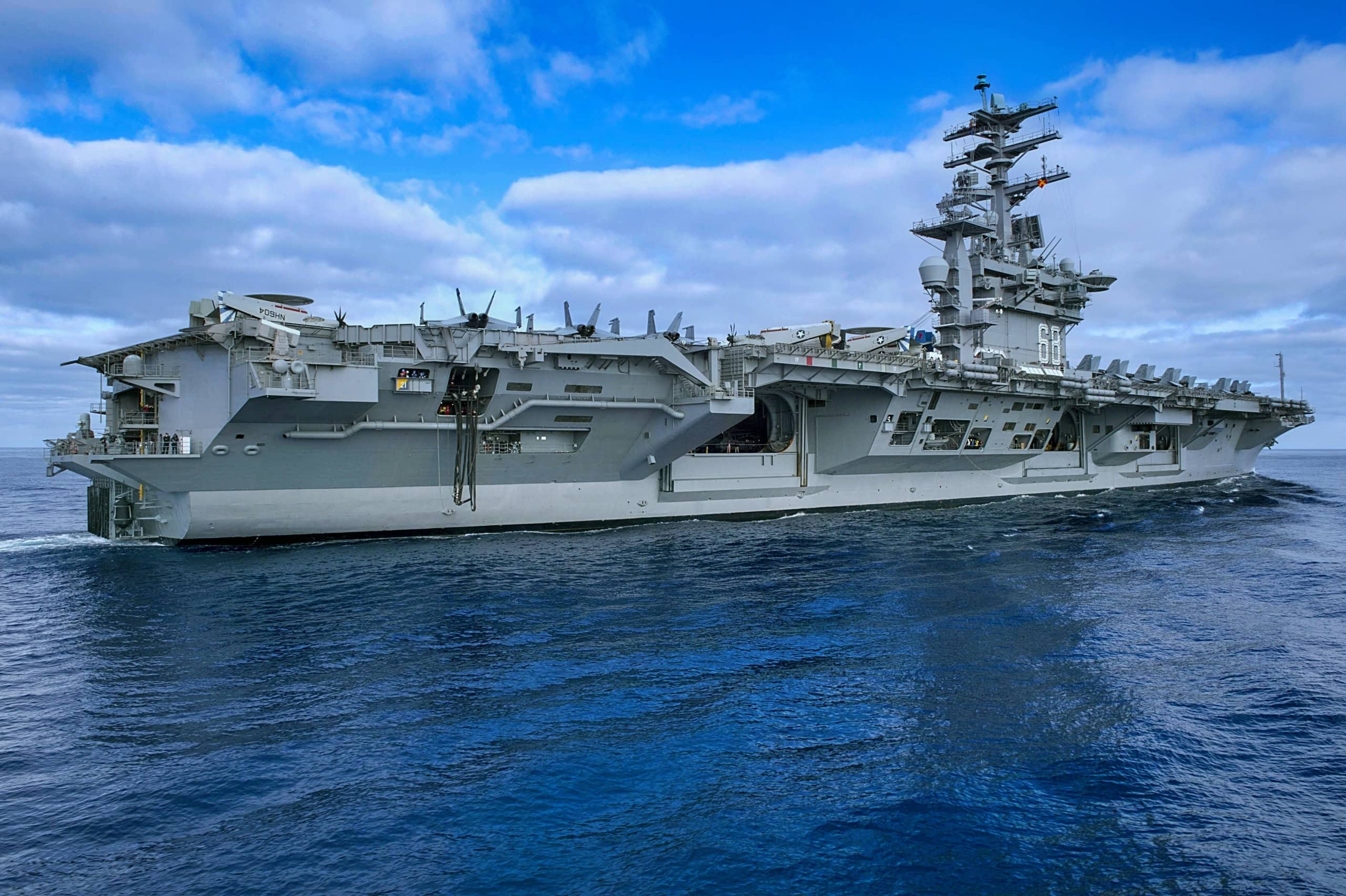
USS Nimitz Aircraft Carrier. Image Credit: Creative Commons.
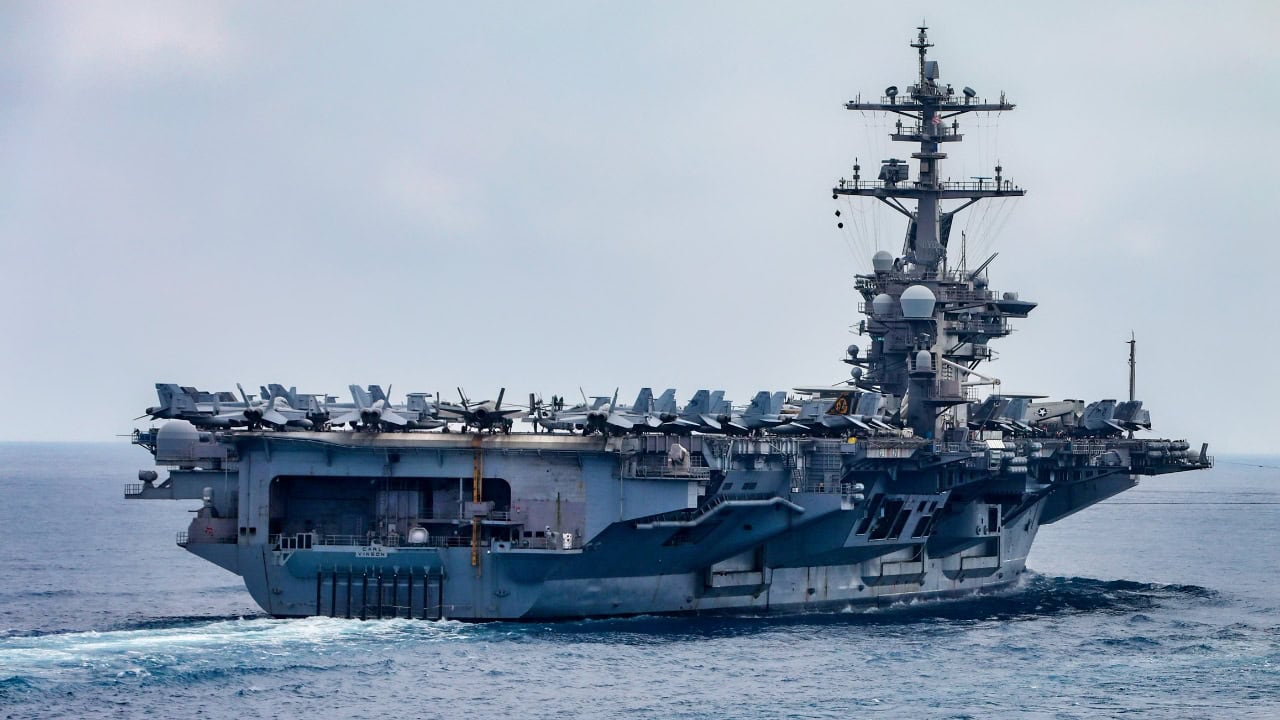
SOUTH CHINA SEA (Feb. 2, 2025) The Nimitz-class aircraft carrier USS Carl Vinson (CVN 70) conducts a replenishment-at-sea with the dry cargo and ammunition ship USNS Carl Brashear (T-AKE 7) Feb. 2, 2025. The Carl Vinson Carrier Strike Group is underway conducting routine operations in the U.S. 7th Fleet area of operations. (U.S. Navy photo by Mass Communication Specialist 1st Class Jacob I. Allison)
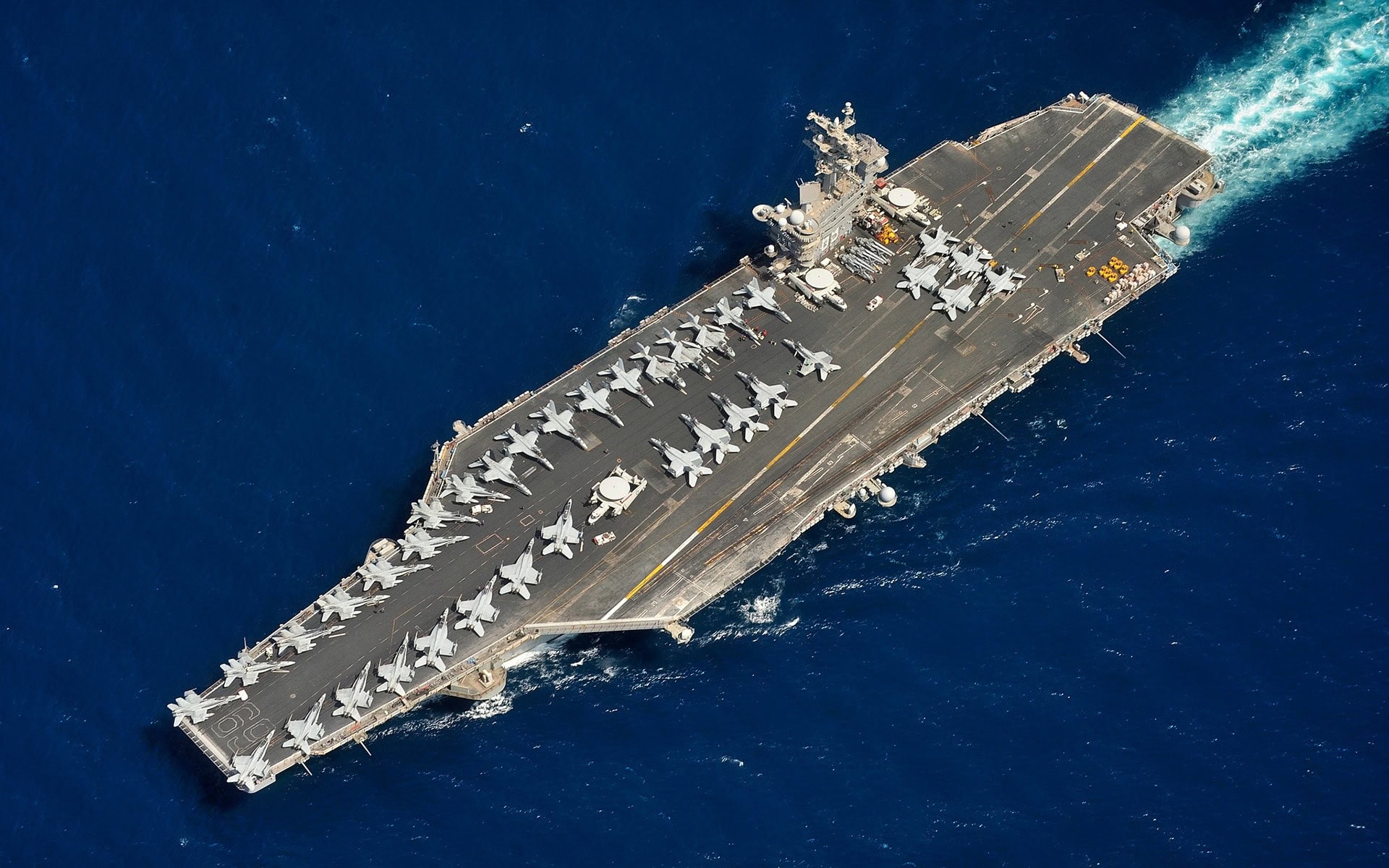
Nimitz-Class aircraft carrier. Image Credit: Creative Commons.
With traffic through the Strait of Hormuz nearly at a standstill, American President Donald Trump has raised the prospect of U.S. Navy warships escorting traffic through that body of water and onward to global markets.
Although the White House has declined to provide exact details, the Trump administration announced that multiple countries have signed on to an international naval escort coalition to protect shipping from Iranian attacks.
Over the weekend, the United Kingdom, plus the Gulf Cooperation Council, which represents the six Gulf countries, signed a joint statement affirming that the countries “have the right to take all necessary measures to defend their security and stability and protect their territories, citizens and residents.”
Although aircraft carriers themselves would not transit the Strait of Hormuz as a part of the escort mission, they could certainly support convoys with an aerial component by launching fighter jets and leveraging those airplanes’ air defense capabilities.
The United States Navy’s Arleigh Burke-class destroyers would take on the lion’s share of escort duty, given their smaller physical size and organic air defense capabilities.
About the Author: Caleb Larson
Caleb Larson is an American multiformat journalist based in Berlin, Germany. His work covers the intersection of conflict and society, focusing on American foreign policy and European security. He has reported from Germany, Russia, and the United States. Most recently, he covered the war in Ukraine, reporting extensively on the war’s shifting battle lines from Donbas and writing on the war’s civilian and humanitarian toll. Previously, he worked as a Defense Reporter for POLITICO Europe. You can follow his latest work on X.