
The B-52 Bomber Won’t Be Retired Anytime Soon: Summary and Key Points
- Isaac Seitz — defense columnist, Patrick Henry College Strategic Intelligence and National Security graduate, and private-sector intelligence analyst — delivers a comprehensive operational history of the Boeing B-52 Stratofortress, the U.S. Air Force’s most enduring strategic bomber.
- From replacing the Convair B-36 during Cold War Soviet penetration missions to carpet-bombing Vietcong forces in Vietnam, the B-52 has continuously evolved.
- The B-52H variant — equipped with TF33-P-3 turbofan engines, AGM-86B air-launched cruise missiles, and precision-guided JDAM munitions — achieved an 80% mission-capable rate during Operation Iraqi Freedom and recently struck Iranian ballistic missile production sites, command-and-control centers, and mobile launchers during Operation Epic Fury, cementing its role as the backbone of U.S. long-range strike doctrine.
The B-52H Just Proved Itself in Combat Over Iran — Here Is What It Actually Did
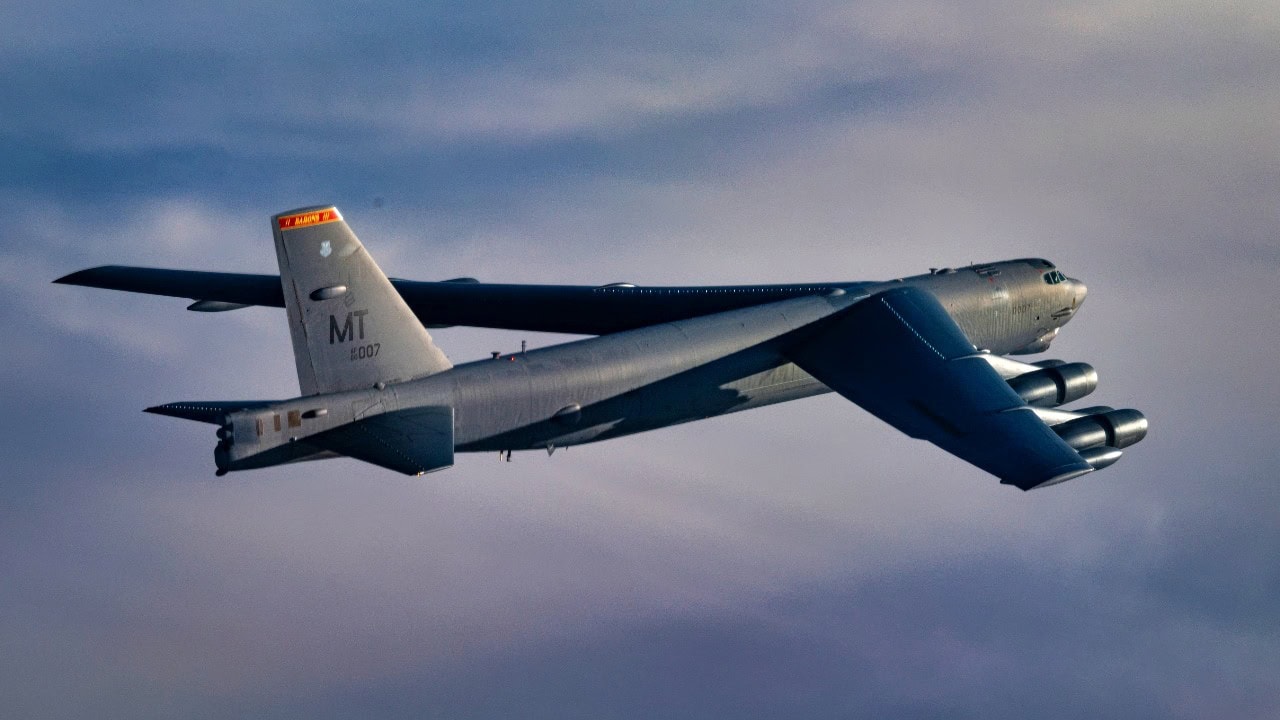
A U.S. Air Force B-52H Stratofortress from the 69th Expeditionary Bomb Squadron flies over the skies of Sweden for their celebration of their acceptance into NATO during Bomber Task Force 25-2, RAF Fairford, United Kingdom, March 11, 2025. These operations demonstrate the ability to rapidly deploy strategic assets in support of global stability. (U.S. Air Force photo by Master Sgt. Chris Hibben)

B-52J Bomber U.S. Air Force. Image Credit: Creative Commons.
Of all the bombers that have been in service with the United States Air Force, none has left as large an impression as the Boeing B-52 Stratofortress.
As one of the largest bombers in the world, the B-52 is a world leader in range and payload capacity, making it one of the most valuable assets in the Air Force.
It is so valuable that seventy years after its inception, the B-52 is still the backbone of the U.S.’ strategic bomber forces and will remain so for another several decades.
Today, the B-52H is the most modern variant of the Stratofortress and continues to carry out combat missions against Iran.
The USAF’s Long Serving Workhorse
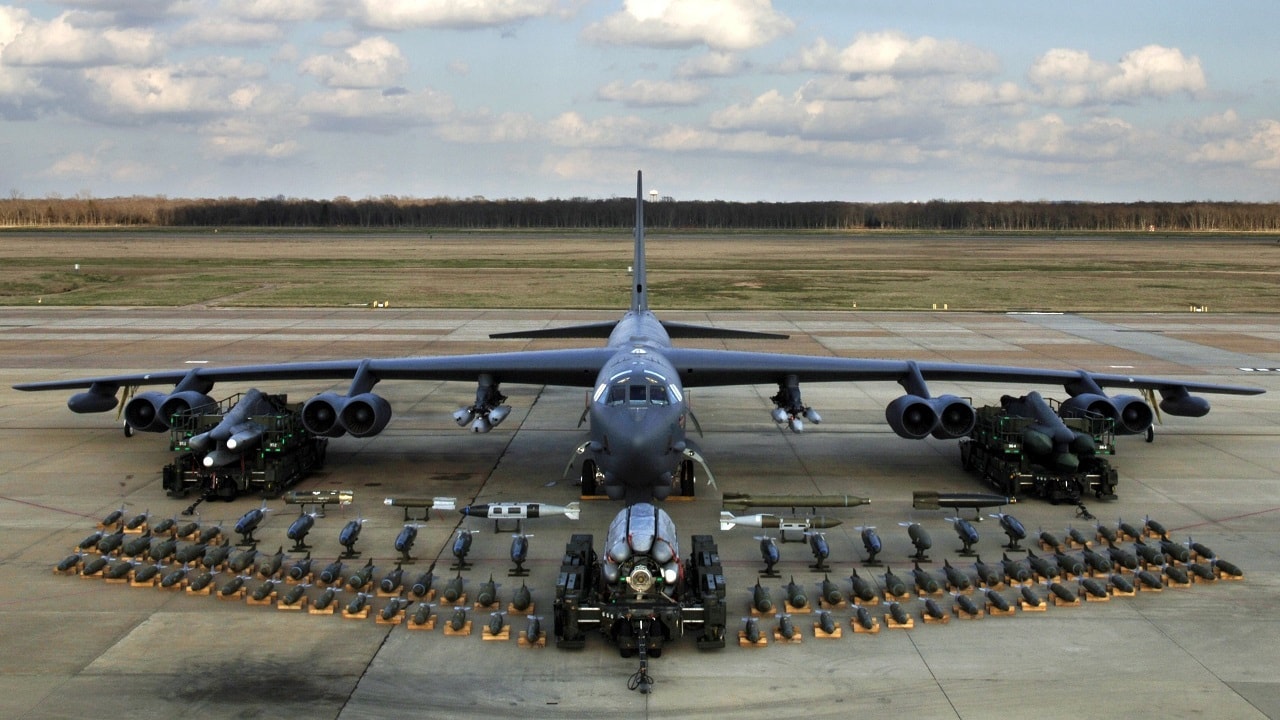
Boeing B-52 static display with weapons, Barksdale AFB 2006. Image: Creative Commons.
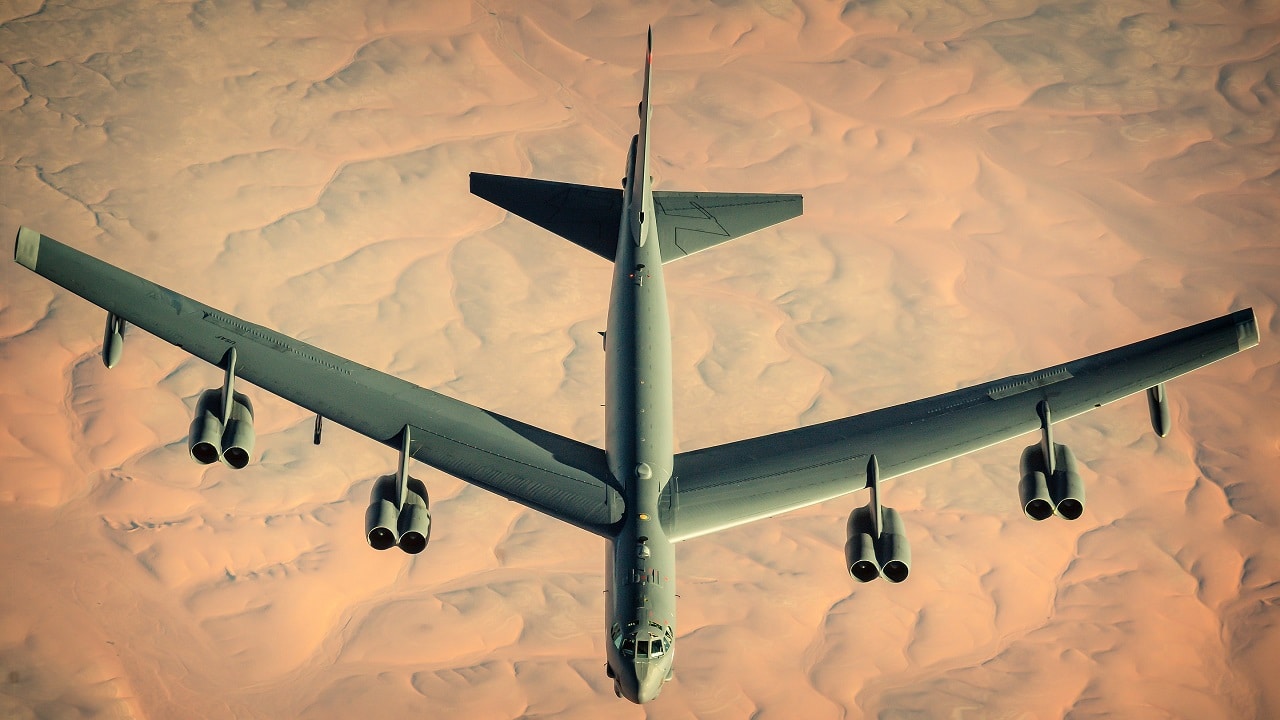
A U.S. Air Force B-52 Stratofortress assigned to the 2nd Bomb Wing departs after receiving fuel from a KC-135 Stratotanker, assigned to the 340th Expeditionary Air Refueling Squadron, during a multi-day Bomber Task Force mission over Southwest Asia, Dec. 10th, 2020. The B-52 is a long-range bomber with a range of approximately 8,800 miles, enabling rapid support of BTF missions or deployments and reinforcing global security and stability. (U.S Air Force photo by Staff Sgt. Trevor T. McBride)
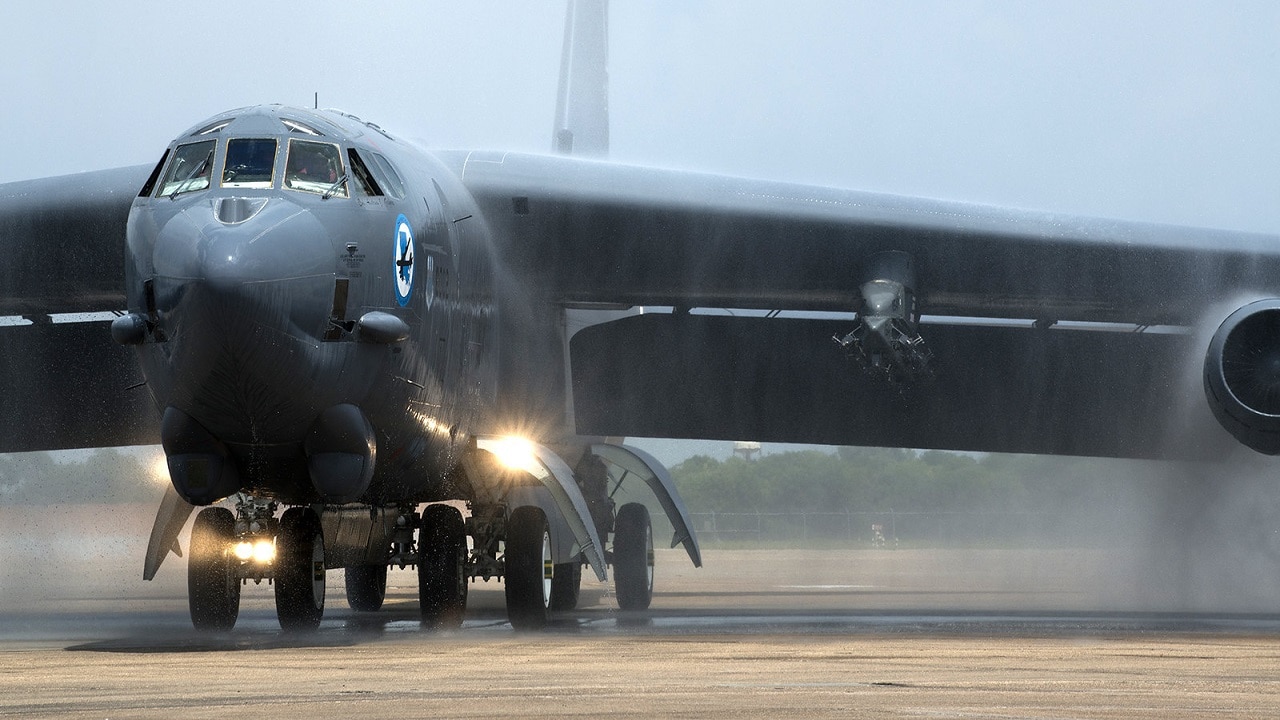
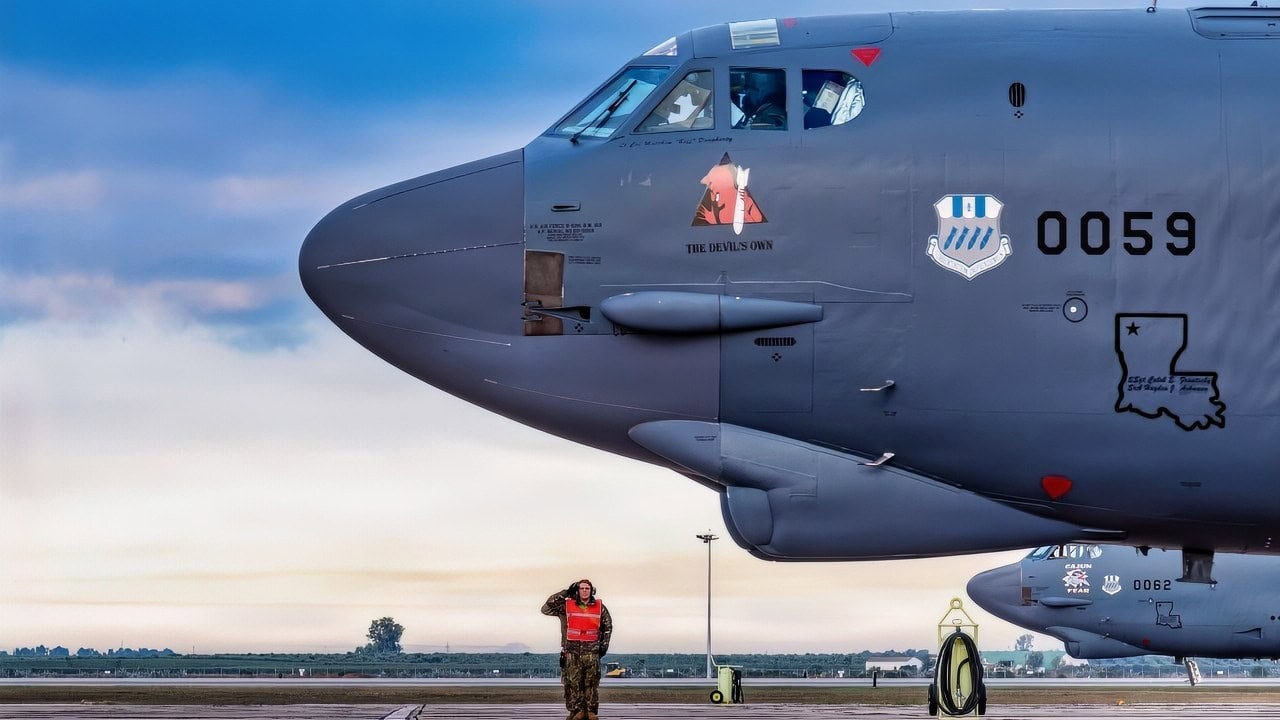
A 2nd Bomb Wing B-52H Stratofortress taxis under a spray of water after returning from a mission July 12, 2014, at Barksdale Air Force Base, La. This marked the last flight for one crew member on the aircraft, Lt. Col. Ronald Polomoscanik, the 343rd Bomb Squadron director of operations, who is retiring after 23 years of service. (U.S. Air Force photo by Master Sgt. Greg Steele/Released)
From the beginning, the B-52 was designed as a high-altitude heavy bomber capable of intercontinental flight without refueling.
It originally replaced the Convair B-36 and was tasked with penetrating Soviet airspace during the early Cold War. Its massive payload, enormous bomb bays, and long range made it uniquely suited to both nuclear and conventional missions.
Over time, technological changes reshaped its operational profile, gradually transforming it from a high-altitude penetrator to a platform optimized for launching long-range standoff weapons. Even today, the aircraft can carry more than 70,000 pounds of munitions and fly more than 8,600 miles without refueling, which makes it one of the most capable and flexible long-range strike aircraft in the world.
Throughout its service life, the B-52 has received numerous modernizations and upgrade packages to include its range and avionics. The B-52D was one variant designed specifically for heavy bombing campaigns without reconnaissance equipment.
It operated extensively in Vietnam, where it performed carpet-bombing missions against Vietcong forces.
The B-52G was the next major iteration of the Stratofortress. This variant dramatically changed the flight controls and the internal crew layout with a larger radome housing more sophisticated avionic equipment.
Finally, the B-52H is the most recent version of the B-52. This variant ditched the old engines in favor of the current TF33-P-3 turbofan engines still in use.
The rear gunner was ditched, and new avionics were installed, making it the most technologically advanced B-52 yet.
The B-52 in the 21st Century
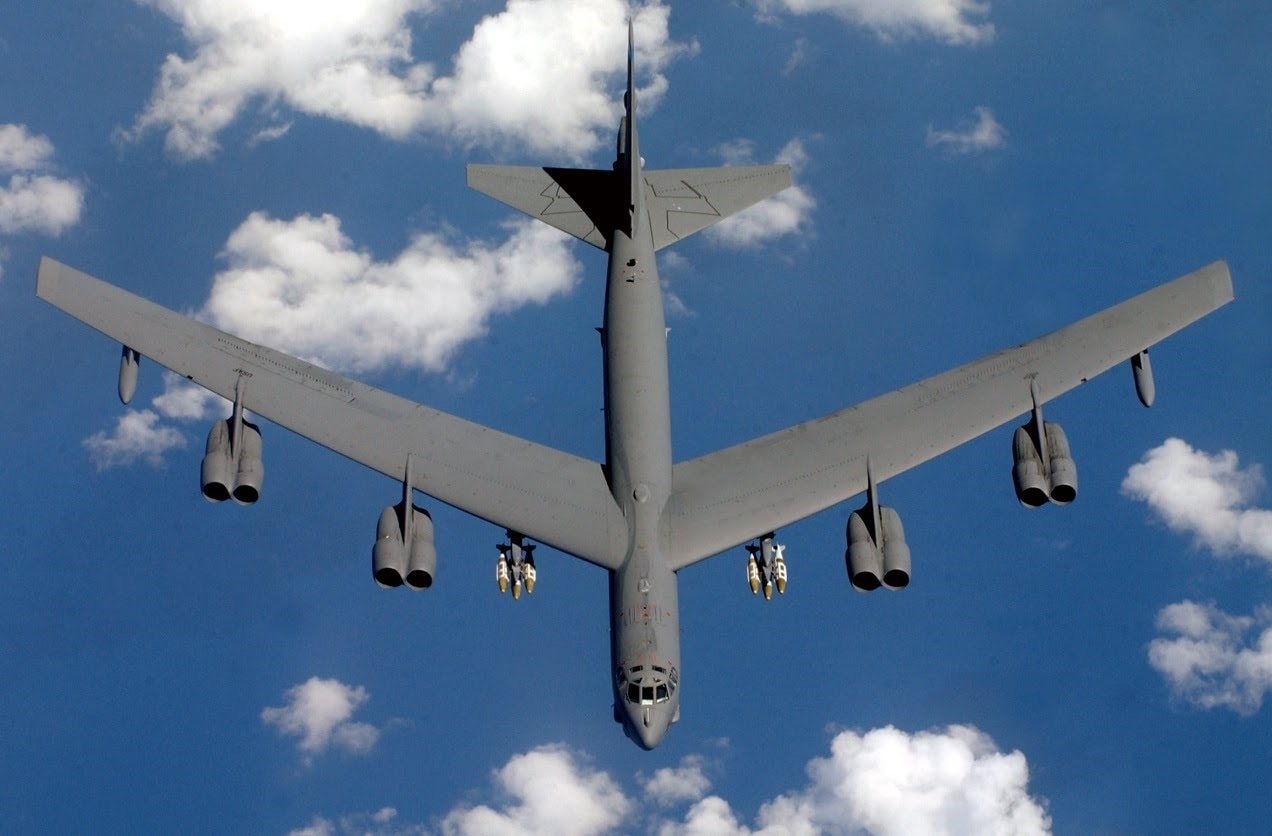
B-52 Bomber. Image: Creative Commons.
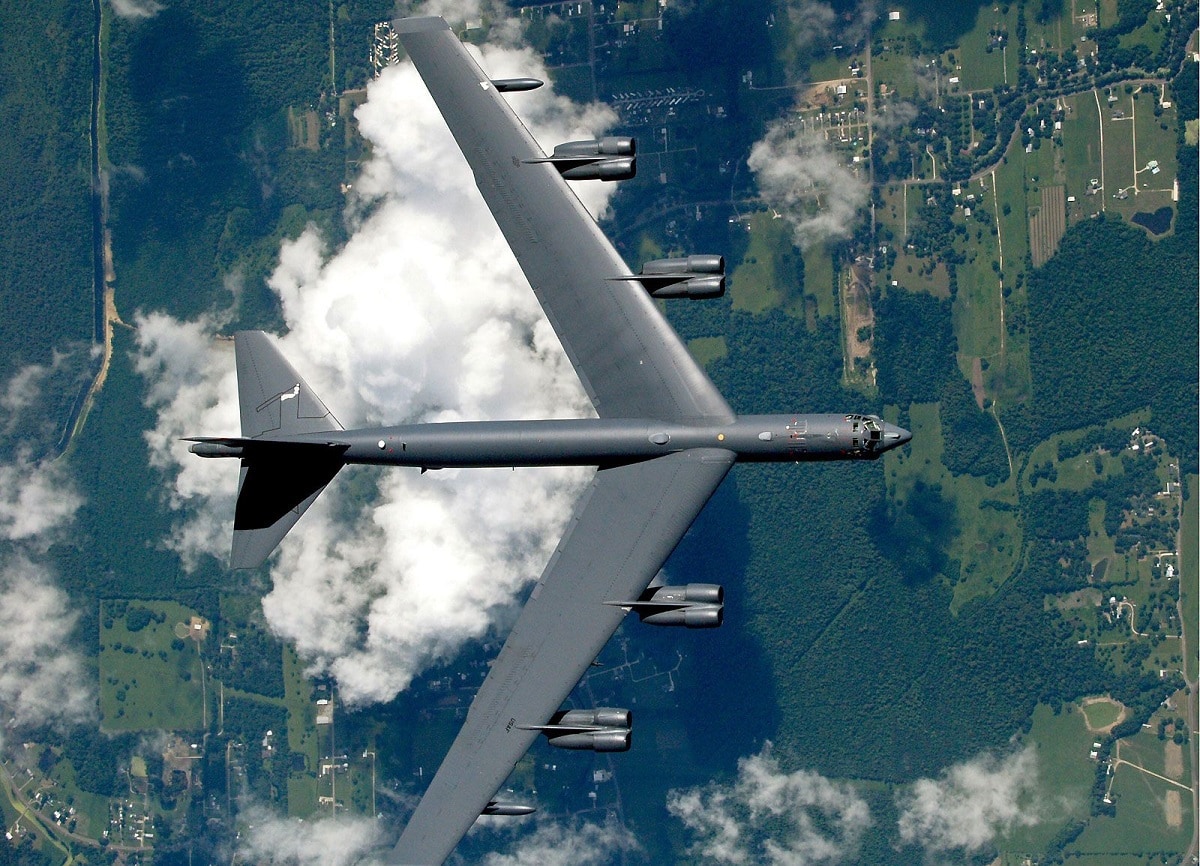
B-52 Bomber Image: Creative Commons.
The B-52H has participated in numerous combat operations since the end of the Cold War, mostly in the Middle East.
During Operation Iraqi Freedom, B-52Hs had the highest mission-capable rate among U.S. heavy bombers, with a 80% readiness rate. B-52s have also been used to strike terrorist and insurgent targets throughout the Global War on Terror.
When Bashir al-Assad’s government in Syria collapsed, the B-52H, along with other U.S. strike aircraft, conducted strikes against a number of Islamic state targets.
During the ongoing Operation Epic Fury, conducted against Iranian targets, B-52H bombers struck ballistic-missile production sites, command-and-control centers, and mobile launchers.
These missions underscored the airplane’s role as a key component of U.S. long-range strike doctrine.
Observers noted that the aircraft’s ability to carry large payloads of precision-guided munitions enabled U.S. commanders to apply sustained pressure across widely distributed targets. The presence of these bombers also provided a visible signal of the U.S. willingness to project power into contested environments.
Why the Air Force Still Operates the B-52
The B-52H’s range and endurance give commanders unusual flexibility for everything from strategic bombing to maritime surveillance.
The aircraft can cover extraordinary swaths of ocean in surveillance roles. Two B-52s can monitor on the order of 140,000 square miles of sea surface in just a couple of hours, which has obvious implications for anti-ship and mine-laying missions and for supporting naval task forces with long-duration overwatch.
The bomber’s eight TF33-P-3/103 turbofan engines have historically provided the thrust and power generation needed for such roles.
The B-52H has a maximum weapons load of approximately 70,000 pounds, which can be distributed across internal bays and external pylons to accommodate a mix of bombs, mines, cruise missiles, and precision-guided munitions. In its nuclear mission, the B-52H employs the AGM-86B air-launched cruise missile, providing a standoff delivery option that enhances survivability by enabling launches well beyond dense enemy air defense belts.
In conventional strike configurations, the aircraft can employ an extensive catalog of weapons and a wide family of JDAMs for precision effects against fixed or relocatable targets, as well as a number of anti-ship munitions for naval missions.
The ability to carry large numbers of long-range standoff munitions has grown more important as modern integrated air defense systems proliferate. A single B-52H sortie can generate massed missile salvos that overwhelm defenses or attrit critical infrastructure at the outset of a campaign, complementing stealth platforms that conduct penetrating strikes.
The Bomber that Will Never Go Away
The B-52H’s diverse mission envelope makes it ideal for almost any situation. The aircraft can perform missions such as strategic attack, interdiction, close air support, offensive counter-air, and maritime operations. The aircraft has also long served as a test platform in aerospace experimentation thanks to its generous wing clearance and structural robustness, a role that continues as the Air Force evaluates future hypersonic weapons and novel payloads.
The B-52 Bomber Just Won’t Go Away
Despite its Cold War origins, continuous modernization efforts have kept the B-52 relevant to this day. The fleet can be outfitted with electro-optical sensors, forward-looking infrared, and modern targeting pods, which together enhance target identification, post-strike assessment, and low-level navigation.
Electronic warfare systems have been modernized over time to improve detection, jamming, and survivability against contemporary radar-guided threats.
The crew, comprised of an aircraft commander, pilot, radar navigator, navigator, and electronic warfare officer, is designed to spread the workload across specialized roles, allowing the aircraft to manage complex weapons employment and navigation tasks during very long sorties.
About the Author: Isaac Seitz
Isaac Seitz, a Defense Columnist, graduated from Patrick Henry College’s Strategic Intelligence and National Security program. He has also studied Russian at Middlebury Language Schools and has worked as an intelligence Analyst in the private sector.