
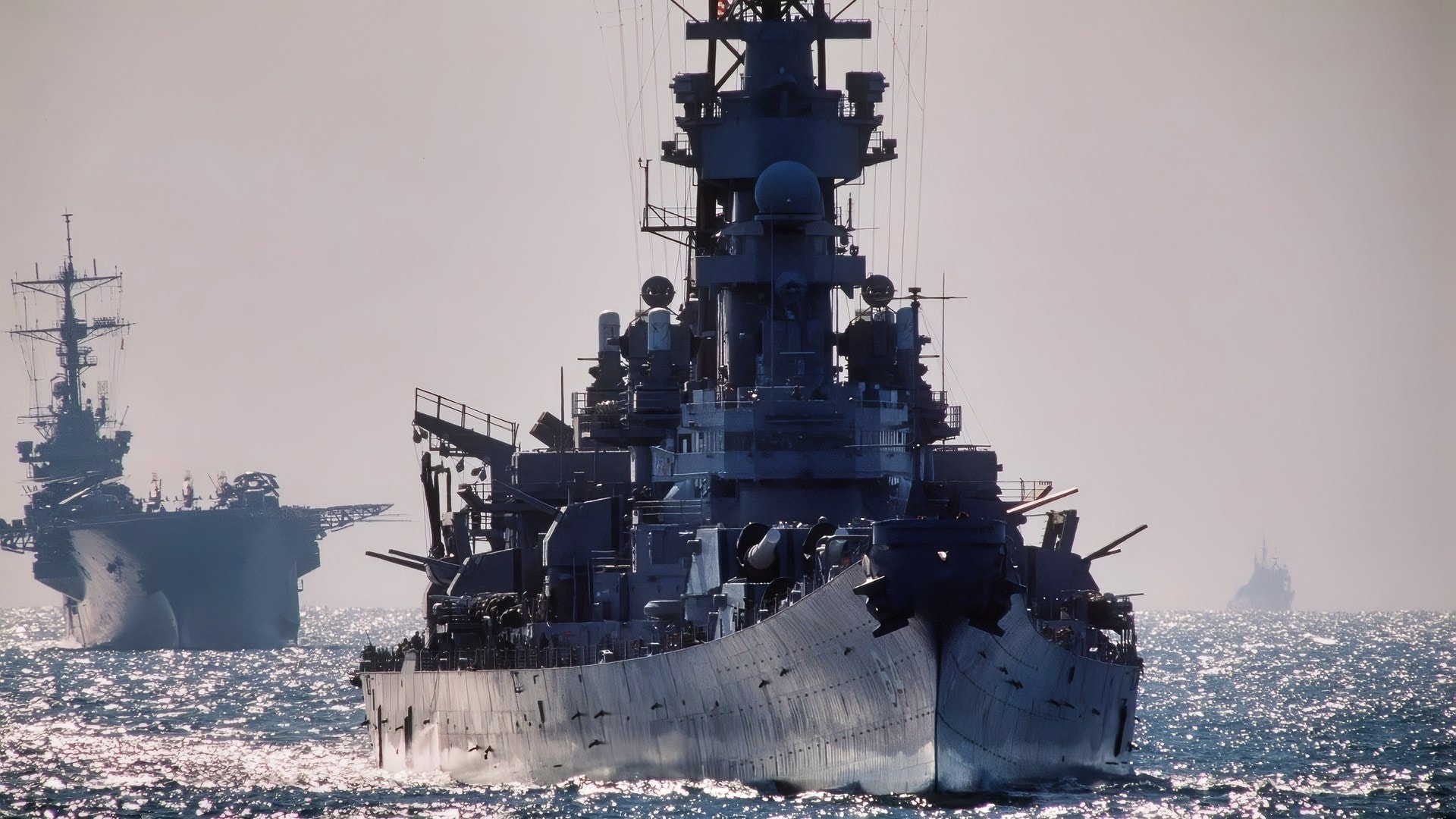
Summary and Key Points: The USS Illinois (BB-65) represents the twilight of the battleship era. Originally envisioned as a Montana-class dreadnought, it was reordered as an Iowa-class vessel to expedite WWII production.
-Despite featuring revolutionary all-welded construction and devastating 16-inch Mark 7 guns, the carrier-led victories at Midway and Coral Sea rendered the “battlewagon” obsolete.
-Construction slowed to a crawl in 1942 and was formally canceled days after the atomic bombing of Japan.
Scrapped in 1958, the ship’s only functional legacy is its bell, which now signals touchdowns at University of Illinois football games.
The Iowa-Class Battleship That Never Was: The Tragic History of the USS Illinois
The USS Illinois (BB-65), the fifth Iowa-class battleship, was laid down during World War II but never completed.
At the onset of World War II, the United States and the US Navy were still married to the idea that the battleship, not the aircraft carrier, was the primary weapon of the fleet.
The US built four Iowa-class battleships but wanted a new, more heavily armored design, with the USS Illinois (BB-65) and the USS Kentucky (BB-66) as the first of the Montana-class battleships.
However, Japan’s invasion of China in 1937 changed that. The Navy ordered that the USS Illinois and USS Kentucky be built as Iowa-class battleships.
The stunning Japanese victory at Pearl Harbor, where carrier-borne aircraft caught the American fleet at anchor and sank or damaged eight battleships, forced the Navy to rethink its strategy to a more carrier-based fleet.

Iowa-Class Battleship at Rest. Image Credit: Creative Commons.
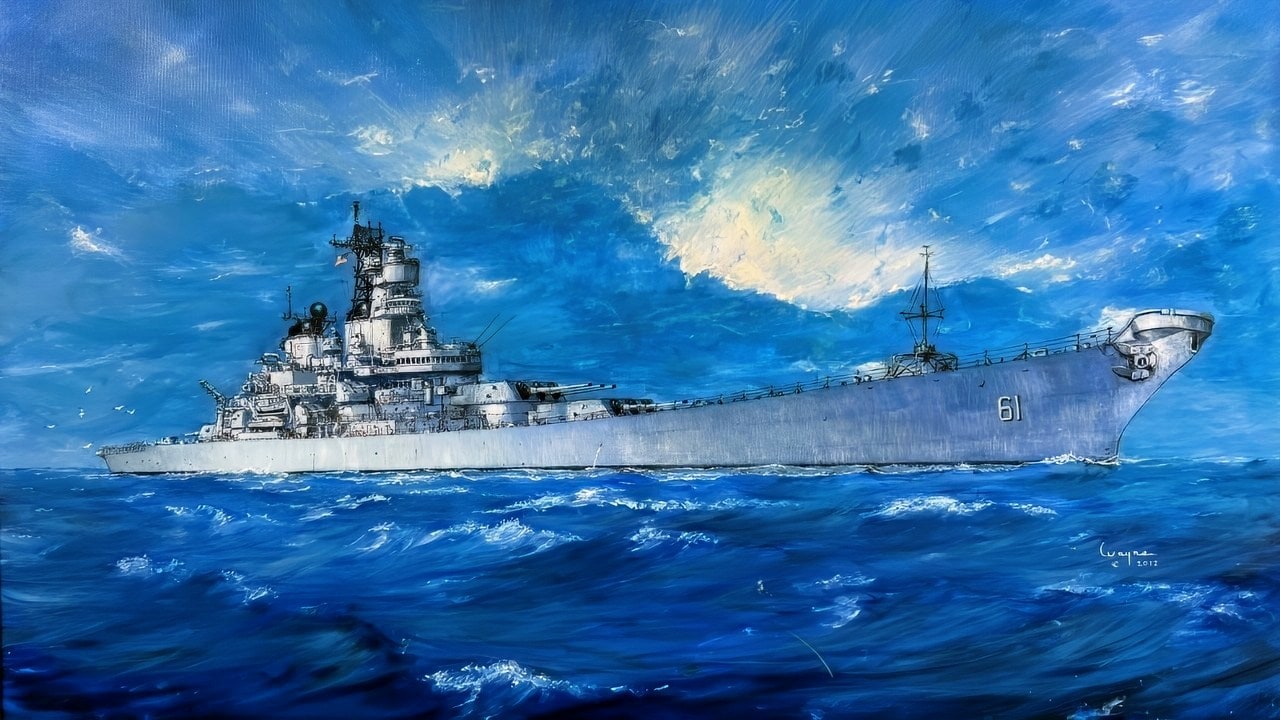
Image taken by Harry J. Kazianis aboard the USS Iowa on August 15, 2025. Image is of a painting of the USS Iowa of the Iowa-Class. USS New Jersey is also a Iowa-Class battleship.
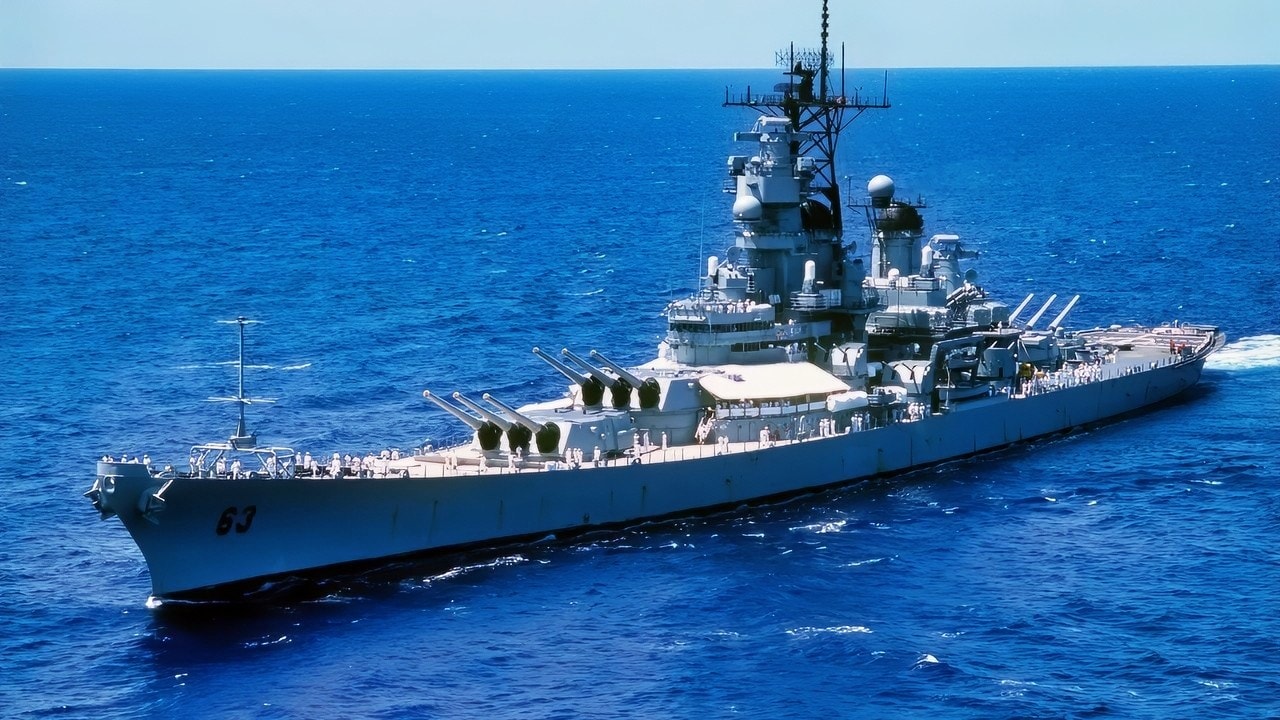
Iowa-Class Battleship Sailing. Image Credit: Creative Commons.
After the American victories in the Coral Sea and at Midway, where, for the first time, the opposing fleets never saw one another, the die was cast.
The US stopped construction on the Illinois in 1942, canceled it in 1945, and finally scrapped it in 1958.
The History Of the USS Illinois (BB-65)
During the late 1930s, the Navy prepared for an eventual war with the Empire of Japan. The Japanese were expanding their empire westward. The Japanese Navy was growing quickly, and its fleet, with many aircraft carriers and fast Kongō-class battlecruisers, was a force to be reckoned with.
Many American strategists still believed that a slower, heavily armored, and armed fleet of battleships was the way to go. Shortly after Japan invaded China in 1937, Carl Vinson, a Democratic Congressman from Georgia, sponsored the “Second Vinson Act of 1938.”
This bill authorized the construction of 105,000 tons of battleships (the first three Iowa-class ships were built under this authorization), 40,000 tons of aircraft carriers (expended on Hornet), 68,754 tons of cruisers (expended on 4 Cleveland and 4 Atlanta-class light cruisers), 38,000 tons of destroyers and 13,658 tons of submarines (eight vessels were built under this authorization – SS-204 to SS-211), together with various smaller ships.
Four Iowa-class battleships were to be built. The USS Illinois and USS Kentucky were to be the first Montana-class battleships.
But in 1940, the need to adopt industrial mobilization as the threat of war loomed forced the Navy to place new designs on hold, and as a result, BB-65 and BB-66 were ordered to the Iowa design.
The Changing Of Naval Warfare Forces: Changes In Planning for Iowa-Class
The Second Vinson Act of 1938 had the US spend over $1 billion to expand the Navy by 20 percent. That billion dollars then is worth about $22,543,214,285.71 today. In an economy still in the depths of a depression, in 1938, a large amount was spent, which speaks to the seriousness with which the country took the potential war due to Japan’s aggressiveness.
When the USS Illinois was ordered in 1940, it was reclassified as an Iowa-class battleship to facilitate shipyard construction. The keel for the USS Illinois and USS Kentucky was laid in 1942, but the face of war had changed dramatically, and so would plans for the battlewagon.
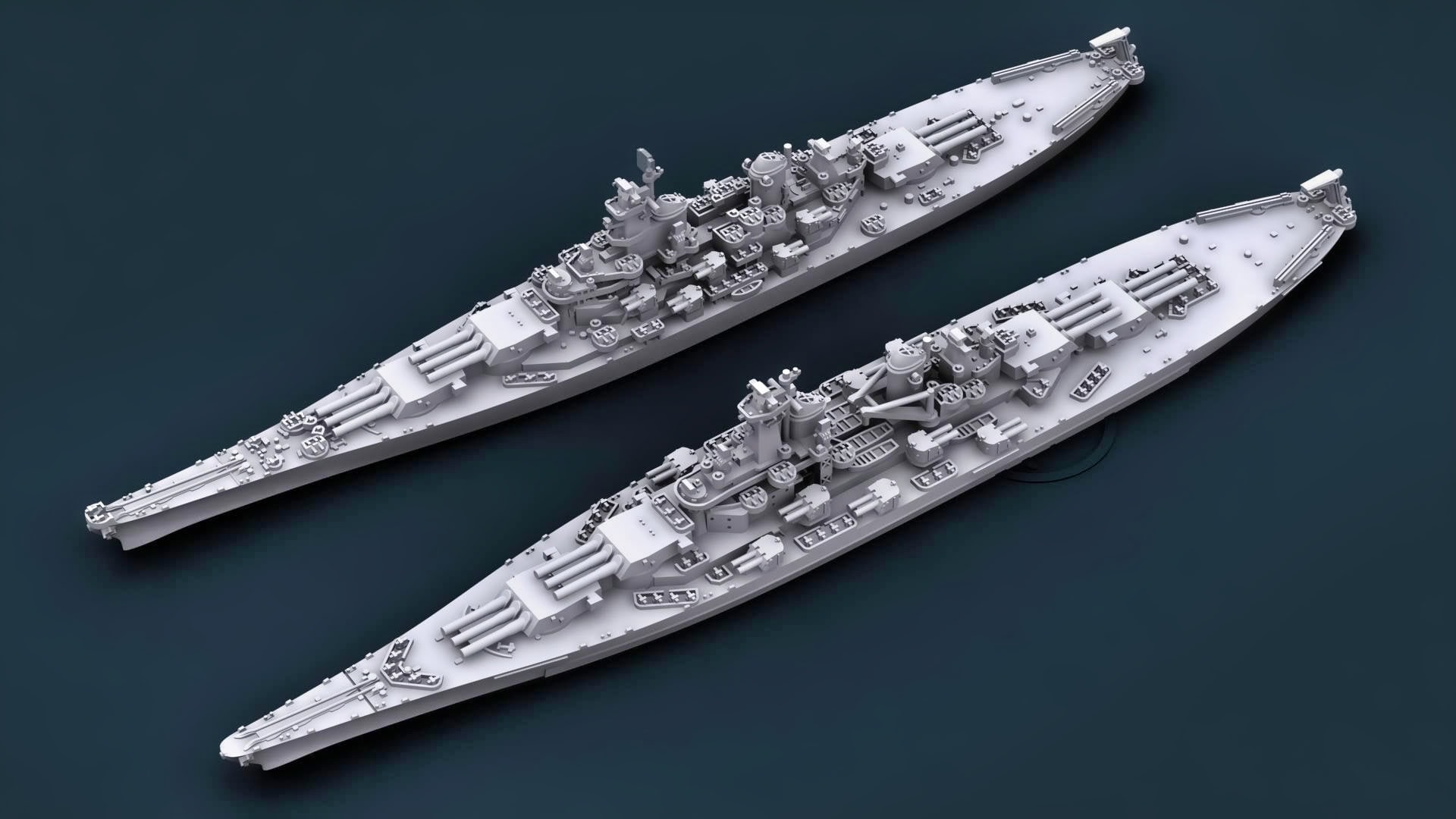
Montana-Class Battleship vs. Iowa-Class. Image Credit: Creative Commons.
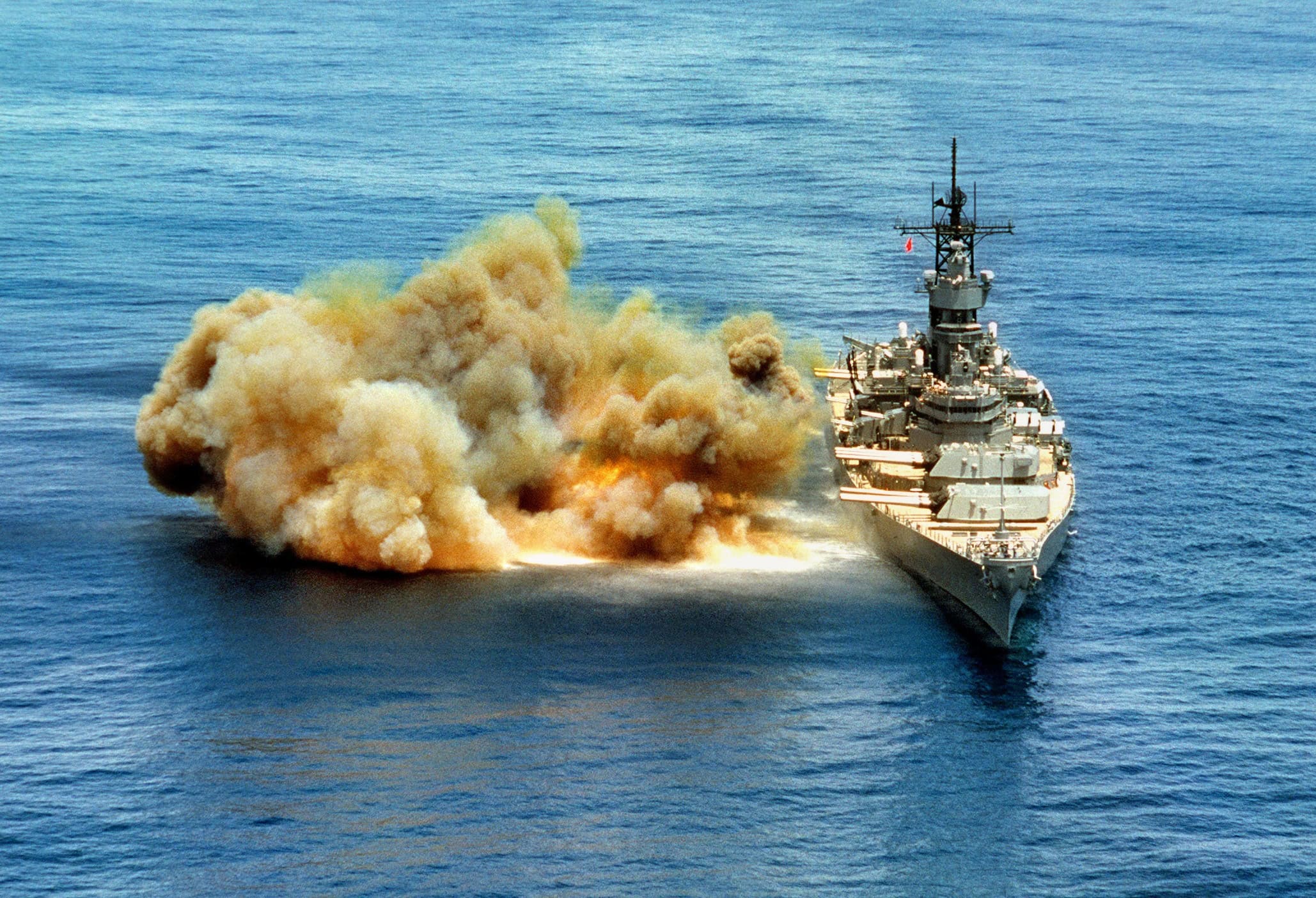
An aerial bow view of the battleship USS IOWA (BB 61) with its 15 guns (nine 16-inch and six 5-inch) firing a salvo off the starboard side.
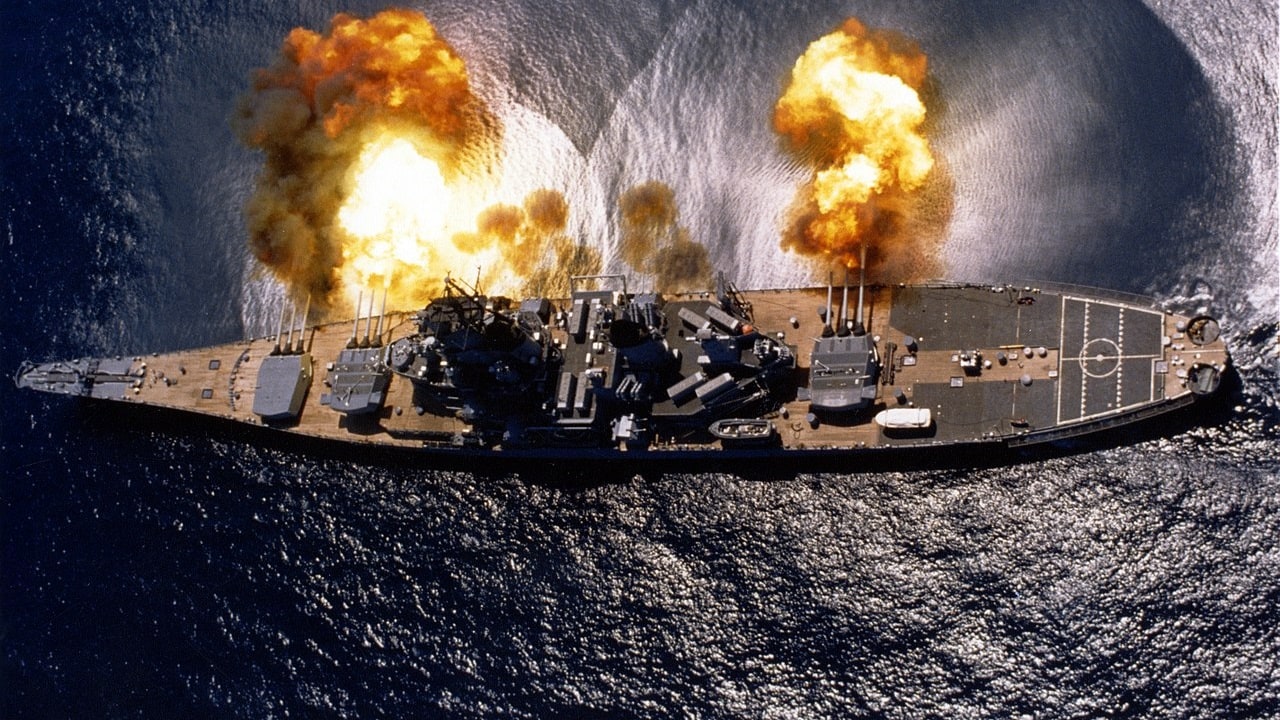
Iowa-Class Battleship. Image Credit: Creative Commons.
The Japanese sneak attack at Pearl Harbor had devastated the Pacific fleet’s battleships. The Coral Sea and Midway battles showcased the aircraft carrier’s astonishing ability to project power.
The battleship has to close with the enemy to sink its vessels. The carrier could strike far from its fleet and sink the battleships long before they were in range to fire their guns.
Production ceased in Illinois and Kentucky in 1942. There was a proposal to convert it into an aircraft carrier, but that was scrapped because a converted USS Illinois would carry fewer aircraft than an Essex-class carrier.
Battleship USS Illinois BB-65 Specs, Had It Been Built
With a displacement of 45,000 tons, a length of 887 feet and three inches, a beam of 108 feet, two inches, and a draught of 37 feet, two inches, the Iowa-class battleships were also the largest battleships to ever be built by the U.S. Navy.
The Iowa-class was the most heavily armored U.S. warship ever built. The armor belt was inside the hull and was 12.1 inches at its thickest. The turrets had 19.7 inches of armor, while the decks were plated with 7.5 inches of armor.
Having taken a tour of an Iowa-class battleship, a guide said a 500-pound bomb could be dropped on the turret, and it would do nothing but raise a cloud of dust inside. While that seems a bit dubious, I’ll take his word for it.
The Illinois would have been the first battleship to have an all-welded construction. This would have reduced the weight compared to the previous riveted/welded hull while also increasing strength.
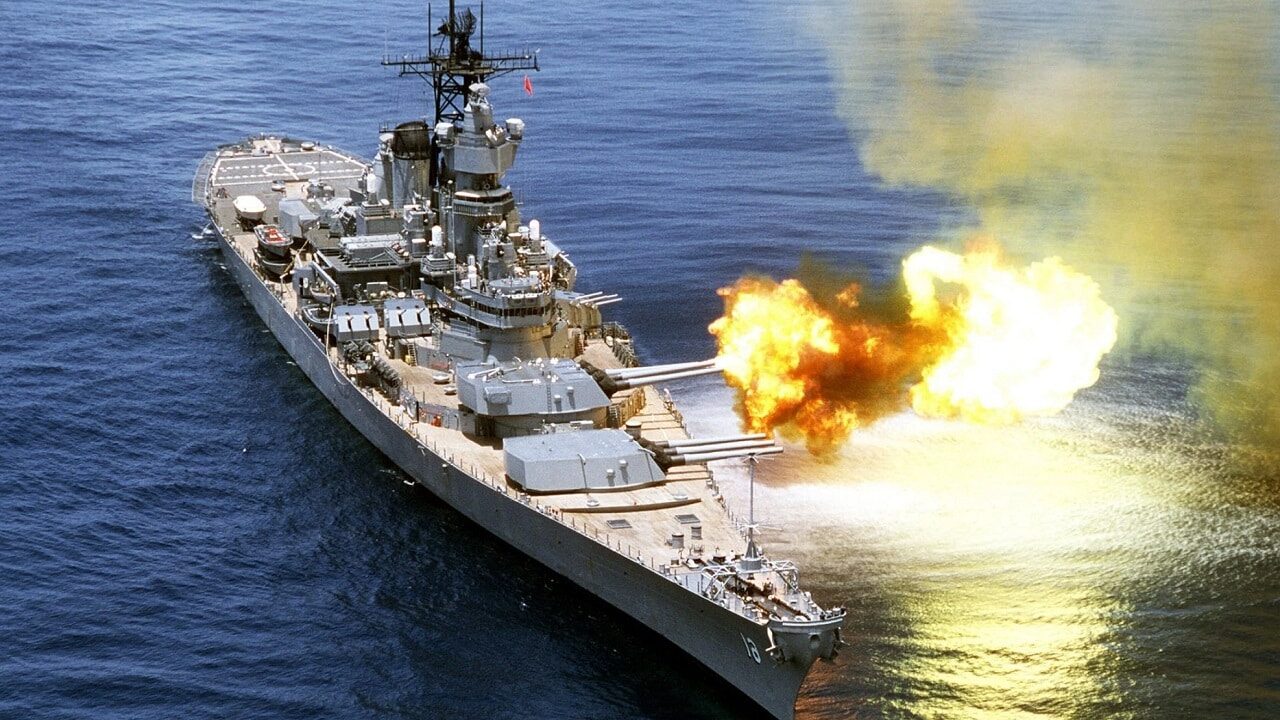
Iowa-Class USS Wisconsin Battleship. Image Credit: Creative Commons.
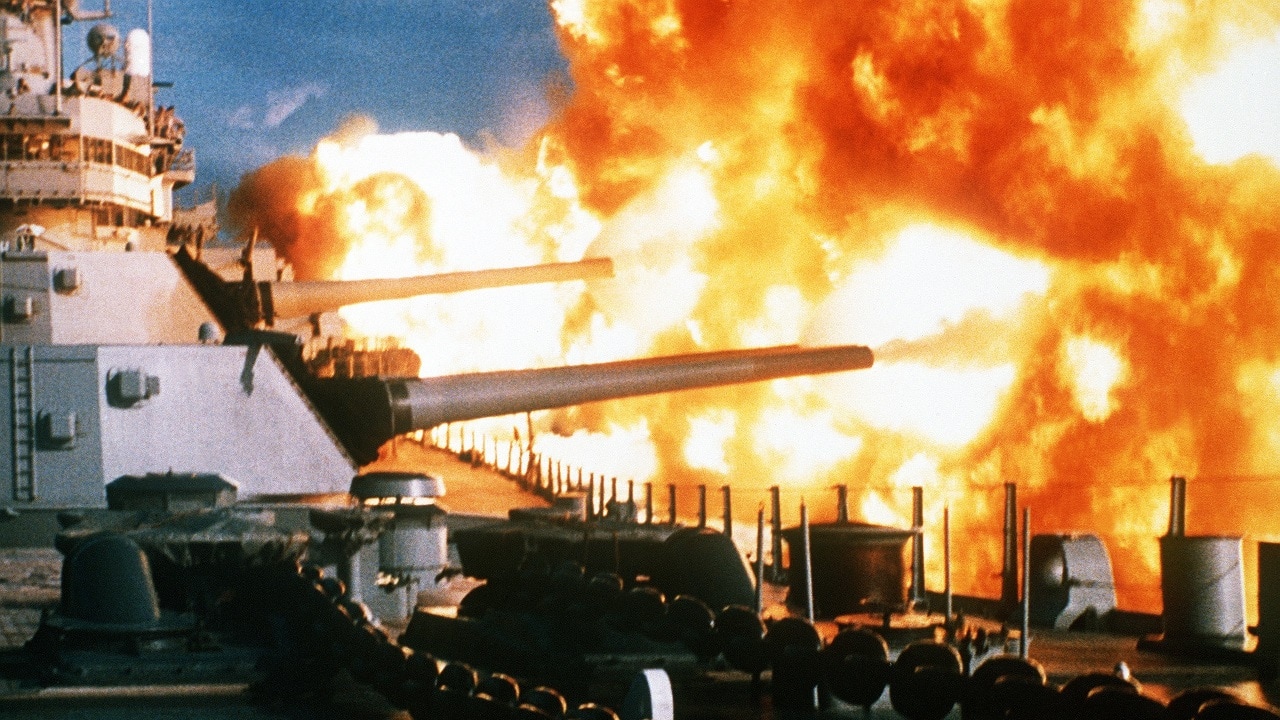
The Iowa-class battleship USS New Jersey fires at positions near Beirut on 9 January 1984 during the Lebanese Civil War.
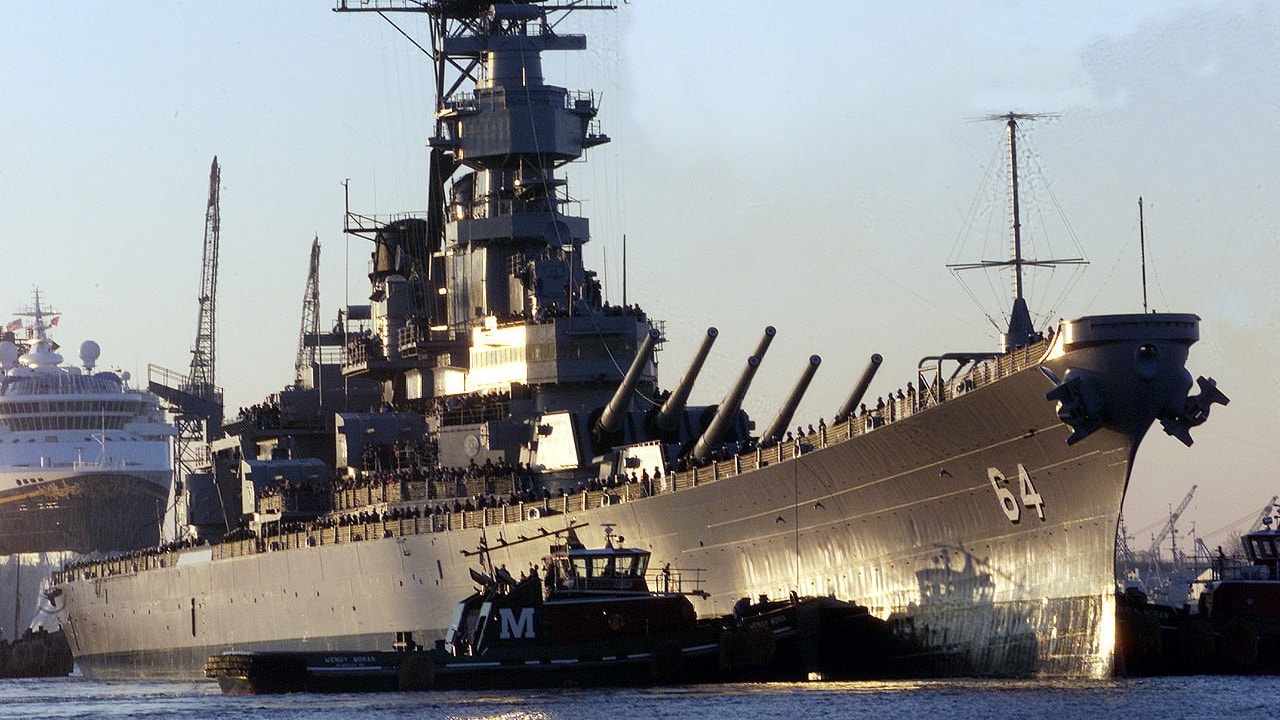
A tug boat nudges the bow of the battleship USS Wisconsin (BB 64) as the ship is pushed from the Norfolk Naval Shipyard to the Nauticus Museum in Norfolk, Va., on Dec. 7, 2000. The Wisconsin will be the centerpiece of a four-part exhibit on the battleship’s role in Naval history.
The armament of the USS Illinois and USS Kentucky would have been the same as that of the other Iowa-class battleships. The primary weapons were a battery of nine 16-inch (406mm) / 50-caliber Mark 7 guns, each capable of firing a 2,700-pound armor-piercing shell up to 20 miles.
The secondary armament was a battery of 20 5-inch (127mm)/38-caliber guns arranged in 10 turrets, which could fire at ranges up to 10 miles. These weapons proved to be extremely effective as anti-aircraft defenses, in close ship-to-ship battles, and as naval gunfire support for amphibious landings.
Work On The USS Illinois Slows to a Crawl and Stops
Work on the USS Illinois was virtually halted in 1942 and resumed only slowly, as it was deemed non-priority, until early 1945. However, on August 11 – just two days after the second atomic bomb dropped on Japan – work ceased.
BB-65 was struck from the Naval Vessel Registry just a day later. Although some proposals were sent forth to change her build, she remained unused. The unfinished hull remained as a parts hulk until she was dismantled in 1958.
The Ship’s Bell Survived
After the ship was scrapped, some parts were kept. The ship’s bell, which was inscribed with “USS Illinois 1946,” is proudly displayed each Saturday during football season at the University of Illinois at Urbana-Champaign’s Memorial Stadium, where NROTC students use the bell to signal touchdowns for the home team.
About the Author: Steve Balestrieri
Steve Balestrieri is a National Security Columnist. He served as a US Army Special Forces NCO and Warrant Officer. In addition to writing on defense, he covers the NFL for PatsFans.com and is a member of the Pro Football Writers of America (PFWA). His work was regularly featured in many military publications.