
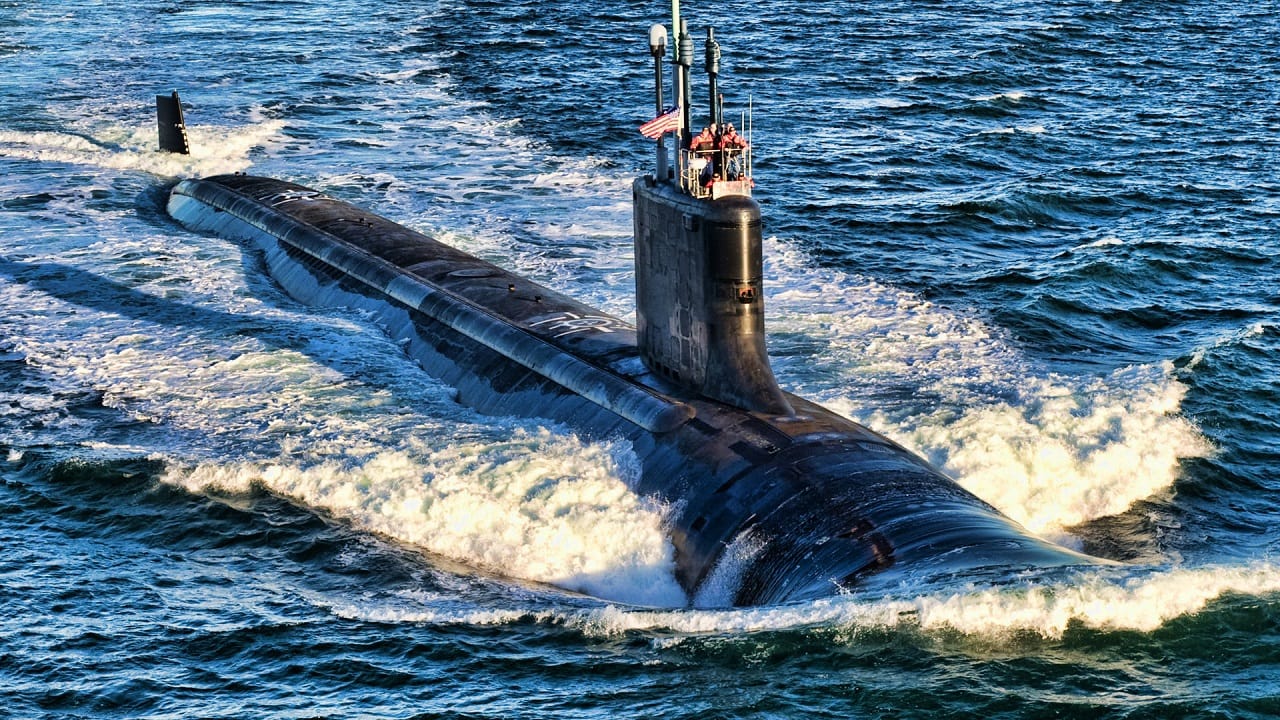
U.S. Navy Sub Troubles: Why Virginia-Class Submarines Can’t Replace the Los Angeles-Class Fast Enough
A growing body of reports and congressional analyses is pointing to a problem that the U.S. Navy has been warning about for years: it is running out of attack submarines faster than they can be replaced.
The Cold War-era Los Angeles class has drawn a lot of attention as these discussions continue, with the fleet gradually being replaced by Virginia-class boats. That transition, however, is not going smoothly.
A January 2026 congressional report on the Virginia-class program noted that, while the Navy has long planned to procure two submarines per year, actual production has fallen short of that goal.
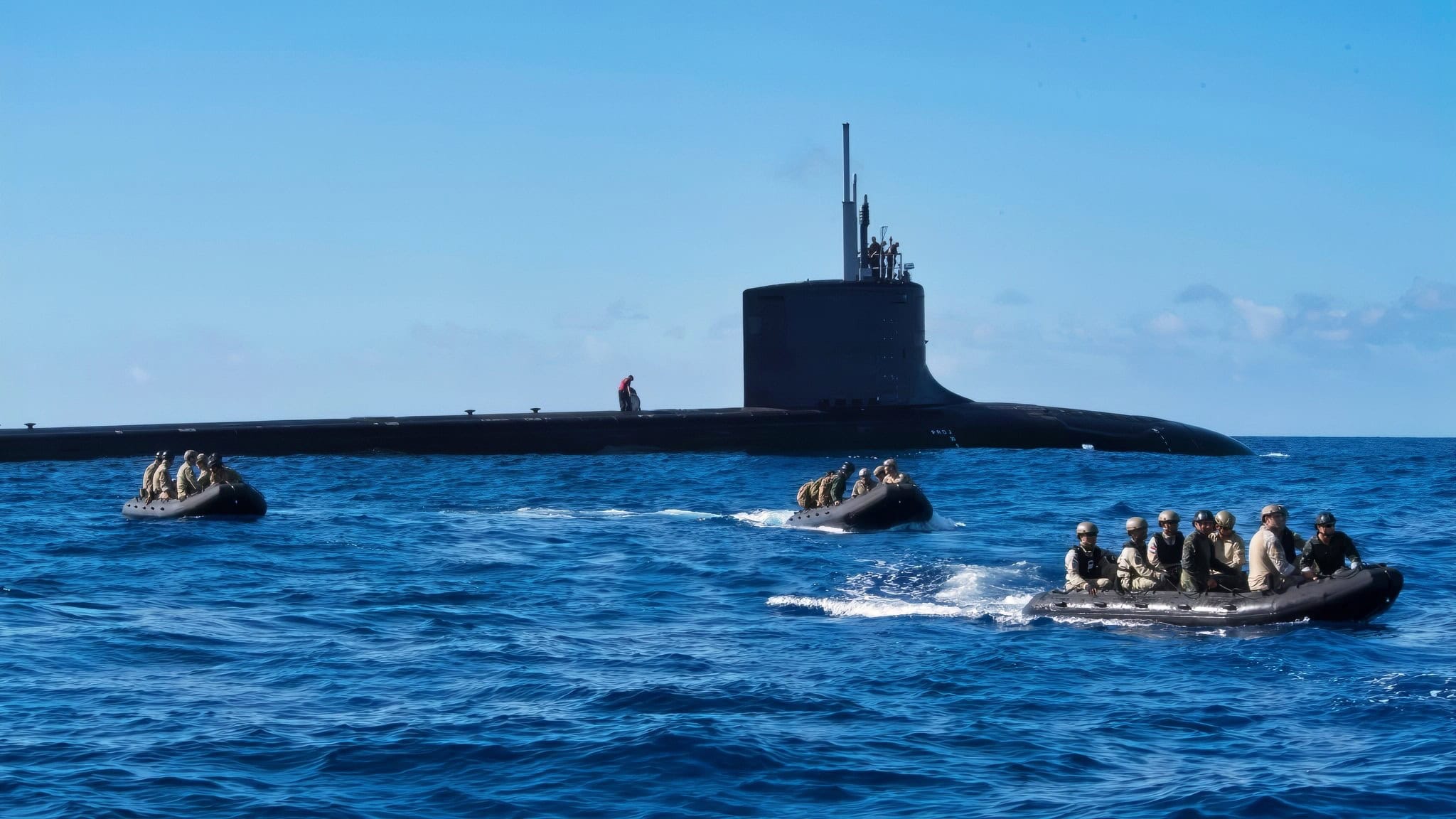
PEARL HARBOR (July 9, 2018) – Multi-national Special Operations Forces (SOF) participate in a submarine insertion exercise with the fast-attack submarine USS Hawaii (SSN 776) and combat rubber raiding craft off the coast of Oahu, Hawaii during Rim of the Pacific (RIMPAC) exercise, July 9. Twenty-five nations, 46 ships and five submarines, about 200 aircraft, and 25,000 personnel are participating in RIMPAC from June 27 to Aug. 2 in and around the Hawaiian Islands and Southern California. The world’s largest international maritime exercise, RIMPAC provides a unique training opportunity while fostering and sustaining cooperative relationships among participants critical to ensuring the safety of sea lanes and security of the world’s oceans. RIMPAC 2018 is the 26th exercise in the series that began in 1971. (U.S. Navy photo by Lt. j.g. Michelle Pelissero)
Since 2022, output has averaged roughly 1.1 to 1.2 boats annually due to workforce shortages, supplier constraints, and industrial bottlenecks. At the same time, older submarines are leaving service on schedule, widening the gap between what the Navy has and what it needs.
As noted by the United States Naval Institute, the retirements of Los Angeles-class submarines are outpacing the delivery of Virginia-class replacement boats, and the U.S. attack submarine fleet is now expected to fall to around 46 boats by 2030 – well below the long-standing requirement of 66.
It is, however, expected to recover to the 50s by 2040, and reach the objective of 66 by the mid-2050s. That’s a long shortfall – and it all matters because attack submarines are one of the Navy’s most in-demand assets.
Attack submarines conduct intelligence gathering and can track adversary submarines; they can support special operations, and perhaps most crucially, they provide long-range strike capability when it’s necessary. In a potential conflict with China, they would be among the first assets deployed – and indeed among the most heavily tasked.
The transition to the new submarines is underway, but it is a massive, generational shift taking place amid growing industrial strain.
The Los Angeles-Class is a Cold War Fleet
The Los Angeles-class submarine was designed for a very specific kind of war – and for decades, it performed that role exceptionally well. First entering service in the 1970s, the class ultimately produced 62 boats, making it the largest class of nuclear-powered attack submarines ever built by the United States. These submarines were optimized for deep-ocean operations, where their primary mission was to track and, if necessary, destroy Soviet submarines operating in the Atlantic and Pacific.
Speed and endurance were also central to the submarine’s mission. Powered by nuclear reactors, Los Angeles-class submarines could operate indefinitely without refueling and sustain high submerged speeds, allowing them to pursue adversaries across vast ocean areas. Over time, later variants – particularly the improved 688i boats – added vertical launch systems for Tomahawk cruise missiles, thereby expanding their role beyond anti-submarine warfare into strike operations.
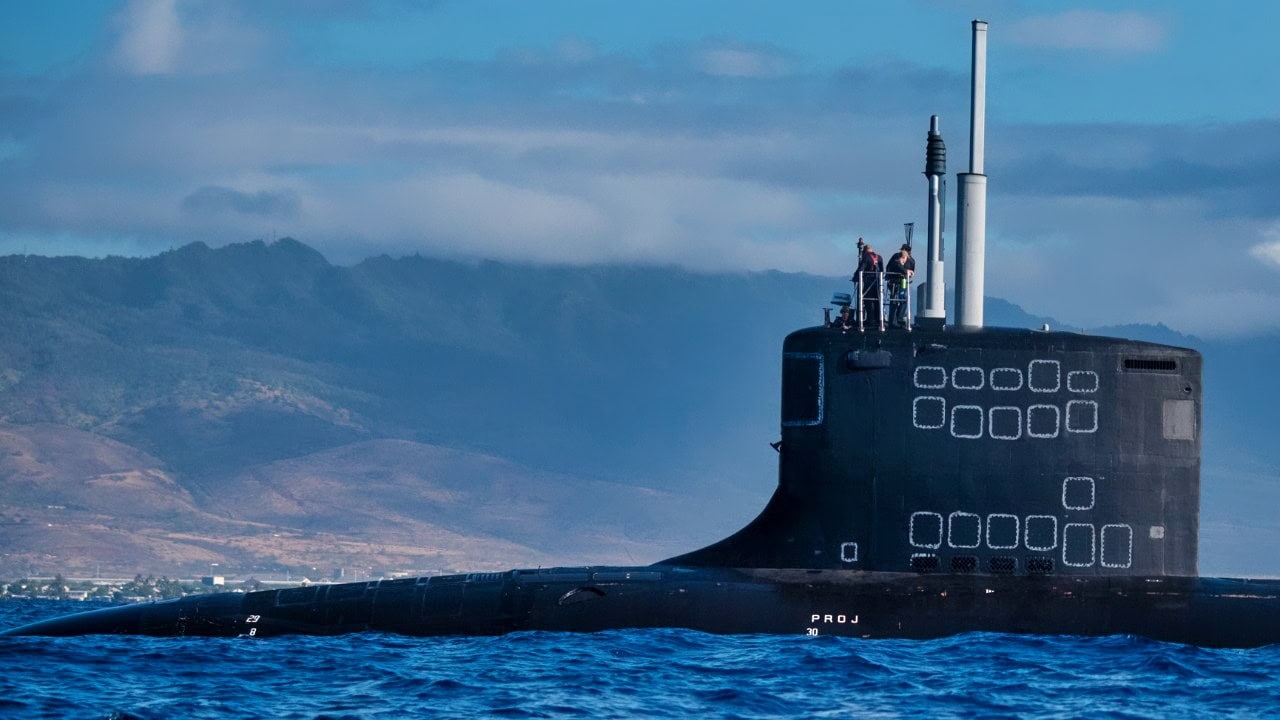
(July 9, 2018) – Multi-national Special Operations Forces (SOF) participate in a submarine insertion exercise with the fast-attack submarine USS Hawaii (SSN 776) and combat rubber raiding craft off the coast of Oahu, Hawaii during Rim of the Pacific (RIMPAC) exercise, July 9. Twenty-five nations, 46 ships and five submarines, about 200 aircraft, and 25,000 personnel are participating in RIMPAC from June 27 to Aug. 2 in and around the Hawaiian Islands and Southern California. The world’s largest international maritime exercise, RIMPAC provides a unique training opportunity while fostering and sustaining cooperative relationships among participants critical to ensuring the safety of sea lanes and security of the world’s oceans. RIMPAC 2018 is the 26th exercise in the series that began in 1971.` (U.S. Navy photo by Mass Communication Specialist 1st Class Daniel Hinton)
The submarines became the backbone of U.S. undersea dominance, and they have remained vital ever since. By the end of the Cold War, they formed the core of the Navy’s attack submarine fleet, supporting carrier strike groups and conducting intelligence missions. These submarines have long maintained a constant presence in contested waters. But they were built for a different strategic environment. When they were new, naval conflict and the maritime environment were defined by open-ocean engagements and predictable adversary patterns. That is no longer true, and there is also no singular focus on a single threat (the Soviet Union at the time).
Now, many of the submarines are reaching or exceeding 30 to 40 years of service life – and even with life-extension efforts, including reactor refueling and modernization upgrades, they are increasingly constrained by their age and design limitations.
The Phase Out
The retirement of the Los Angeles-class should come as no surprise. Among the obvious reasons the submarines need to go is their age. Nuclear submarines are built with finite hull lives, and extending those lives becomes increasingly complex and expensive over time. Major overhauls can take submarines offline for 20 to 30 months, reducing overall fleet availability and placing additional strain on remaining assets.
Second, the class was not designed for the kinds of missions that now dominate undersea warfare. Modern submarine operations increasingly involve intelligence collection in littoral environments and support for special operations forces. They must also be capable of integrating with networked warfare systems. These are areas where the Los Angeles-class, designed primarily for high-speed blue-water operations, is less well suited.
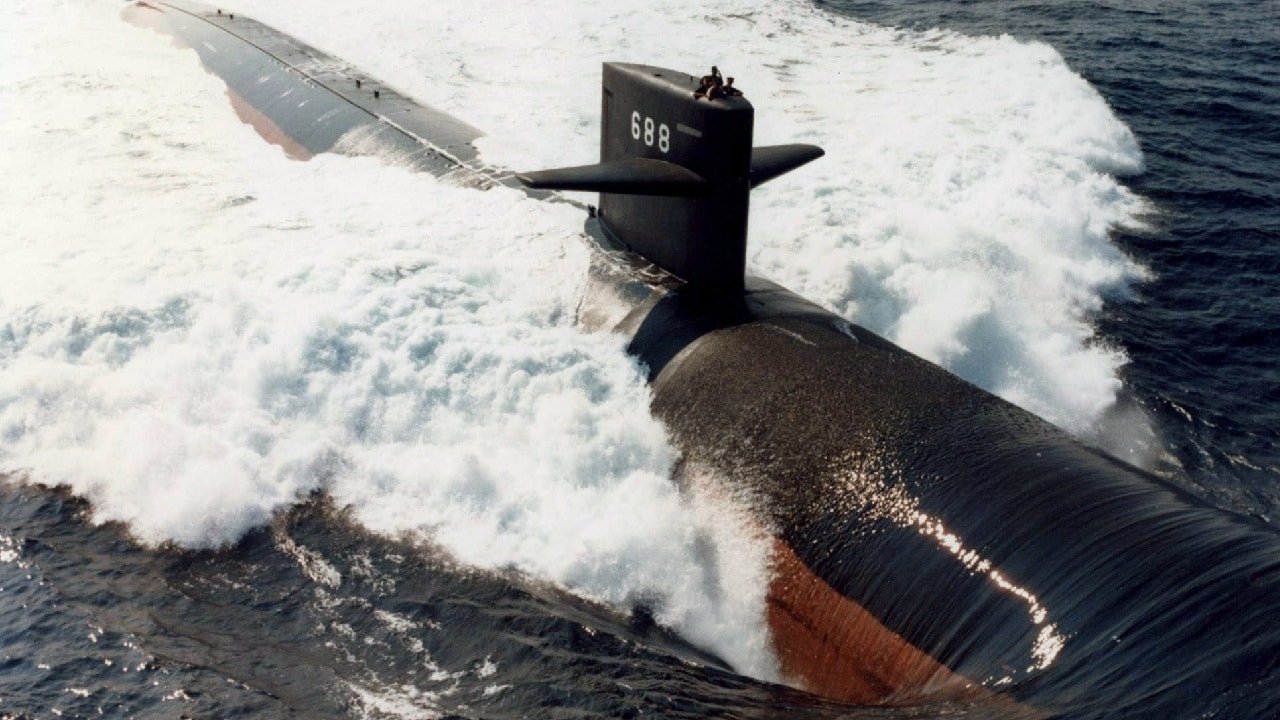
Los Angeles-class attack submarine. Image Credit: Creative Commons.
Third, the threat environment has evolved dramatically. Russia’s Yasen-class submarines and China’s rapidly modernizing fleet are quieter and more capable, and they are increasingly optimized for contested environments. Maintaining an acoustic and technological advantage over these new assets is necessary to maintain U.S. naval dominance at a time when it is under greater threat than ever.
There’s also the simple issue of replacement timing. The Navy cannot indefinitely sustain this Cold War-era fleet, and as older submarines retire, they must be replaced – and the Virginia-class is the only program currently positioned to do that.
Meet the Virginia-Class
The Virginia-class submarine was conceived in the post-Cold War era as a more flexible, modular, and cost-controlled alternative to earlier designs. Procured since the late 1990s, the program has steadily evolved through multiple “blocks,” each incorporating new technologies and capabilities. As of 2025, more than 40 boats have been procured, with additional submarines under construction or planned.
Compared to the Los Angeles-class, the Virginia-class introduces several key improvements. Stealth is one of the most significant. Advances in propulsion, hull design, and acoustic treatment have made the Virginia-class substantially quieter, improving survivability and effectiveness in contested environments.
Sensor systems have also been upgraded. The class uses photonic masts instead of traditional periscopes, along with advanced sonar arrays that enhance detection and tracking. These systems enable the submarine to operate more effectively in both open-ocean and littoral environments. The design is also modular. Each block introduces incremental improvements without requiring a complete redesign, allowing the Navy to adapt the platform over time as new technologies emerge.
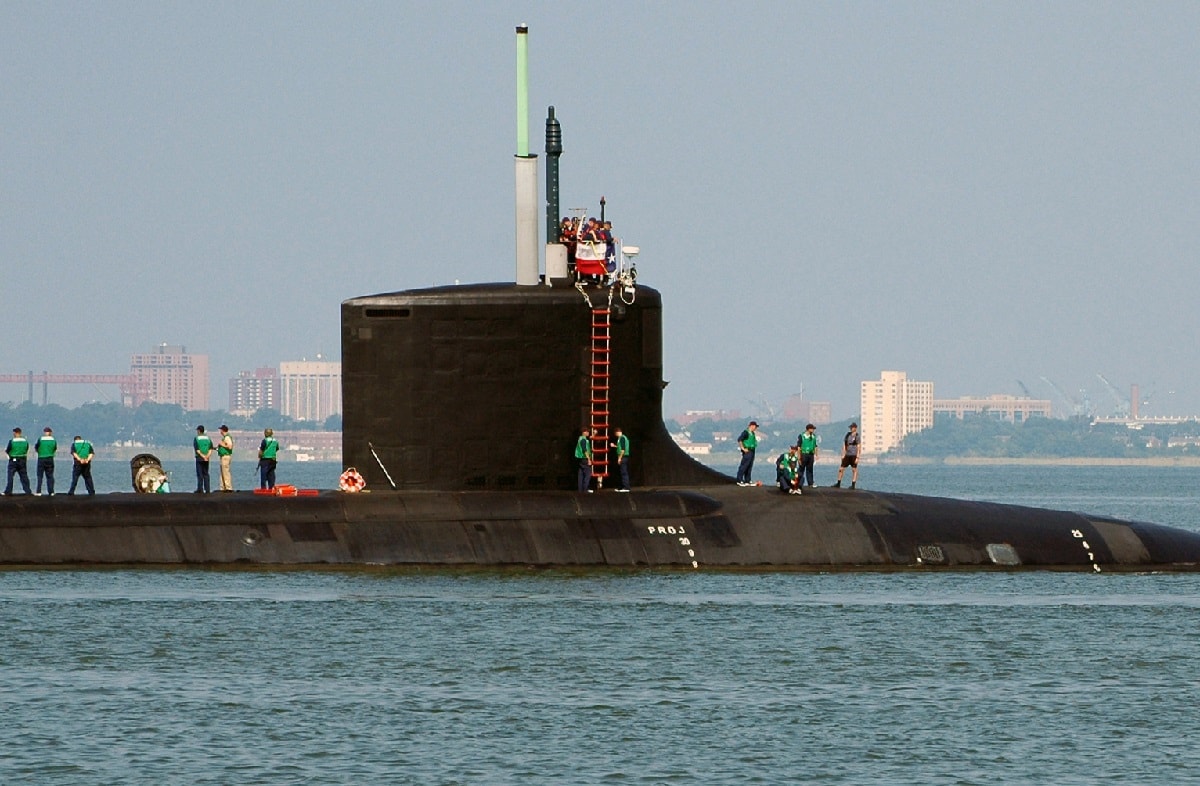
U.S. Navy Sailors stationed aboard the Virginia Class New Attack Submarine Pre-Commissioning Unit (PCU) TEXAS (SSN 775) stands topside as the boat gets underway from Naval Station Norfolk, Va., Aug. 22, 2006. TEXAS is the second Virginia Class submarine built and the first major U.S. Navy combatant vessel class designed with the post-Cold War security environment in mind. TEXAS will be commissioned Sept 9, 2006 in Galveston, Texas. (U.S. Navy photo by Mass Communication Specialist Seaman Kelvin Edwards) (Released)
Those advantages are huge, but they also come at a cost. Recent estimates place the procurement cost of a Virginia-class submarine at roughly $4.5-$5 billion per boat, depending on configuration and block variant. As with every military program, it seems, cost growth and schedule delays have also proven to be persistent challenges, with some boats experiencing delivery delays of up to 36 months.
What’s New In Virginia Subs
One of the most significant developments within the Virginia-class program is the introduction of the Virginia Payload Module (VPM), beginning with Block V submarines. The VPM adds four large-diameter payload tubes to the submarine, dramatically increasing its strike capacity.
That means a single Virginia-class submarine can carry dozens of Tomahawk cruise missiles, representing a substantial increase over the previous configuration. And that capability is necessary because it is filling a looming gap in U.S. naval firepower.
The Navy is retiring its Ohio-class guided-missile submarines (SSGNs), each of which can carry up to 154 Tomahawk missiles.
As those submarines leave service, the Navy needs a way to preserve its ability to conduct large-scale conventional strike operations from undersea platforms. The Virginia-class, equipped with VPM, is intended to absorb part of that role.
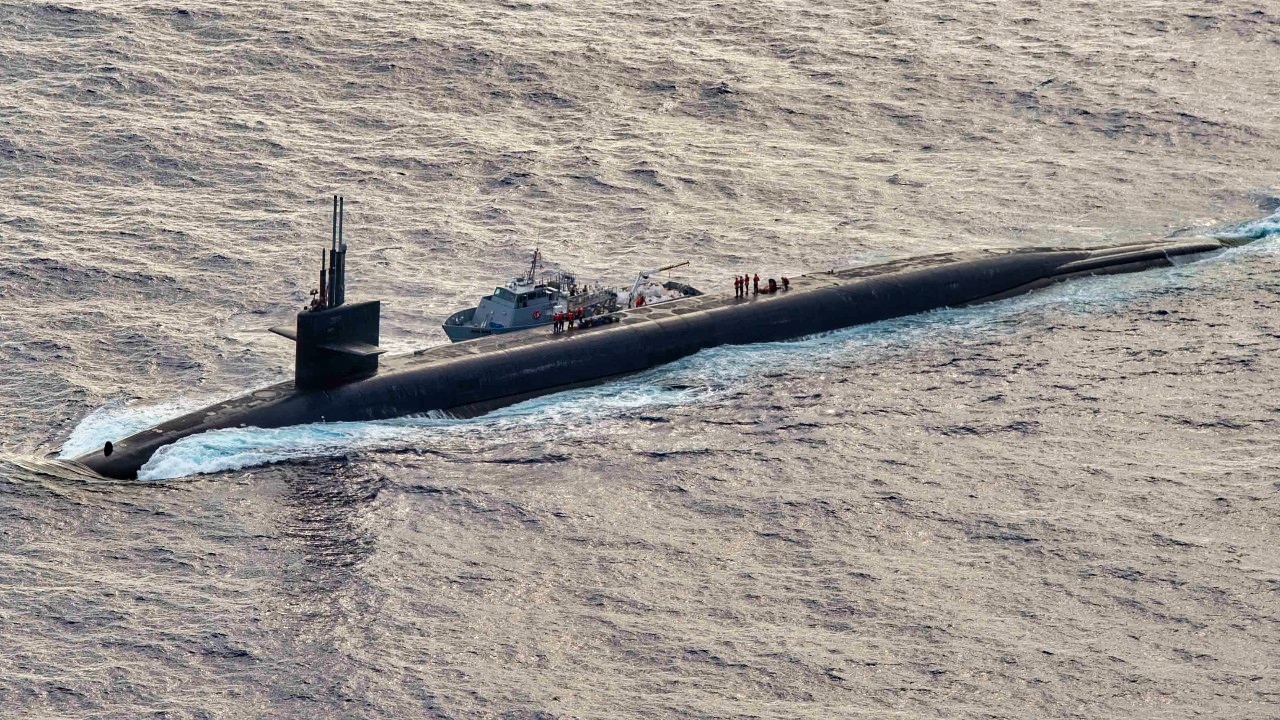
The Ohio-class ballistic missile submarine USS Kentucky (SSBN 737) sails alongside a submarine support vessel during a routine armed air escort (AAE) exercise, April 24, 2025. AAEs are designed to improve interoperability between our services, increasing lethalitythrough multi-domain integration.. Commander, Submarine Group (SUBGRU) 9, exercises administrative control authority for assigned submarine commands and units in the Pacific Northwest providing oversight for shipboard training, personnel, supply and material readiness of submarines and their crews. SUBGRU-9 is also responsible for nuclear submarines undergoing conversion or overhaul at Puget Sound Naval Shipyard in Bremerton, Washington. (U.S. Navy photo by Mass Communication Specialist 1st Class Ryan Riley)
Not only is the Virginia class providing additional capabilities, but it also represents a shift in how attack submarines are being used.
Rather than focusing primarily on hunting enemy submarines, the Virginia-class boats are increasingly expected to serve as multi-role platforms that combine intelligence gathering and special operations support with long-range strike capability.
The Virginia-class is designed to replace the Los Angeles fleet, but it can only do so if production accelerates and deliveries arrive on time.
About the Author: Jack Buckby
Jack Buckby is a British researcher and analyst specialising in defence and national security, based in New York. His work focuses on military capability, procurement, and strategic competition, producing and editing analysis for policy and defence audiences. He brings extensive editorial experience, with a career output spanning over 1,000 articles at 19FortyFive and National Security Journal, and has previously authored books and papers on extremism and deradicalisation.