
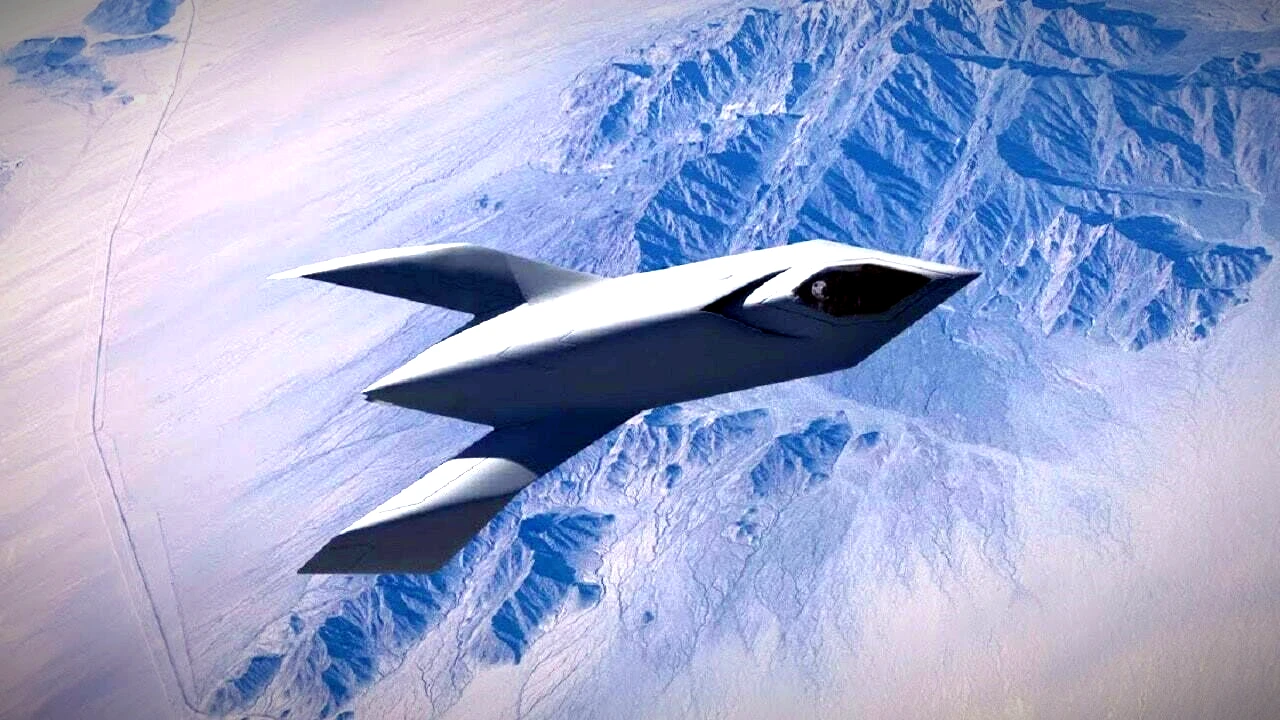
You Can Visit the YF-118 Bird of Prey Stealth Fighter in Ohio at the National Museum of the U.S. Air Force
As part of our work at 19FortyFive, we regularly visit military museums and restoration facilities to examine aircraft and systems firsthand and speak with the people responsible for maintaining and preserving them.
One such visit took us to the National Museum of the U.S. Air Force last summer, where a small, angular aircraft sits tucked among many more famous platforms: the Boeing YF-118G Bird of Prey. We put quite a few pictures from the visit into this article.
And the crazy thing is, the YF-118G is suspended right above the F-22 Raptor stealth fighter.

YF-118G. Image taken by Harry J. Kazianis for 19FortyFive.
Most people don’t even know it’s there.
At first glance, the aircraft looks strange. It has faceted surfaces and an odd canopy, and its proportions don’t resemble any operational U.S. aircraft. But that impression doesn’t change the fact that this is one of the most consequential experimental aircraft of the 1990s because of what its design elements eventually enabled.
As U.S operations now look to a future combat environment defined by stealthy unmanned systems for everything from surveillance to autonomous targeting, the lineage of these platforms is gaining new relevance. In many cases, they can be traced back to experimental programs like the YG-118G. In particular, Boeing’s later work on Boeing X-45, which demonstrated autonomous strike capability in the early 200s, was informed by the experimental craft.
The YF-118G was never intended to enter service, but its testing to make stealth technology accessible and scalable helped lay the groundwork for the systems now shaping modern warfare.
The Origins of the “Bird of Prey”
The YF-118G “Bird of Prey” was developed during an interesting period in U.S. defense planning.
The Cold War had ended, but the Pentagon was still absorbing the lessons of expensive and complex stealth programs like the F-117 Nighthawk and the then-in-progress F-22 Raptor program.
Both had demonstrated the value of using low-observable aircraft in combat, but the Pentagon was well aware of the cost.
In response, the U.S. Air Force began exploring whether stealth could be developed more efficiently, and the YF-118G was part of that effort.
Developed in the early 1990s by McDonnell Douglas, which merged with Boeing in 1997, the aircraft was conceived as a low-cost technology demonstrator and not a prototype for eventual production.
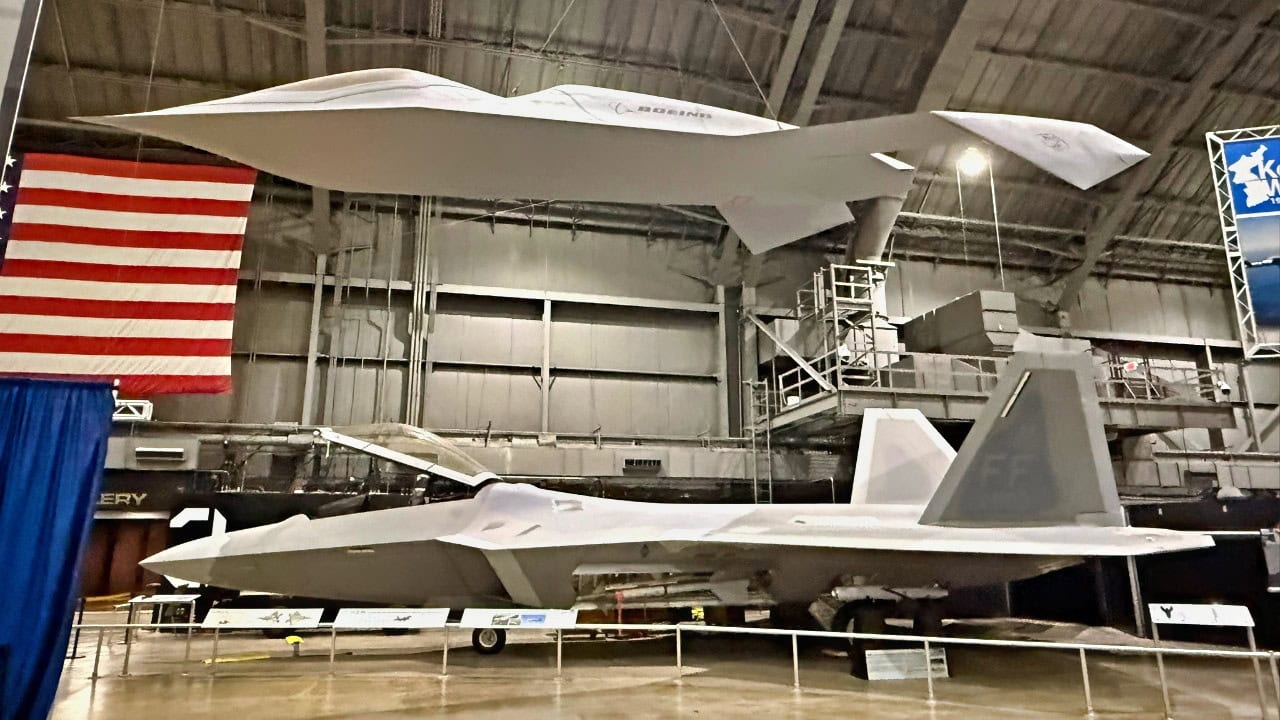
YF-118G. Image taken by Harry J. Kazianis for 19FortyFive.
The program was interesting from the beginning, being run as a classified “black program” until its public unveiling in 2002. It had a remarkably small team behind it, too, of just around 40 people.
According to Boeing, the total program cost was approximately $67 million, a fraction of what was being spent on other stealth aircraft at the time.
After all, the team wasn’t developing a combat aircraft but testing whether stealth shaping and manufacturing processes could be simplified and made more affordable.
That meant working outside the traditional acquisition system, rapidly iterating prototypes and changing methods without being burdened by the bureaucracy of developing an entire system.
The first flight took place in 1996, with testing continuing through 1999. During that time, the aircraft conducted a number of flights, with most sources claiming 38, but it generated disproportionate insight into low-observable design. In many ways, the project was more beneficial precisely because it was not a traditional aircraft development program.
What Made It Unique
The YF-118G’s odd design was intentional. It was never designed to be conventional in any way. It featured angulate geometry that was optimized to reduce radar cross-section using shaping rather than relying too heavily on expensive radar-absorbent materials (RAM), which had driven up costs in earlier stealth programs.
That method was built on lessons learned from the F-117, which was also fairly unique in its looks, but the program aimed to refine them as much as possible.
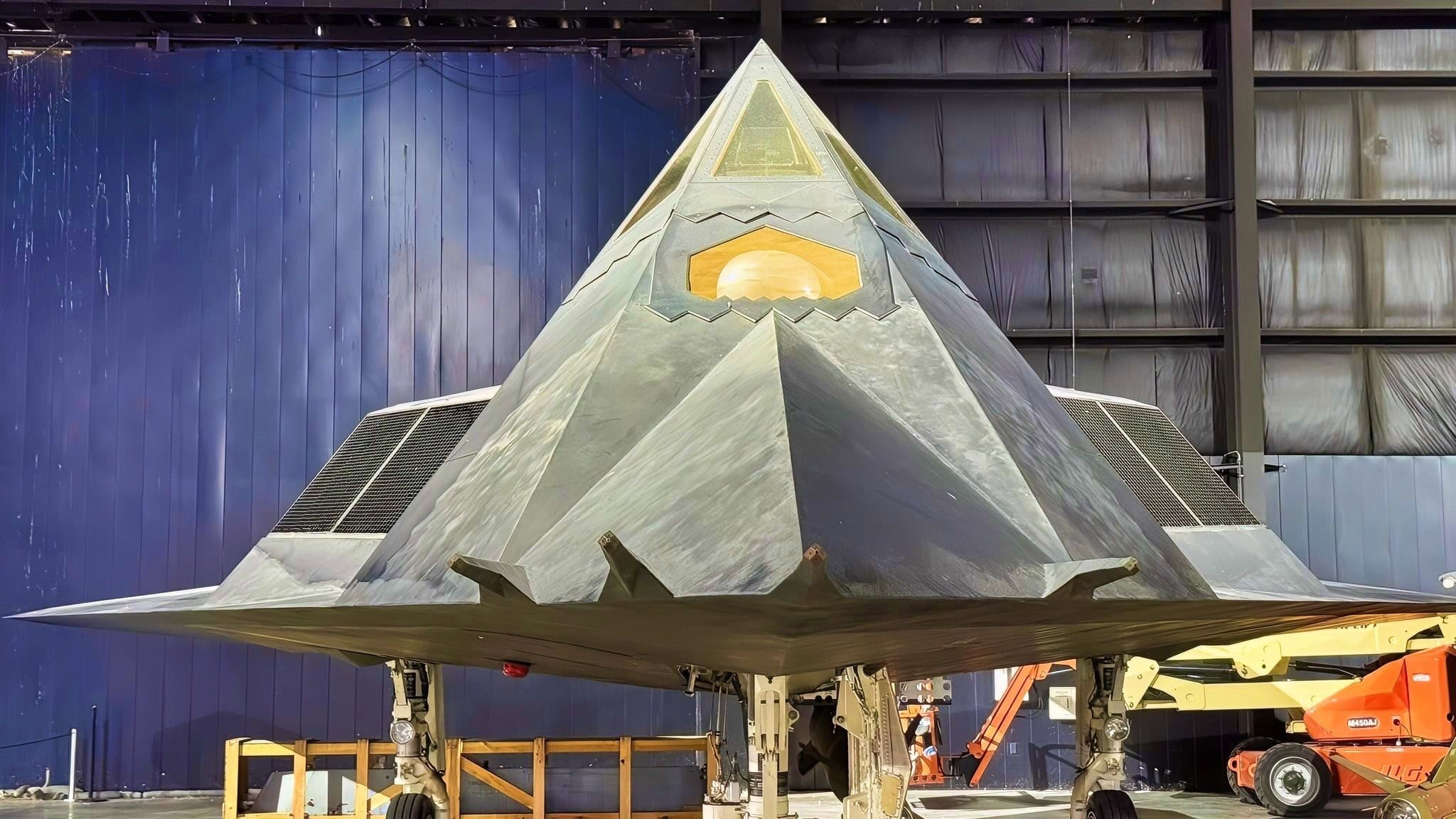
F-117 Nighthawk Stealth Fighter Harry Kazianis Photo from the U.S. Air Force Museum back in July of 2025.
The Bird of Prey explored whether shaping, when perfected, could have a similar effect as using the most advanced RAM at the time. Beyond its shape, though, the aircraft was small and lightweight, powered by a single turbofan engine. It featured a highly unusual canopy integrated into the fuselage, and the air intakes were also designed to minimize radar visibility.
Importantly, the program also utilized commercial, off-the-shelf components wherever possible – a measure not designed to improve its stealthiness per se, but to reduce the overall cost of building and developing it. The aim was to prove that stealth aircraft did not need to rely on bespoke and expensive subsystems.
This was also not an airmed aircraft, nor did it carry avionics. Engineers used it to test the aircraft’s aerodynamic performance and identify its handling characteristics at such extreme angles on its exterior.
Throughout the flight test program, engineers evaluated how well these approaches could replicate the low-observable characteristics of some of the most advanced and expensive aircraft of the era. And in the end, they built an impressive proof of concept, demonstrating that stealth could be achieved without the same level of cost and complexity seen in earlier programs. That finding would prove critical as the Pentagon began to explore a broader range of stealthy systems.
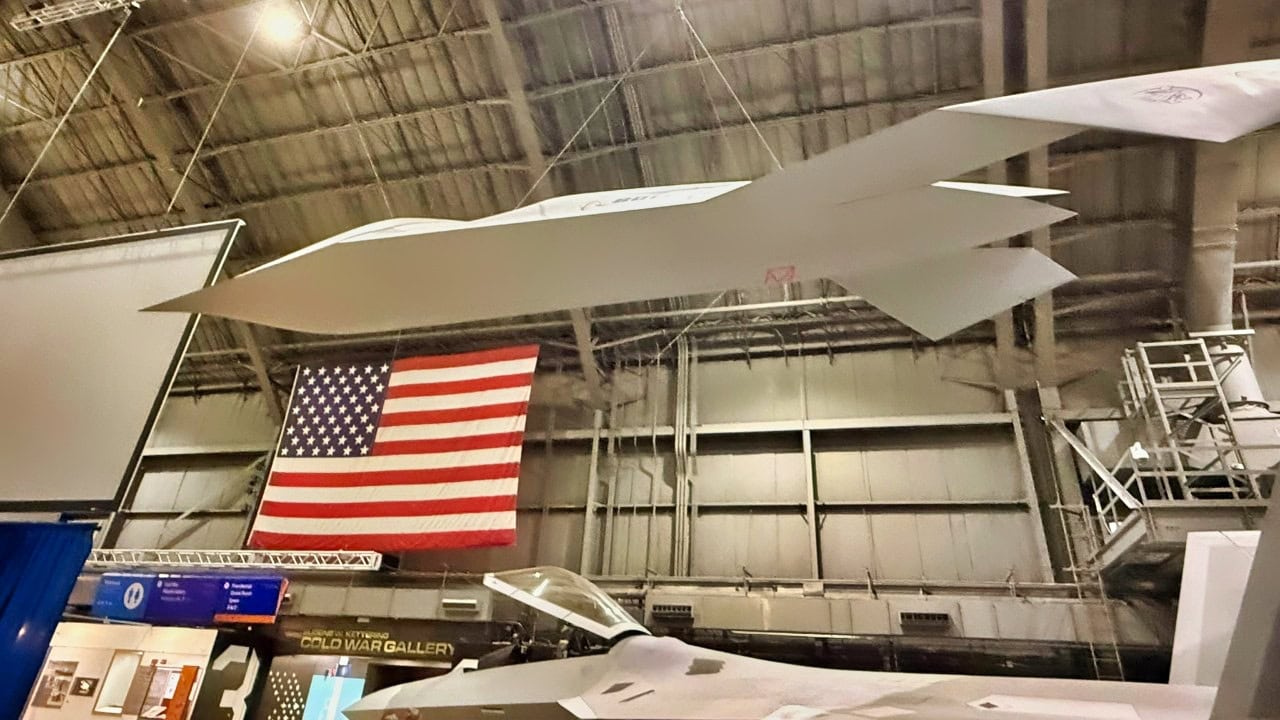
YF-118G. Image taken by Harry J. Kazianis for 19FortyFive.
From Bird of Prey to X-45
While the YF-118G did not lead to a production aircraft, its influence is clearly seen in the aircraft that followed.
After the 1997 merger that brought McDonnell Douglas into Boeing, the company applied many of the lessons from the Bird of Prey to its work on unmanned systems.
The most direct successor was the Boeing X-5, developed in partnership with DARPA and the U.S. Air Force.
The X-45 first flew in 2002 and was designed to demonstrate autonomous strike capabilities. It was a different kind of aircraft, but it baked in many lessons from the Bird of Prey project, incorporating low-observable shaping principles refined by the YF-118G program. It also built in an emphasis on cost control and rapid development/iteration.
During testing, the X-45 demonstrated capabilities that were unprecedented at the time. In one series of trials, it successfully conducted simulated strike missions and coordinated operations between multiple unmanned aircraft.
Those developments marked a turning point, because instead of focusing solely on manned stealth platforms, the Pentagon was now considering how low-observable technology could be applied to unmanned systems, thereby creating entirely new forms of warfare.
The X-45 program was, however, eventually canceled – but the vision didn’t die. It was replaced by Navy-led efforts such as the X-47B, which demonstrated carrier-based autonomous operations, including arrested landings and aerial refueling.
The YF-118G was the first step, proving that stealth could be simplified, and the X-45 and X-47B then applied those lessons to entirely new mission sets. And today, those principles are being incorporated into next-generation fighter jet systems under the Next Generation Air Dominance (NGAD) and the F/AXX programs.
The Real Programs Informed by the Bird of Prey
The Bird of Prey has directly informed the concepts for the Collaborative Combat Aircraft (CCA) being developed to fly alongside NGAD and F/A-XX platforms.
The systems are being designed around the same core principle first tested by the YF-118G: that stealth can be achieved through shaping and cost-controlled procurement and manufacturing, rather than exclusively through expensive materials.
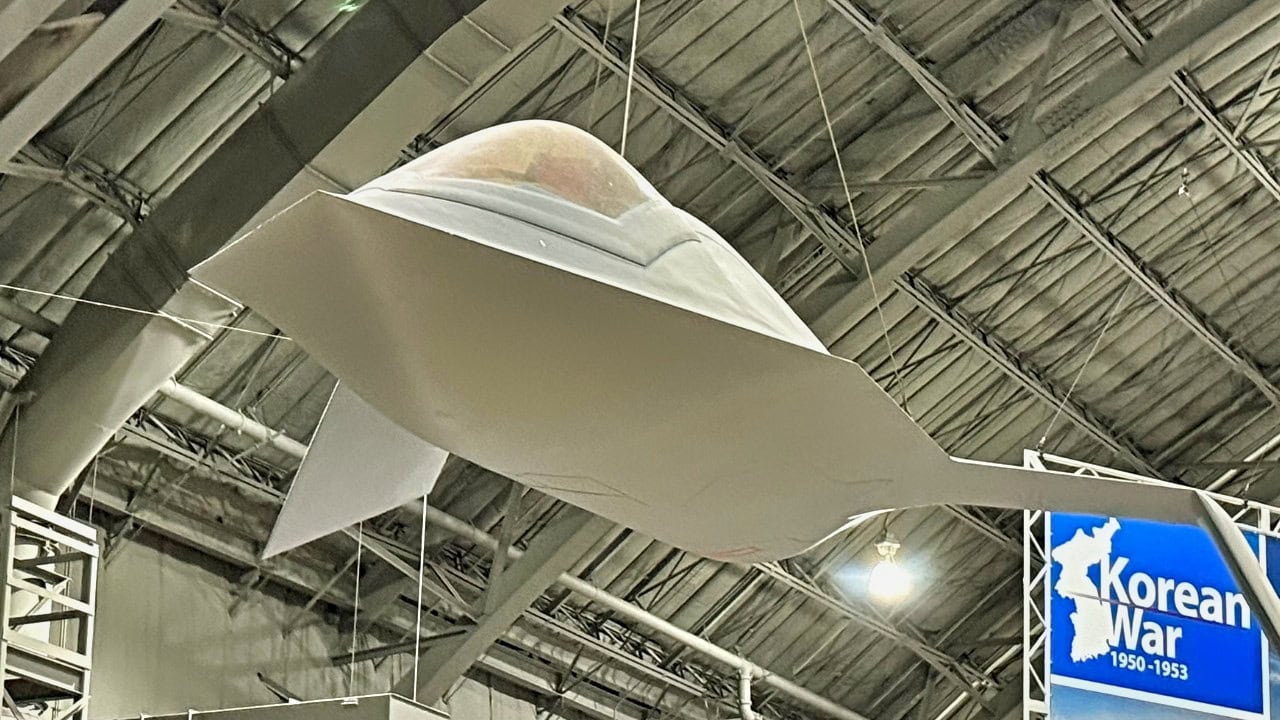
YF-118G. Image taken by Harry J. Kazianis for 19FortyFive.
The U.S. Air Force has already begun showcasing early Collaborative Combat Aircraft concepts, with a prototype scheduled for unveiling in the future.
MORE – The A-12 Avenger II Stealth Bomber Almost Flew From Aircraft Carriers
About the Author: Jack Buckby
Jack Buckby is a British researcher and analyst specialising in defence and national security, based in New York. His work focuses on military capability, procurement, and strategic competition, producing and editing analysis for policy and defence audiences. He brings extensive editorial experience, with a career output spanning over 1,000 articles at 19FortyFive and National Security Journal, and has previously authored books and papers on extremism and deradicalization.