
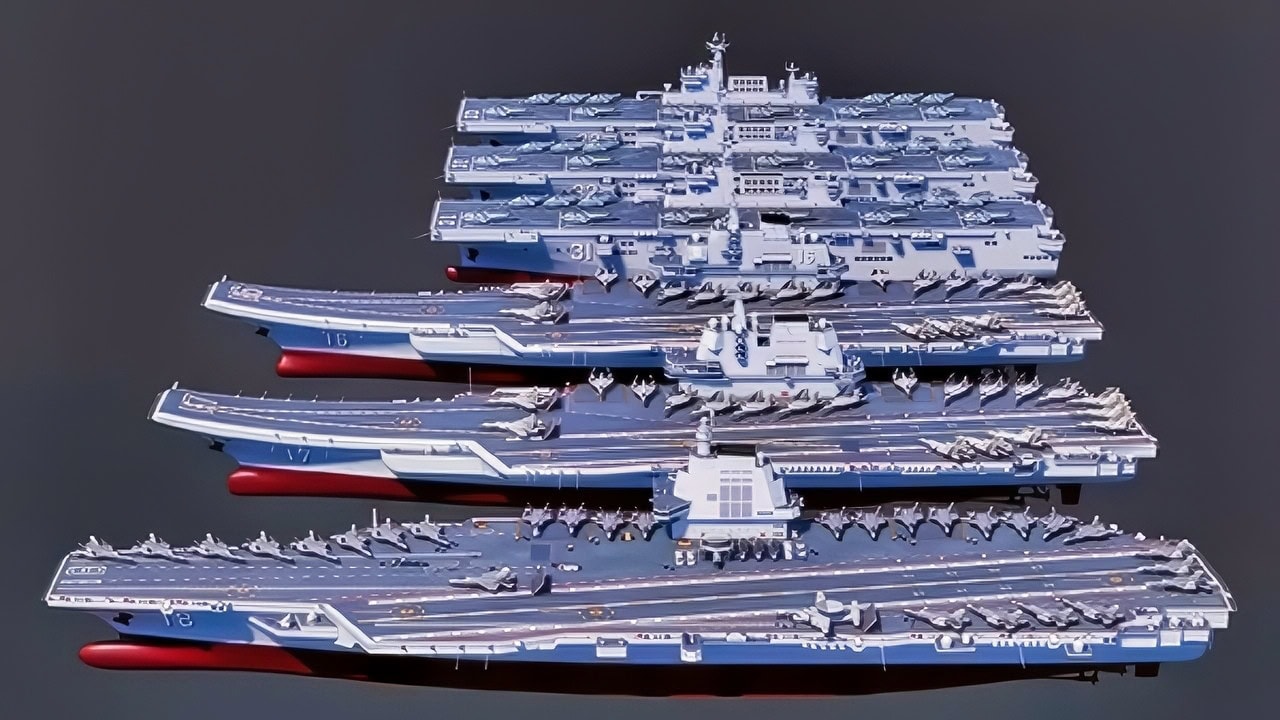
China has remained relatively quiet during Operation Epic Fury. Beijing hasn’t issued any loud threats, limiting itself to calling for a ceasefire and peace process, which is finally underway. But don’t assume Chinese President Xi Jinping is ignoring the realities on the ground. He likely receives countless briefings from his generals in the People’s Liberation Army Air Force (PLAAF) and from intelligence analysts.
The First Revolution in Military Affairs
The last time China was captivated by U.S. performance in a war was after Operation Desert Storm in 1991. After that war, China launched a modernization effort called the Revolution in Military Affairs. This was inspired by the U.S. Air Force’s use of precision-guided munitions. The impressive combination of stealth and conventional bombers with air-to-surface missiles that destroyed Saddam Hussein’s military infrastructure and partly took out his air force in just a few days was enough for the Chinese to decide they must elevate the PLAAF.
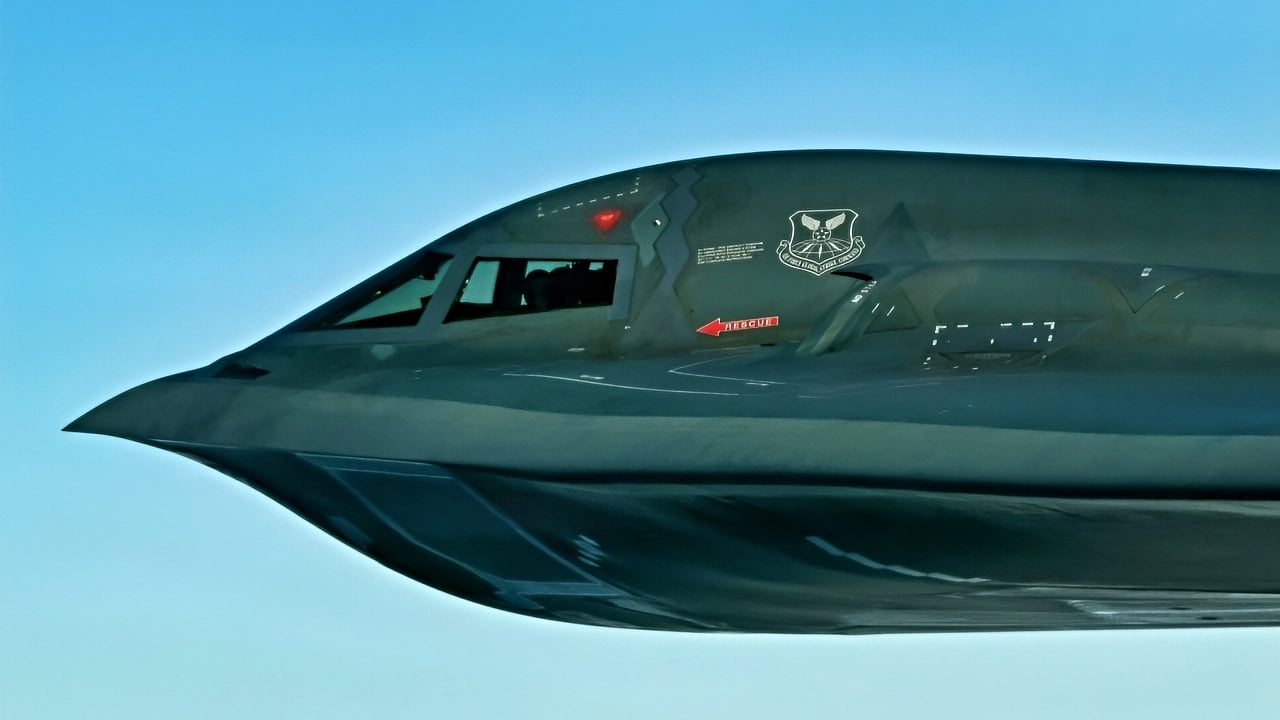
A U.S. Air Force B-2 Spirit conducts an integrated maritime strike training exercise with U.S. Navy F-35C Lightning II and F/A-18E Super Hornets from Carrier Air Wing Eleven (CVW-11) off the coast of California, on Feb. 10-11, 2026. Practicing innovative methods to employ and integrate strategic bombers like the B-2 with Navy carrier strike groups enhances combat capabilities through synchronized, integrated power projection. (U.S. Navy photo by Katie Archibald)
What Does the American Effort Against Iran Show?
With the war in Iran suspended by a tenuous ceasefire, we can observe how China is responding to the U.S. Air Force’s actions. First, the Americans launched everything they had against Iran in another display of shock and awe.
At least 11,000 targets were reportedly hit, many by Air Force fighters and bombers.
No American Pilot Has Died
The Americans haven’t lost any pilots permanently to downed aircraft, although two had to be rescued in a daring mission by U.S. special operations forces after an F-15E Strike Eagle was shot down over Iran.
The United States lost other planes to friendly fire from a Kuwaiti fighter that mistakenly took out three F-15Es. So, the Americans had to deal with fighter jet losses.
Blow Up American Airplanes on the Ground
The United States also endured damaged and destroyed support airplanes, including several KC-135 tankers and an E-3 Sentry AWACS airborne command center hit on the ground by Iranian missile fire.
This is where the Chinese may have discovered a weak point in U.S. armor.
In the Indo-Pacific, U.S. installations on Guam and in Japan lack sufficient hardened bunkers and reinforced underground facilities to protect aircraft against bombs and missiles. China might conclude that a saturation strike with projectiles and drones could destroy U.S. aircraft on the ground during a conflict.
MANPADS Have Been Effective
China also might learn from Iran’s use of shoulder-fired anti-aircraft missiles. Such systems may have shot down the F-15E. The Chinese could plan to use older anti-aircraft guns to target low-flying U.S. aircraft during a potential future war. The U.S. Navy almost lost an F/A-18E/F Super Hornet to a shoulder-fired missile.
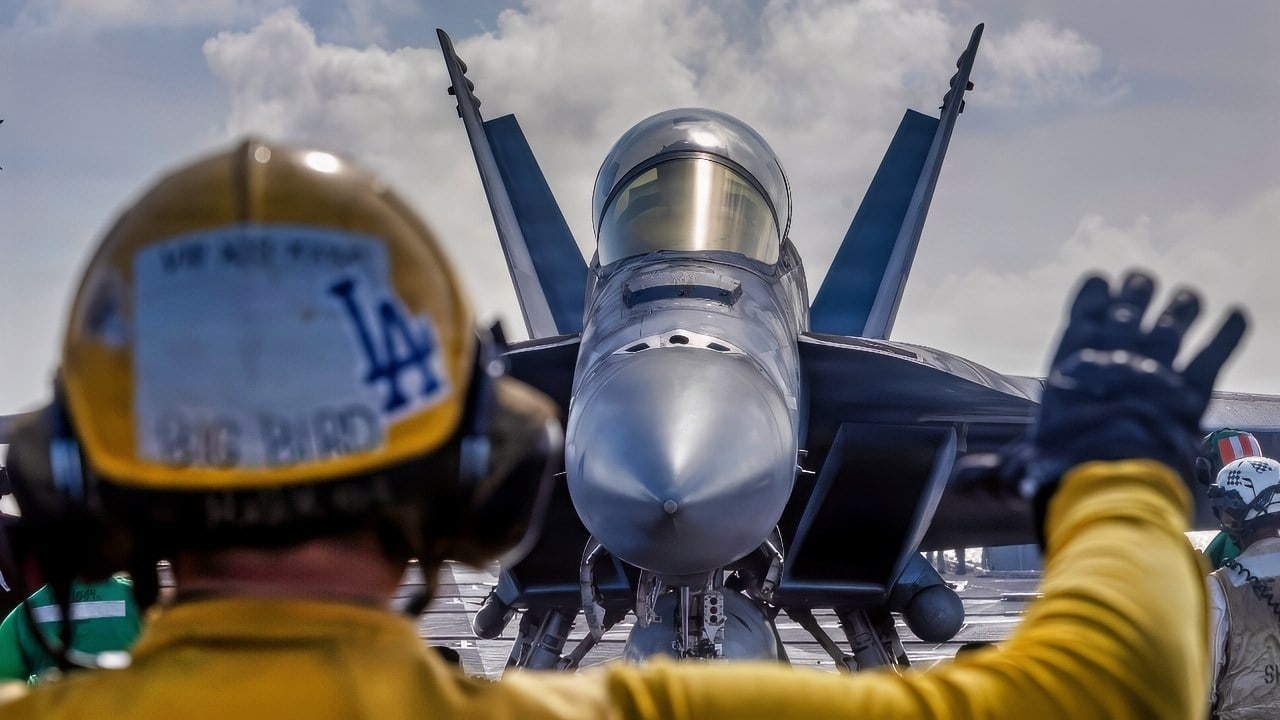
U.S. Navy Aviation Boatswain’s Mate (Handling) 2nd Class Michael Cordova directs an F/A-18E Super Hornet, attached to Strike Fighter Squadron (VFA) 14, on the flight deck of Nimitz-class aircraft carrier USS Abraham Lincoln (CVN 72) on Jan. 10, 2026. The Abraham Lincoln Carrier Strike Group is underway conducting routine operations in the U.S. 7th Fleet area of operations. Units assigned to 7th Fleet conduct regular Indo-Pacific patrols to deter aggression, strengthen alliances and partnerships, and advance peace through strength. (U.S. Navy photo by Mass Communication Specialist Seaman Daniel Kimmelman)
How to Counteract the A-10 Warthog?
The Chinese might have been surprised by the resurgence of the A-10 Warthog. A-10s played a crucial role in close air support during the extraction of the downed F-15E crew and also destroyed multiple Iranian Navy ships and boats.
I once recommended retiring the A-10 because it is vulnerable to being shot down and expensive to maintain. Indeed, one A-10 was downed, and the pilot ejected safely during Operation Epic Fury—but the strike airplane has proven to be a pleasant surprise.
China may have assumed the A-10 was close to being phased out, and thus might lack plans to counter it.

A U.S. Air Force A-10 Warthog from the Air National Guard Air Force Reserve Test Center flies during exercise Sentry Aloha 24-2 June 6, 2024, above the island of Hawaii. This iteration of the exercise involves approximately 1,060 participants and more than 40 aircraft from nine states, which operated out of Joint Base Pearl Harbor-Hickam, Marine Corps Base Hawaii, and Onizuka Kona International Airport, Keāhole. The Hawaii Air National Guard’s 154th Wing has hosted the exercise for more than 20 years to provide tailored, cost-effective and realistic combat training for total-force Airmen and other Department of Defense services. (U.S. Air National Guard photo by Tech. Sgt. John Linzmeier)
U.S. Air Force Stealthiness Rules
China has also recognized that U.S. airplanes remain as stealthy as ever. F-22s and F-35s have performed remarkably well, with none shot down. The F-35’s electronic warfare capabilities have stood out.
The F-22 has demonstrated its ability to serve as a multi-role ground-attack aircraft.
These roles are important for escorting bombers. As a result, China will continue to focus on improving its stealth technology.
The Bunker Busting Bomb Is a Critical Weapon
The Americans also effectively used bunker-busting bombs. Massive Ordnance Penetrators targeted Iran, though they did not succeed in taking out all of the country’s underground missile facilities.
China might have observed that the acclaimed Iranian “Mosaic Defense Strategy” has only been partly successful.
This strategy involves allowing layered air defenses to operate with a high degree of autonomy, without direct orders from above, in a fragmented and decentralized manner. China’s air defense approach may continue to differ from Iran’s.
China could also build additional underground facilities to safeguard its critical military infrastructure, similar to Iran’s approach. In what I call the “kinetic missile fight,” the side with the best protection against projectiles could secure an early victory.
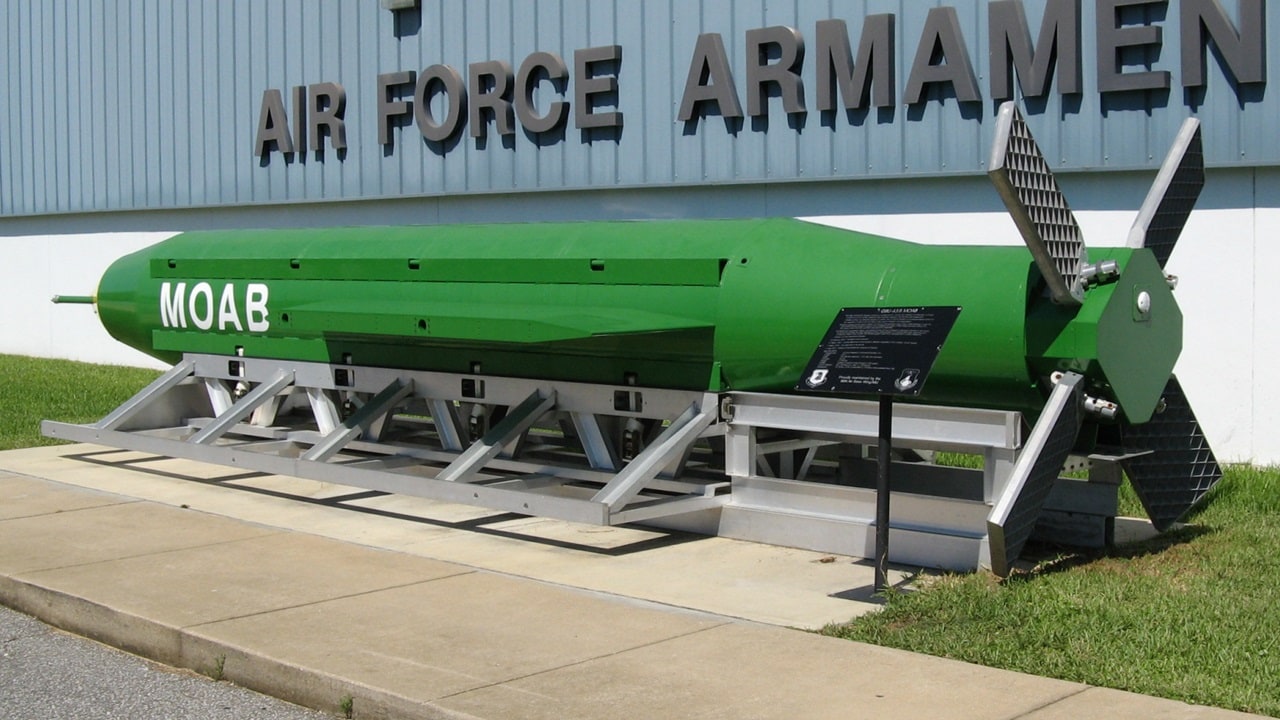
MOAB glide bomb, USAF Armaments Museum, Eglin AFB, Florida / 2007
No Dogfights to Compare Notes
The PLAAF observed that U.S. air superiority and successful ground strikes against Iranian aircraft meant there was no true dogfight during Operation Epic Fury. The Chinese likely hoped to see how the F-35 and F-22 would perform in aerial combat.
JDAMS Are Cheaper and More Plentiful
The PLAAF has learned that the Americans decided to switch from high-end Tomahawk missiles, which are expensive and limited in number, to cheaper Joint Direct Attack Munition guided bombs that can cost as little as $80,000 each.
Chinese intelligence will be busy analyzing all these outcomes. Unfortunately, this ceasefire is fragile, and fighting might resume if negotiations fail. The United States could continue to face shortages of missiles and interceptors, and the U.S. defense industrial base might struggle to supply the Air Force with ordnance.
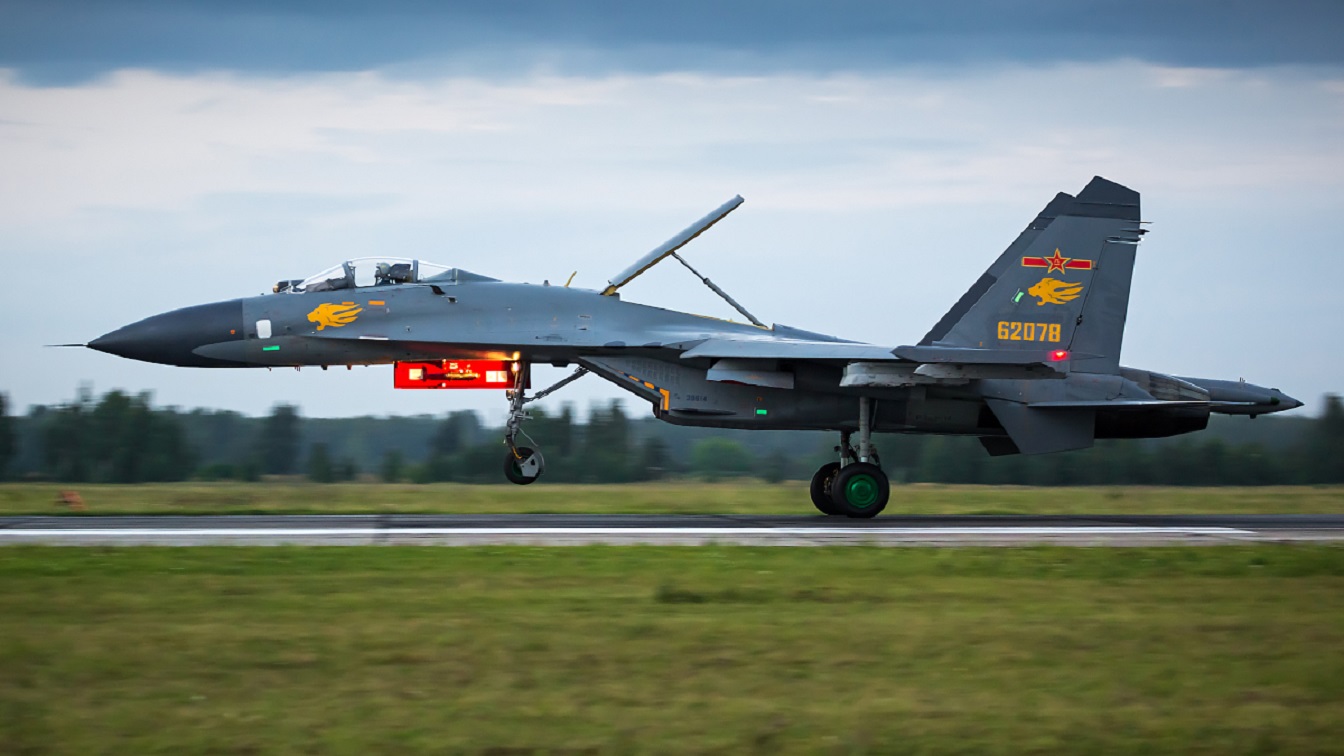
China J-11 Fighter. Image Credit: Creative Commons.
However, China has its own homework to do. The main conclusion is that U.S. forces performed exceptionally well during Operation Epic Fury and that China needs to continue modernization efforts if it hopes to catch up with U.S. capabilities.
About the Author: Brent M. Eastwood
Author of now over 3,500 articles on defense issues, Brent M. Eastwood, PhD, is the author of Don’t Turn Your Back On the World: A Conservative Foreign Policy and Humans, Machines, and Data: Future Trends in Warfare, plus two other books. Brent was the founder and CEO of a tech firm that predicted world events using artificial intelligence. He served as a legislative fellow for US Senator Tim Scott and advised the senator on defense and foreign policy issues. He has taught at American University, George Washington University, and George Mason University. Brent is a former US Army Infantry officer. He can be followed on X @BMEastwood.