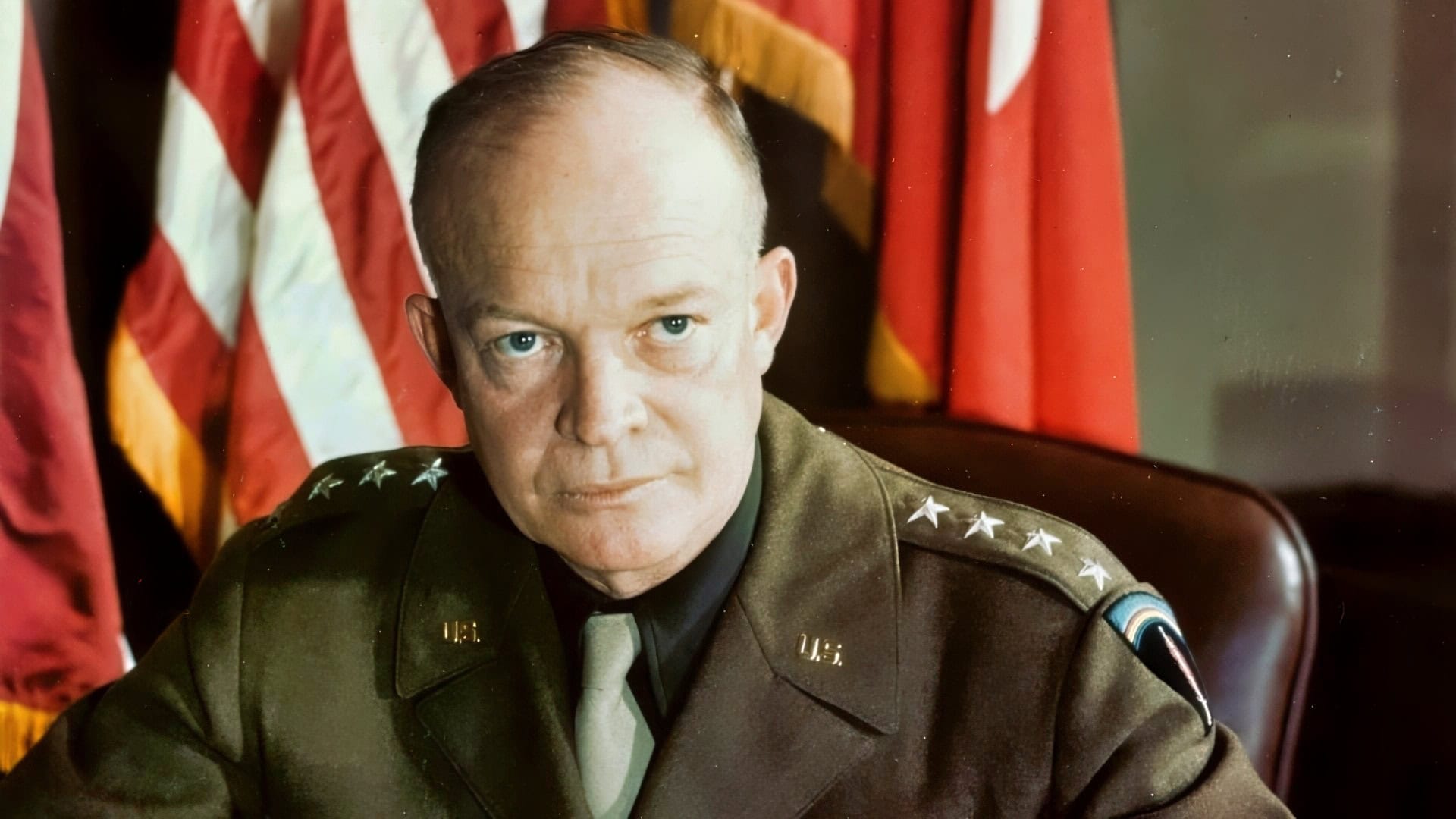
General and President Dwight Eisenhower commanded the largest invasion in human history and watched thousands of men die on the beaches he sent them to. He spent the rest of his life making sure it never happened again.
Quote of the Day by Dwight D. Eisenhower
“When people speak to you about a preventive war, you tell them to go and fight it. After my experience, I have come to hate war.” – Dwight D. Eisenhower
Dwight D. Eisenhower holds a unique place in American history.
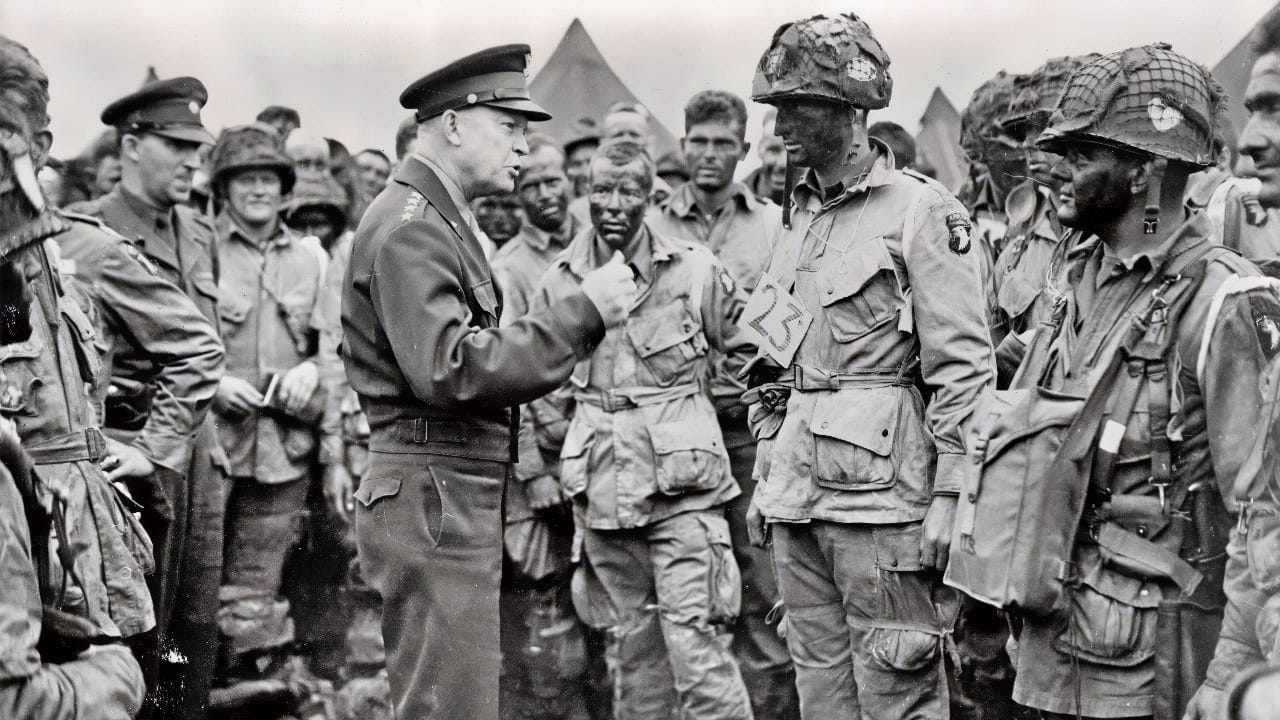
Dwight D. Eisenhower D-Day 1944. Image Credit: Creative Commons.
After overseeing command in the largest war in history, he went on to become President and led the nation during the early stages of the Cold War. His leadership during both periods was instrumental to the survival of the United States.
War was a constant in Eisenhower’s adult life. Whether it was an active conflict or tensions with the Soviet Union, war would remain at the forefront of his mind until the day he died.
Early Life and Career
Eisenhower was born on October 14, 1890, in Denison, Texas, and raised in Abilene, Kansas, in a modest household shaped by strong religious values and limited means. His family instilled a sense of discipline, personal responsibility, and hard work, principles that guided him throughout his life.
Eisenhower showed an early interest in history and military affairs, which eventually led him to seek admission to the United States Military Academy at West Point. Graduating in 1915, he entered the U.S. Army at a time when Europe was already engulfed in war. Although he did not see combat during World War I, Eisenhower’s assignments in training and logistics proved critical to his development, forcing him to think strategically and manage large, complex organizations.
In the interwar years, Eisenhower steadily built a reputation as an exceptional planner and administrator rather than a battlefield tactician.
He served under prominent military leaders such as Douglas MacArthur and worked closely with George C. Marshall, who became one of his most important mentors.
These experiences sharpened Eisenhower’s skills in diplomacy, negotiation, and coordination which would be indispensable to him during World War II. Unlike many ambitious officers, Eisenhower demonstrated an unusual willingness to subordinate personal glory to broader institutional goals, earning the trust of superiors and allies alike.
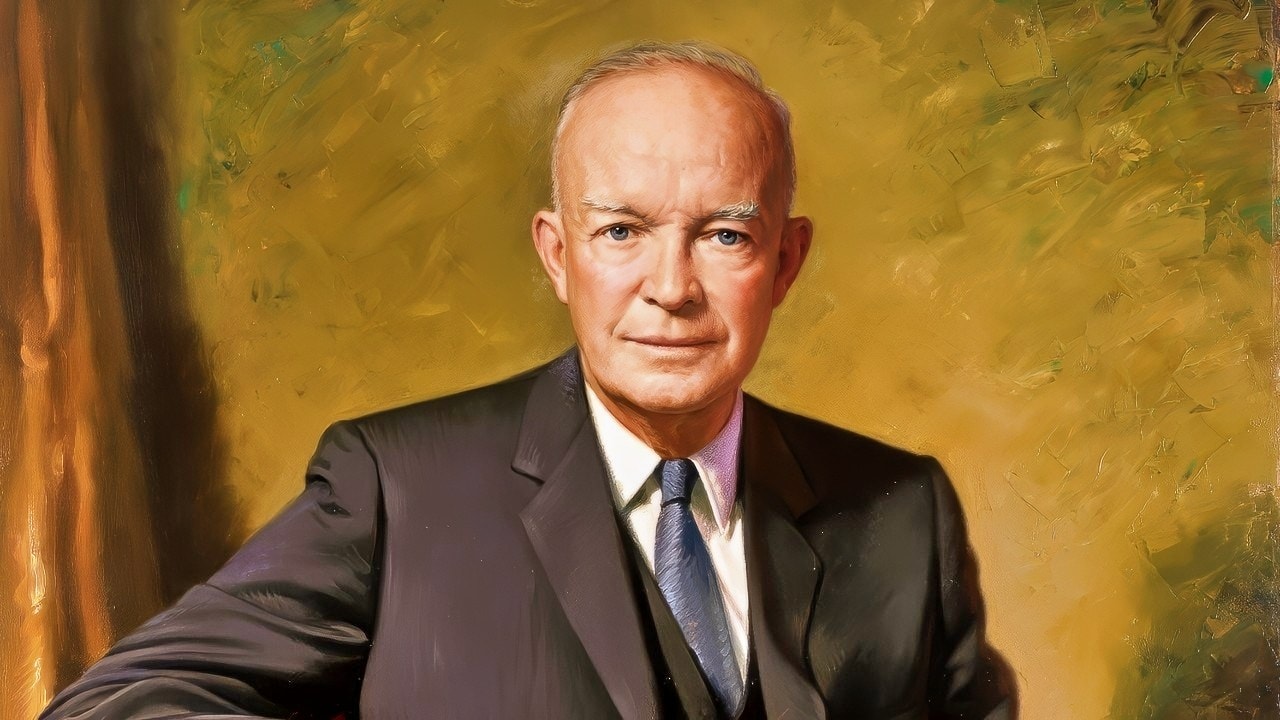
Former General Dwight D. Eisenhower. Image Credit: Creative Commons.
Eisenhower and WWII
When the Second World War began, Eisenhower’s first major test came with Operation Torch, the Allied invasion of North Africa in November 1942.
The campaign did not begin smoothly. American forces suffered its first defeat at the Battle of Kasserine Pass, where German troops exposed weaknesses in U.S. training and leadership. Eisenhower responded decisively by reorganizing command structures, removing ineffective officers, and promoting more competent leaders such as George S. Patton. Rather than allowing early failures to undermine morale, he treated them as learning experiences.
By May 1943, Allied forces had eliminated Axis resistance in North Africa, capturing hundreds of thousands of enemy troops and proving that the coalition could fight effectively.
Following victory in North Africa, Eisenhower oversaw the Allied invasion of Sicily in July 1943. This campaign, while successful, revealed strains within the Allied command, particularly between British General Bernard Montgomery and American General George S. Patton.
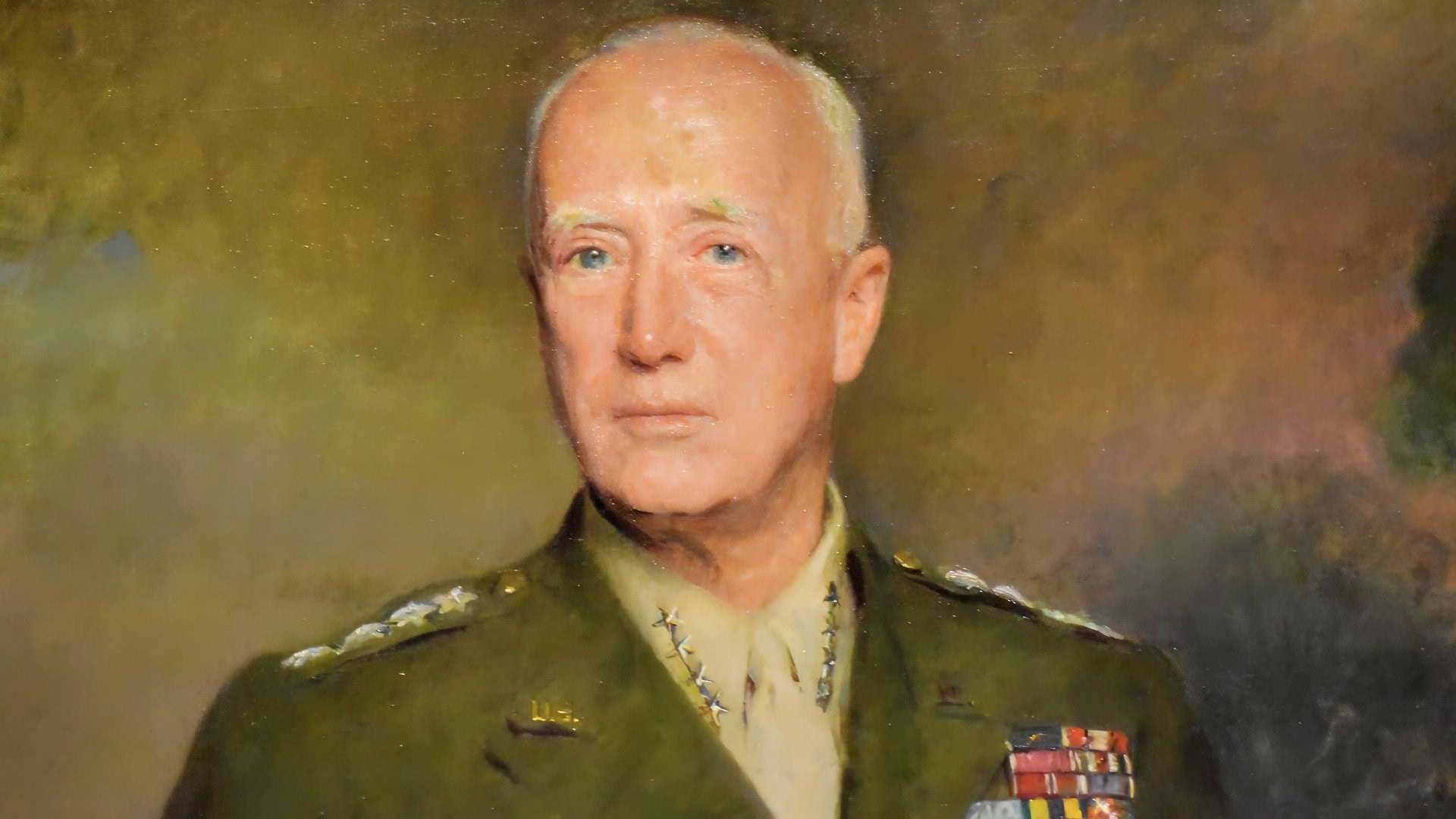
General George Patton at the National Portrait Gallery. Image Taken by 19FortyFive.com in Washington, DC, 1/23/2026 by Dr. Brent M. Eastwood.
Eisenhower’s leadership during this period was critical. He possessed neither Montgomery’s fixation on meticulous planning nor Patton’s flamboyant aggressiveness, but he excelled at managing difficult personalities and keeping them focused on shared objectives.
His decision to discipline Patton after the controversial slapping incidents demonstrated his commitment to both military discipline and political responsibility. The Sicily campaign led directly to the ousting of Mussolini and Italy’s eventual surrender, though German resistance continued.
Promotion to Supreme Commander
In December 1943, Eisenhower was appointed Supreme Allied Commander of the Allied Expeditionary Force, the most important command role of his career. This position placed him in charge of planning and executing Operation Overlord, the invasion of Nazi-occupied Western Europe.
The scale of the operation was enormous, involving millions of troops, vast naval and air forces, and complex logistical preparations.
Eisenhower’s role was to ensure unity of effort among the Allied nations. He had to balance British and American strategic preferences, manage the egos of senior commanders, and work closely with political leaders such as Franklin D. Roosevelt and Winston Churchill.
As Allied forces pushed deeper into Germany in early 1945, Eisenhower continued to focus on coordination and minimizing unnecessary losses.
He supported linking up with advancing Soviet forces rather than racing to capture Berlin. This decision was influenced by both military considerations and political agreements among the Allies.
In May 1945, Germany surrendered unconditionally, ending the war in Europe. Eisenhower’s leadership guided the Allies from the war’s rough start to total victory.
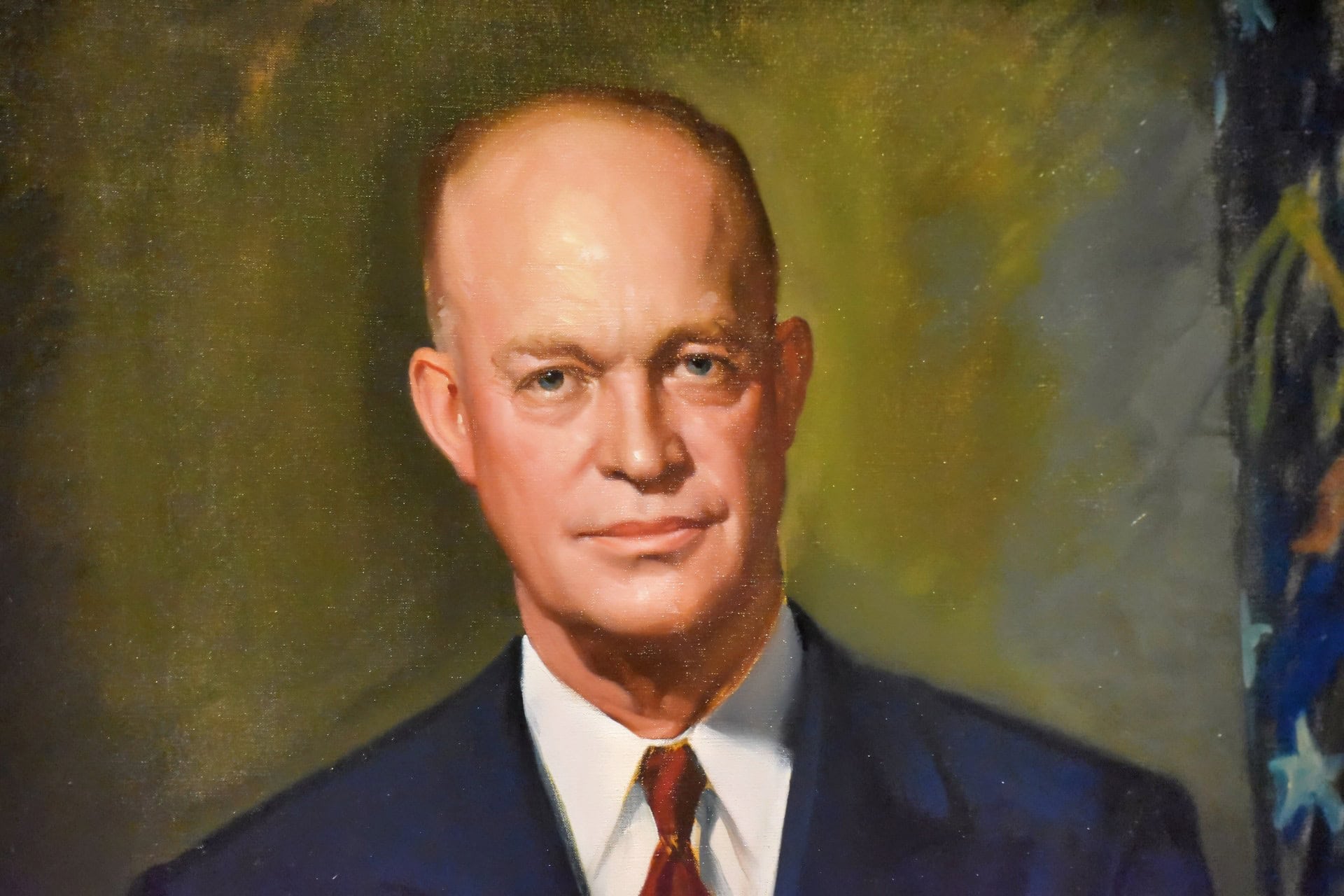
Dwight D. Eisenhower 19FortyFive.com Image. Taken on 1/23/2026 at the National Portrait Gallery in Washington, DC By Dr. Brent M. Eastwood.
“I Like Ike”: Eisenhower as President
In 1953, after serving as NATO Supreme Commander, Eisenhower ran for President of the United States and won by an overwhelming majority.
He pursued a moderate Republican agenda, accepting many of the social welfare programs established under the New Deal rather than dismantling them.
He expanded Social Security, increased the minimum wage, and supported limited federal involvement in housing and education. Eisenhower believed that abrupt change risked social instability, and his policies sought continuity and gradual improvement rather than sweeping reform.
One of Eisenhower’s most significant domestic achievements was the Interstate Highway System, authorized by the Federal-Aid Highway Act of 1956. Viewing a sophisticated highway system as an imperative for national defense, Eisenhower championed what became the largest public works project in American history.
The system reshaped the nation’s economy and geography, facilitating interstate commerce, accelerating suburban growth, and transforming daily life for millions of Americans.
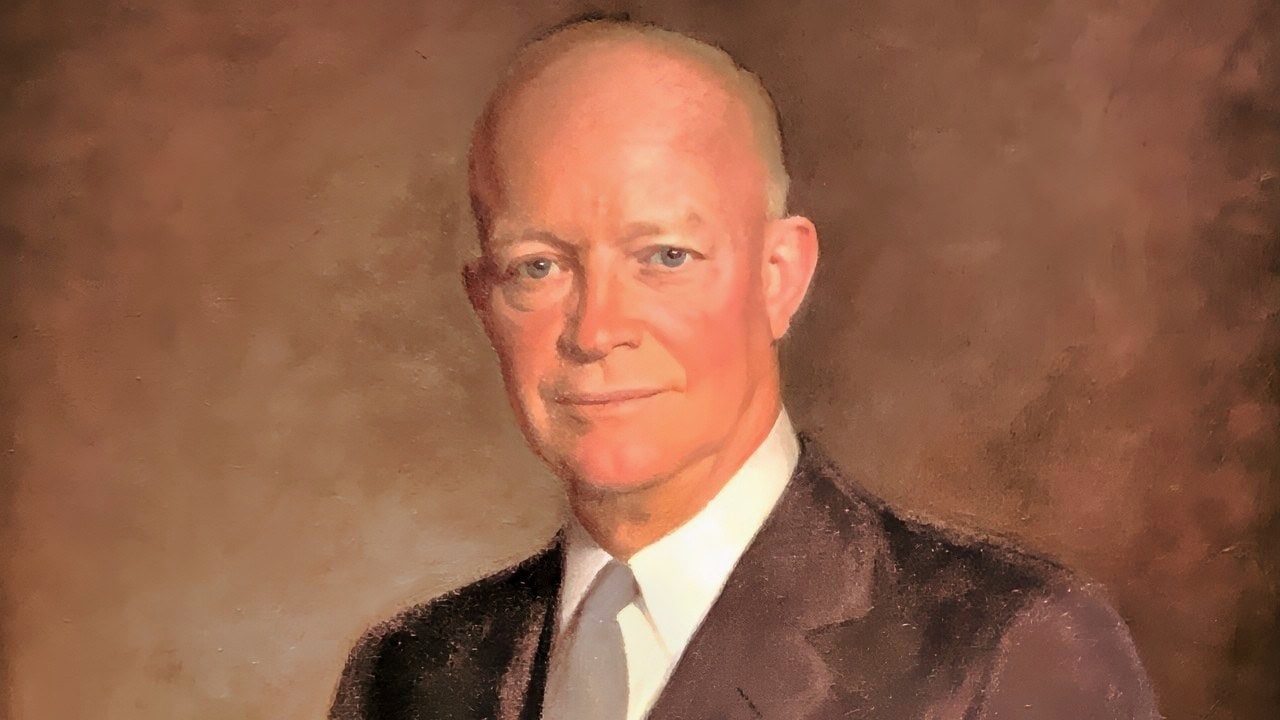
Dwight D. Eisenhower President. Image Credit: Creative Commons.
Ike and the Cold War
Eisenhower’s presidency also unfolded during a critical phase of the Cold War, when the threat of nuclear conflict loomed constantly.
Guided by the principles of George H. Kennan, Eisenhower pursued a strategy of deterrence and containment toward the Soviets. Known as the “New Look,” this approach relied heavily on nuclear weapons and strategic air power to discourage Soviet aggression while controlling defense spending.
Although some advocated for a full-on confrontation with the USSR, Eisenhower was tired of war and wanted to avoid a full-scale conflict by any means necessary.
Eisenhower died in 1969, and despite the high tensions of the Cold War, he managed to avoid engaging the U.S. in any foreign conflicts, leading to a relatively uneventful presidency.
He presided over eight years without any major conflicts despite some close calls, oversaw dramatic economic growth, and left the nation with critical infrastructure and enduring institutional stability.
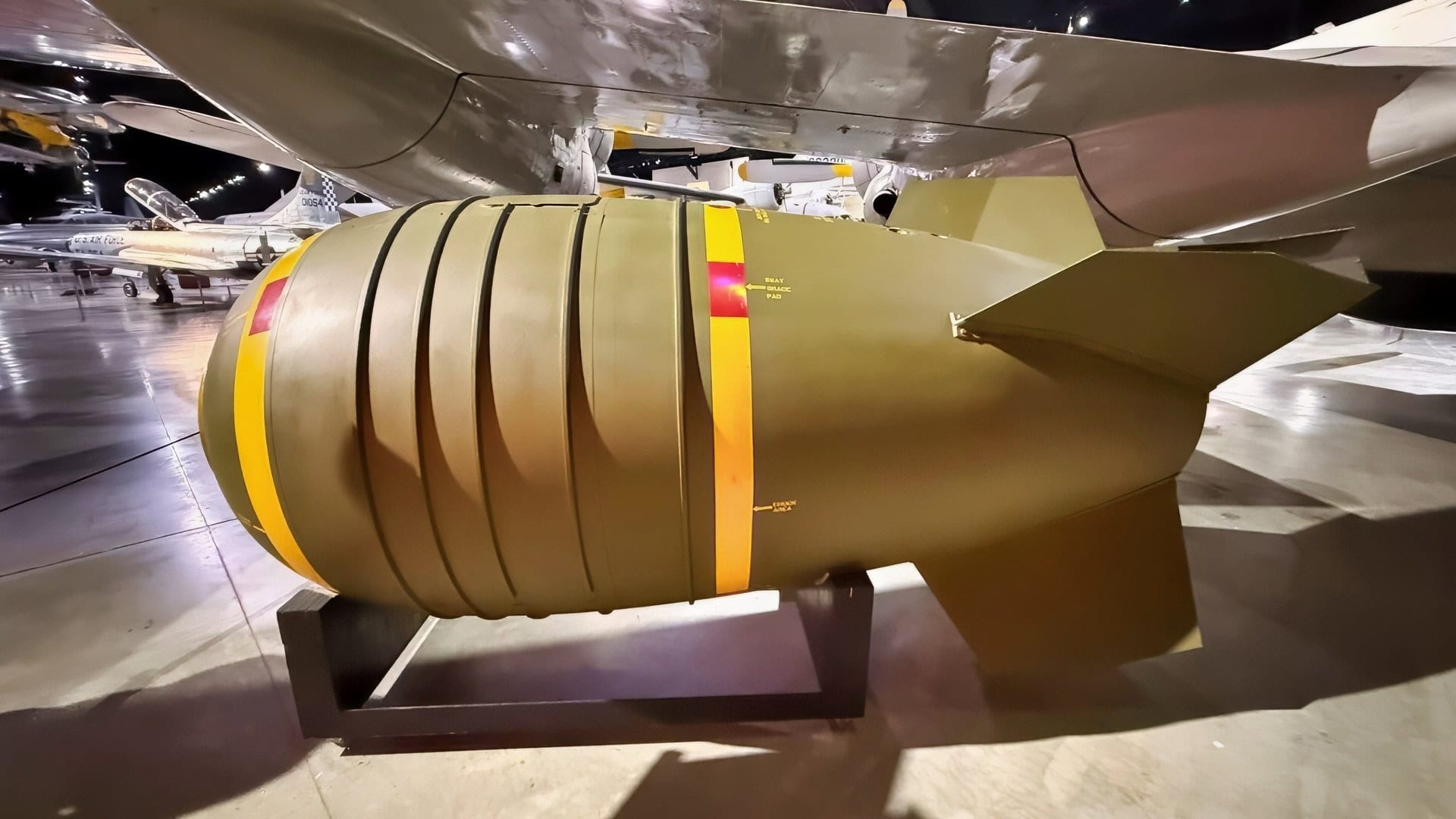
Nuclear Bomber Image Taken at National Museum of the Air Force by 19FortyFive.com
All of these achievements were thanks to the managerial skills he developed in the army, which enabled him to manage large resources effectively.
About the Author: Isaac Seitz
Isaac Seitz, a Defense Columnist, graduated from Patrick Henry College’s Strategic Intelligence and National Security program. He has also studied Russian at Middlebury Language Schools and has worked as an intelligence Analyst in the private sector.