
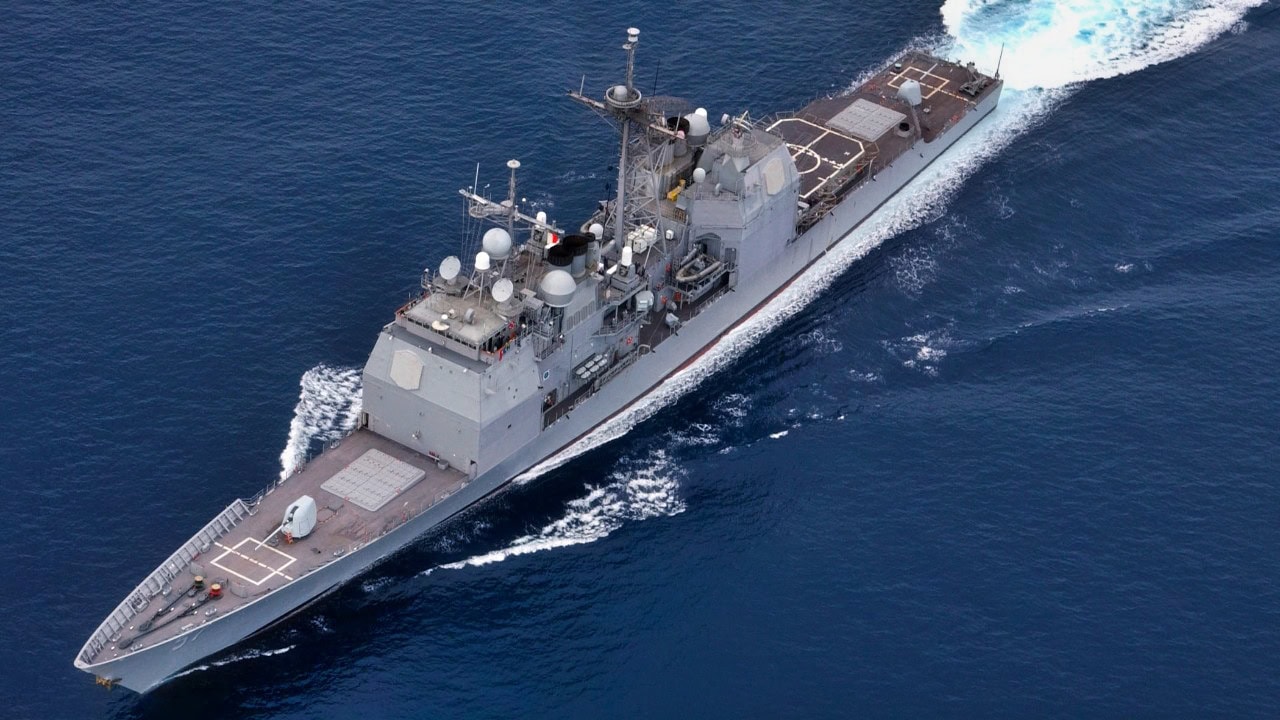
Why Is The U.S. Navy Retiring Its Ticonderoga-Class Cruisers?: The U.S. Navy is retiring its Ticonderoga-class guided-missile cruisers because the 1980s-era ships are worn out and ruinously expensive to maintain — but the fuller story is that Congress forced the Navy to spend billions saving them, the rescue became a fiasco the GAO calls a waste, and the cruisers are being scrapped anyway, some after barely a deployment. These were the most heavily armed surface warships America ever built, 122 missile cells apiece, the air-defense shield of the carrier strike group for four decades. Their end is the clearest case study of how the Navy’s surface fleet grew old, how the fight to keep it going failed, and why America is shedding more missile capacity than it can replace, just as the Pacific demands more.
The Aegis Revolution: How The Ticonderogas Became The Fleet’s Shield
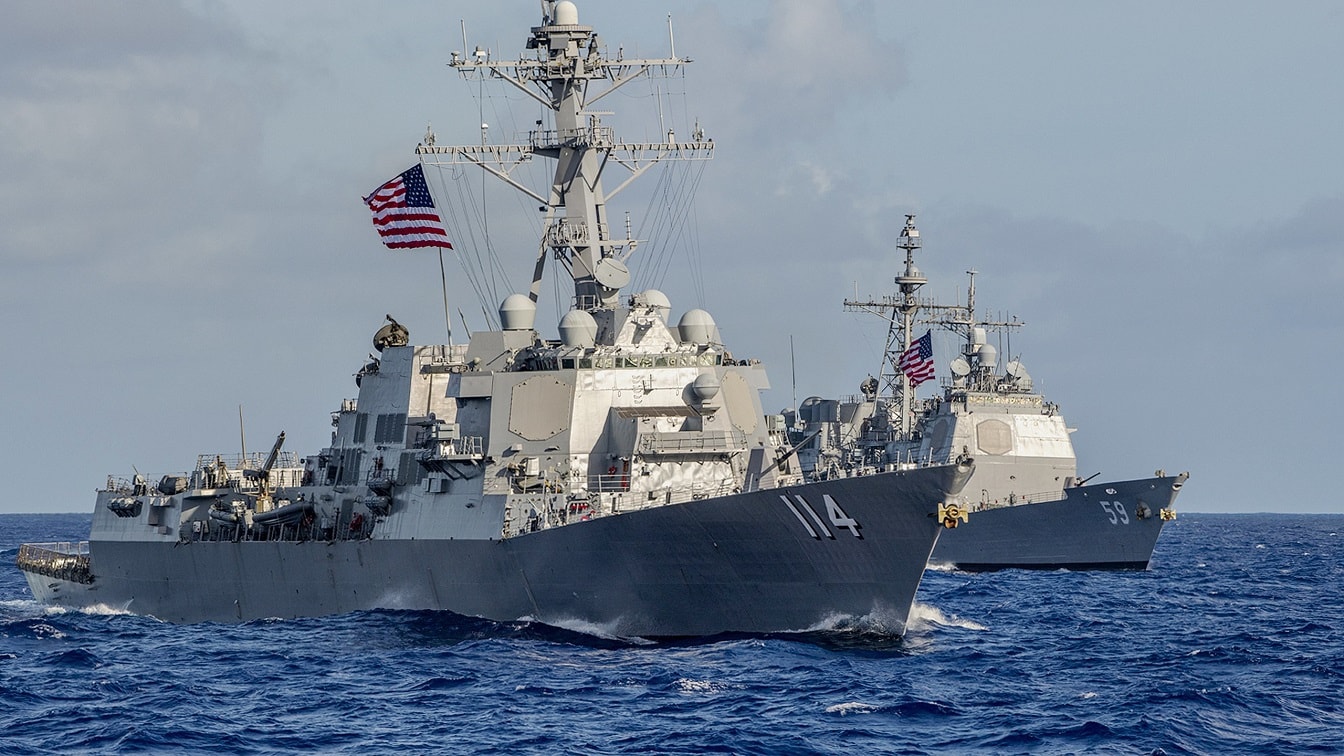
The Arleigh Burke-class guided-missile destroyer USS Ralph Johnson (DDG 114) and the Ticonderoga-class guided-missile cruiser USS Princeton (CG 59) steam in formation during dual carrier operations with the Nimitz and Theodore Roosevelt Carrier Strike Groups (CSG). Dual carrier operations unify the tactical power of two individual CSG, providing fleet commanders with an unmatched, unified credible combat force capable of operating indefinitely. The CSGs are on a scheduled deployments to the Indo-Pacific.
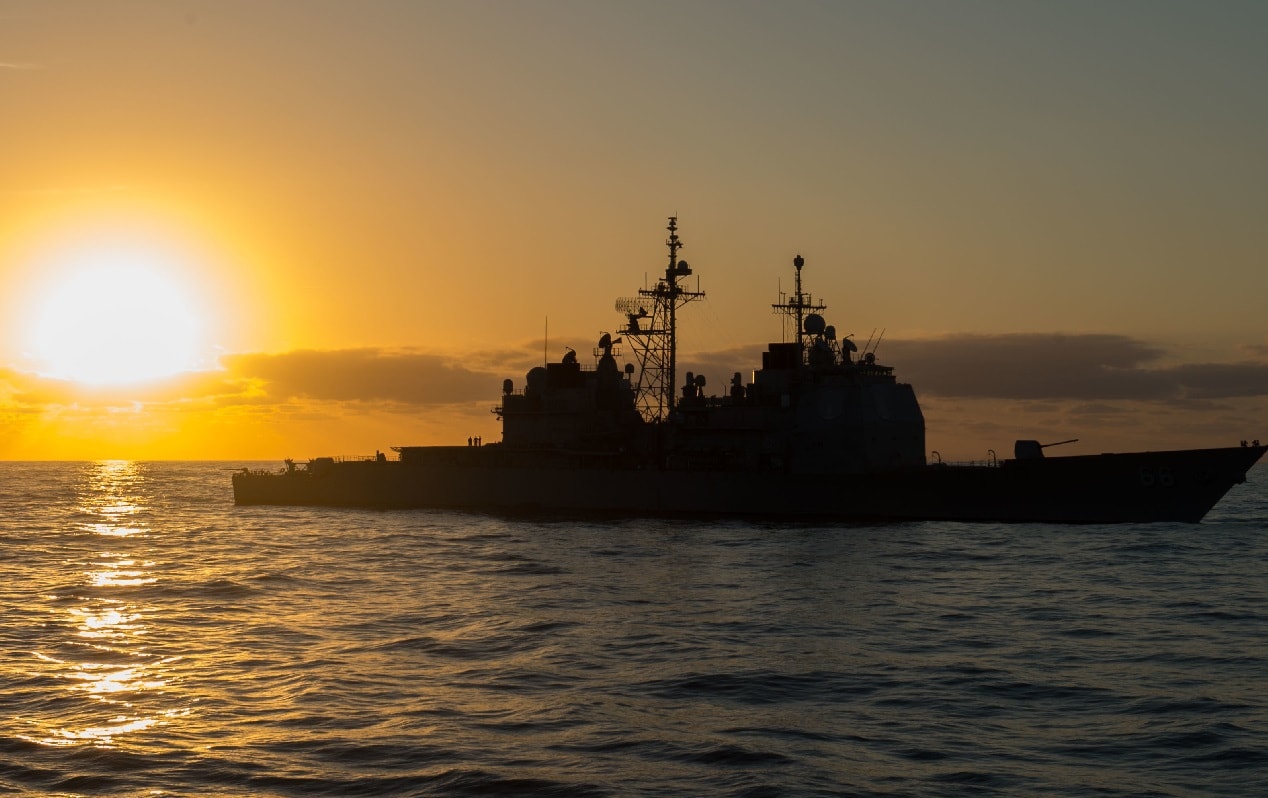
The sun rises over the Ticonderoga-class guided-missile cruiser USS Hue City (CG 66) in the Atlantic Ocean March 28, 2018. Hue City is underway supporting Carrier Strike Group Four Task Force Exercise 18-2. (U.S. Navy photo by Mass Communication Specialist 3rd Class Danny Ray Nuñez Jr.)
The Ticonderogas were born from a technological leap. They were originally ordered as guided-missile destroyers under the designation DDG-47, but the combat system they were built around was revolutionary enough to justify reclassifying them as cruisers before their keels were laid.
That system was Aegis, and the Ticonderogas were the first operational ships to carry it, paired with the powerful AN/SPY-1 phased-array radar. For the first time, a single warship could track and engage dozens of air threats at once, which made the new cruisers the air-defense anchor of the carrier strike group — the ships that would shield the carrier from massed missile and aircraft attack.
The firepower matched the sensors. The lead ship, USS Ticonderoga, entered service in 1983, and 27 were eventually built, the later ships fitted with 122 Mk 41 vertical-launch cells split between forward and aft arrays — the most of any surface combatant in the U.S. fleet.
Those cells could fire Tomahawk land-attack cruise missiles, SM-2 and SM-6 air-defense missiles, and SM-3 ballistic-missile interceptors, making each cruiser a versatile heavy combatant capable of striking targets ashore, defending a fleet from aircraft and missiles, and contributing to ballistic-missile defense.
For most of the past forty years, the Ticonderogas were the Navy’s premier surface warships, and their Tomahawk salvos featured in American campaigns from the 1990s onward. They were designed for a 30-year service life, later extended to 35 as the Navy sought time to field a replacement.
The Retirement: Scrapping The Fleet’s Heaviest Hitters
That replacement never came, and the cruisers are now being retired with no true successor. The Navy has been phasing the class out for years — retiring four in 2024 and seeking to decommission the remaining ships, with its latest shipbuilding plan pushing to retire all remaining Ticonderogas by fiscal 2027. Storied names are already gone: Bunker Hill, Mobile Bay, and Lake Champlain decommissioned in San Diego, joining Cowpens, Vicksburg, Anzio, and Hué City. The cruisers that helped make the Tomahawk a feared weapon are being struck from the register one after another.
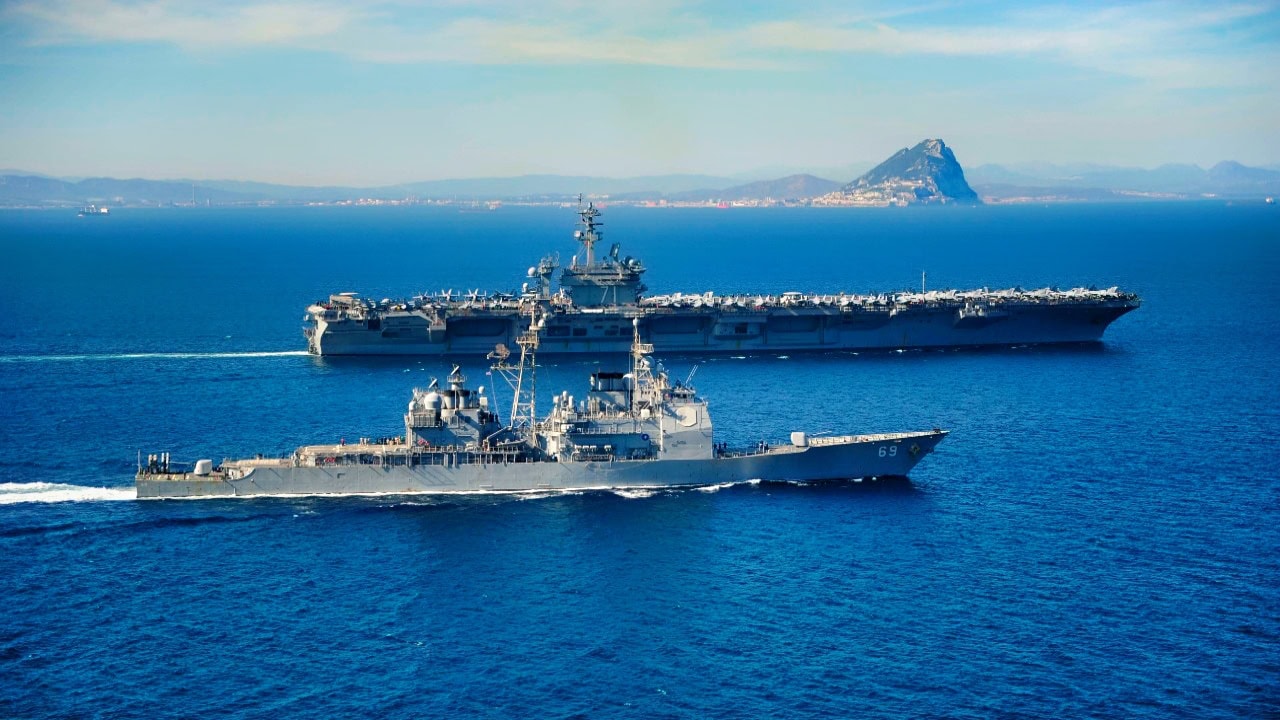
Ticonderoga-Class Cruiser U.S. Navy. Image Credit: Creative Commons.
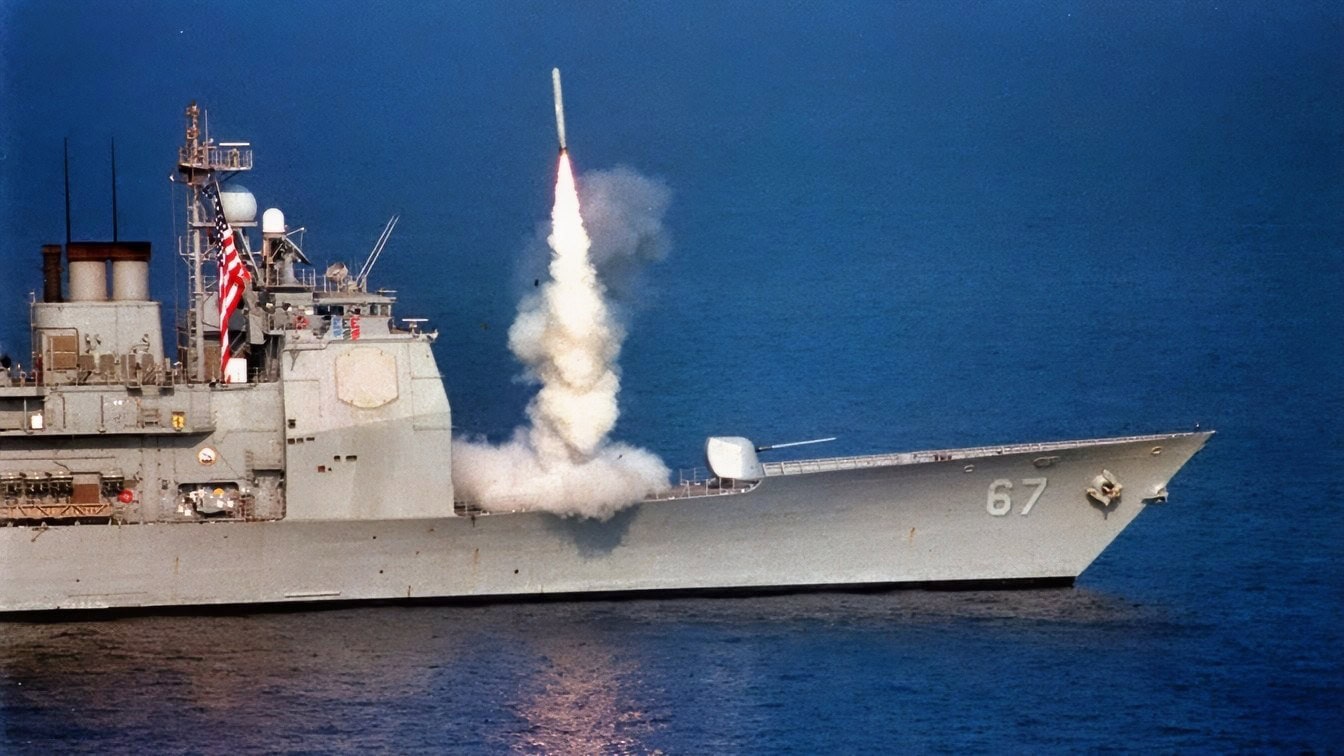
A Tomahawk cruise missile launches from the forward vertical launch system of the USS Shiloh (CG 67) to attack selected air defense targets south of the 33rd parallel in Iraq on Sept. 3, 1996, as part of Operation Desert Strike. The attacks are designed to reduce risks to the pilots who will enforce the expanded no-fly zone. President Clinton announced an expanded no-fly zone in response to an Iraqi attack against a Kurdish faction. The larger no-fly zone in Southern Iraq will make it easier for U.S. and coalition partners to contain Saddam Hussein’s aggression. The U.S. Navy Ticonderoga Class cruiser launched the missiles as it operated in the Persian Gulf.
The problem is what replaces them, because nothing fully does. The Flight III Arleigh Burke-class destroyer is the designated short-term role replacement, carrying the upgraded SPY-6 radar, but a Burke carries between 90 and 96 VLS cells to the Ticonderoga’s 122 — at least 26 fewer per hull.
The dedicated cruiser successor, the CG(X), was canceled in 2010, and before it the Cruiser Baseline and CG-21 concepts died too, leaving the surface fleet with no replacement cruiser at all. The eventual large surface combatant, the DDG(X), is not expected until the 2030s, and each new cruiser-class ship would cost well over a billion dollars. The result is a structural loss: retiring the Ticonderogas removes a large share of the surface fleet’s vertical-launch capacity, with no platform able to make up for it in the near term.
The Rescue Congress Forced: $3.7 Billion And A “Debacle”
What separates the Ticonderoga story from an ordinary retirement is the fight over it. The Navy never wanted to modernize these cruisers, preferring to spend the money on newer ships.
But when the service proposed retiring cruisers early to save money, lawmakers balked at losing the hulls and the missile tubes and ordered the Navy to refit them instead. The result was a phased modernization program, launched as a compromise after Congress denied the Navy’s request to decommission the ships early, intended to extend the lives of 11 cruisers by upgrading their combat systems and refreshing their aging hulls, with all work to be completed over roughly a ten-year span.
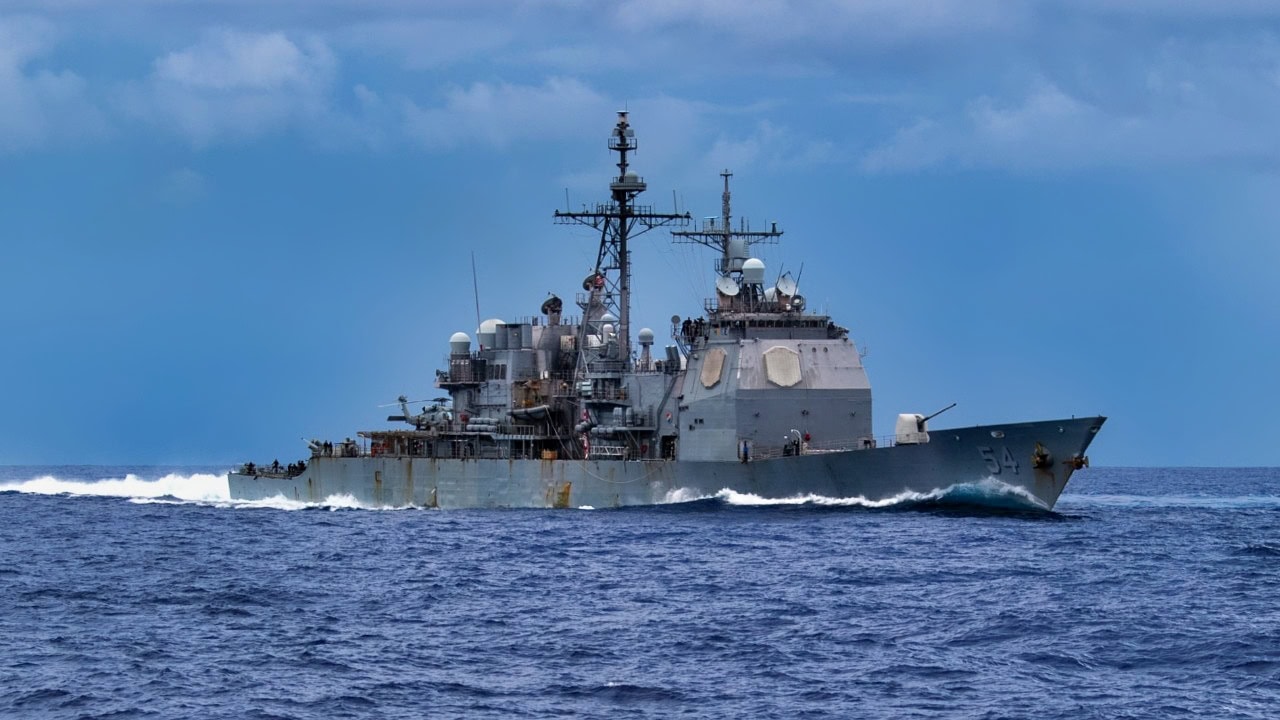
PACIFIC OCEAN (Sept. 14, 2020) The Ticonderoga-class guided-missile cruiser USS Antietam (CG 54) moves in formation during exercise Valiant Shield 2020. Valiant Shield is a U.S. only, biennial field training exercise (FTX) with a focus on integration of joint training in a blue-water environment among U.S. forces. This training enables real-world proficiency in sustaining joint forces through detecting, locating, tracking, and engaging units at sea, in the air, on land, and in cyberspace in response to a range of mission areas. (U.S. Navy photo by Mass Communication Specialist 2nd Class Nick Bauer)
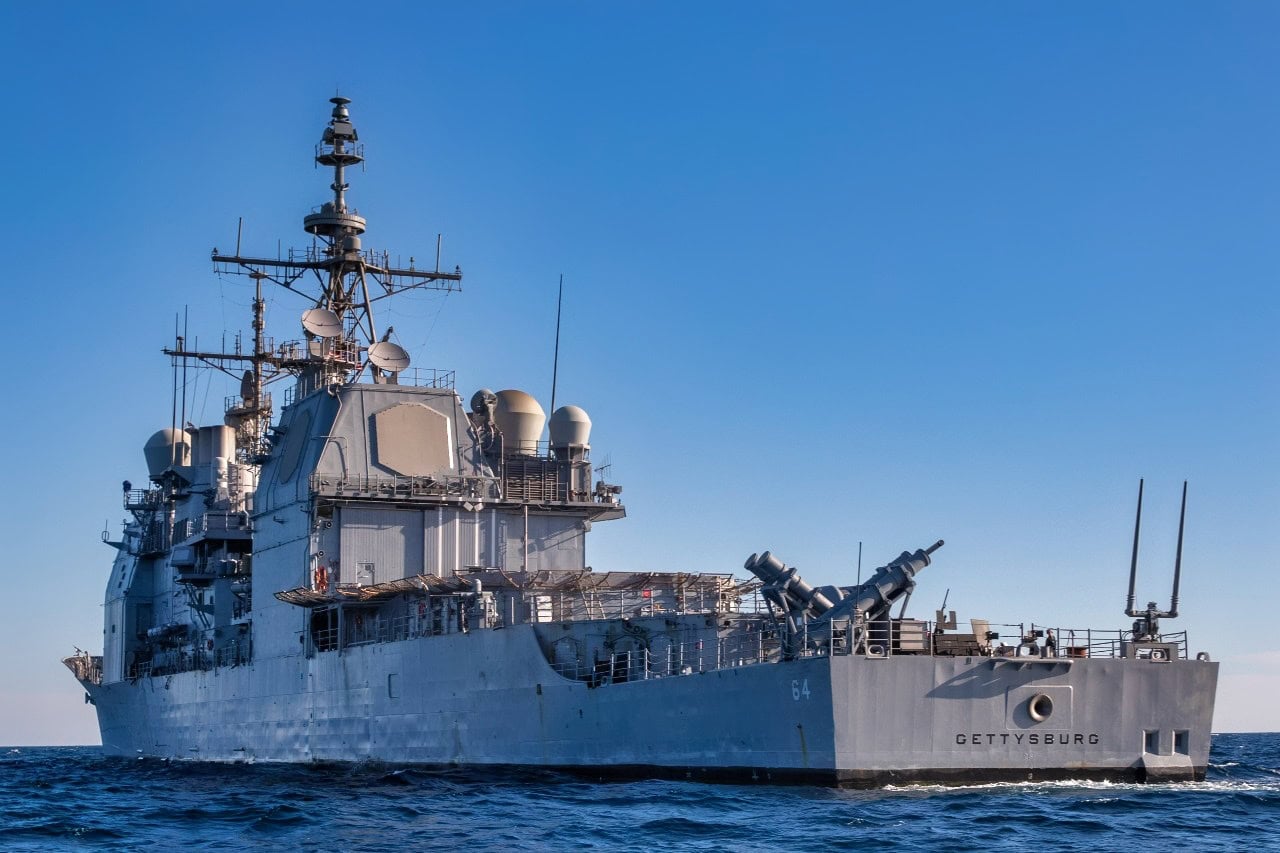
(Feb. 18, 2025) The Ticonderoga-class guided-missile cruiser USS Gettysburg (CG 64) sails in the U.S. Central Command area of responsibility. (Official U.S. Navy photo)
It went badly. According to a December 2024 Government Accountability Office report, the Navy spent about $3.7 billion modernizing seven Ticonderogas from 2015, and only three of them will ever complete the process, with none gaining the five years of additional service life the program was supposed to deliver. The GAO found the Navy “wasted” $1.84 billion modernizing four cruisers that were divested before they ever deployed again, and cited ineffective oversight, incomplete planning, and poor contractor work — including substandard work on the sonar dome of USS Vicksburg that required costly rework.
The audit traced the cost growth to a high volume of unplanned work, some 9,000 contract changes that cascaded into delays. The per-ship waste was stark: the Navy spent $161.2 million on Hué City and $250.54 million on Anzio before decommissioning both in 2022, then spent $678.56 million on Cowpens and $754.1 million on Vicksburg before scrapping them in 2024 — hundreds of millions per ship for vessels that never returned to the fight.
“Malicious Compliance”: The U.S. Navy’s Ticonderoga-Class Problem
The sharpest charge in the saga is that the Navy, forced to keep ships it wanted gone, deliberately let them rot. The Navy’s acquisition chief described the breakdown as a cascade of cyclical delays, explaining that structural work left unfinished in one repair period piled into the next, leaving the first cruisers — Gettysburg, Vicksburg, and Cowpens — struggling through production.
But lawmakers and congressional staff went further, characterizing the Navy’s execution as “hostile” or “malicious” compliance: the suspicion that a service ordered to maintain cruisers against its will let them atrophy to prove they were not worth keeping. USS Vicksburg became the emblem of the accusation, a ship that languished for years before its deep modernization began.
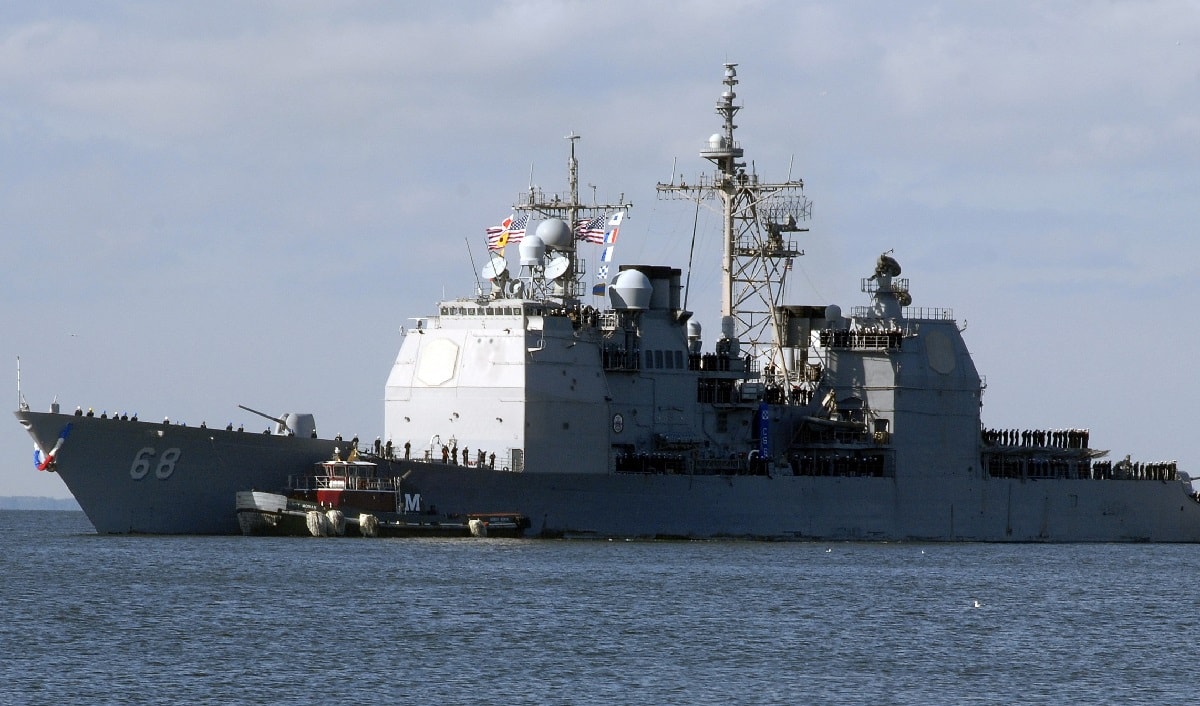
The Ticonderoga-class guided-missile cruiser USS Anzio (CG 68) returns to Naval Station Norfolk after completing a six-month deployment in the U.S. 5th and 6th Fleet areas of responsibility. Anzio served off the Horn of Africa as the flagship of the international anti-piracy task force, Combined Task Force (CTF) 151. (U.S. Navy photo by Mass Communication Specialist 3rd Class John Suits/Released).
It is important to be precise about what is established and what is alleged: the GAO documented the waste and the mismanagement as fact, while the motive — deliberate sabotage versus genuine incompetence and bad luck — is a charge leveled by frustrated members of Congress, not a proven finding, and the Navy attributes the failures to planning and contractor problems rather than intent.
What is not in dispute is the frustration in Congress, which watched the Navy decommission cruisers it had poured hundreds of millions into. Lawmakers were angered that the service moved to retire ships after only 30 to 36 years of service rather than the 40 years the modernization was meant to enable, and both chambers repeatedly wrote provisions into defense bills to halt some of the retirements the Navy sought.
The compromise that was supposed to preserve the fleet’s firepower instead became, in the words of the trade press covering it, a continuing debacle.
The Punchline: Billions Spent, Ships Retired Anyway
The result of all the money and all the fighting is that the Navy will get very little for it. Of the seven cruisers put through modernization, only one — Gettysburg — had actually deployed by the time of the GAO report, and the three that completed the process were scheduled for only one deployment before the Navy planned to divest them.
As the trade press put it, the Defense Department would get perhaps a handful of extra deployments out of the ships for all the billions of dollars and manpower spent to modernize them.
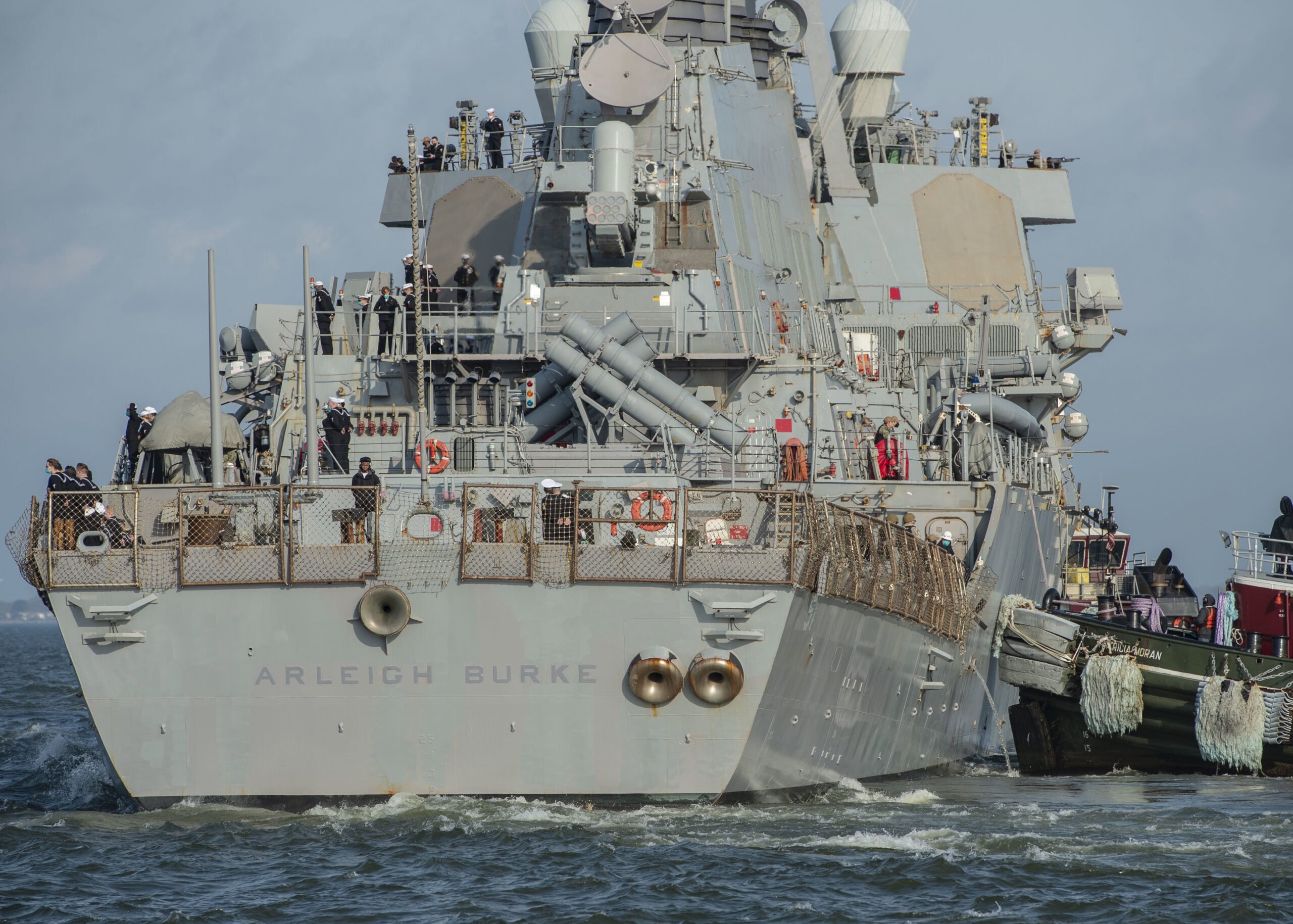
NORFOLK (Mar. 26, 2021) – A tugboat assists the guided-missile destroyer USS Arleigh Burke (DDG 51) in getting underway Mar. 26. Arleigh Burke will replace USS Donald Cook (DDG 75) as one of four forward deployed naval forces (FDNF) located in Spain. Arleigh Burke will join USS Ross (DDG 71), USS Roosevelt (DDG 80), and USS Porter (DDG 78) as the newest member of FDNF Rota. (U.S. Navy photo by Mass Communication Specialist 2nd Class Kris R. Lindstrom)
There is a partial reprieve, and it is real but limited. In November 2024, the Navy reversed course just enough to extend the service lives of the three modernized survivors — Gettysburg, Chosin, and Cape St. George — by three years, keeping them in the fleet toward the end of the decade rather than retiring them in 2026.
The Navy was explicit that it would only extend ships that had completed modernization and had the material readiness to keep operating, having learned hard lessons from the program; the GAO noted that the service now plans to decommission all three by fiscal 2030. Even the rescue, in other words, is temporary, and the cruisers that consumed billions without finishing — Vicksburg among them, scrapped after roughly $300 million in its final overhaul alone — got no such reprieve.
The Honest Balance: They Genuinely Are Hard To Keep
The Navy’s instinct to retire these ships was not crazy, and an honest account has to say so. The Ticonderogas average well over 35 years old, and they are deteriorating in ways that make them genuinely costly and difficult to maintain. The Chief of Naval Operations, who oversaw much of the phase-out, warned of cracks and worsening material conditions in hulls averaging more than three decades old, and described some of the cruisers’ older radar systems as approaching obsolescence against modern missile threats.
The modernization ran roughly 200 percent over its estimated costs and hundreds of days behind schedule, and the deeper problem is structural: the ships were not designed for modern maintenance, so routine work can require opening bulkheads and rerouting cables to reach aging components, and some of their systems are hard to support because the companies that built them no longer exist.
The Ticonderogas were also increasingly vulnerable by the time of their retirement, as standalone platforms in an age of long-range anti-ship missiles. The Navy’s argument — that pouring money into 40-year-old hulls to buy a few more years was a poor use of scarce funds better spent on Burkes and future ships — has real force. The failure was not in the basic premise that the cruisers eventually had to go.
It was in the execution of the rescue and the fight around it: a congressionally forced program the Navy did not want, managed so poorly that it wasted nearly two billion dollars and produced almost nothing, leaving both sides worse off than if they had agreed on a plan at the start.
U.S. Navy Business & Industrial Headache: A Case Study In A Fleet Growing Old
The Ticonderoga saga is the definitive illustration of the Navy’s surface fleet aging problem. The service was forced to keep ships it could not afford to maintain, spent billions to delay the inevitable, and lost both the money and the ships, shedding irreplaceable missile capacity in the process.
The cell math is the part that should worry planners most. Each retiring cruiser takes 122 vertical-launch cells with it, and the Ticonderoga retirements — well over a thousand cells across the remaining hulls — combine with the simultaneous loss of the four Ohio-class guided-missile submarines, which carry 616 cells between them, to strip more than 2,000 launch cells from the fleet in a single wave, the largest concentrated loss of strike capacity since the Cold War.
The Flight III Burkes that replace the cruisers carry fewer cells each, the DDG(X) is years away, and there is no dedicated cruiser successor at all.
That loss is arriving at the worst possible moment, with the wars of 2026 burning through Tomahawk inventories and a potential Pacific conflict demanding more magazine depth, not less. The Ticonderogas were the most heavily armed warships the United States ever put to sea, and they are being scrapped after a rescue that cost billions and saved almost nothing.
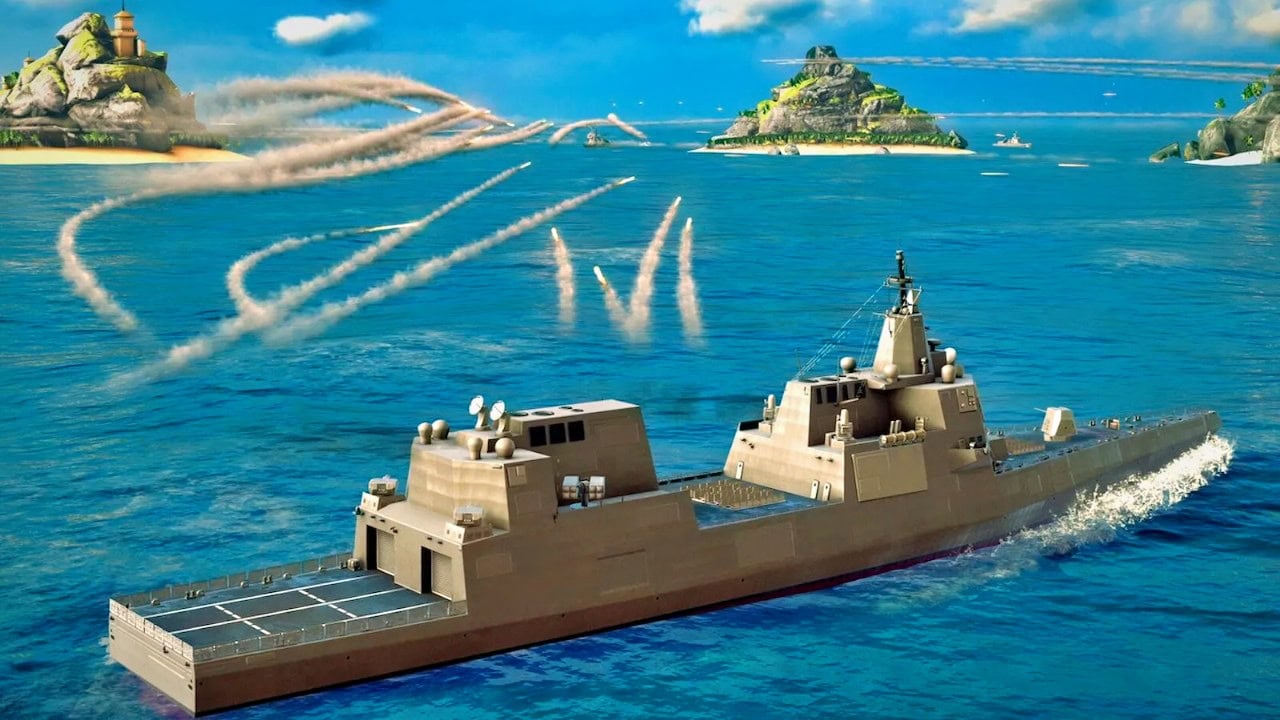
DDG(X) image created by artist. Image Credit: Creative Commons.
Whether the lesson is that the Navy mismanaged a program it never wanted or that Congress forced it to throw good money after old hulls, the outcome is the same: America is retiring its heaviest hitters with nothing of equal weight to put in their place, and the gap they leave will be measured in missiles the fleet can no longer carry.
About the Author: Harry J. Kazianis
Harry J. Kazianis (@Grecianformula) was the former Senior Director of National Security Affairs at the Center for the National Interest (CFTNI), a foreign policy think tank founded by Richard Nixon based in Washington, DC. Harry has over a decade of experience in think tanks and national security publishing. His ideas have been published in the NY Times, The Washington Post, The Wall Street Journal, CNN, and many other outlets worldwide. He has held positions at CSIS, the Heritage Foundation, the University of Nottingham, and several other institutions related to national security research and studies. He is the former Executive Editor of the National Interest and the Diplomat. He holds a Master’s degree focusing on international affairs from Harvard University.