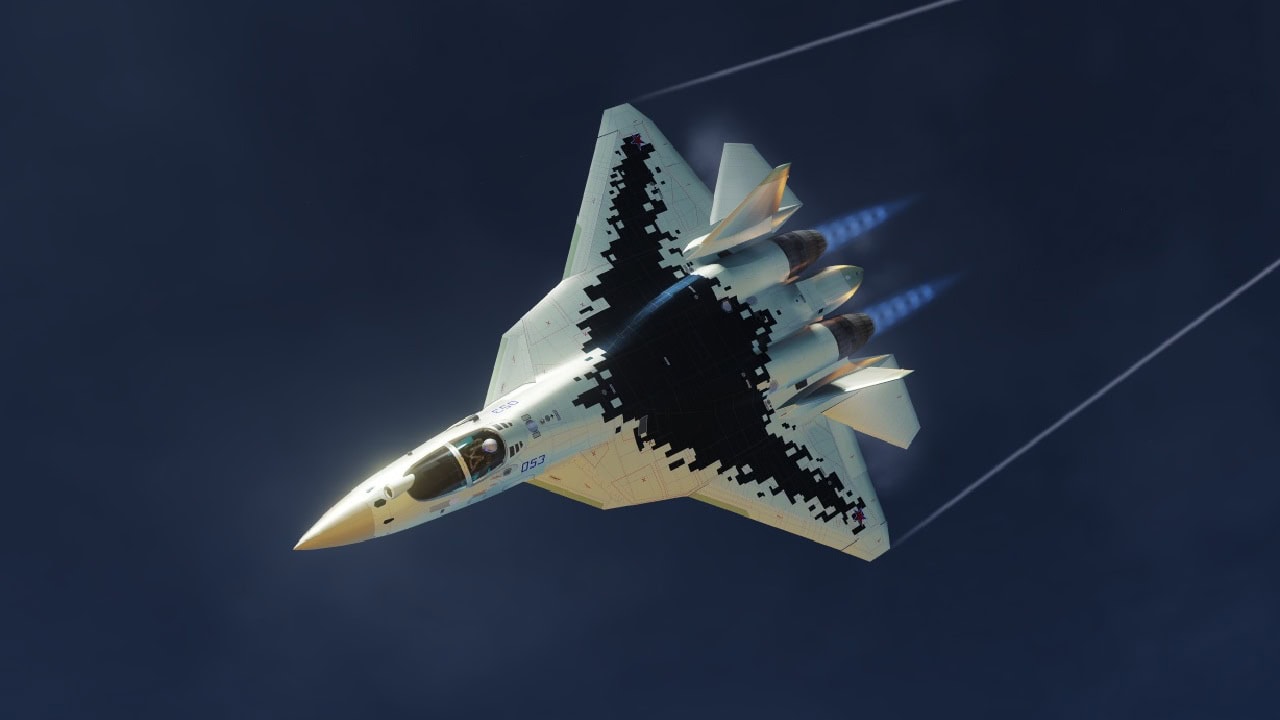
Summary and Key Points: Military modernization expert Kris Osborn evaluates the Sukhoi Su-57 (Felon) against U.S. fifth- and sixth-generation platforms such as the Lockheed Martin F-35 and Boeing F-47.
-While the Su-57 boasts a Mach 2 top speed and thrust-vectoring agility, its radar cross-section (RCS) and unproven AESA sensor fusion remain critical vulnerabilities.
-With only 32 to 42 airframes built by 2026, the Su-57 lacks the “fleet density” to challenge the 1,300+ F-35s in service.
-Furthermore, Russia’s attempt at manned-unmanned teaming with the S-70 Okhotnik-B drone lags behind the U.S. Collaborative Combat Aircraft (CCA) ecosystem.
Su-57 vs. F-35: The 2026 Air Superiority Gap in Sensor Fusion and AI
Despite its stealthy appearance and purported speed, many questions remain about how much of a threat Russia’s 5th-generation Su-57 poses to adversaries.
Russian media reports extensively on the airframe’s performance parameters, yet little is known about its computing, weapons interfaces, sensing, and manned-unmanned teaming capabilities.
The Su-57 looks stealthy to the observer, with its blended-wing body and rounded fuselage.
How might it compare, however, with the F-35 in terms of sensing and high-speed, AI-enabled computing that can gather sensor input from disparate data sources and perform immediate analysis and organization to present integrated information to a pilot?

Su-57 Felon Fighter from Russian Air Force.

Su-57 and Su-75 Checkmate Russian Air Force.
The airframe’s capabilities remain unanswered.
Additional specs on the Su-57 suggest it can reach Mach 2 and travel up to 2,200 miles. This makes the jet slightly slower than an F-22, which reportedly reaches Mach 2.25.
Also, the Su-57 may not have a thrust-to-weight ratio that rivals an F-22, making it less competitive than a true air-dominance platform such as the Raptor.
Nonetheless, the Sukhoi Su-57’s speed can be an important factor, making it a potential threat to the Lockheed Martin F-35 Lightning II in certain combat scenarios.
While both aircraft are advanced fifth-generation fighters designed with stealth, sensors, and networked warfare in mind, differences in speed and flight performance can influence how each aircraft engages in air combat.
Su-57 Speed
One of the most notable characteristics of the Su-57 is its high top speed.
The aircraft is estimated to reach speeds of around Mach 2, significantly faster than the F-35, which typically reaches about Mach 1.6. This difference in maximum speed gives the Su-57 the potential to close distances more quickly in a combat situation.
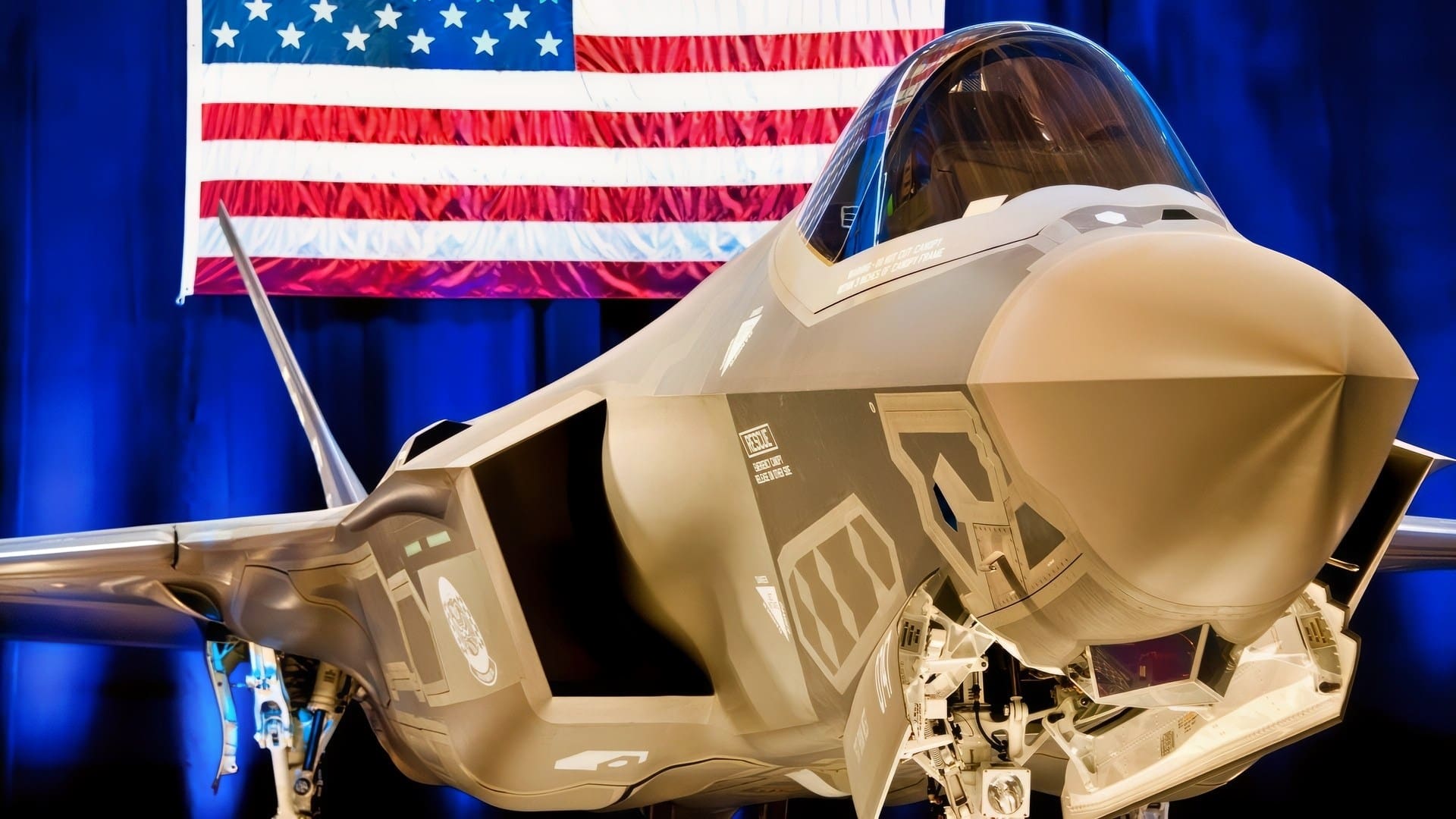
F-35 Fighter With U.S. Flag. Image Credit: Creative Commons.
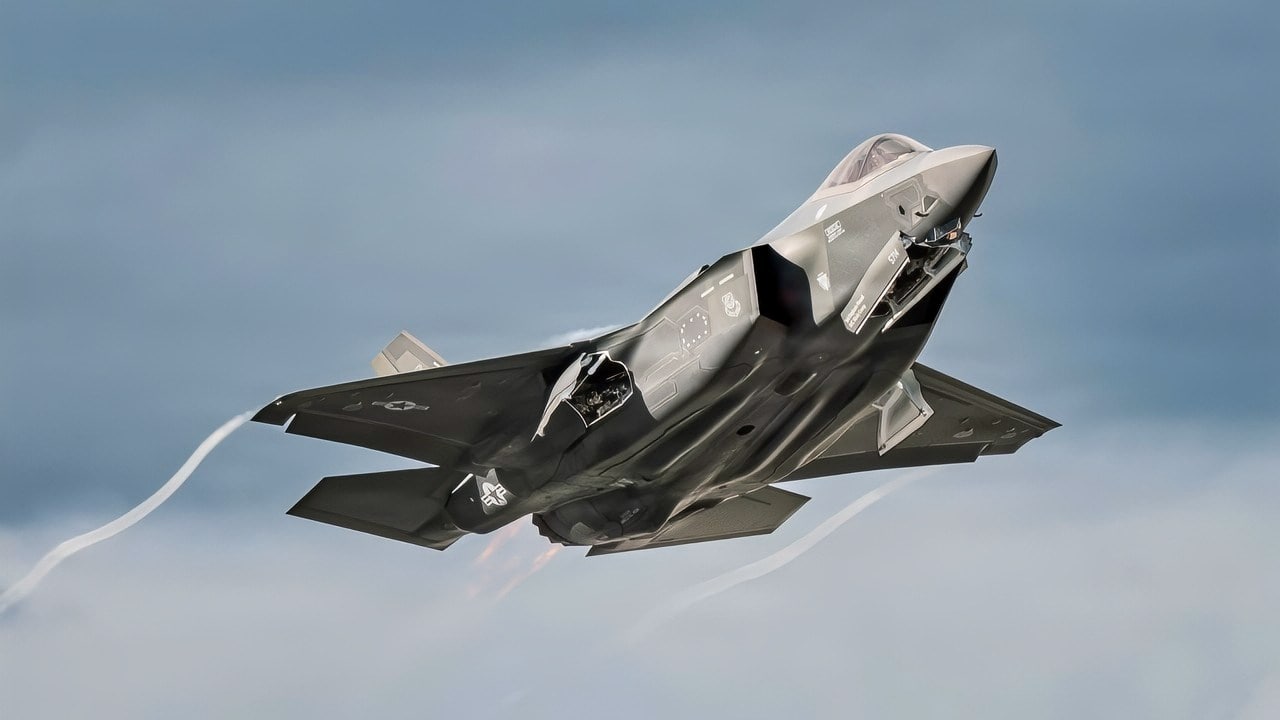
A U.S. Air Force F-35 Lightning II assigned to the 6th Weapons Squadron takes off in support of a U.S. Air Force Weapons School Integration (WSINT) mission at Nellis Air Force Base, Nevada, Nov. 18, 2025. WSINT incorporates multiple aircraft, domains and mission sets to challenge participants with dynamic problem-solving. (U.S. Air Force photo by Senior Airman Lauren Clevenger)
If a Su-57 detects an enemy aircraft or receives targeting data from external sensors, its higher speed could allow it to intercept the target faster than an F-35 might expect, reducing the time the opposing pilot has to react or reposition.
However, this advantage could be largely offset by the range and fidelity of the F-35’s targeting sensors, which could likely locate the Su-57 before it could detect an F-35.
However, speed alone does not determine superiority. The F-35 emphasizes stealth, sensor fusion, and advanced networking capabilities, which are designed to detect and engage adversaries before they are even aware of its presence.
In many scenarios, the F-35’s lower radar signature and advanced avionics could allow it to fire first, potentially neutralizing a faster opponent before speed becomes a decisive factor.
Su-57 AESA Radar & Targeting
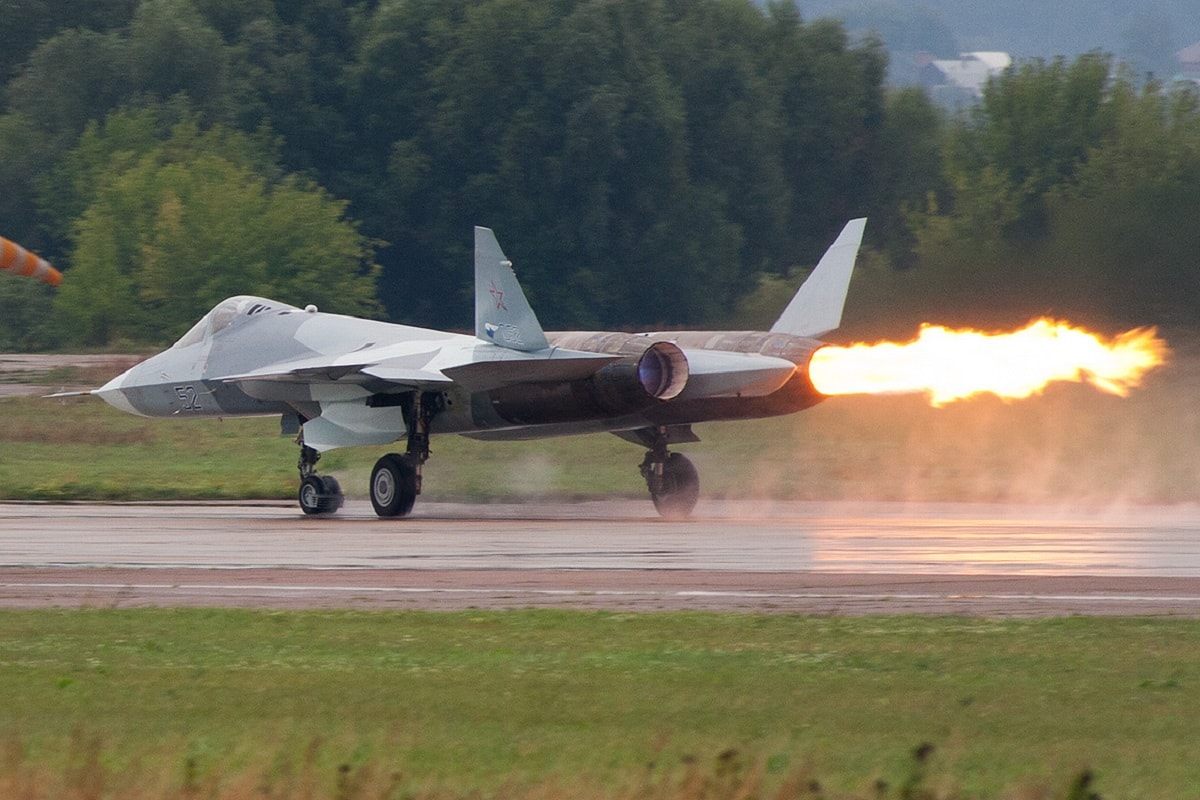
Image of Russia’s Su-57 fighter. Creative Commons.
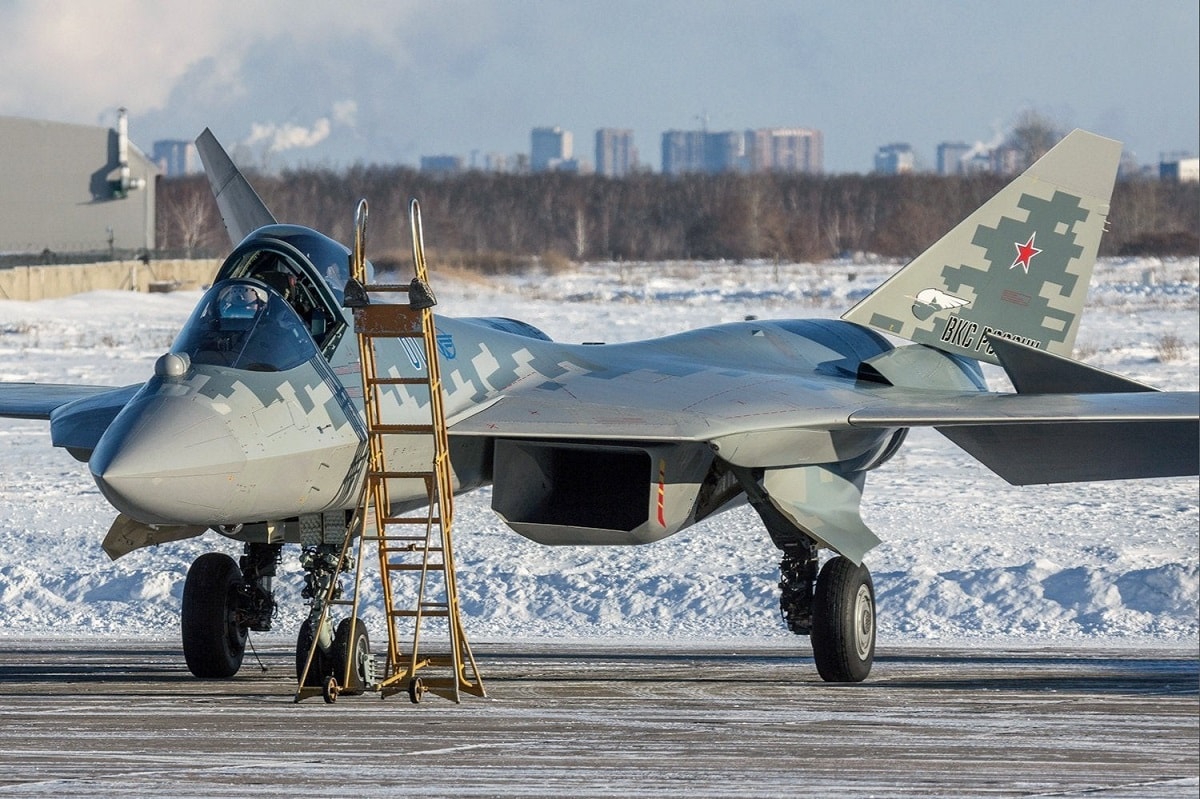
Su-57 Felon. Image Credit: Creative Commons.
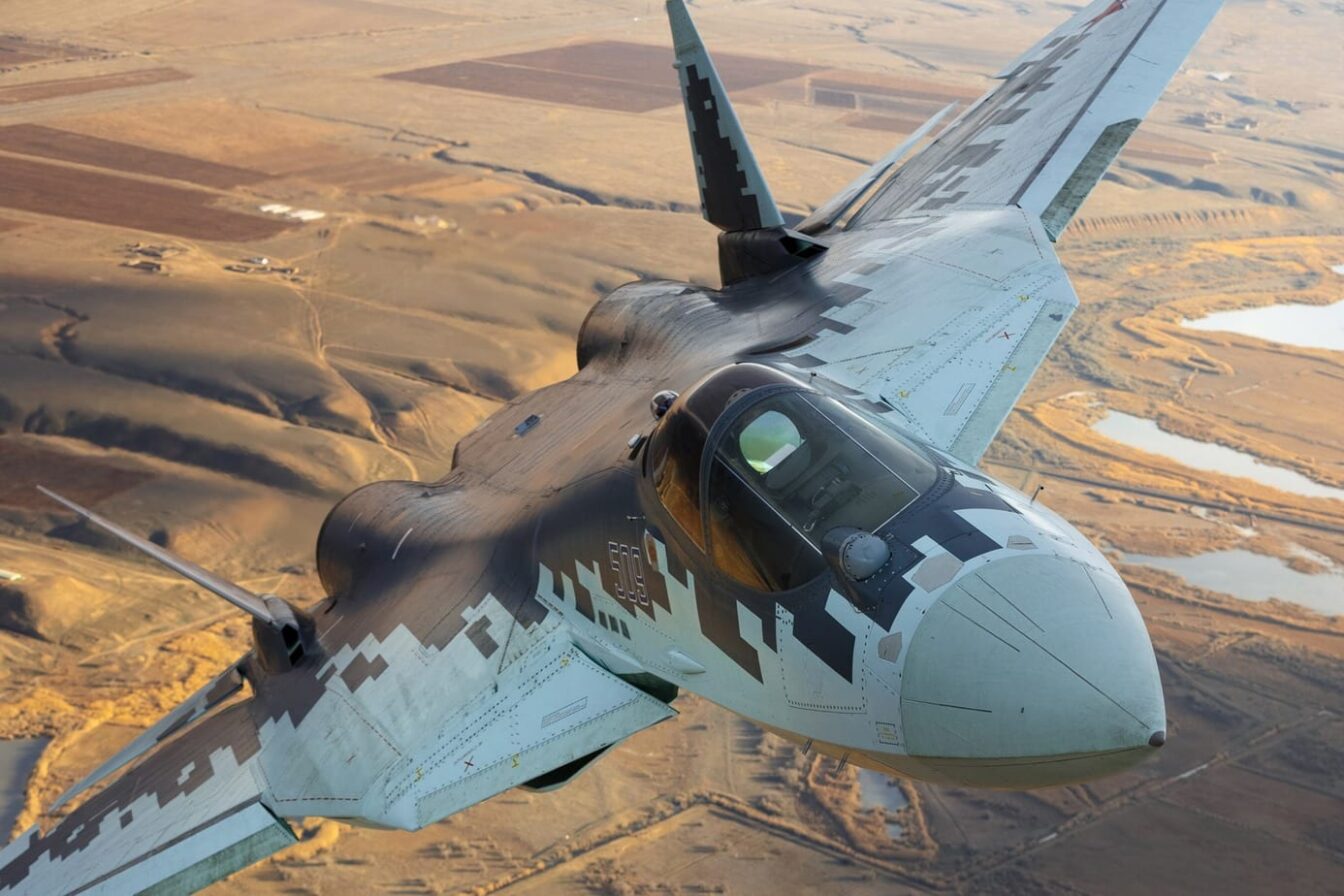
Russia’s Su-57 Felon Stealth Fighter.
It is reported that the Su-57 has an AESA (Active Electronically Scanned Array) radar and a phased-array radar, supported by extensive electronic countermeasures.
Further details suggest the Su-57 uses an F/A-18-like Infrared Search and Track targeting technology, which, among other things, enables fighter jets to operate in a high-threat “jamming” environment.
Not Enough Su-57s
Regardless of the extent to which the Su-57 can truly rival U.S. 5th-generation aircraft, Russia’s next-generation aircraft primarily suffers from a numbers problem.
There are just not that many of them, as multiple public reports say there are currently between 4 and 15 operational Su-57 aircraft, and Russia’s TASS news agency has reported plans to acquire 76 Su-57s over the next 5 years.
The U.S., by contrast, operates hundreds of F-35s or more, and that is not including the fast-arriving NATO and European F-35s, something which gives the U.S. and NATO a sizeable margin of superiority when it comes to a possible air superiority war with the Su-57.
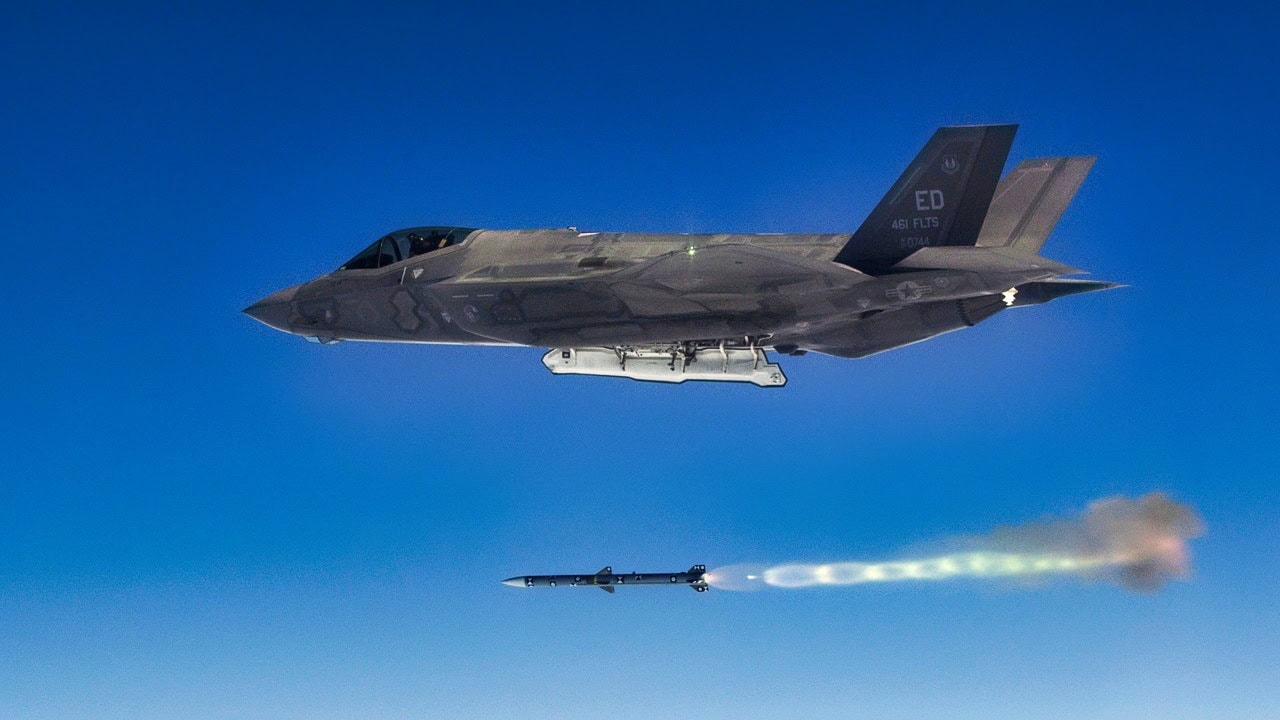
An Edwards AFB F-35A Lightning II fires an AIM-120 Advanced Medium-Range Air-to-Air Missile as part of Weapons Delivery Accuracy testing. The 461st Flight Test Squadron and F-35 Integrated Test Force completed WDA testing in early December, which concludes a large and important part of F-35 developmental test and evaluation. (Courtesy photo by Chad Bellay/Lockheed Martin)
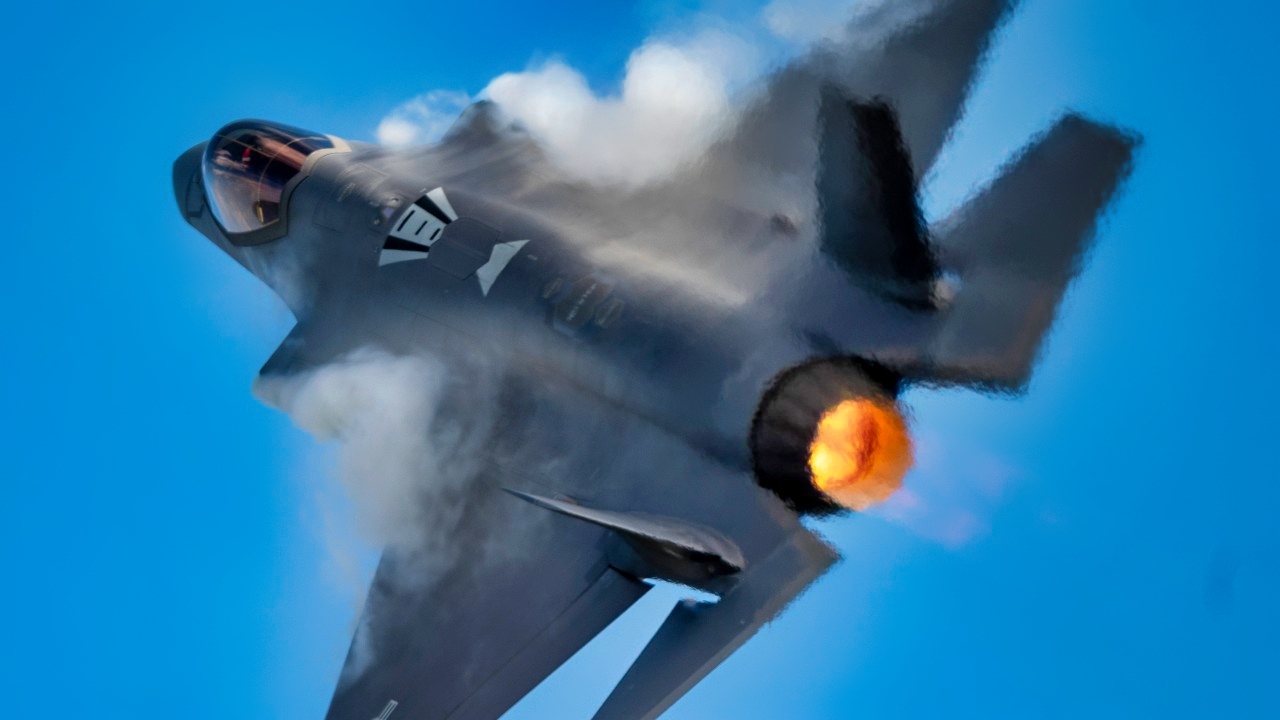
U.S. Air Force Maj. Melanie “Mach” Kluesner, the pilot for the F-35A Demonstration Team, performs aerial maneuvers in a USAF F-35A Lightning II during the practice day before the airshow at Jacksonville Naval Air Station, Florida, on 18 October, 2024. The practice day ensures that the team is able to safely and properly display the power, agility, and lethality of America’s 5th generation fighter jet. (U.S. Air Force photo by Senior Airman Nicholas Rupiper)
Manned-Unmanned Teaming
There is also the question of manned-unmanned teaming, as Russian media reports have mentioned efforts to connect drones with manned fighter jets, using what the U.S. Air Force refers to as a “loyal wingman” type of scenario.
The U.S. Air Force, for instance, has demonstrated that its Valkyrie drone can share real-time data with an F-35, and it is not at all clear that Russia’s Su-57 is capable of such technology.
Russia’s Izvestia news outlet has reported in recent years that the Su-57 is working to network with Russia’s S-70 Okhotnik B drone. The extent of Russian progress on this may be unknown, including whether the Su-57 can operate drones in real time.
It’s conceivable that the Russian Su-57 is far behind the U.S. 6th-Gen Next Generation Air Dominance family of systems in which manned stealth aircraft operate groups of autonomous drones.
About the Author: Kris Osborn
Kris Osborn is the President of Warrior Maven – Center for Military Modernization. Osborn previously served at the Pentagon as a highly qualified expert in the Office of the Assistant Secretary of the Army—Acquisition, Logistics & Technology. Osborn has also worked as an anchor and on-air military specialist at national TV networks. He has appeared as a guest military expert on Fox News, MSNBC, The Military Channel, and The History Channel. He also has a Masters Degree in Comparative Literature from Columbia University.