
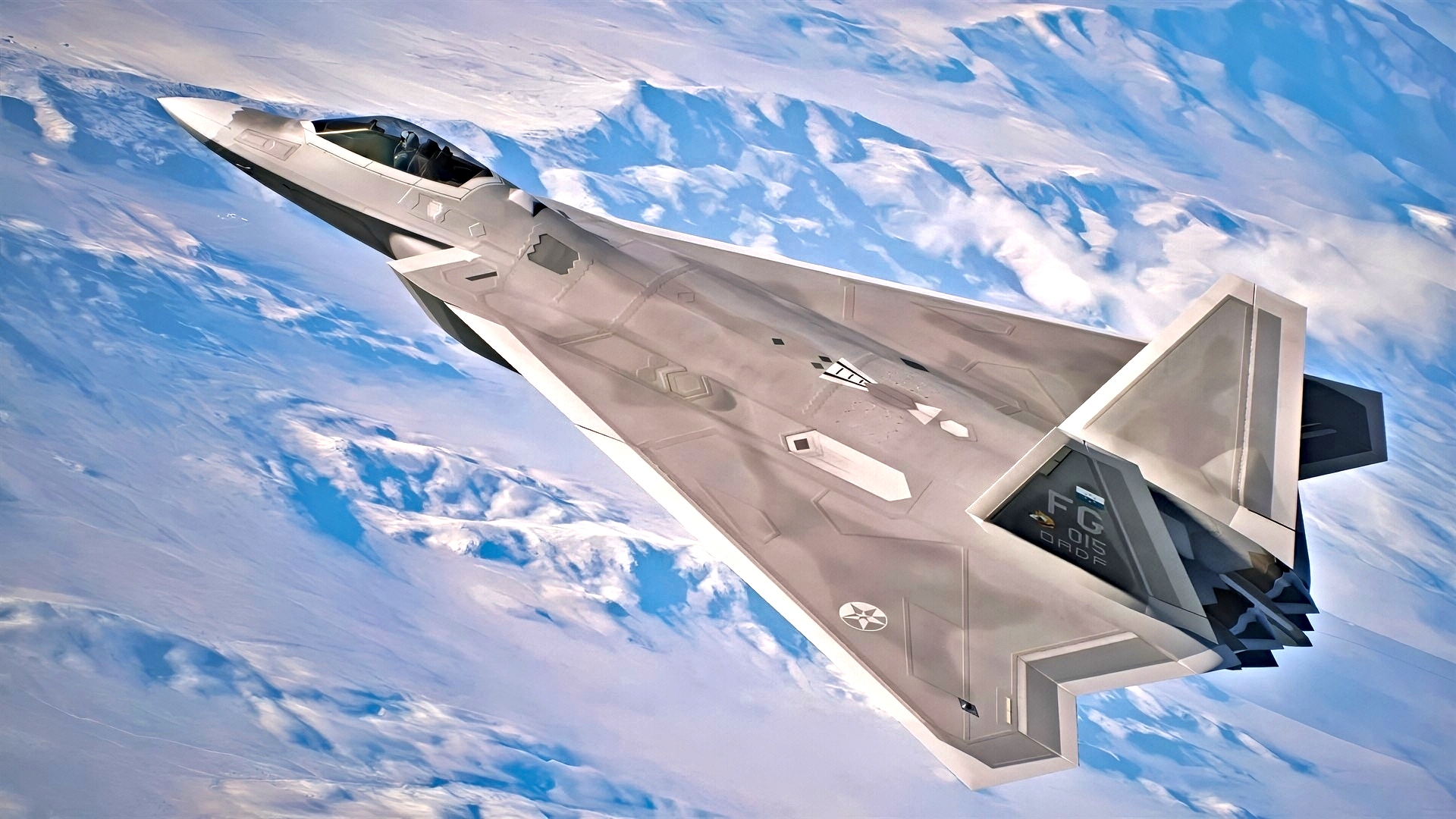
Summary and Key Points: For about four years in the early 2000s, the United States Air Force seriously considered turning the F-22 Raptor into a bomber. The concept had a champion in the Secretary of the Air Force, who kept a model of it on his desk. It had a manufacturer that had already sketched six versions. It had a fleet size, a mission, and a development estimate. What it never had was a price per airplane, a funded program line, or a survivable answer to one question about geography. The FB-22 remains the closest the United States ever came to building a supersonic stealth bomber, and the reasons it died in 2006 explain a surprising amount about the bombers, fighters, and budget fights of 2026.
FB-22 Bomber: Born as an Unsolicited Idea
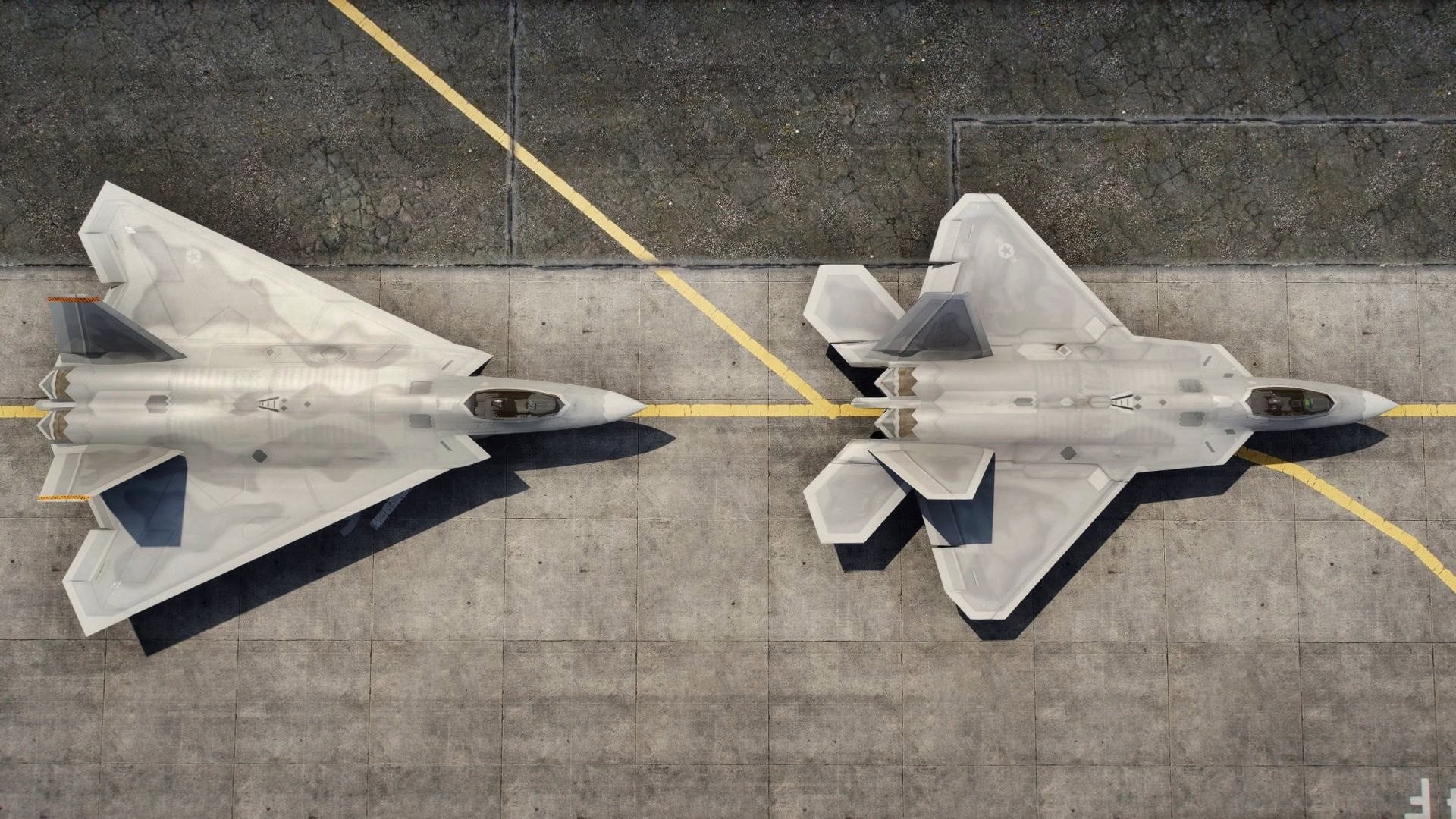
FB-22 and F-22. Image Credit: Computer Generated Image.
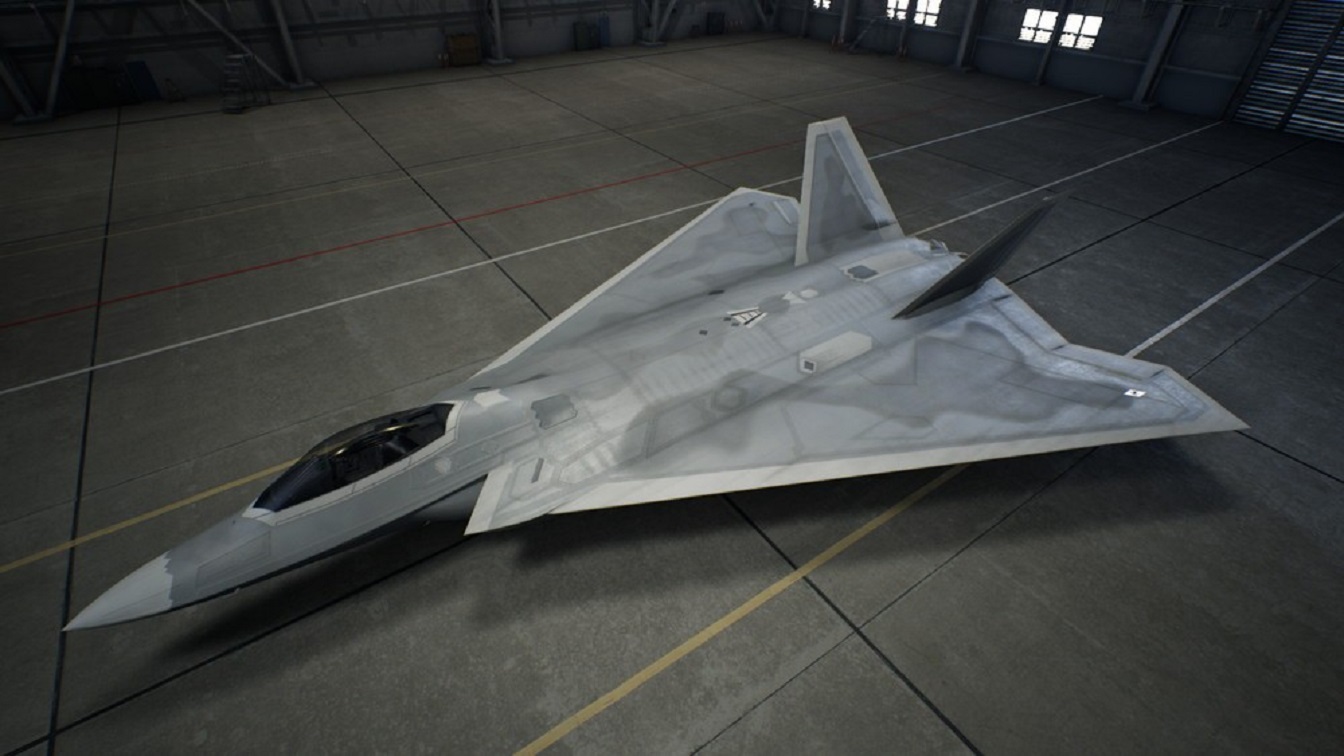
FB-22. Image Credit: Artist Rendition – Creative Commons.
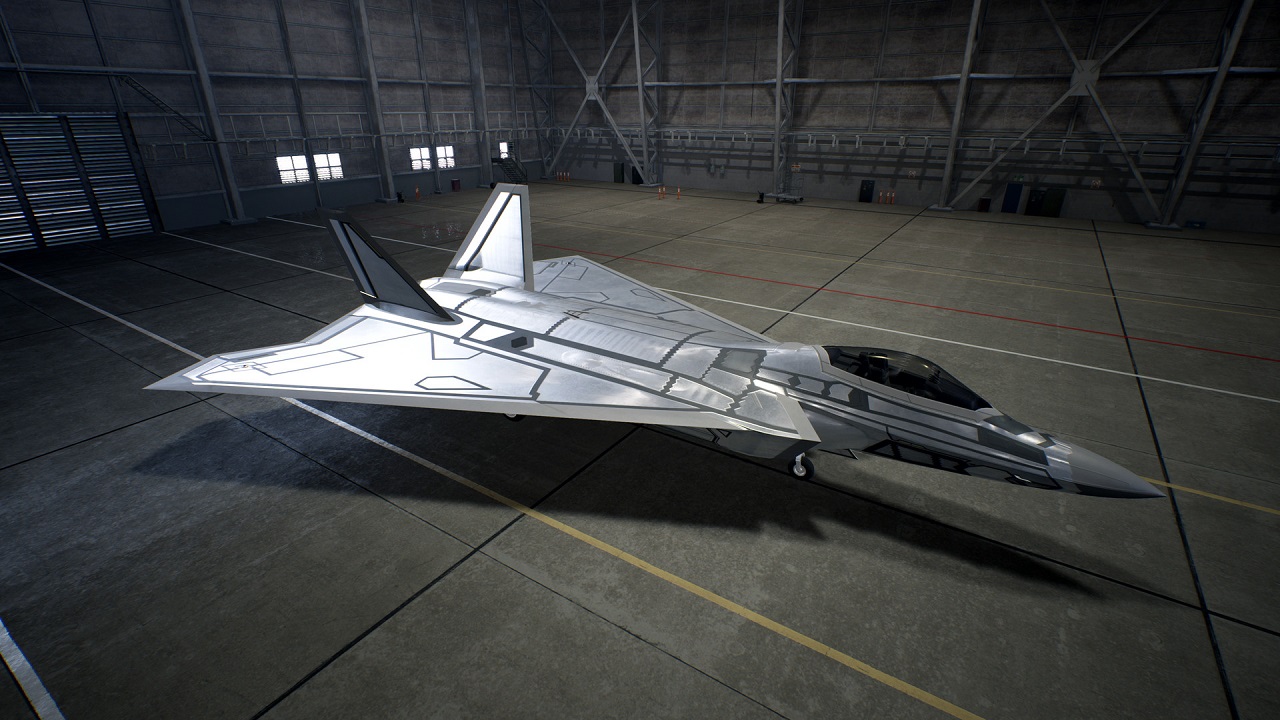
FB-22 computer generated image from Ace Combat 7. Image Credit: Screenshot.
The FB-22 did not begin as an Air Force requirement. In 2001, Lockheed Martin started internal, company-funded studies of a bomber derivative of the F-22, and by early 2002, the company was briefing the concept to the Air Force on its own initiative. The design that emerged in reporting by Bill Sweetman for Jane’s and Popular Science was striking: a tailless delta, with the F-22’s fuselage stretched and widened, yaw controlled by split “decelerons” on an enormous new wing, and roll handled by movable wingtips.
The briefed concept added a second seat, kept the Raptor’s supercruise, gave up some of its violent maneuverability, and traded eight internally carried small-diameter bombs for thirty, at roughly two and a half times the fighter’s range. For payload beyond the internal bays, Lockheed designed detachable faceted pods, a “wing weapons bay” intended to carry ordnance externally without wrecking the stealth signature.
Boeing, Lockheed’s partner in F-22 production, was slated to build the aircraft once development was complete.
The idea found its patron quickly. Air Force Secretary James Roche embraced the concept from 2002, kept the model on his desk, and told the House Armed Services Committee in February 2003 that he envisioned a force of 150 FB-22s.
By 2004, the Air Force had issued a formal request for information on a regional or interim bomber, and Lockheed had submitted six distinct FB-22 variants — some stretching the fuselage, one changing only the wings — because the Air Force had not yet defined the targets, payload, or range it actually wanted. That detail mattered more than it seemed.
Why the Air Force Wanted It
The desire was rational, and the arithmetic behind it was grim. The Air Force of 2002 owned exactly 21 B-2 stealth bombers, a fleet so small and precious that planners treated each airframe like a national monument. The rest of the bomber force dated to the 1960s and 1970s, and the service’s own 1999 bomber roadmap did not plan a replacement until around 2037, thirty-five years away.
Meanwhile, the wars of the moment, Kosovo and then Afghanistan, kept teaching the same lesson John Tirpak captured in Air Force Magazine’s reporting of the era: what commanders wanted was a persistent, survivable strike against fleeting targets, and there was nothing in the inventory that combined stealth, speed, range, and a deep magazine.
The FB-22 promised exactly that combination on a shortened clock. The Congressional Research Service’s assessment of the concept recorded the appeal in plain terms: Air Force leaders described it as a bridge between the aging bomber force and the 2037 capability, and prized its speed, potentially up to Mach 1.8, for attacking moving and time-critical targets — the mission the F-111 had once owned and nothing had inherited.
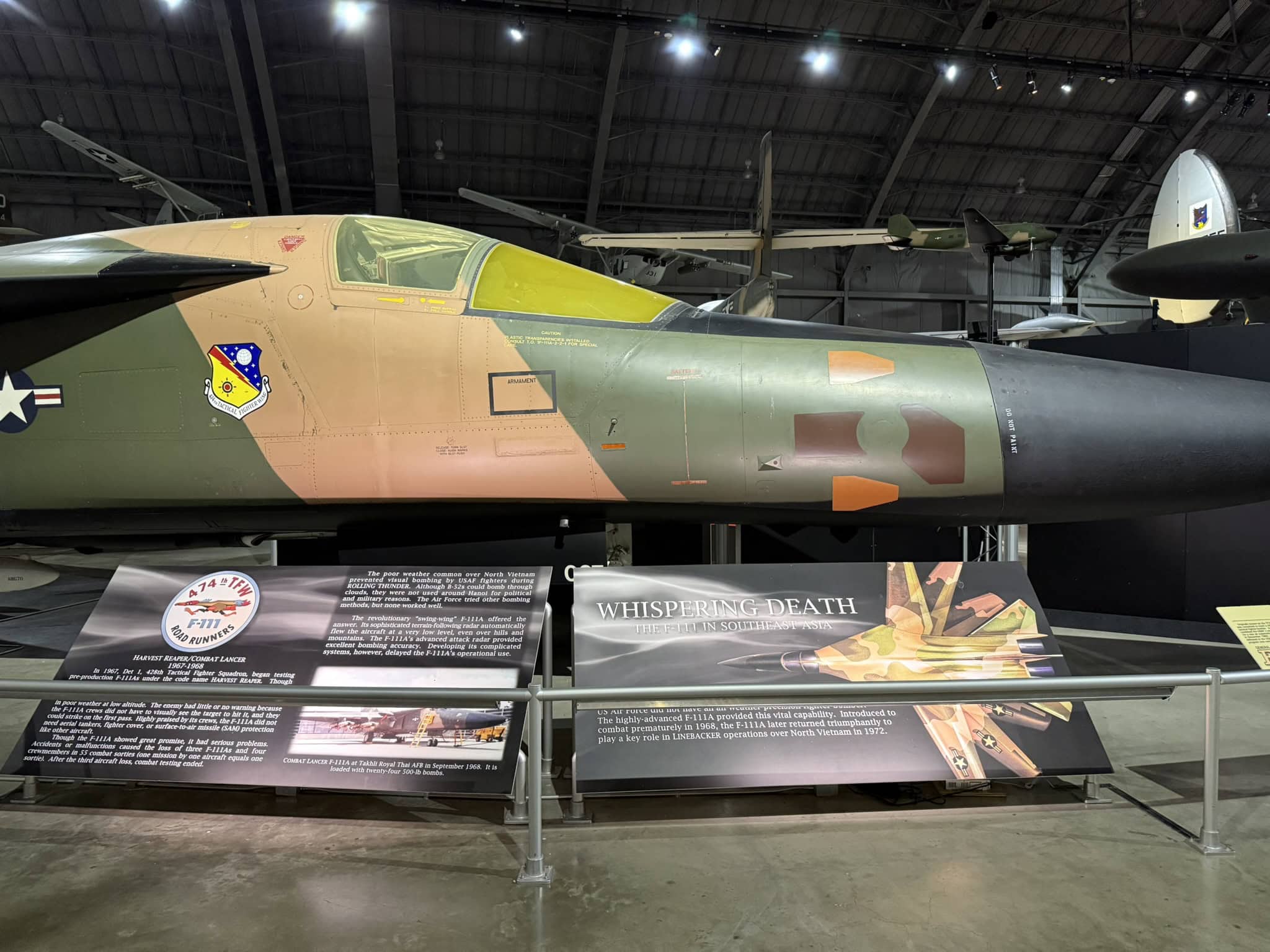
F-111 at the National Museum of the U.S. Air Force. 19FortyFive Photo by Harry J. Kazianis.
A stealthy supersonic aircraft carrying thirty precision weapons more than 1,600 miles, available years before any clean-sheet bomber, flown by an air force that would already operate hundreds of its fighter cousins: on a briefing slide, it was the cheapest revolution on offer.
What It Would Have Cost
The carried numbers are these. Lockheed estimated FB-22 development at $5 billion to $7 billion in 2002 dollars, roughly a quarter of what a clean-sheet strategic bomber would cost to develop, on the strength of claimed 80 percent commonality with the F-22’s fuselage and avionics. Congress was interested enough that the fiscal 2005 defense bill put $100 million toward next-generation bomber work and urged the Pentagon to budget for one.
What never existed was an official price per airplane, and the reason is the program’s most revealing fact: with six variants on the table and the requirements undefined, there was no single airplane to price. Simple multiplication suggests the scale. At Roche’s 150 aircraft, even priced at parity with the F-22’s then-flyaway cost of roughly $130 million to $150 million, procurement alone implied $20 billion to $22 billion, and a total program plausibly in the $25 billion to $30 billion range in the dollars of that decade — with every acquisition precedent arguing the real number would land higher, since derivatives at small production runs cost more than their parents, not less.
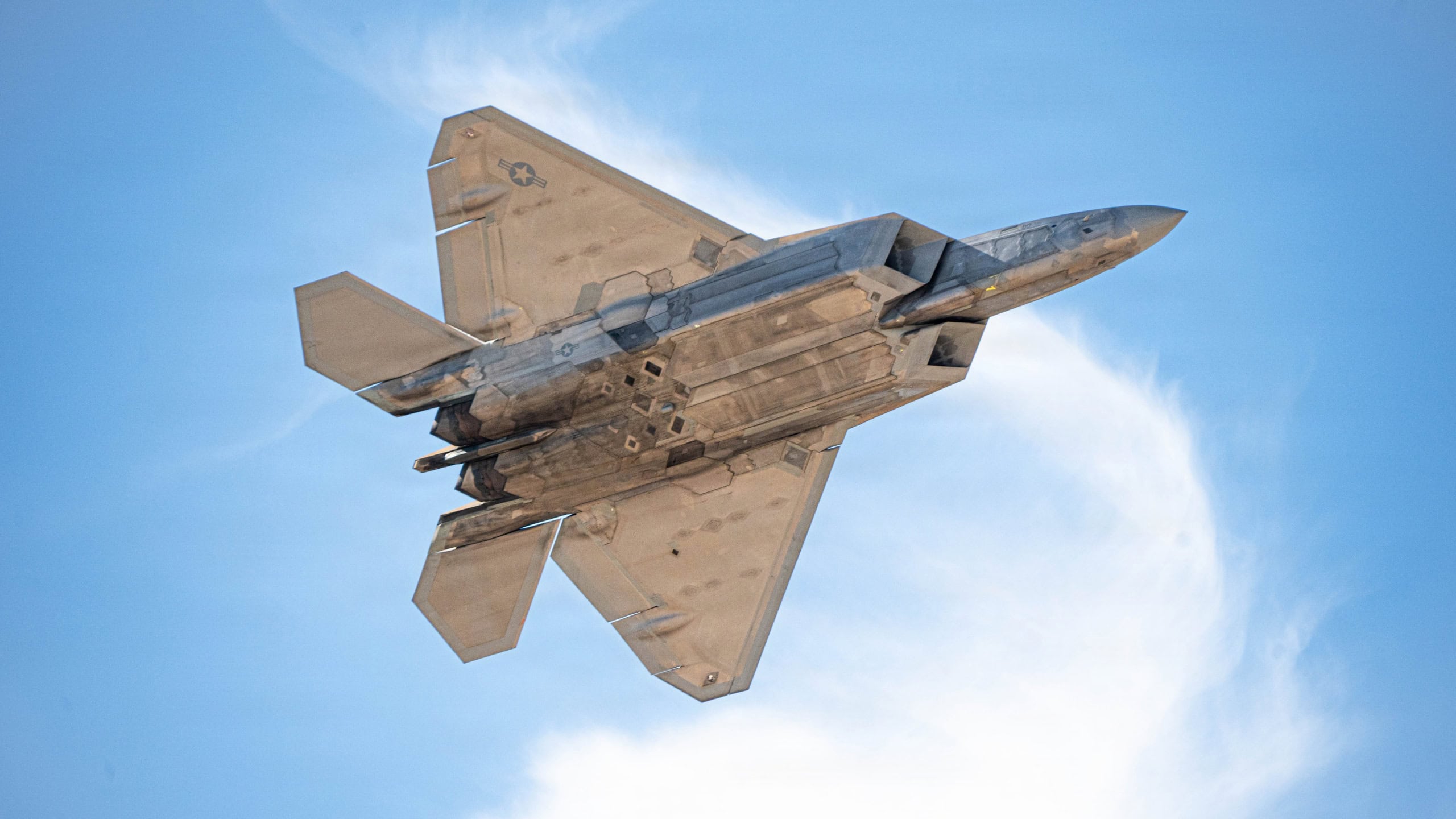
U.S. Air Force Capt. Nick “Laz” Le Tourneau, pilot and commander of the F-22 Raptor Aerial Demonstration Team, performs a practice demonstration for the 2026 Heritage Flight Training and Certification Course at Davis-Monthan Air Force Base, Arizona, Feb. 27, 2026. The Heritage Flight Training and Certification Course is an annual event where military and civilian pilots train together to fly in formations, showcasing both modern and vintage military aircraft. These flights are performed at airshows across the country to honor the service and contributions of every U.S. Airmen, past and present, while educating the general public on the importance of the U.S. Air Force and its mission. (U.S. Air Force photo by Staff Sgt Mary Bowers)
The skeptics inside the building said so at the time. Marvin Sambur, the Air Force’s own acquisition chief, pointed to the F-22A’s developmental difficulties as reason for caution about promises built on its airframe, a warning the Congressional Research Service preserved in the record.
The Review That Killed It
The FB-22 died with unusual cleanness for a Pentagon program: one document, one sentence of logic. The 2006 Quadrennial Defense Review directed the Air Force to field a new long-range strategic bomber by 2018, and a bomber whose combat radius made it regional could not be the answer to a requirement whose first word was range. Lockheed suspended work on the concept after the review.
Roche was already gone, having resigned in early 2005, and the FB-22’s rival interim concepts, Northrop’s FB-23 and the B-1R, died in the same shift. The Pentagon had looked at the map of the western Pacific, measured the distance from surviving bases to the targets that mattered, and concluded that 1,600 miles was a tactical aircraft’s answer to a strategic question.
The Lessons, Twenty Years Later
What were the lessons learned? The QDR’s core judgment has been vindicated completely. Range was the right god to worship, because the bases a regional bomber depends on have become the most threatened real estate in American strategy: China now aims 1,700 missiles at the Pacific airfields an FB-22 would have flown from, and an aircraft that must sit inside the threat ring to reach its targets is a hostage before it is a weapon.
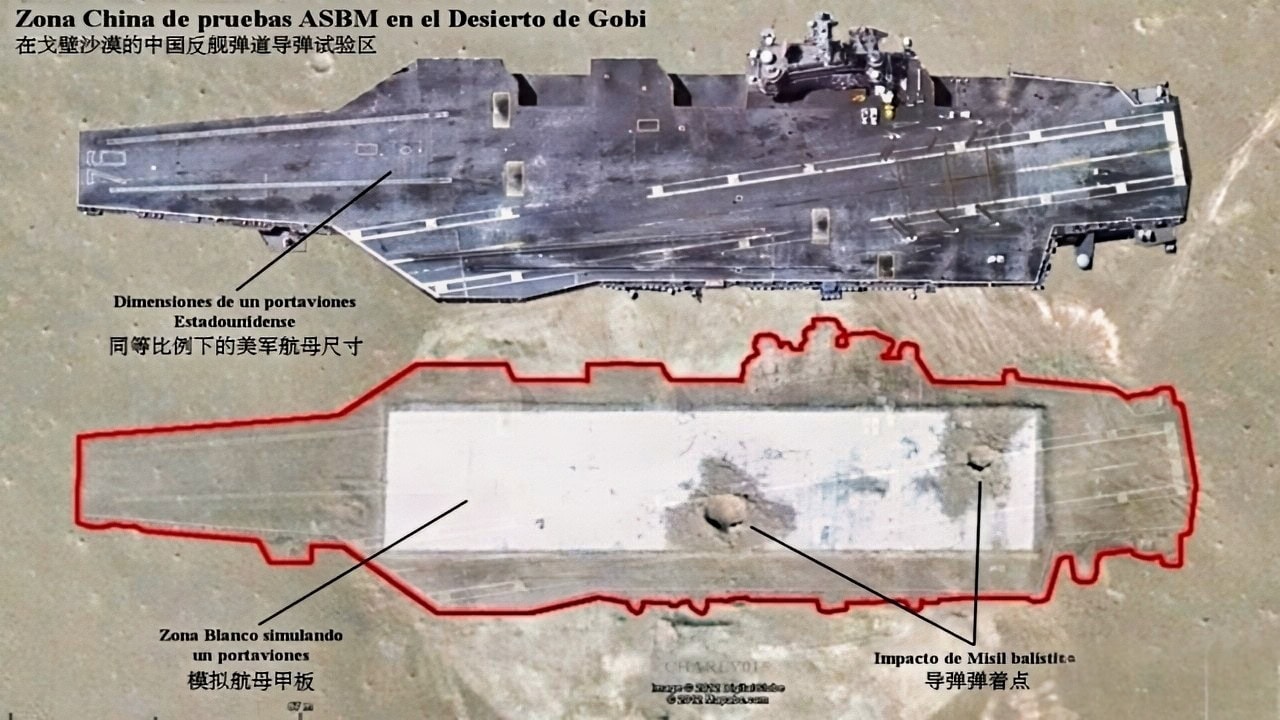
DF-21D image. Creative Commons.
The commonality promise deserved its skepticism, too. A new wing, a new fuselage, new bays, and new controls attached to familiar avionics is a new airplane wearing an old name, and the Air Force learned the industrial version of that lesson a decade later, when its study of simply rebuilding the original F-22 found four subsystems needing outright redesign because the components no longer existed.
But the FB-22’s defenders have valid points, for sure. The 2018 bomber that killed it did not arrive in 2018. The requirement wandered through a canceled program, was reborn as the Long Range Strike Bomber, and produced a contract only in 2015 — meaning the interim aircraft the Pentagon rejected as a distraction would have been flying operational missions for roughly a decade before its replacement’s first flight. And the industrial counterfactual stings the most. An FB-22 order would have kept the Marietta production complex alive well past December 2011, when the F-22 line closed instead; within five years, Congress was asking what a restart would cost, and the answer was $50 billion and a supplier base that no longer existed. This site has examined the FB-22 what-if before and reached the uncomfortable middle: the airplane was the wrong answer to the right question, canceled for reasons that were correct and expensive at the same time.
What Fills the Role Now
Today, the FB-22 idea at least lives on. Northrop Grumman won the Long Range Strike Bomber competition in October 2015, the resulting B-21 Raider first flew in November 2023, and the aircraft is now in production at Palmdale at a unit cost around $700 million by public estimates, with roughly 100 planned and the program funded in the $1.5 trillion defense request now before Congress — subsonic, longer-legged than anything the FB-22 promised, and nineteen years later than the bridge the FB-22 was supposed to be.
The bomber that lost survives as archived Lockheed imagery of the final FB-22-4 configuration, a Congressional Research Service file closed in 2006, and the small gray model that sat on James Roche’s desk in the Pentagon, the only FB-22 ever built.
About the Author: Harry J. Kazianis
Harry J. Kazianis (@Grecianformula) was the former Senior Director of National Security Affairs at the Center for the National Interest (CFTNI), a foreign policy think tank founded by Richard Nixon based in Washington, DC. Harry has over a decade of experience in think tanks and national security publishing. His ideas have been published in the NY Times, The Washington Post, The Wall Street Journal, CNN, and many other outlets worldwide. He has held positions at CSIS, the Heritage Foundation, the University of Nottingham, and several other institutions related to national security research and studies. He is the former Executive Editor of the National Interest and the Diplomat. He holds a Master’s degree focusing on international affairs from Harvard University.