
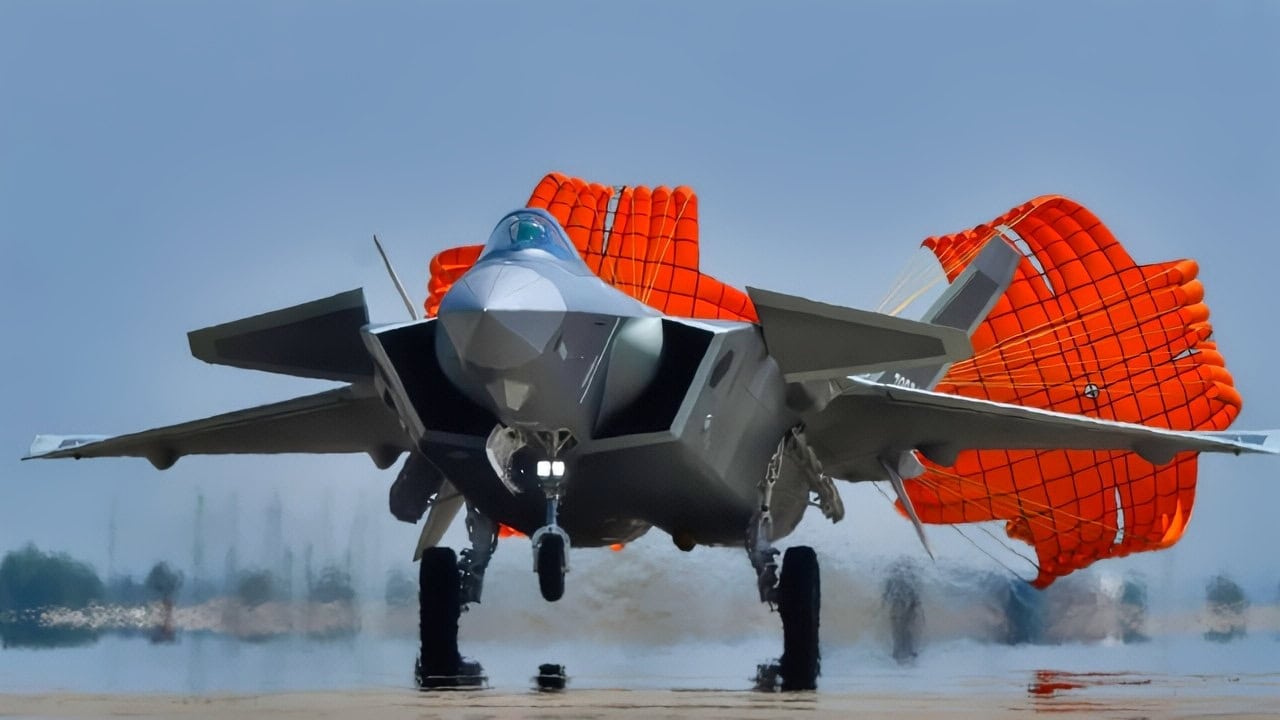
China’s J-20 Stealth Fighter: 300+ Built and Racing Toward 1,000 by 2030
The Chengdu J-20 Mighty Dragon is China’s first fifth-generation stealth fighter and is the second-most widely produced stealth fighter in the world. It was designed to challenge American air superiority and hunt down high-value air targets.
While many analysts question the capabilities of the J-20, the fighter is a significant leap in capability compared to previous Chinese aircraft. The Chinese also are producing the aircraft at astonishingly high rates—its numbers alone make it a credible threat, even if its electronics are not as refined as those of its Western counterparts.
China’s Most Widely Produced Stealth Fighter
By September 2025, more than 300 J-20s were built, according to independent tallies. By late October 2025, defense analysts confirmed that more than 300 units were already fully integrated into People’s Liberation Army Air Force (PLAAF) service across several theater commands, making the J-20 fleet the largest fifth-generation force outside the United States.
This rapid scaling became possible when China adopted high-efficiency pulse-line assembly methods beginning in 2022 that dramatically increased production throughput. At its current rate of production, China may be able to field more than 1,000 J-20s by 2030—this would fundamentally reshape global military aviation.
The J-20 is intended to function as a long-range air-superiority platform with secondary strike capabilities. Its development was directly motivated by the United States’ introduction of the F-22, and China the J-20 to counter U.S. stealth fighters. Its role is to secure air superiority and hunt down enemy air targets with long range missiles such as the PL-17.
The J-20 is also designed to hunt down high-value targets including aerial refuelers and Airborne Early Warning and Control aircraft from standoff distances without being detected by enemy radar. This makes it especially threatening to Taiwan, which operates a significantly smaller air force compared to the PLAAF and is vulnerable to aircraft such as the J-20.
The Mighty but Unproven Dragon
The evolution of the J-20 has produced several important variants. The initial production model, introduced in 2017, established the aircraft’s baseline stealth and long-range performance profile. Subsequent refinements led to a revised J-20A, with improved engines and thrust-vectoring capabilities for better agility.
A pivotal development occurred in September 2025 with the introduction of the J-20S, a twin-seat version of the fighter that expanded strike coordination and controlled unmanned “loyal wingman” drones. This variant demonstrates China’s intention to integrate manned-unmanned teaming into future air combat doctrine.
The fighter is still relatively new in China’s ranks; the first aircraft were not introduced into combat units until 2018.
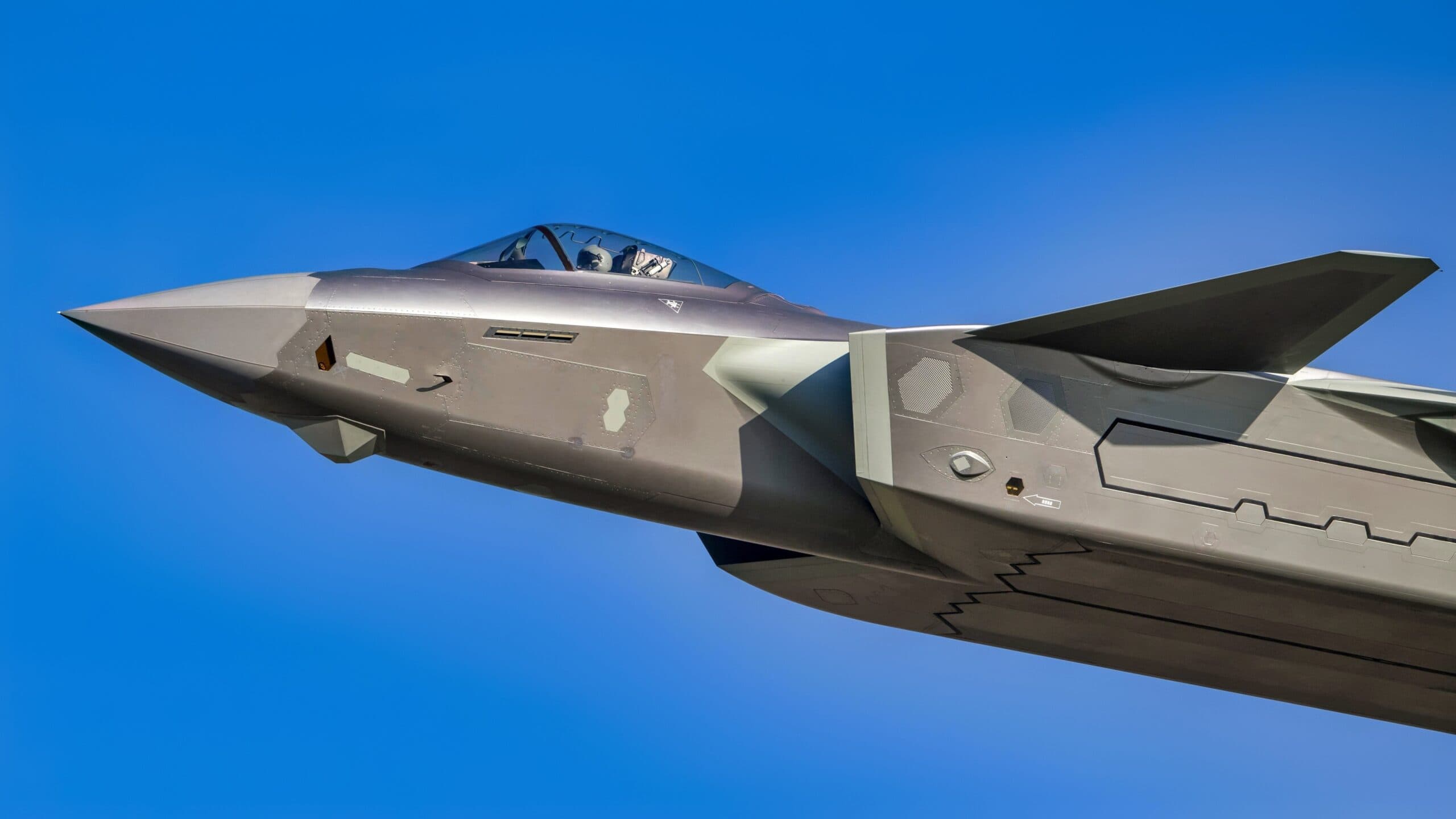
J-20 Fighter. Image Credit: Creative Commons.
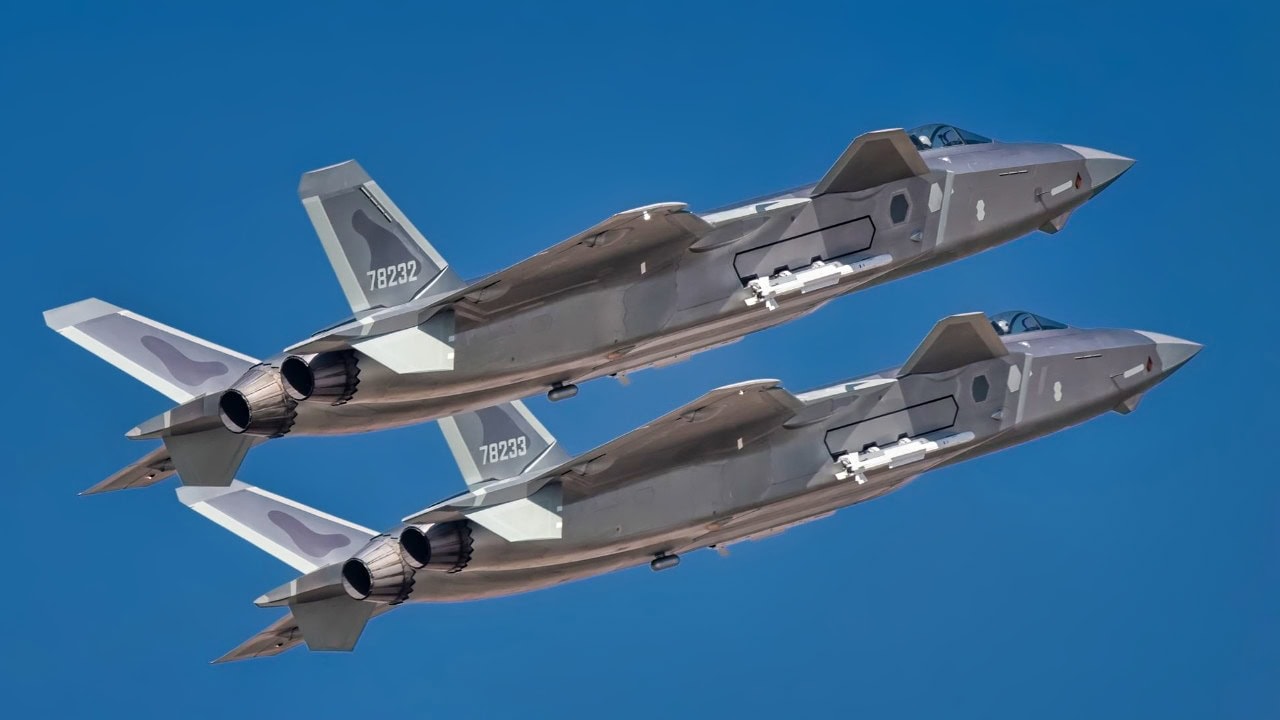
J-20 Mighty Dragon. Image Credit: Creative Commons
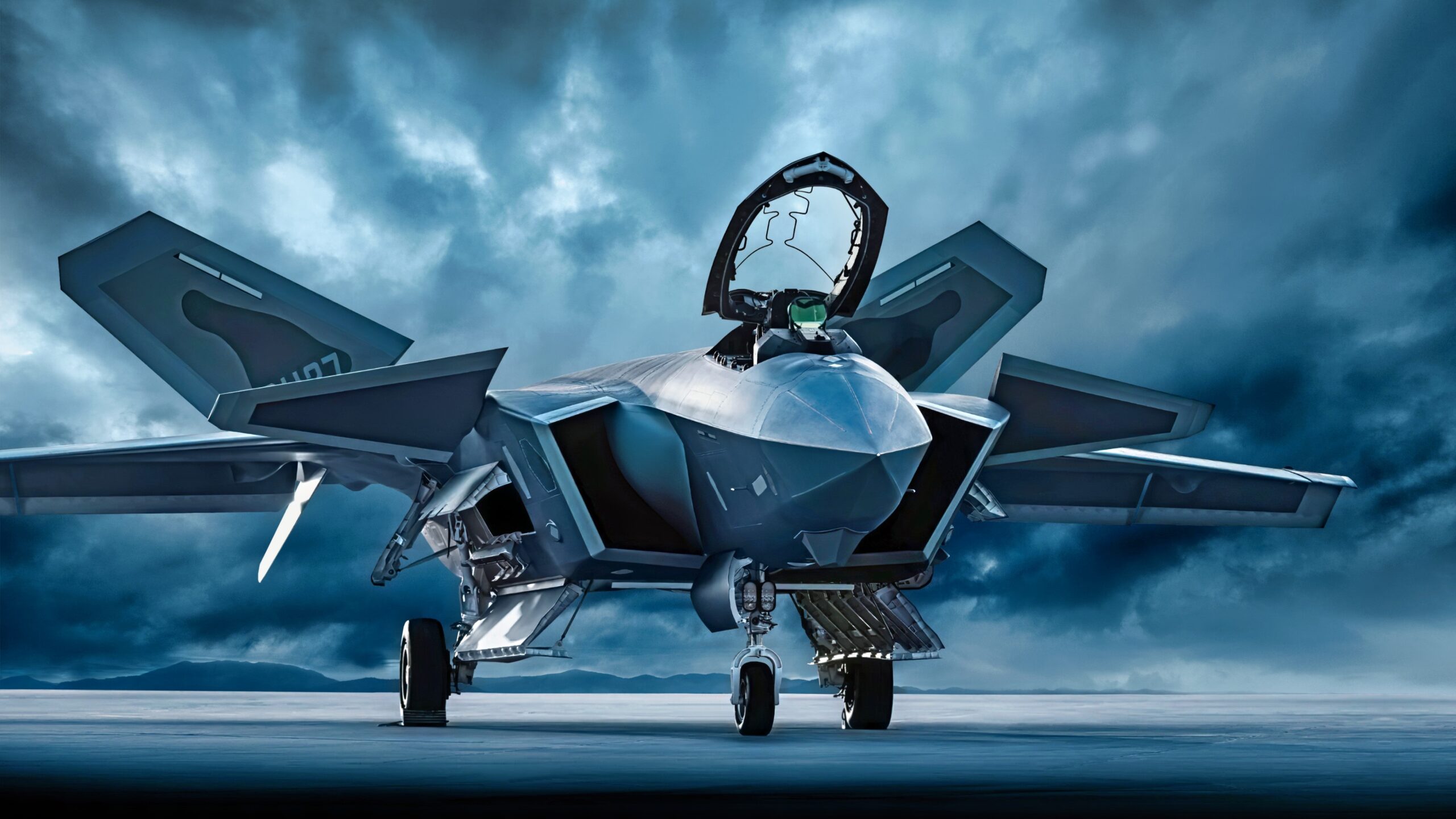
J-20 Fighter 2025 Artist Rendition. Image Credit: Creative Commons.
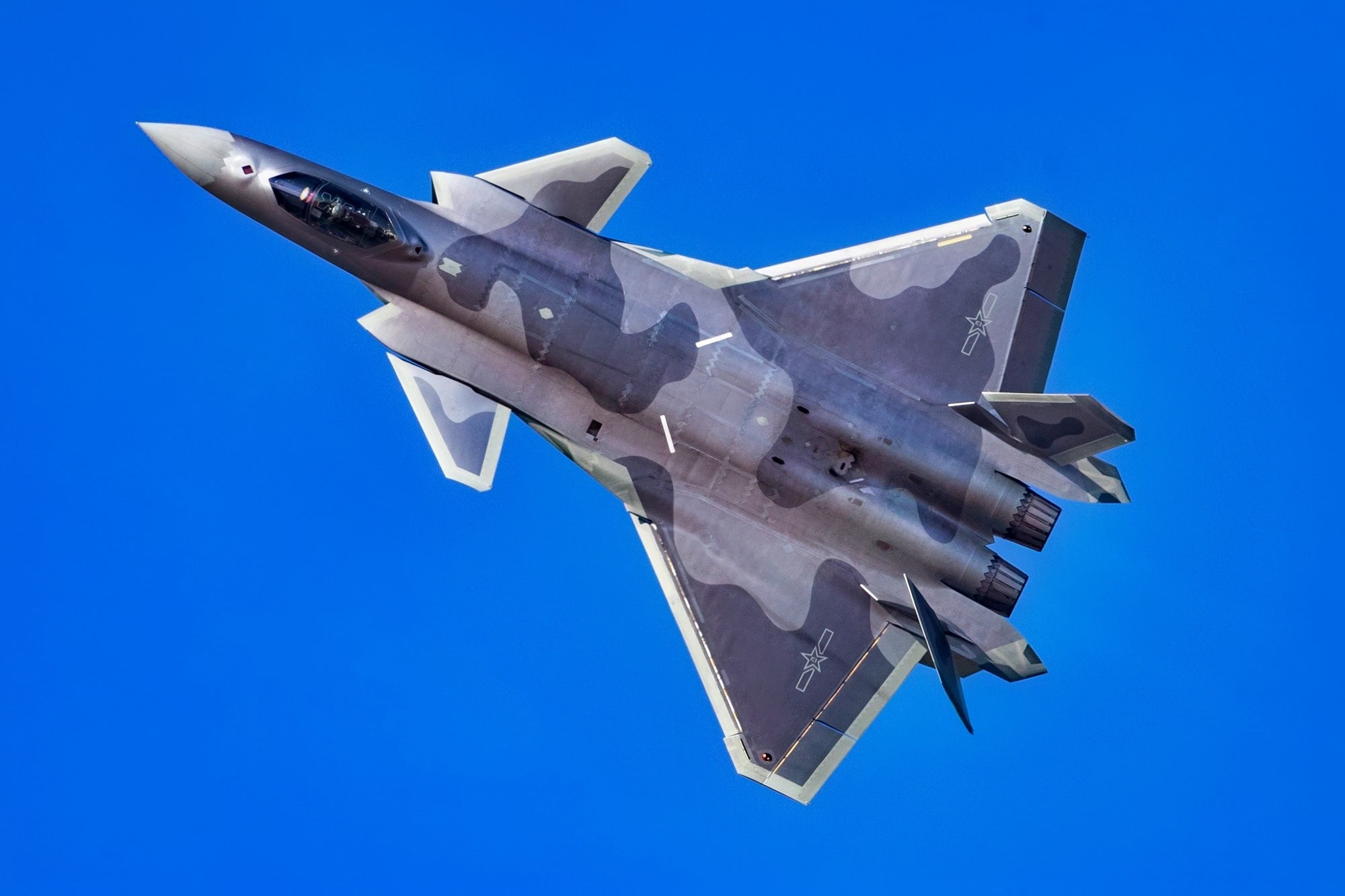
J-20 Fighter from China. Image Credit: Creative Commons.
Since then, the J-20 has been used mainly for patrols, and even then China has intentionally restrained its use, most likely to prevent Western intelligence services from figuring out its secrets.
Nevertheless, the fighter has become the backbone of the PLAAF’s fifth-generation air wing and remains the second most widely produced stealth fighter in the world behind the F-35.
Design and Development of China’s First Stealth Fighter
In the late 1990s, China launched the J-XX program to create an indigenous stealth fighter in response to the development of the U.S. F-22 Raptor. In 2008, the PLAAF officially endorsed Chengdu’s proposal under Project 718.
When the first prototype completed high-speed taxi tests in December 2010, it signaled China was approaching its first breakthrough in fifth-generation fighter design. Just weeks later, on January 11, 2011, the prototype took its maiden flight, marking China’s official entrance into the field of advanced stealth aviation.
Over the next several years, a sequence of refined prototypes revealed steady improvements in stealth shaping, aerodynamics, materials, and systems integration.
By 2017, the aircraft formally entered service, and in early 2018 China activated its first operational J-20 combat unit, becoming only the second nation in the world to field a domestically developed stealth fighter.
The J-20’s airframe presents a distinctive canard-delta configuration, which differs from other stealth aircraft such as the F-22 and F-35.
While the use of canards is unusual for stealth designs, Chengdu had longstanding experience with this aerodynamic layout through earlier programs like the J-9 and J-10. The canards support maneuverability and lift, while the overall shape incorporates stealth features such as diverterless supersonic intakes, radar-absorbent materials, and internal weapon bays.
Subtle improvements became increasingly evident with each subsequent prototype, demonstrating a maturation of China’s design capabilities over time.
Getting Over the Engine Hurdles
Propulsion has long been China’s most significant technological hurdle. Early J-20 models relied on imported Russian AL-31F engines that limited the fighter’s potential for sustained supersonic flight.
This constraint was a major concern for China, given that true fifth-generation fighters must combine both stealth and high-performance propulsion.
A turning point came in 2019, when the J-20 transitioned to domestically produced WS-10 engines, removing foreign dependency and scaling up production.
The long-term plan centers on the WS-15 engine, which is expected to bring the aircraft’s thrust-to-weight ratio closer to that of the F-22, potentially enabling genuine supercruise capability.
About the Author: Isaac Seitz
Isaac Seitz, a Defense Columnist, graduated from Patrick Henry College’s Strategic Intelligence and National Security program. He has also studied Russian at Middlebury Language Schools and has worked as an intelligence Analyst in the private sector.