
Synopsis: Christian D. Orr, a former Air Force Security Forces officer and defense expert, evaluates the 2026 combat debut of the B-52 Stratofortress in Operation Epic Fury.
-According to U.S. Central Command, an armada of B-52s—nicknamed “Stratosaurus”—targeted Iranian ballistic missile and command-and-control posts on March 3, 2026.
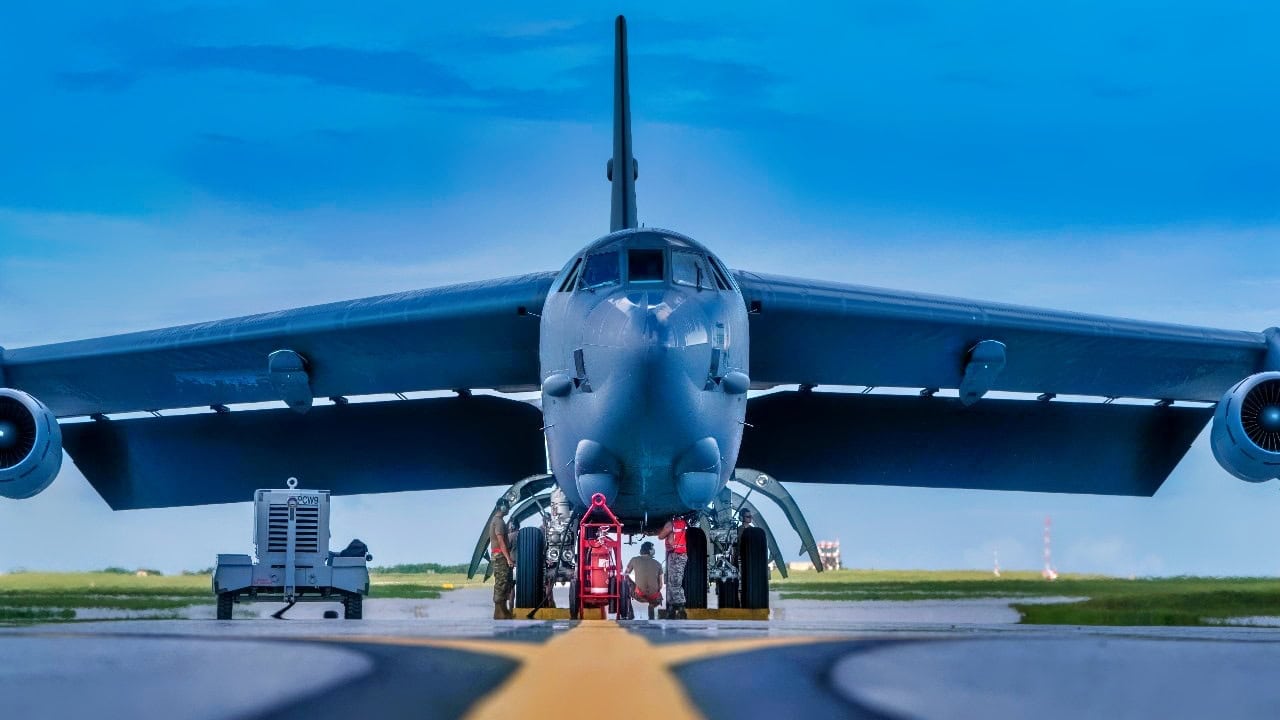
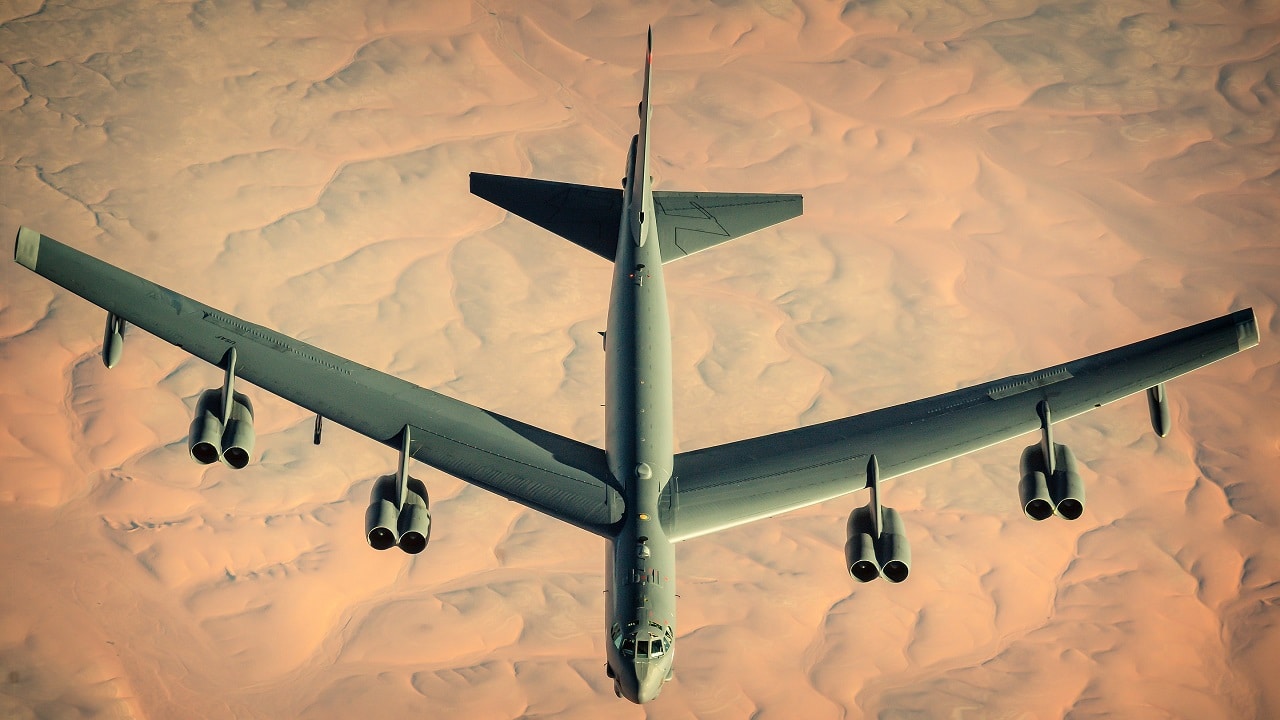
B-52 Bomber. Image: Creative Commons.
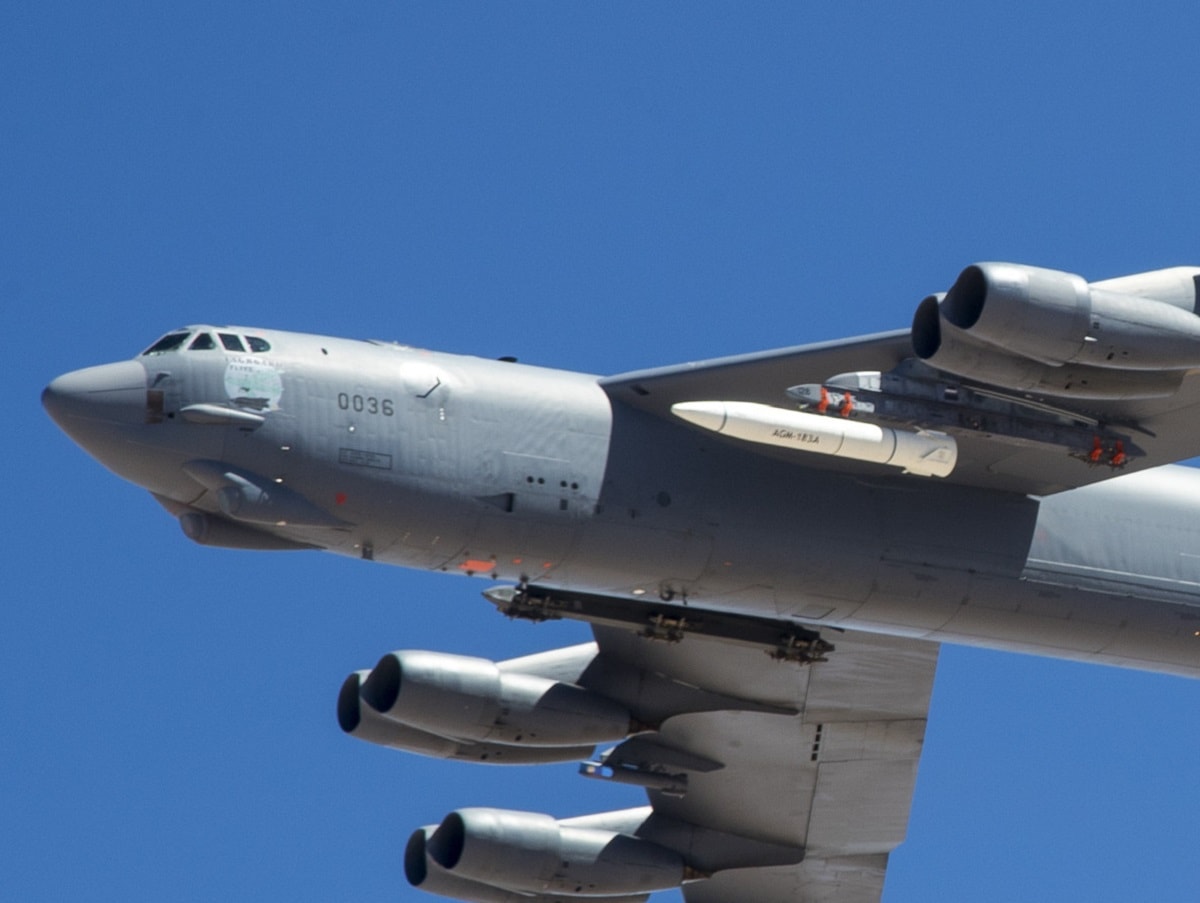
EDWARDS AIR FORCE BASE, Calif. (June 12, 2019) B-52 out of EDW carries ARRW IMV asset for its first captive carry flight over Edwards Air Force Base. (U.S. Air Force photo by Christopher Okula)
-This report analyzes the bomber’s flexibility in a non-stealth environment, enabled by U.S. air superiority over the IRIAF.
-Orr concludes that with the expiration of the New START treaty, the Air Force Global Strike Command may restore nuclear delivery capabilities.
The Stratosaurus Strikes: Why the 70-Year-Old B-52 is Now the Hammer of Operation Epic Fury
The Boeing B-52 Stratofortress, AKA the “BUFF” (“Big Ugly Fat Fellow”), is a septuagenarian warbird with a mind-boggling 74 years of faithful service under its belt.
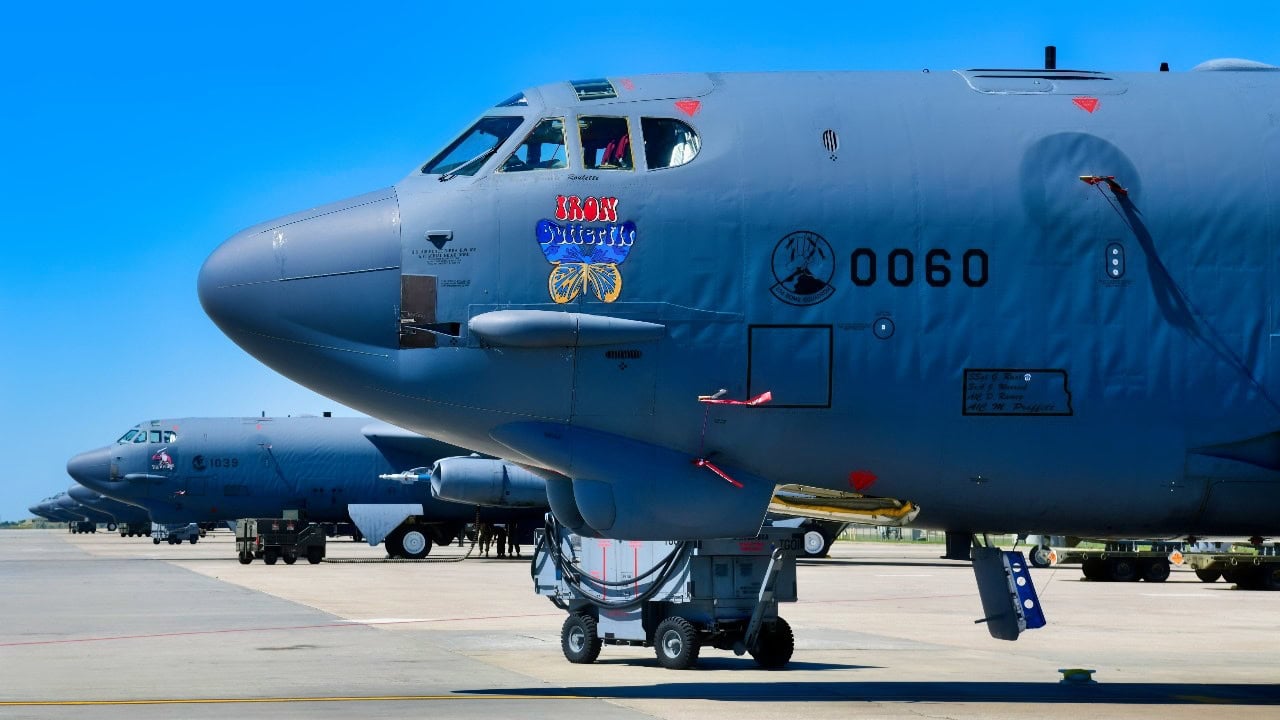
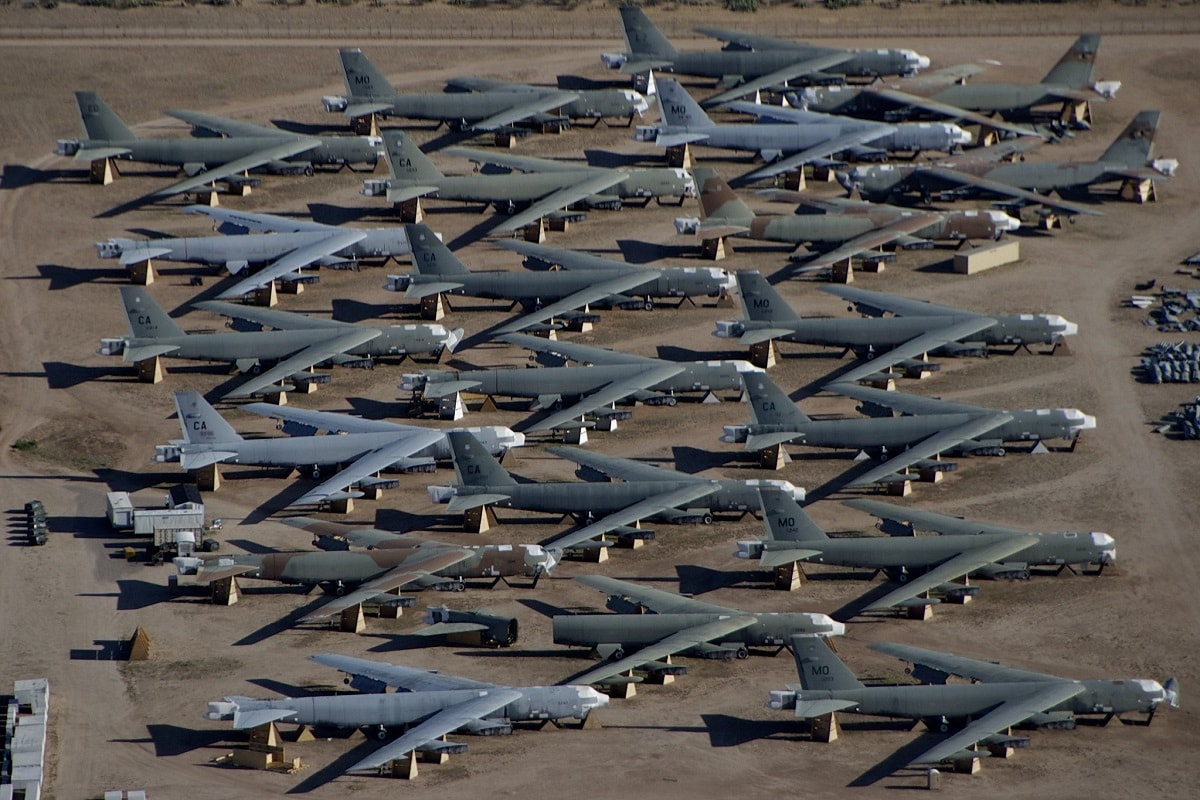
Multiple B-52H Stratofortresses sit parked on the flight line on Minot Air Force Base, North Dakota, Aug. 8, 2022. The B-52 Bomber has been in service since February of 1955. (U.S. Air Force photo by Airman Alysa Knott)
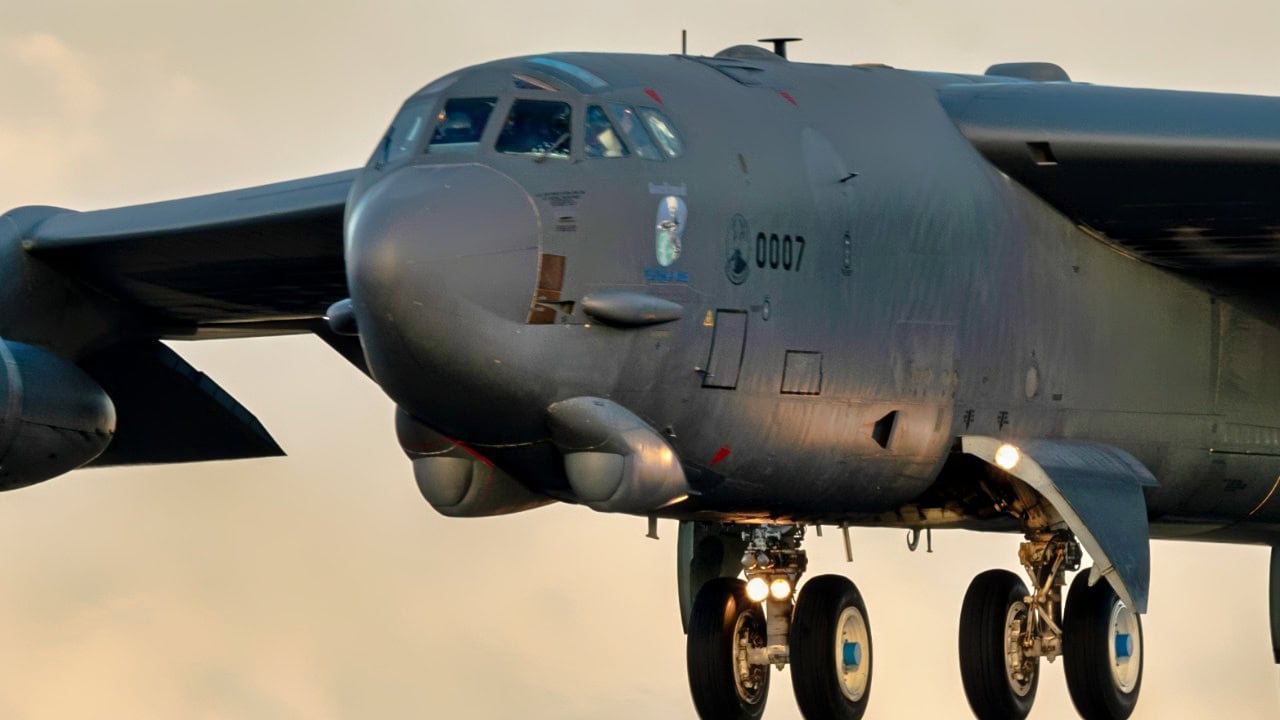
U.S. Air Force B-52H Stratofortress lands at RAF Fairford, England, following a sortie in support of Bomber Task Force 25-2, Feb. 27, 2025. The U.S. maintains a strong, credible strategic bomber force that enhances the security and stability of Allies and partners. (U.S. Air Force photo by Airman 1st Class Luis Gomez)
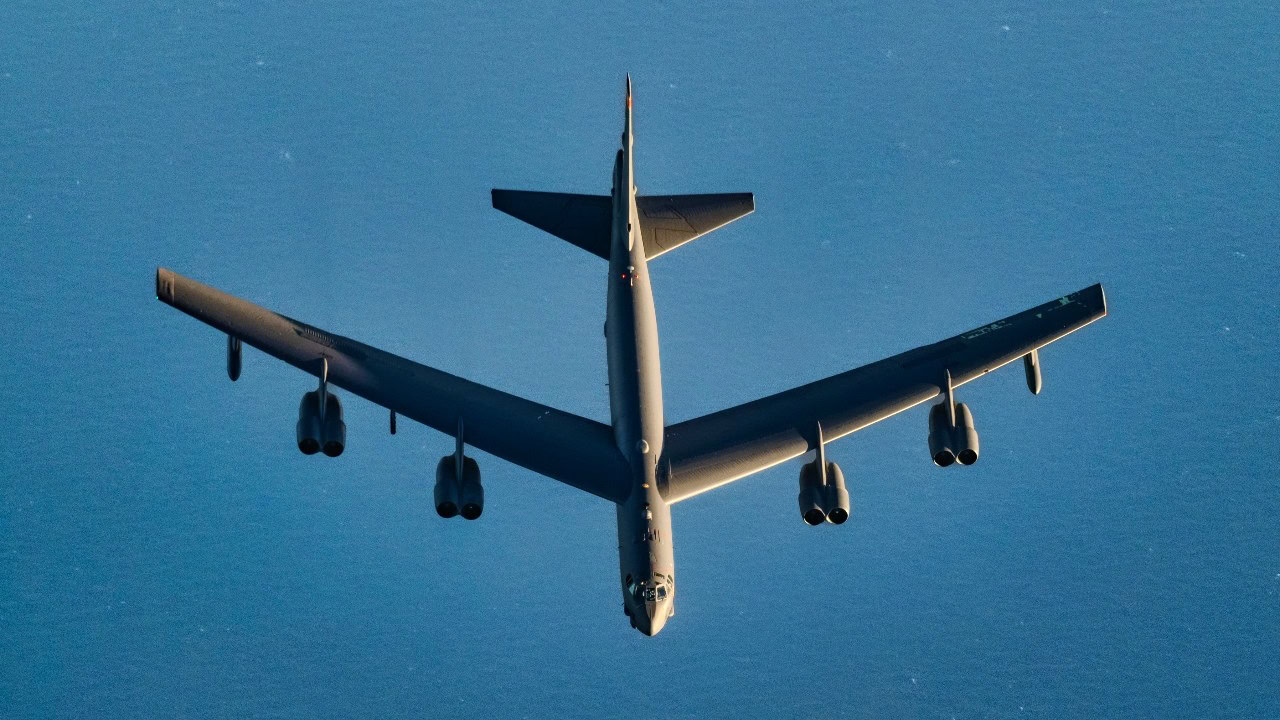
A U.S. Air Force B-52H Stratofortress flies a show of presence mission over the U.S. Central Command area of responsibility, Feb. 20, 2025. Strategic bombers contribute to stability in the CENTCOM theater by demonstrating the credibility, capability, and readiness of the U.S. bomber force, which is critical to deterring attacks against the U.S. and its allies and partners. (U.S. Air Force photo by Staff Sgt. Jackson Manske)
It’s the most battle-proven member of the United States Air Force’s strategic bomber triumvirate, proven to be absolutely devastating—both physically and psychologically—in missions such as the Vietnam War, the 1991 Persian Gulf War, Operation Allied Force in 1999 (the Kosovo air campaign), and the Global War on Terror (Operation Enduring Freedom and Operation Iraqi Freedom).
So, then, it seemed like it was only a matter of time before the B-52 was also used to unleash hell against the theocratic regime of the Islamic Republic of Iran in the current Operation Epic Fury. After all, “Epic Fury” calls for an epic warbird?
“Bomb, Bomb, Bomb, Bomb, Bomb Iran”
This latest exciting development comes to us courtesy of Military Times reporter Claire Barrett, in a March 4, 2026, article titled “The US Air Force just used its oldest bomber to attack Iran.” To wit: “U.S. forces have hit 2,000 targets in Iran since the opening salvos of Operation Epic Fury on Feb. 28, adding the B-1 Lancer and B-52 Stratofortress bombers to the air attacks, U.S. Central Command reported Tuesday morning … On Tuesday, U.S. Central Command confirmed on X that an armada of B-52s, nicknamed ‘Stratosaurus’ for its advanced years, was used in a strike against ‘ballistic missile and commander [sic] control posts.’”
(I presume that by “commander,” the X poster committed a typo and actually meant to say “command and,” e.g., command and control.)
Digging Deeper
The report doesn’t specify whether the “Stratosaurus” strike package employed carpet-bombing tactics or precision-guided munitions, such as cruise missiles and/or Joint Standoff Attack Weapons.
However, given the type of target involved, I would venture that it was the latter, as carpet-bombing missions are more appropriate for massed troop formations.
But either way, it shows the flexibility and versatility of the B-52 platform and why it remains in service after 70+ years.
As the early 20th-century Italian airpower theorist Gen. Giulio Douhet was famous for saying, “Flexibility is the key to airpower.”
It’s also a reflection of the degree of confidence that U.S. aerial warfare planners have in the air superiority that they have gained in the skies of Iran.
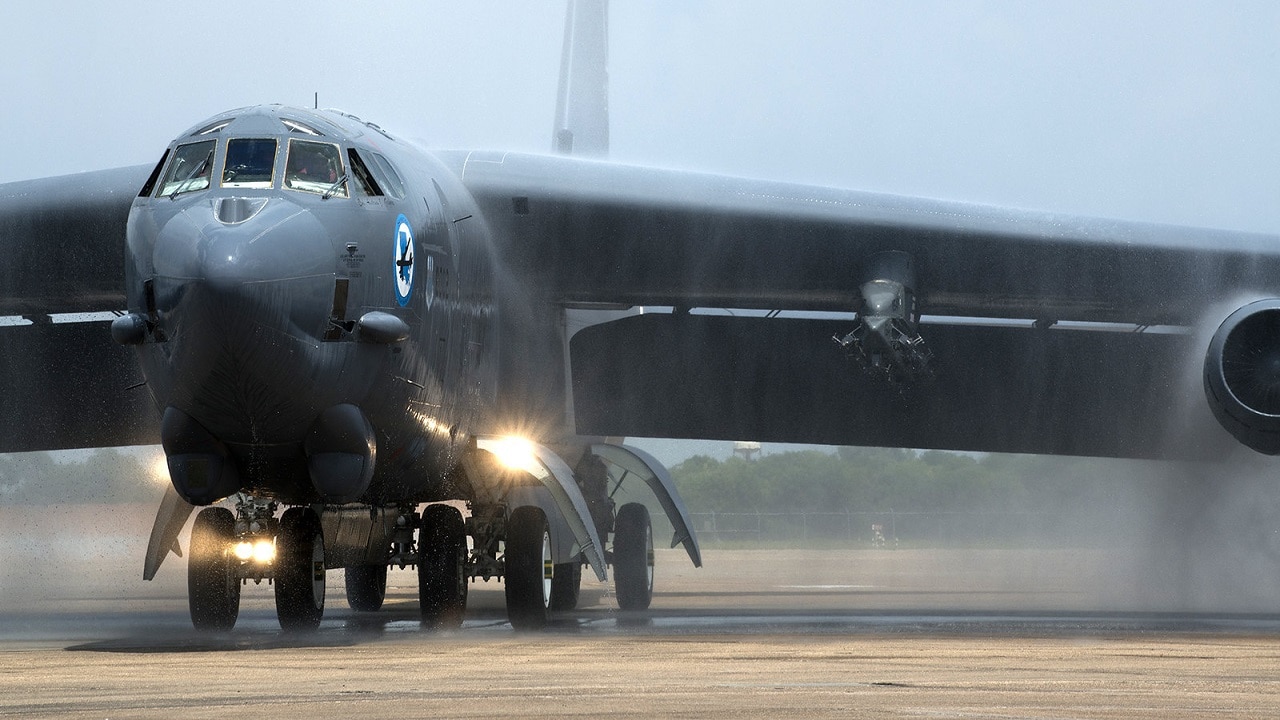
A 2nd Bomb Wing B-52H Stratofortress taxis under a spray of water after returning from a mission July 12, 2014, at Barksdale Air Force Base, La. This marked the last flight for one crew member on the aircraft, Lt. Col. Ronald Polomoscanik, the 343rd Bomb Squadron director of operations, who is retiring after 23 years of service. (U.S. Air Force photo by Master Sgt. Greg Steele/Released)
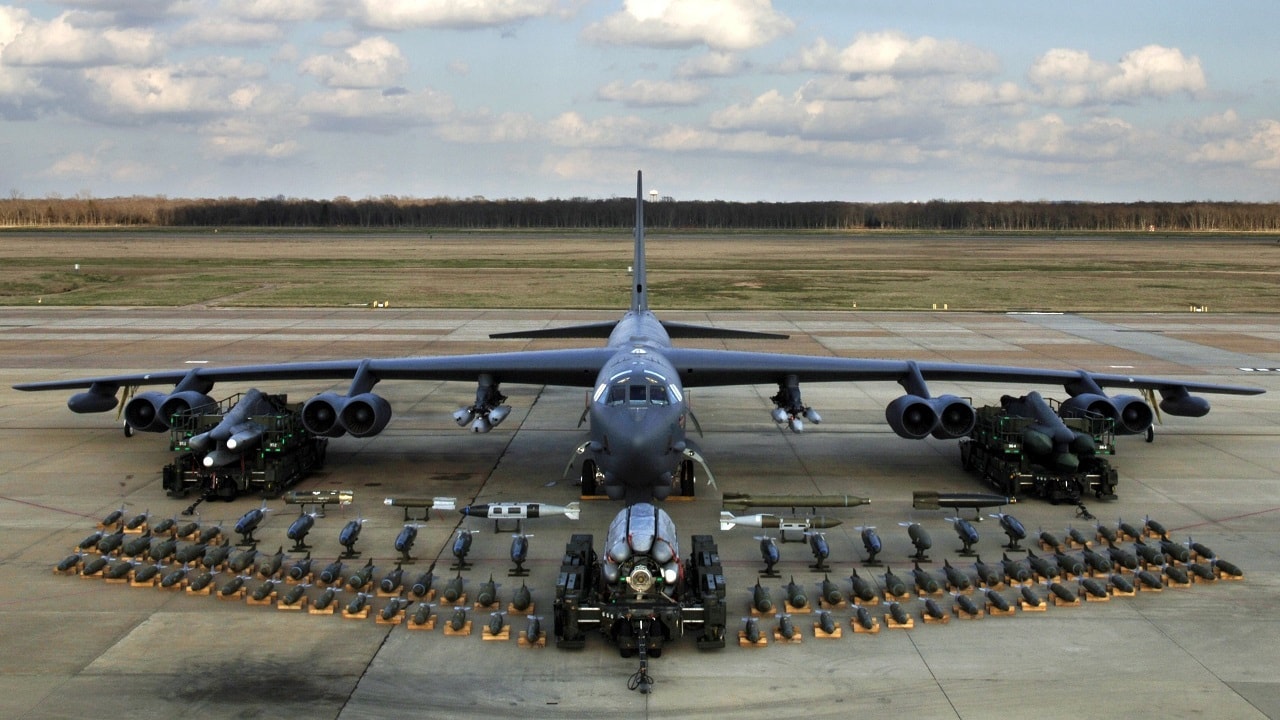
Boeing B-52 static display with weapons, Barksdale AFB 2006. Image: Creative Commons.
A U.S. Air Force B-52 Stratofortress assigned to the 2nd Bomb Wing departs after receiving fuel from a KC-135 Stratotanker, assigned to the 340th Expeditionary Air Refueling Squadron, during a multi-day Bomber Task Force mission over Southwest Asia, Dec. 10th, 2020. The B-52 is a long-range bomber with a range of approximately 8,800 miles, enabling rapid support of BTF missions or deployments and reinforcing global security and stability. (U.S Air Force photo by Staff Sgt. Trevor T. McBride)
It’s one thing to employ the B-2 Spirit on bombing missions, as it has the advantage of stealth technology—indeed, it’s the original “stealth bomber”—that enables it to easily avoid radar detection. It’s another thing to employ the B-1B Lancer (AKA the “BONE”), which has the advantage of supersonic speed (Mach 1.2 / 800 knots / 920 mph / 1,481 km/h).
It’s quite another thing yet to employ the big lumbering Stratofortress, which has neither stealth nor speed (max airspeed of Mach 0.83 / 560 knots / 644 mph / 1037 km/h).
In fact, the Stratofortress is so slow that it should be easy picking for surface-to-air missiles and for the Islamic Republic of Iran Air Force (IRIAF) and its aging fighter fleet, consisting of F-14 Tomcats and F-4 Phantom IIs, F-5 Tigers IIs (American-made, ironically), MiG-29 “Fulcrums” (Soviet-made), Dassault F1 Mirages (French-made), and J-7 “Fishcans” (Chinese-made).
Yet as far as we can ascertain, no IRIAF fighters have risen up to challenge American warplanes.
One unlucky Iranian Yakovlev Yak-130 crew went up against an Israeli Air Force F-35 “Adir” (“Mighty One”) and paid the price for it.
But the only American aircraft losses were those three F-15E Strike Eagles shot down by Kuwaiti friendly fire (thankfully, all six crew members ejected safely), not Iranian ordnance.
Therefore, it’s not surprising that the U.S. Central Command generals are feeling confident enough to employ the B-52 in the skies over Iran.
Worst Case Scenario
Of course, a major reason that U.S. President Donald Trump and U.S. Secretary of War Pete Hegseth launched Operation Epic Fury in the first place was to prevent the Islamic Republic of Iran from ever obtaining a nuclear weapon.
Accordingly, we all hope that the conflict won’t escalate into World War III and require the United States to employ nukes against Iran and/or any of its three best buddies, the nuclear-armed People’s Republic of China, the Russian Federation, and the Democratic People’s Republic of Korea.
However, if the “Doomsday Mission” against either Iran and/or any of its allies becomes necessary, the B-52 stands ready to perform that duty as well.
Air Force Global Strike Command (AFGSC) recently declared that it is prepared to restore nuclear weapons capability to the entire B-52 bomber fleet.
As an anonymous AFGSC spokesperson stated: “Although we will not comment on the posturing of our forces, Air Force Global Strike Command both maintains the capability and training to MIRV the Minuteman III [intercontinental ballistic missile] force and convert its entire B-52 fleet into dual capable long range strike platforms if directed by the President.”
That’s especially noteworthy, considering that out of the Air Force’s 76 B-52H airframes, 30 of them are currently only capable of employing conventional munitions; this posture was implemented to enable the U.S. meet its obligations under the New START treaty.
However, New START—officially known as The Treaty between the United States of America and the Russian Federation on Measures for the Further Reduction and Limitation of Strategic Offensive Arms—expired last month.
What’s more, the happier days of Russo-U.S. relations, e.g., Mikhail Gorbachev’s perestroika and glasnost, Bill Clinton’s friendship with Boris Yeltsin, and George Walker Bush “[getting] a sense of Vladimir Putin’s soul,” have gone the way of the dodo bird anyway.
About the Author: Christian D. Orr, Defense Expert
Christian D. Orr is a Senior Defense Editor. He is a former Air Force Security Forces officer, Federal law enforcement officer, and private military contractor (with assignments worked in Iraq, the United Arab Emirates, Kosovo, Japan, Germany, and the Pentagon). Chris holds a B.A. in International Relations from the University of Southern California (USC) and an M.A. in Intelligence Studies (concentration in Terrorism Studies) from American Military University (AMU). He is also the author of the newly published book “Five Decades of a Fabulous Firearm: Celebrating the 50th Anniversary of the Beretta 92 Pistol Series.”