
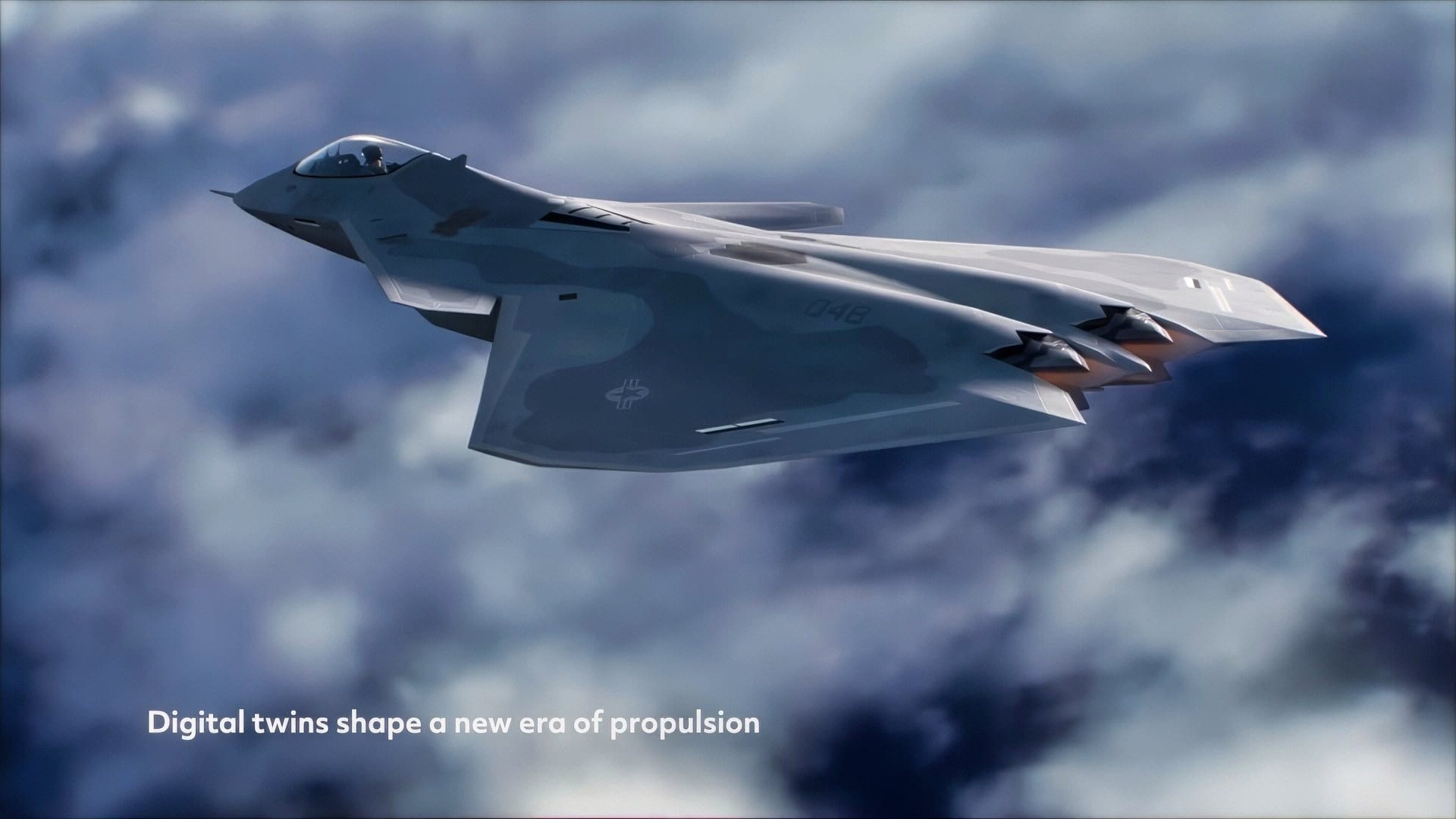
“The F-47 is the most important fighter the U.S. Air Force will ever field. We can’t mess this up. Any mistake or delay could mean China wins the race for 6th-generation fighters. Failing could cost lives.” That’s what a former U.S. Air Force General told me last week when we talked on background about all things F-47 NGAD. His assessment was clear: “The F-47 will be the spine of the U.S. Air Force’s efforts to deter China. We need this fighter more than we know.”
That all makes sense, but let’s come back to the present for a moment. The F-47 NGAD stealth fighter doesn’t exist yet.
The F-47 NGAD Is Coming
Not really. Boeing has begun assembling the first article at its St. Louis facility, the Air Force has confirmed that experimental X-plane demonstrators have been flying since 2020, and General David Allvin — until his retirement in late 2025, the Air Force Chief of Staff — committed publicly to getting the first F-47 in the air by 2028.
But the production fighter itself is still ink on a classified blueprint, a sort of digital twin running inside Boeing Phantom Works’ computers, and a couple of artist renderings the Air Force has openly admitted were modified to obscure the actual design.
That gap between paper and metal is exactly why understanding what the F-47 is supposed to be — and why the Air Force is willing to gamble more than $20 billion in development money plus hundreds of billions more in expected production orders to get there — matters now, before the program is too far along to course-correct.
This is how the F-47 NGAD came to exist, what it is supposed to do, why it should outclass the F-22 and F-35 across every measurable performance dimension that matters, why a small fleet of approximately 185-plus aircraft can plausibly anchor American air superiority through the 2040s, and — most importantly — why this fighter should not be thought of as a fighter at all. The F-47 will be a flying command node. The first true one.
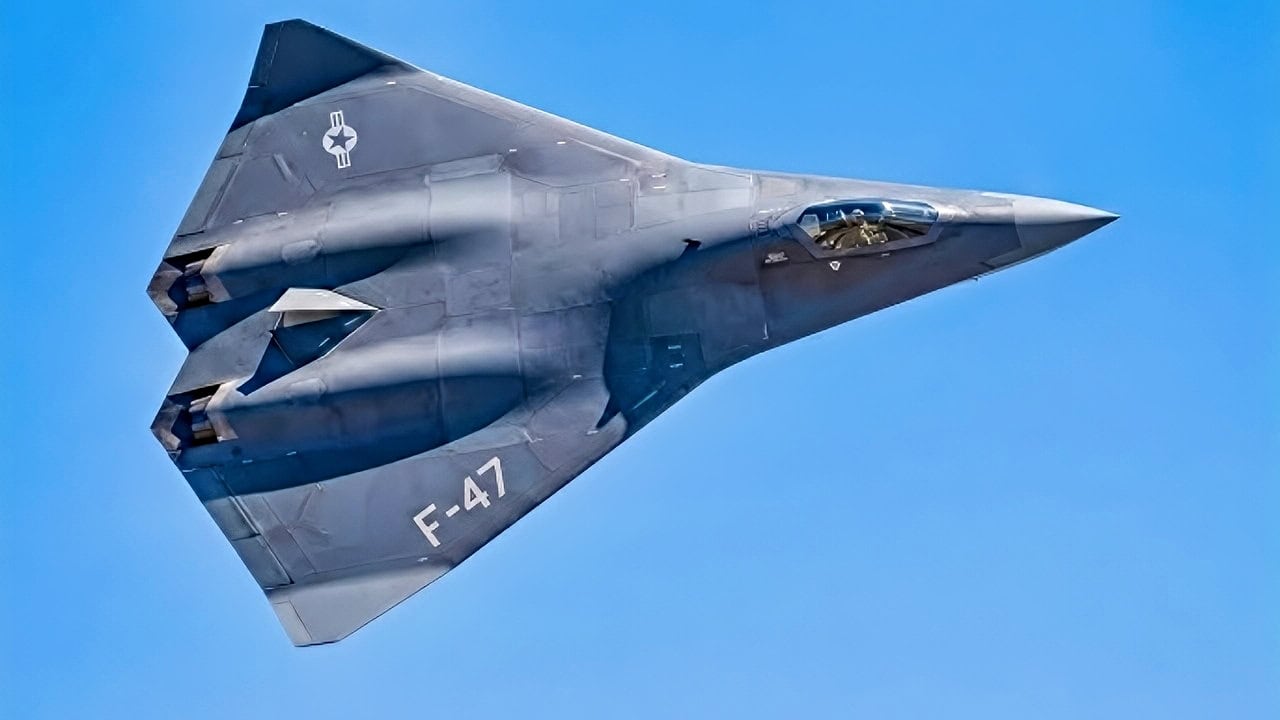
F-47 Fighter Computer Mock Up. Image Credit: Creative Commons.
A Long Road To A Sixth-Generation Fighter and the F-47
The program that became the F-47 began in 2014, when the Defense Advanced Research Projects Agency launched what was originally called the Air Dominance Initiative.
The objective was straightforward but ambitious: figure out what the next generation of air superiority would look like after the F-22 — a fighter the U.S. had been building since the 1990s — eventually reached the end of its useful life. The following year, then-acquisition chief Will Roper expanded the effort into the Aerospace Innovation Initiative, which funded full-scale X-plane demonstrators worth roughly $1 billion in classified development.
The public got its first hint that any of this was happening in September 2020, when Roper told reporters that a full-scale Next Generation Air Dominance demonstrator had “broken records” — a deliberately vague statement that signaled the program was much further along than anyone outside the Pentagon had realized. According to Allvin’s March 2025 disclosures, two competitive prototypes had by then been flying secretly since 2020, accruing hundreds of hours of flight time. Northrop Grumman opted out of the prime competition in 2023, leaving Boeing and Lockheed Martin as the two finalists.
By 2024, the program was in serious trouble. Then-Air Force Secretary Frank Kendall paused the contract award in May of that year because the projected per-aircraft cost had ballooned to roughly three times the price of an F-35 — putting individual NGAD fighters in the $300 million range. Kendall ordered an internal study to determine whether the program could be restructured to be more affordable or whether the air superiority mission could be accomplished with cheaper alternatives.

Shown is a graphical artist rendering of the Next Generation Air Dominance (NGAD) Platform. The rendering highlights the Air Force’s sixth generation fighter, the F-47. The NGAD Platform will bring lethal, next-generation technologies to ensure air superiority for the Joint Force in any conflict. (U.S. Air Force graphic)
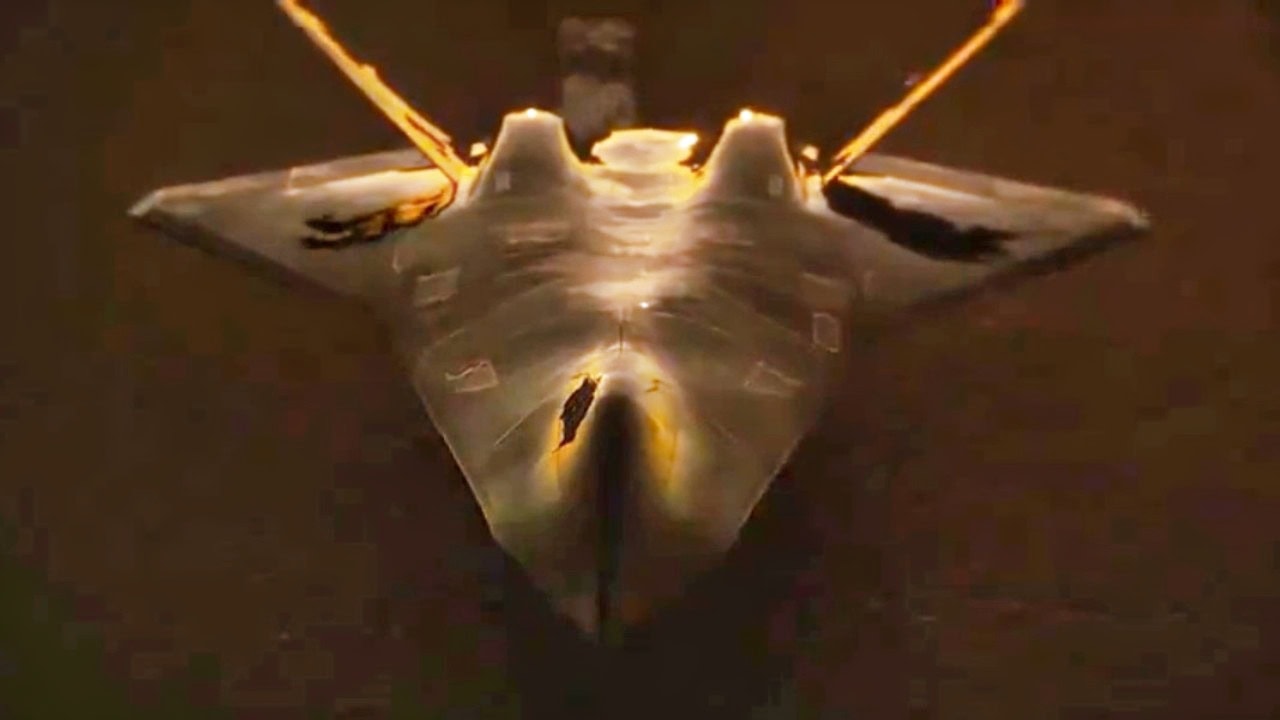
F-47 Fighter from Boeing. Image Credit: U.S. Air Force Screenshot.
The study concluded there was no acceptable substitute. As Major General Joseph Kunkel, the service’s director of force design, integration, and wargaming, told the Air & Space Forces Association Warfare Symposium in early 2025, every alternative the Air Force tested came up short against the threats projected to dominate the 2030s and 2040s.
President Trump announced the contract award on March 21, 2025, designating Boeing the winner and naming the aircraft the F-47. The engineering and manufacturing development contract was reported at over $20 billion, with the company expected to mature, integrate, and test the airframe and produce a handful of test articles. Defense Secretary Pete Hegseth, Allvin, and Lieutenant General Dale White flanked the President at the announcement. The decision was a turning point for Boeing, whose defense business had been bleeding money on fixed-price contract losses, and a first-ever stealth fighter loss for Lockheed Martin’s Skunk Works — the division that had built every Western stealth fighter since the F-117.

F-117 Nighthawk at National Museum of Air Force 19FortyFive Photo
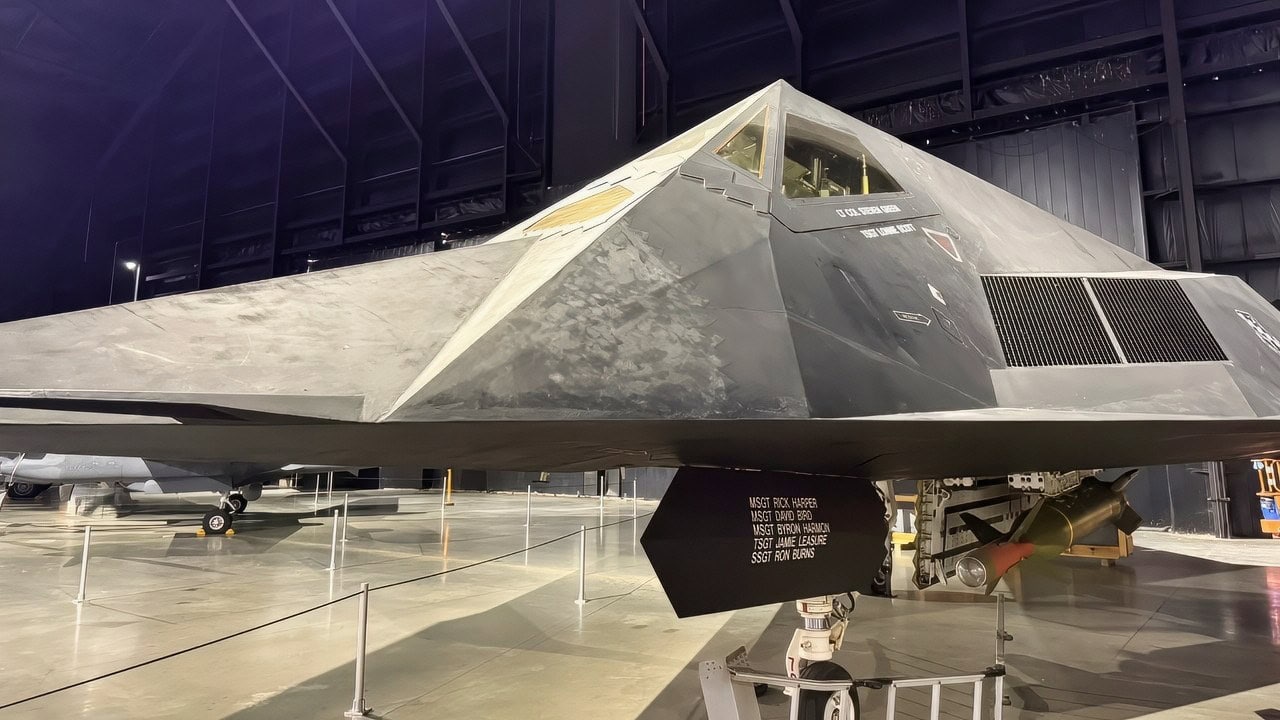
F-117A Nighthawk at USAF Museum. Image taken by 19FortyFive Owner, Harry J. Kazianis.
In September 2025, Allvin announced that Boeing had begun manufacturing the first F-47 at its St. Louis facility, with first flight targeted for 2028. The 2028 target was reaffirmed in the fiscal year 2027 budget request released by the White House in April 2026. Operational entry is targeted for 2029, with the aircraft fielded broadly in the 2030s.
Why The F-47 Is Better Than The F-22 — And The F-35
Allvin laid out the broad performance picture in March 2025, saying the F-47 would have significantly longer range, more advanced stealth, be more sustainable and supportable, and have higher availability than the Air Force’s fifth-generation fighters.
A May 13, 2025, infographic he posted on X added concrete numbers to the framing.
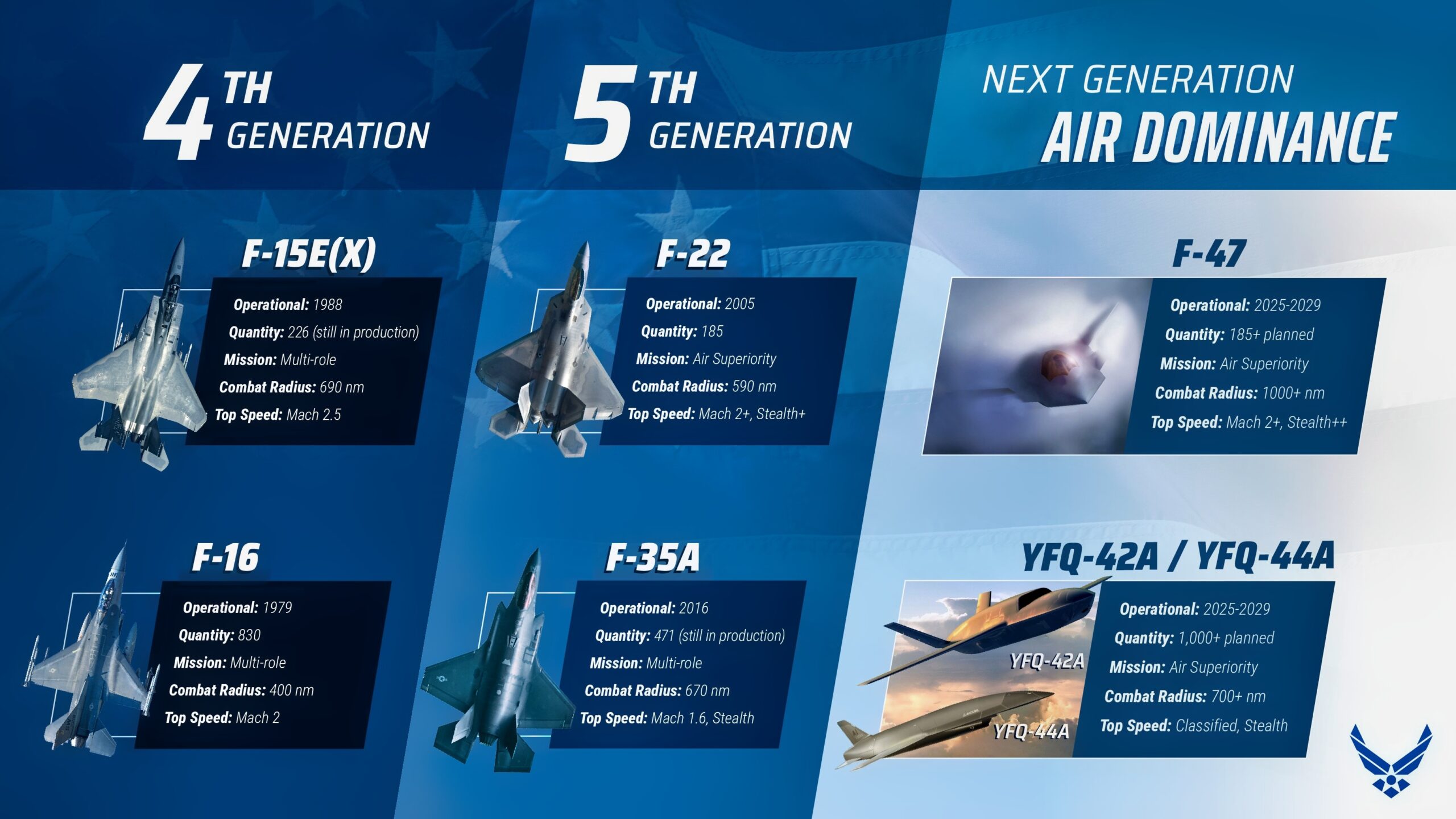
F-47 Infographic. Image Credit: U.S. Air Force
Range:
This is the single most important upgrade. The F-47 is publicly stated to have a combat radius of more than 1,000 nautical miles. The F-22’s combat radius is 590 nautical miles. The F-35A is 670. That works out to a 69 percent increase in unrefueled reach over the Raptor and a roughly 50 percent increase over the Lightning II.
The official figure is listed as “1,000+”—leaving room for the actual number to be higher than the published floor.
The strategic implication is direct. An F-47 operating from Guam or Japan can reach contested airspace around Taiwan without needing tanker support — or with tankers positioned much further from threat zones. The F-22 cannot do that. The F-35A cannot do that either. Long-range Chinese anti-ship and air-to-air missiles, including the very long-range PL-17 and the DF-26, were specifically built to threaten the tankers that current American fighters depend on. By extending the F-47’s combat radius past 1,000 nautical miles, the Air Force is engineering a fighter that does not need to live inside the kill chain Beijing has spent two decades building.
Stealth:
The F-22 has long been described as a “stealth+” platform — better than the F-117 or B-2 by virtue of being designed for the air superiority mission rather than the ground-attack and strategic-strike missions those earlier aircraft were built for.
The F-35 is “stealth,” tuned for multi-role operations rather than the F-22’s pure air-to-air profile. The F-47, according to Allvin’s infographic, will be “stealth++” — improved low-observability against radar across multiple frequency bands and reduced infrared signature from every angle. The Air Force has described the F-47 as featuring all-aspect, broadband low-observability. That phrasing is not accidental.
Low-observability against modern multi-band radar networks — like the integrated sensor architecture China is fielding across its Type 003 Fujian carrier and ground-based A2/AD network — requires reduced signatures in frequencies that fifth-generation aircraft were not optimized to defeat.
Speed:
The F-47 is officially listed as capable of speeds above Mach 2. The F-22’s top speed is Mach 2.25. The F-35A’s Mach is 1.6. Trump, at the contract announcement, said the F-47’s speed was “top, so ‘over two,’ which is something that you don’t hear very often” — characteristically vague but consistent with public reporting that suggests the aircraft will be faster than the F-35 and broadly comparable to the F-22, with the additional benefit of supercruise — sustained supersonic flight without afterburner — across a wider operational envelope.
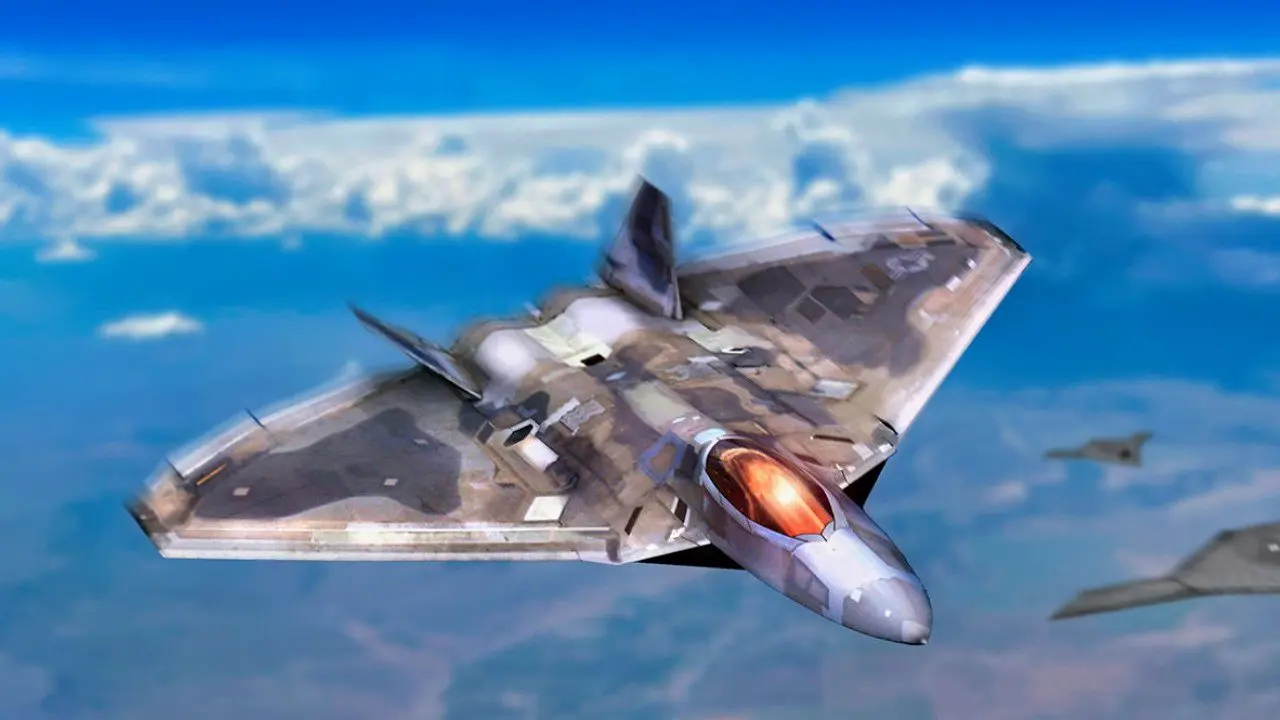
NGAD Fighter. Artist Rendering.
Engines:
The fundamental enabling technology behind the F-47’s range and power is its propulsion system. The aircraft will be powered by an adaptive-cycle engine developed under the Next Generation Adaptive Propulsion program — either the Pratt & Whitney XA103 or the General Electric XA102.
These are not conventional turbofans. Adaptive-cycle engines have a third bypass stream that can be opened for fuel efficiency during cruise or closed to redirect airflow toward the core for maximum combat thrust. Pratt & Whitney has stated that its XA103 architecture is engineered to deliver up to 25 percent greater fuel efficiency and up to 20 percent more thrust compared with conventional fixed-cycle engines. The company completed the engine’s detailed design review in early 2025 and revealed additional architecture details in February 2026.
That power matters for more than just speed and range. Modern combat aircraft increasingly require enormous amounts of electrical generation to power their sensors, processors, and — eventually — directed-energy weapons. The XA103 was specifically designed to deliver thrust, electrical power, and thermal management capacity simultaneously, which is why Pratt & Whitney’s program leadership has openly discussed creating air dominance by staying decades ahead of potential adversaries. Adaptive propulsion is the technology that makes a true sixth-generation fighter possible. Without it, you have a fifth-generation airframe with new avionics. With it, you have a fighter that can do things — including supporting megawatt-class lasers and persistent high-bandwidth networking — that no current platform can.
Sustainment:
Allvin emphasized repeatedly that the F-47 will require less manpower and infrastructure to deploy than the F-22 and F-35. This is partly a consequence of the open-architecture digital design approach Boeing used — the same approach that allowed the company to build a complete digital twin of the aircraft before bending any metal — and partly a consequence of the lessons learned from the maintenance burden of the F-22, which had famously low mission-capable rates throughout much of its operational career.
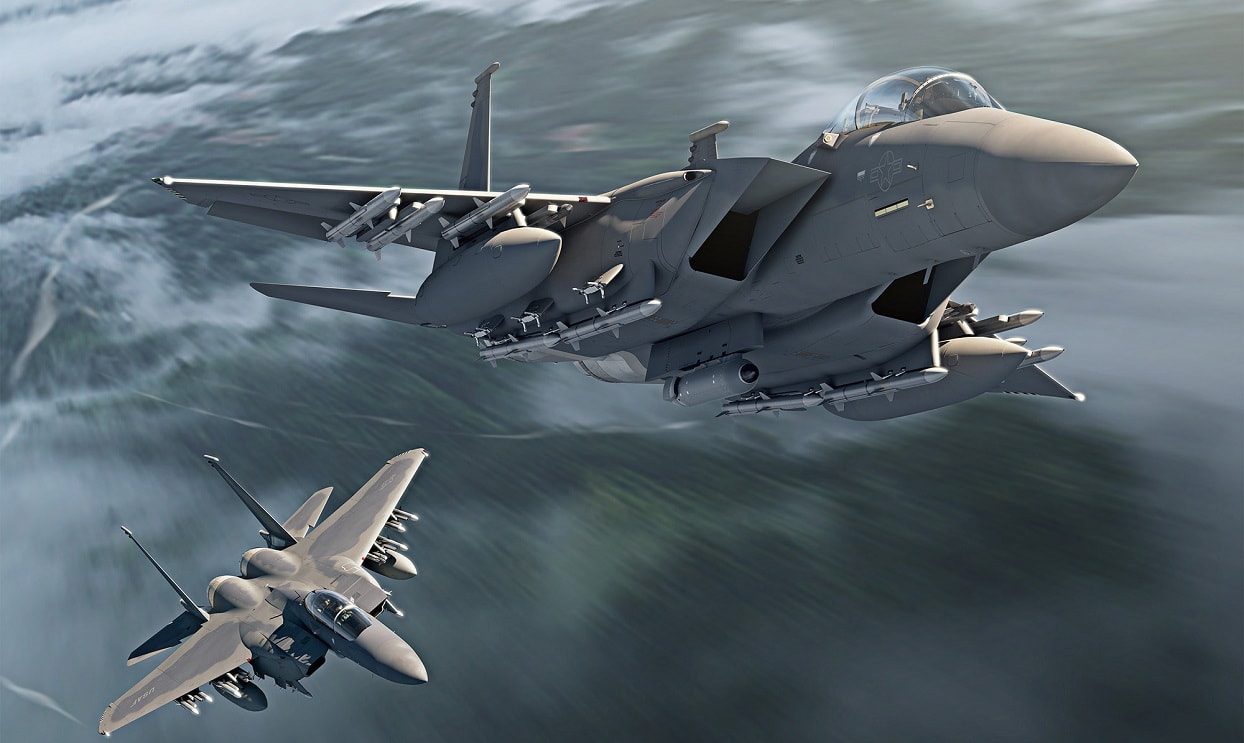
Two Boeing F-15EX Eagle II fighters armed with air-to-air missiles. Boeing handout.
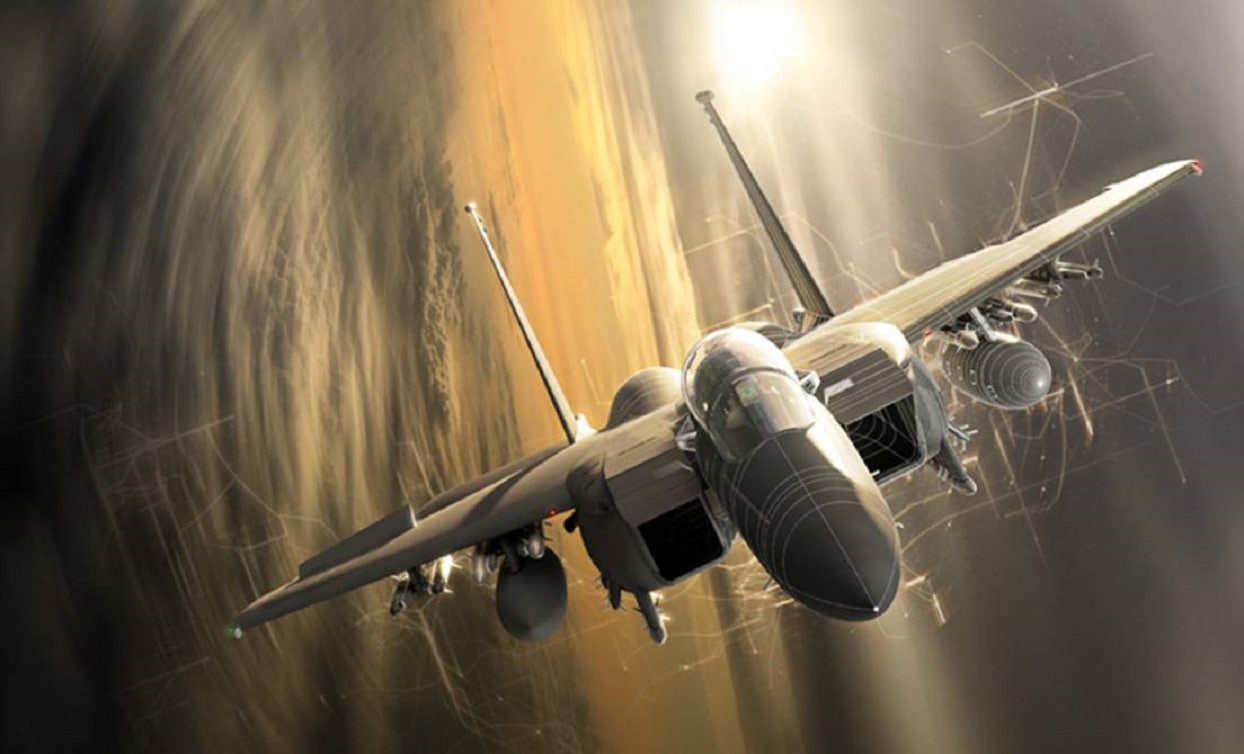
Image Credit: Boeing.
Why It Could Cost $300 Million Per Aircraft — And Why That’s Worth It
Let’s talk about the money.
The Congressional Budget Office estimated as early as 2018 that an NGAD-class airframe could cost up to $300 million each.
That number was reaffirmed in subsequent years as Pentagon planners modeled the program in detail. By the time Kendall paused the program in 2024, the per-aircraft cost projection was sitting at roughly three times that of an F-35 — the same $300 million range — which was the likely proximate cause of the procurement freeze.
The redesign that followed Kendall’s pause was specifically aimed at reducing that number. Whether it succeeded is one of the open questions about the program. Public reporting suggests the per-aircraft cost will still be substantially higher than that of fifth-generation fighters, with $300 million remaining the most-cited estimate even after the redesign.
That number is large in absolute terms. It is also defensible.
The F-22 cost approximately $143 to $150 million per aircraft. The F-35 family typically falls between $80 million and $109 million per tail. A $300 million F-47 sounds like a sticker-shock decision until you put it next to the strategic alternative — which is fielding a Pacific air force that cannot reach the fight without tankers vulnerable to Chinese long-range missiles, that cannot survive deep inside an integrated air defense network designed specifically to defeat the F-22 and F-35, and that cannot manage the unmanned formations that future air combat will be built around.
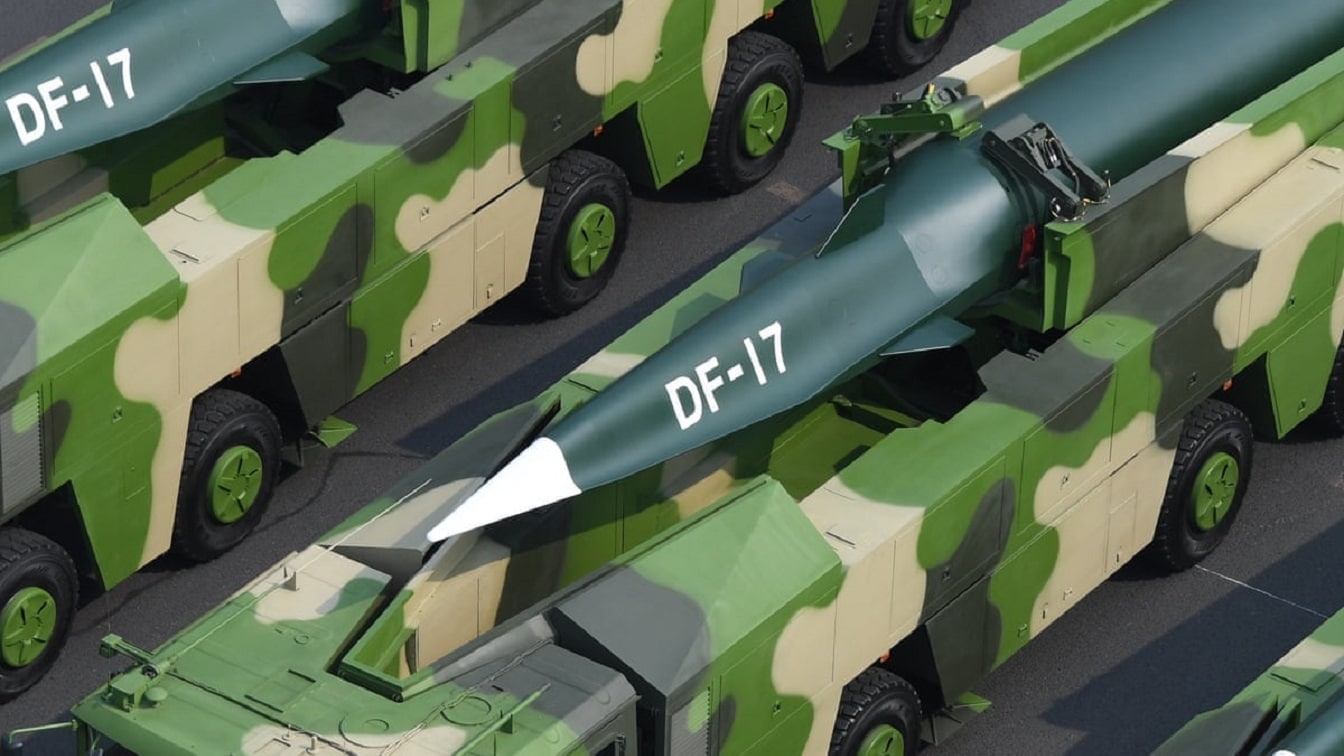
DF-17 Chinese Missile. Image Credit: Creative Commons.
Cheap fighters that lose are more expensive than expensive fighters that win. That is the calculation that drove Kunkel’s working group to the conclusion they reached and likely handed to Trump in early 2025.
There is also an offsetting math that the Air Force has been emphasizing publicly. Each F-47 will operate as the manned controller of two or more Collaborative Combat Aircraft — semi-autonomous unmanned fighters being built under a separate but linked program. The two CCA prototypes currently in flight test are the General Atomics YFQ-42A “Dark Merlin”, which made its maiden flight on August 27, 2025, and the Anduril YFQ-44A “Fury”, which followed on October 31, 2025. These drones are being designed at unit costs of $20-30 million — a fraction of what a manned fighter costs. If each F-47 effectively functions as a five-platform formation — one manned fighter plus two to four unmanned wingmen — the cost-per-combat-capability calculation looks substantially better than the raw $300 million-per-tail number suggests.
F-47 NGAD: The Quarterback Of The Battle Zone
Here is where the F-47 becomes genuinely different from anything that came before — and where the comparison to the F-22 starts to break down.
The F-22 was built to be the world’s best dogfighter. Period. It was designed in the 1980s, optimized for a Cold War threat environment in which the United States expected to face large numbers of Soviet fighters in contested skies over Europe, and built around the assumption that air superiority meant winning every individual air-to-air engagement. It is extraordinarily good at that mission. It is not particularly good at anything else.
The F-35 is closer to the F-47 in design philosophy. The Lightning II was built around sensor fusion — the ability to integrate enormous quantities of data from multiple onboard sensors and external sources into a single tactical picture, with the pilot operating as the human supervisor over a system that does most of its work in software. F-35 pilots routinely describe the aircraft as a flying computer, and they are accurate. The jet’s stealth and kinematic performance matter, but the genuine combat advantage of the F-35 is the situational awareness it provides — the ability to see further, identify targets earlier, and coordinate with other platforms more effectively than any aircraft that came before it.
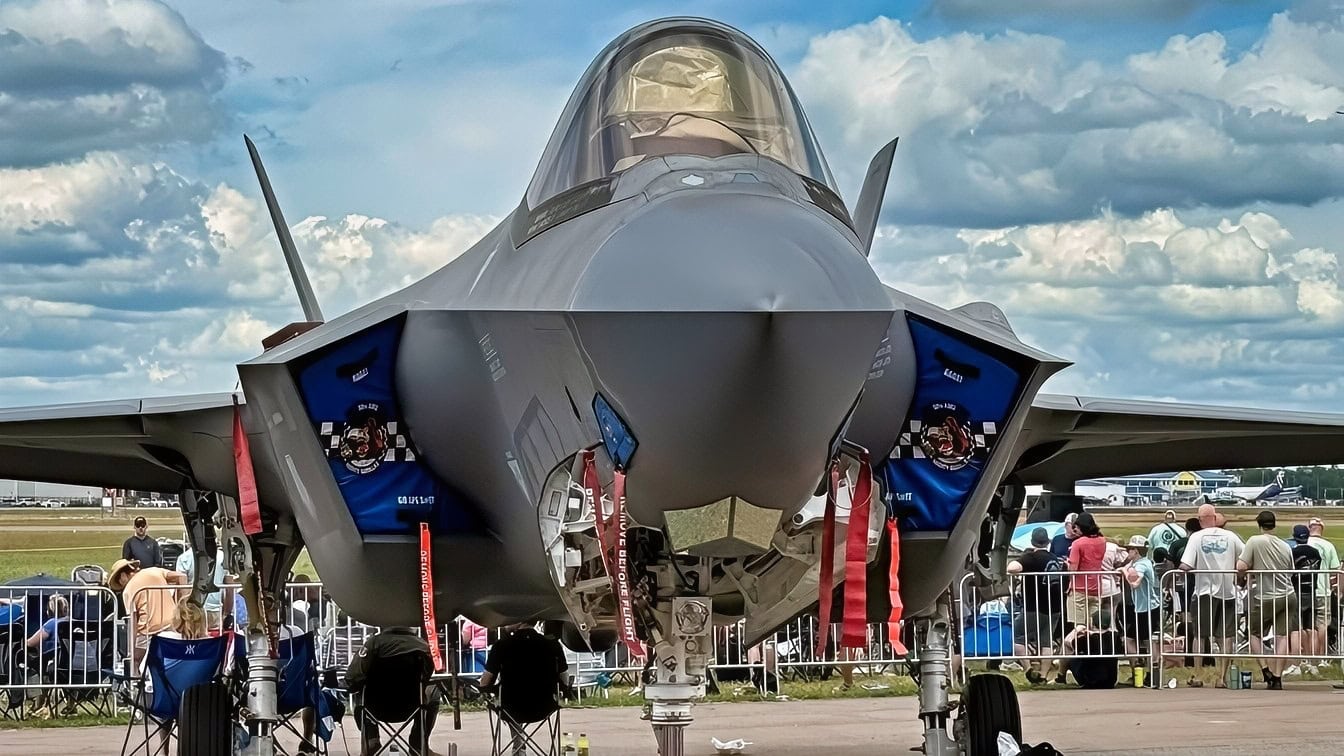
F-35C Lakeland Airshow Photo 19FortyFive Image Taken on 4/19/2026.
The F-47 takes that same fundamental insight — air combat is increasingly about information dominance rather than maneuver dominance — and pushes it to the next level. The aircraft will likely operate, in the Air Force’s own framing, as a quarterback in the sky. A manned F-47 will fly at a standoff distance from the heaviest threats while controlling a formation of unmanned wingmen that move forward into contested airspace to do the dangerous work — probing enemy defenses, jamming radars, dropping decoys, or launching weapons under human authorization.
This is the function the F-22 has been retroactively upgraded to perform under the Super Raptor program — turning what was designed as a stealthy lone wolf into a connected node that can quarterback drone formations. It is the function the F-35 already performs to a substantial degree, with recent Lockheed Martin tests demonstrating the ability to control multiple drones from a single F-35. But the F-47 is the first American fighter being built from the ground up around the assumption that this is what an air superiority aircraft does. The cockpit, the sensor architecture, the data link bandwidth, the AI-enabled decision-support systems, and the secure jam-resistant communications backbone are all engineered around the controller mission rather than retrofitted onto an airframe designed for something else.
That changes what air dominance looks like in practice. An F-47 formation in 2035 might consist of one manned fighter and four to eight unmanned aircraft operating across a 200-mile slice of airspace — with the manned aircraft serving as the central node, processing data from the unmanned platforms, coordinating with overhead satellites and friendly surface ships, and directing strikes against enemy targets without ever entering the engagement envelope of the most dangerous Chinese surface-to-air missiles. The F-22 cannot do that. The F-35 can do it partially. The F-47 is supposed to do it as its primary mission.
Why 185-Plus Could Actually Be Enough
The Air Force has stated publicly that it intends to buy at least 185 F-47s. The figure is not coincidental — it closely matches the operational F-22 inventory of 187 aircraft, which is the number actually delivered after Robert Gates capped F-22 production in 2009 against an original Air Force requirement of 750 fighters. Boeing’s program is, in essence, being scoped to replace the F-22 fleet on a close to a one-for-one basis.
That sounds dangerously small. It would have been dangerously small in 1991, when the F-22 was selected as the winner of the Advanced Tactical Fighter competition. It is not necessarily dangerously small in 2035, for one reason: the F-47 is not flying alone.
The Air Force has confirmed plans to buy more than 1,000 Collaborative Combat Aircraft to operate alongside the F-47 and F-35 fleets — at a target ratio of approximately two CCAs per manned fifth- or sixth-generation fighter. If the Air Force fields 185 F-47s with two CCAs each, that is a 555-aircraft sixth-generation force structure. If it fields 185 F-47s with four CCAs each, as some Air Force exercises have explored, that is a 925-aircraft force. The combat capability of that force is not a function of how many manned fighters the service buys — it is a function of how many networked combat platforms the service can put in the air, and how effectively those platforms can be commanded.
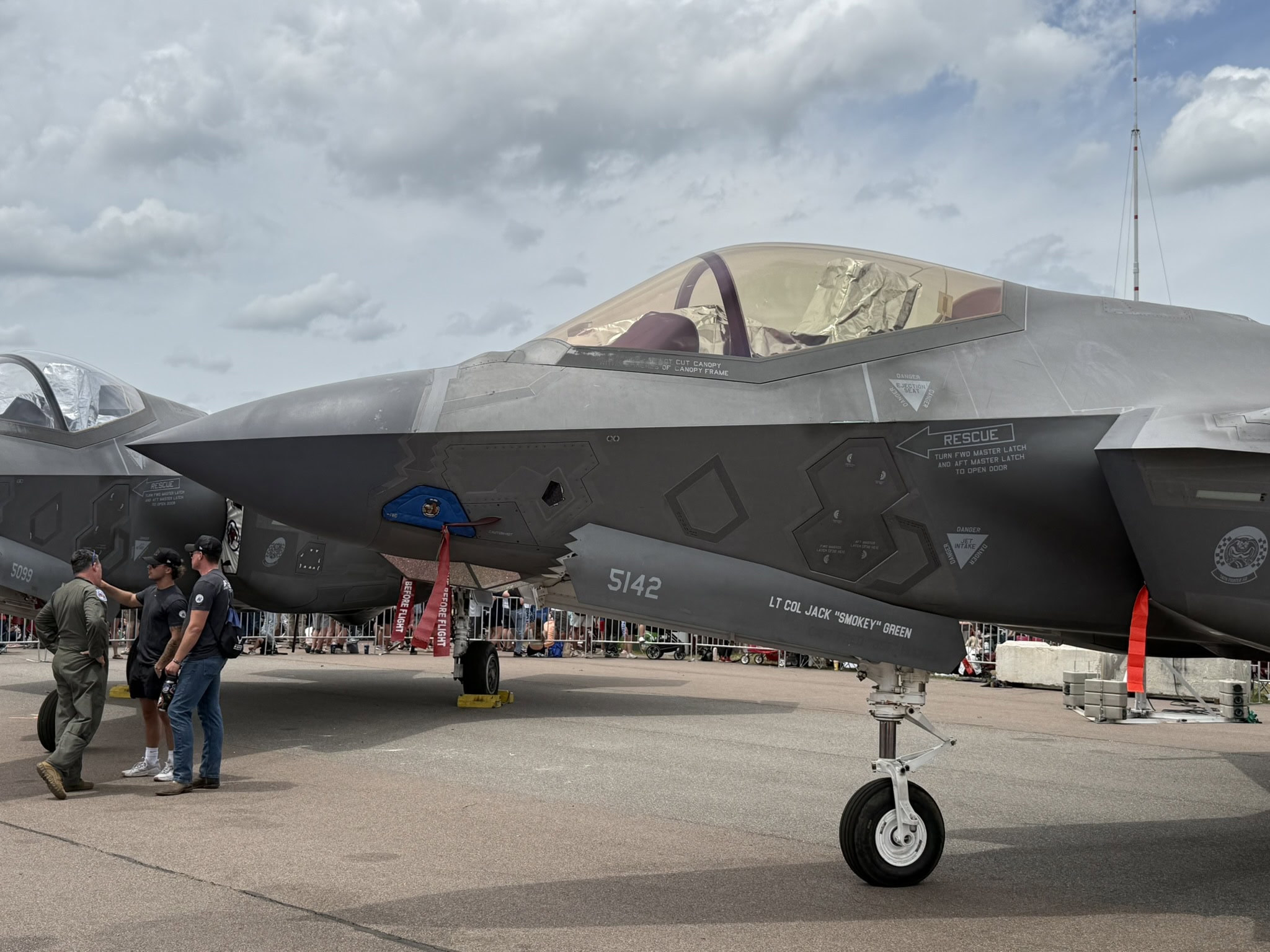
F-35C at Lakeland, Florida Airshow. Image Credit: 19FortyFive.com
This is the strategic logic that justifies the small manned fleet. A Cold War air force needed hundreds of F-15s and F-16s because each pilot could fly only one aircraft. A 2030s air force commanded by F-47s does not face that constraint, because each F-47 pilot is effectively in command of multiple unmanned wingmen. The unit of combat power has shifted from the individual airframe to the manned-unmanned formation.
That said, 185 is the floor, not the ceiling. The Air Force has consistently used the phrase “185-plus” in its public statements, and there is institutional pressure from former officials and outside analysts — including those who lived through the F-22 production cap — to ensure the F-47 program is not similarly truncated mid-stream.
The 2009 decision to cap the F-22 at 187 looks worse with every year that passes, as China builds out the J-20 fleet — now reportedly exceeding 200 aircraft — and continues flight testing the J-36 and J-50 sixth-generation prototypes that first appeared in December 2024. If the F-47 is allowed to drift toward a similarly small fleet without the corresponding CCA mass, the Air Force will end up where the F-22 left it: outnumbered and stretched thin across multiple theaters.
But if the program holds together — if the 185-plus F-47s actually get delivered, if the 1,000-plus CCAs come online on schedule, and if the manned-unmanned teaming concept actually works the way the doctrine promises — then 185 sixth-generation fighters anchoring approximately 1,000 unmanned wingmen is a force structure that can plausibly contest the air over the Indo-Pacific into the 2040s.
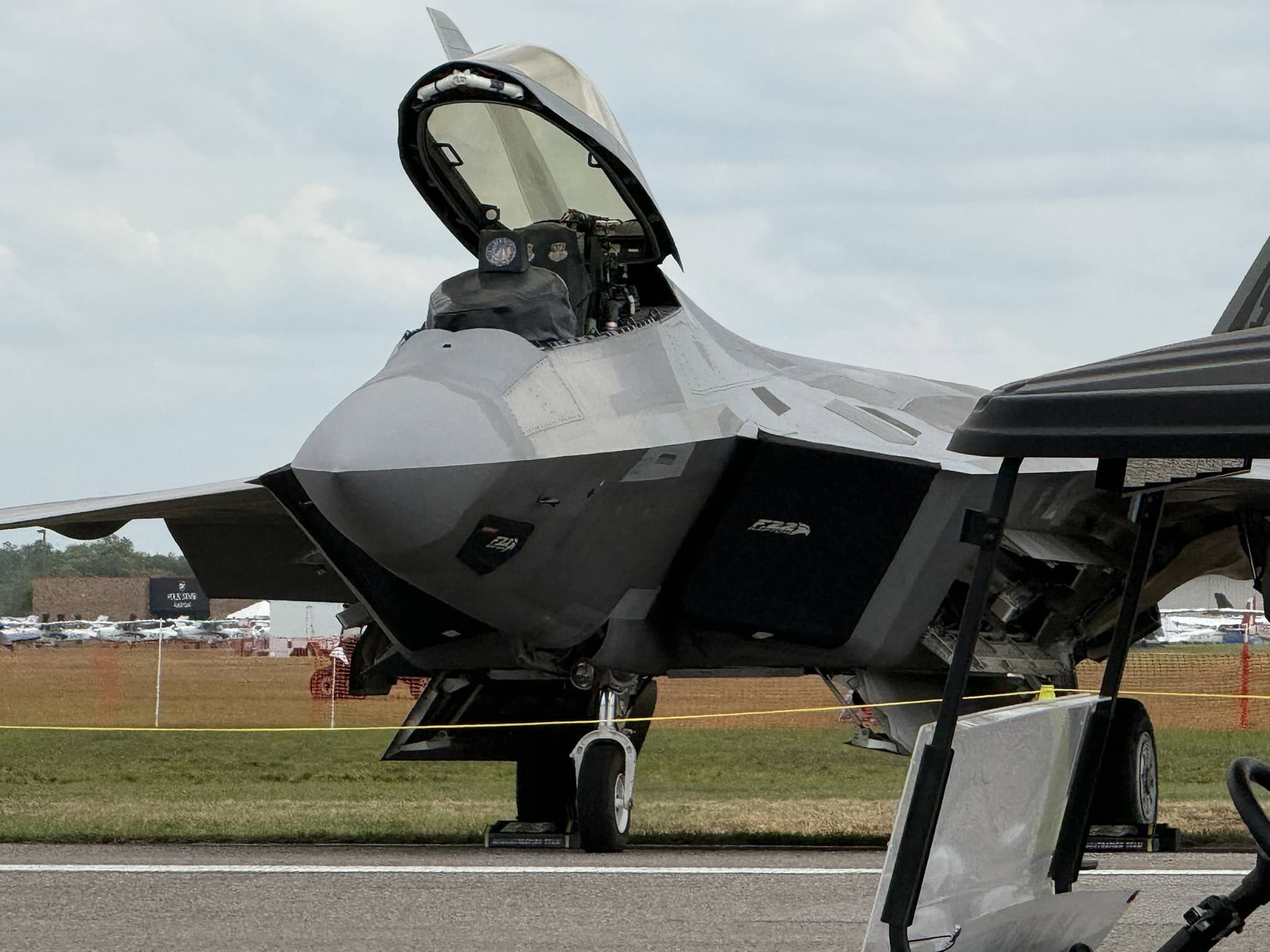
F-22 Raptor. Taken on 4/19/2026 by Harry J. Kazianis for 19FortyFive.com
Not A Fighter, A Flying Command Node
The single most important point about the F-47 is the one that gets lost in coverage of its speed, range, and stealth specifications: this aircraft is not a fighter in the traditional sense.
The F-22 was a fighter. It was designed to find enemy aircraft, get into a position of advantage, and shoot them down. Its sensors, weapons, and airframe were optimized for that single mission. The F-35 expanded the fighter concept by adding sensor fusion and multi-role flexibility, but the underlying mental model was still a manned aircraft executing manned missions with the support of advanced computing.
The F-47 is something else. It is a flying command-and-control node that happens to also be a fighter. Its primary function is to process information, coordinate combat formations, and direct unmanned combat aircraft against enemy targets — with the secondary function of defending itself and engaging targets directly when the situation requires it. The combat radius matters because it lets the F-47 operate from places where its CCAs can reach the fight.
The stealth matters because it lets the F-47 operate in airspace where adversary sensors are looking for it. The adaptive engines matter because they enable the F-47 to generate the electrical and thermal capacity needed to run the sensor fusion, data links, and AI-enabled decision-support systems required by the controller mission.
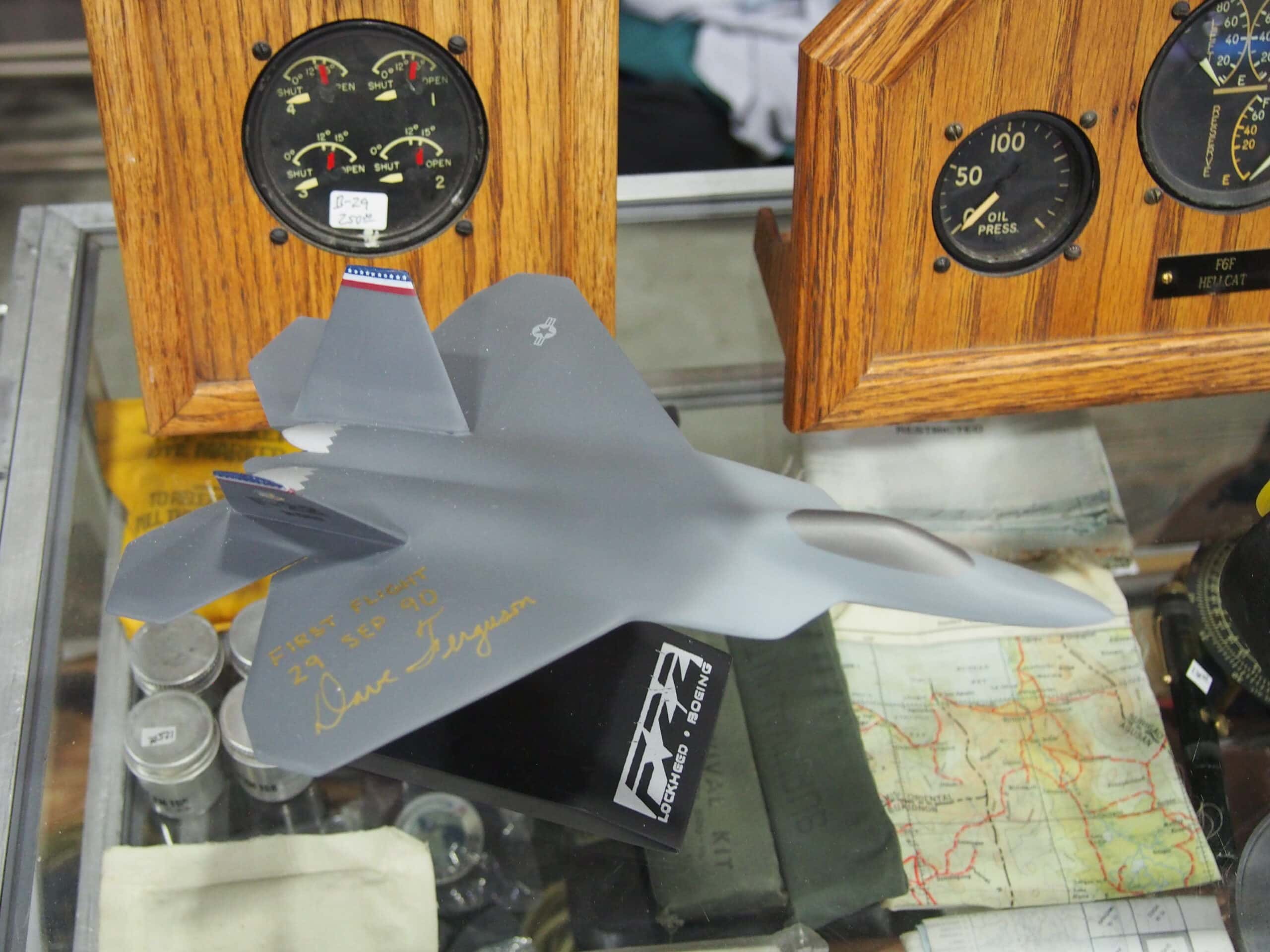
F-22 Model. Image Credit: 19FortyFive.com
In that sense, the F-47 is the F-35 taken to its logical conclusion. The F-35 is a flying computer. The F-47 is a flying command node — better in every direction that matters, and built from the start around a mission profile the F-35 has been gradually pulled toward over the course of its operational life.
That is what the F-47 program is actually buying. Not a faster, stealthier, longer-range version of the F-22 — although it will be all of those things — but the first American fighter explicitly designed to fight the way air combat is going to actually be fought in the 2030s and 2040s. A formation rather than an individual aircraft. A network rather than a platform. A controller rather than a shooter.
If the program delivers what the Air Force is promising, 185 of them will be enough. If it doesn’t, no number will be.
About the Author: Harry J. Kazianis
Harry J. Kazianis (@Grecianformula) was the former Senior Director of National Security Affairs at the Center for the National Interest (CFTNI), a foreign policy think tank founded by Richard Nixon based in Washington, DC. Harry has over a decade of experience in think tanks and national security publishing. His ideas have been published in the NY Times, The Washington Post, The Wall Street Journal, CNN, and many other outlets worldwide. He has held positions at CSIS, the Heritage Foundation, the University of Nottingham, and several other institutions related to national security research and studies. He is the former Executive Editor of the National Interest and the Diplomat. He holds a Master’s degree focusing on international affairs from Harvard University. Kazianis is Editor-In-Chief of 19FortyFive.