
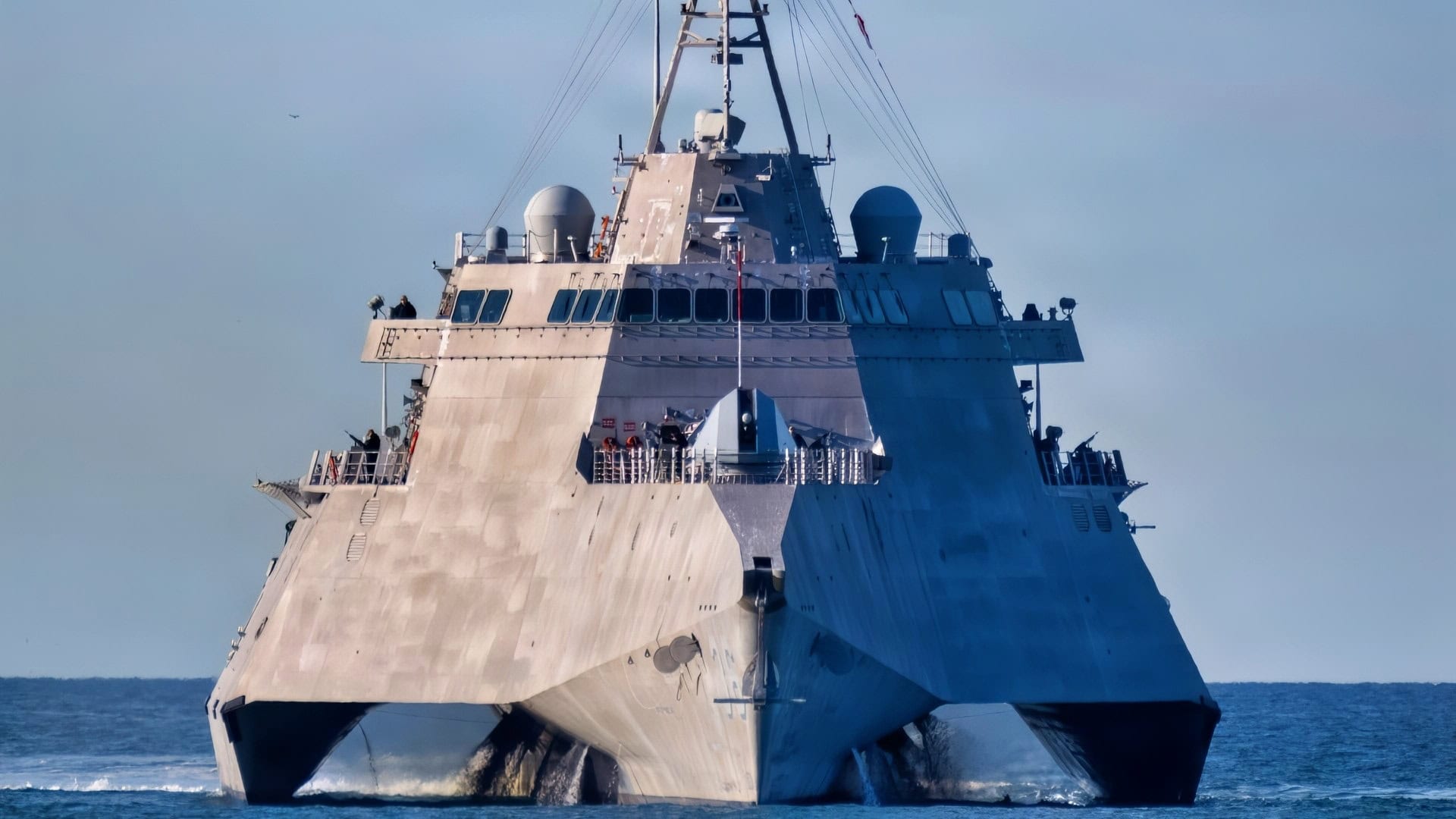
Summary and Key Points: The U.S. Navy’s latest shipbuilding plan would retire 46 ships from 2027 to 2031 — including 2 aircraft carriers, 10 destroyers and cruisers, and 16 submarines of various classes — replacing them with 47 unmanned surface drones and 16 extra-large unmanned underwater vehicles.
-The plan reduces aircraft carriers from 11 to 9 in the outyears, orders only 2 Virginia-class submarines per year, and brings the fleet to a low of 288 warships in 2027. China’s Department of War assessment calls for 9 Chinese aircraft carriers by 2035 — and Beijing is now building its first nuclear-powered supercarrier.
-The U.S. Navy has a 2017 congressional mandate to reach 355 ships. That number is now unreachable until the mid-2040s.
The Navy’s New Shipbuilding Plan: Fewer Manned Warship Orders?
Nobody likes to pay more to get less. But that’s what the U.S. will be getting under the Navy’s latest shipbuilding plan.
While there are some bright spots in the plan, such as orders for more oilers and tenders (auxiliary support craft), the plan spends tens of billions of dollars more to build fewer ships over the coming years.
The plan suggests that we order only two Virginia-class attack submarines per year, one destroyer per year for the rest of the decade, and eventually reduce the number of aircraft carriers from 11 to 9 in the outyears.
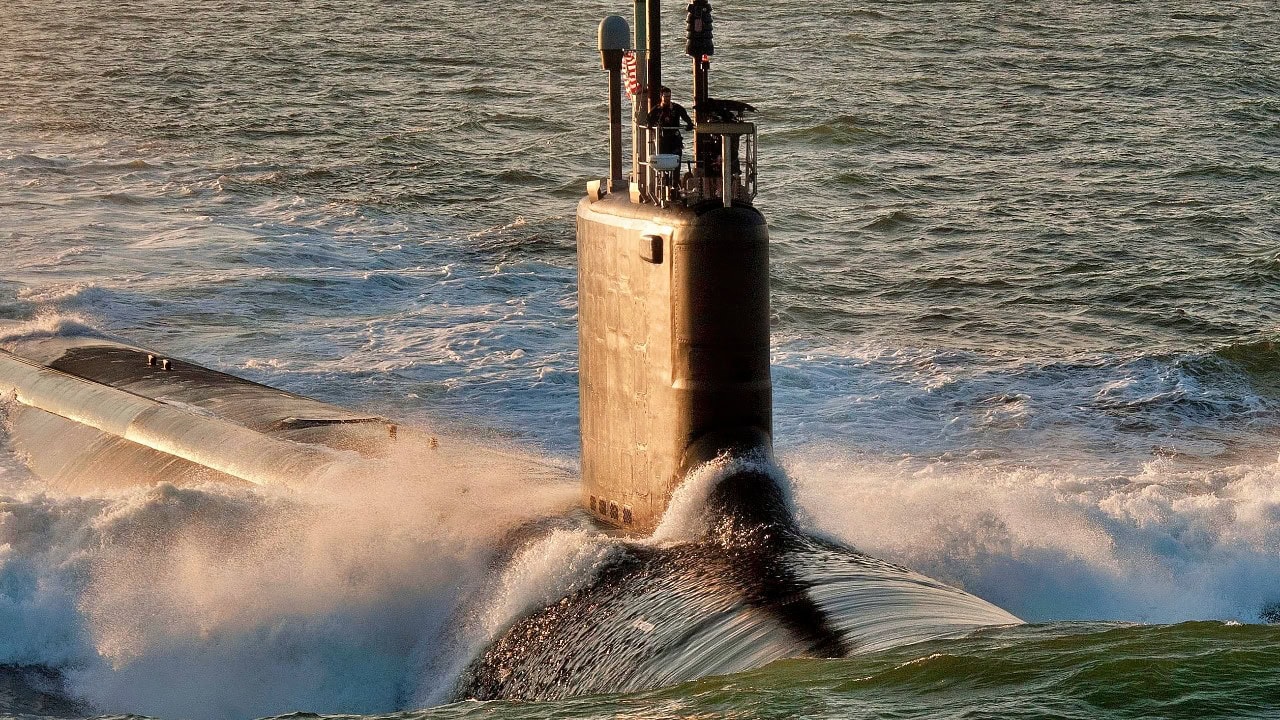
U.S. Navy Virginia-Class Submarine.
In total, the plan would “retire[e] 46 ships, including two aircraft carriers, 10 destroyers and cruisers, and 16 submarines of various classes from 2027 to 2031.” It would replace manned surface combatants with 47 unmanned surface drones and 16 extra-large unmanned underwater vehicles, all of which have shorter ranges, less weapons capabilities, and remain unproven in combat.
The shipbuilding plan does call for a new class of battleships and frigates. But beyond vague descriptions, there are no realistic timelines or even drydock spaces to build such vessels, none of which have even completed the naval architecture aspects of designing these vessels, much less laid the first keel.
This is all problematic, to say the least.
The American Navy has been shrinking in size for years (fewer destroyers, submarines, cruisers, oilers, and tenders). And according to the Navy’s shipbuilding plan, the number of manned vessels will continue to shrink to a low of 288 warships in 2027. For the foreseeable future, the Navy will need to sustain significant budgets and capital investments in shipyards and workforce to meet its congressional mandate set in 2017 for a fleet of 355 vessels, which now will be virtually impossible to get to until the mid-2040s.
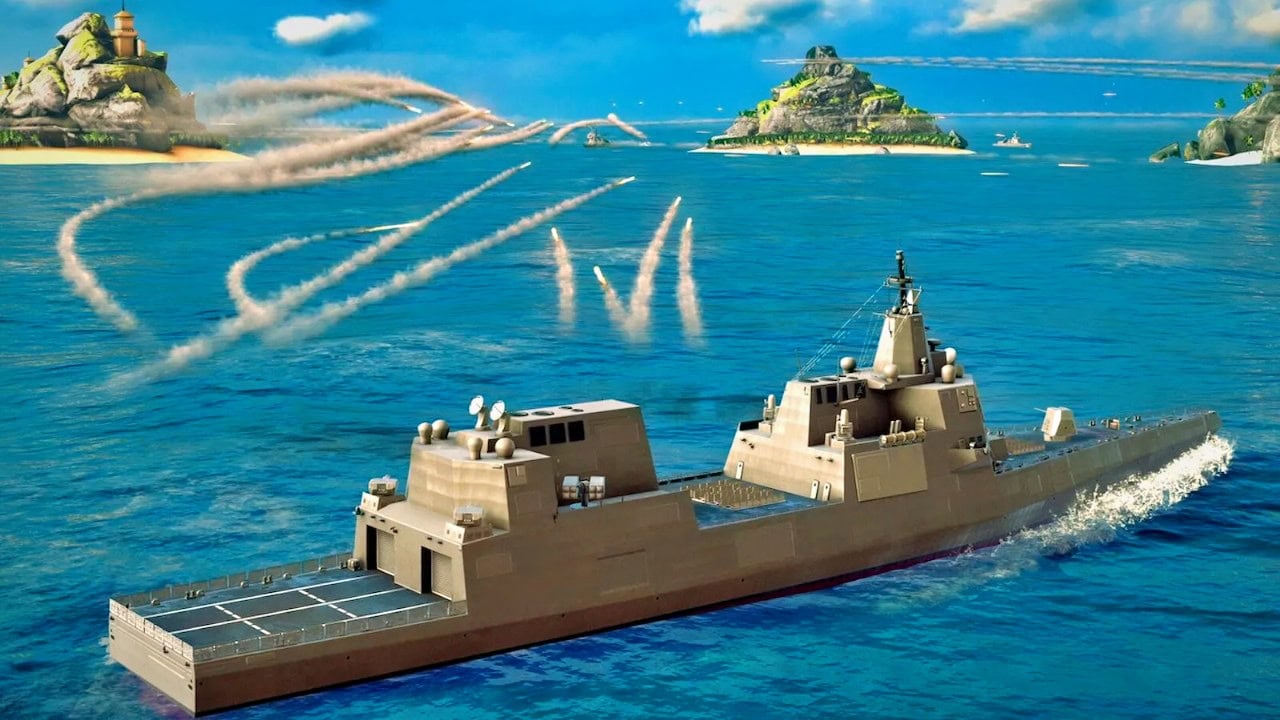
DDG(X) image created by artist. Image Credit: Creative Commons.
Worse, this would occur as our naval requirements are growing. Ongoing counternarcotics operations in the Caribbean, ongoing and sustained operations in the Persian Gulf, and commitments in the Atlantic and Mediterranean theaters all put strains on the fleet.
But most worryingly, the United States could be at war with the People’s Republic of China in the coming years—and that war would be no easy thing.
China has the world’s largest Navy, a massive concentration of missiles, an enormous Air Force, and is the fastest-growing nuclear power on the planet. China certainly does not consider aircraft carriers obsolete, as it now operates three carriers and is constructing its first nuclear-powered supercarrier. According to the U.S. Department of War, China is planning to have nine aircraft carriers by 2035.
Accordingly, deterring and, if necessary, defeating Chinese aggression means the United States needs more planes and munitions—but most of all, it needs more submarines, destroyers, and aircraft carriers.
While unmanned surface and underwater drones hold promise, they are untested, have a fraction of the range of destroyers, and carry a fraction of the weaponry. They should be seen as additive to the manned surface fleet of destroyers, frigates, and aircraft carriers, not replacements.

Aircraft Carrier USS Gerald R. Ford Diagram. Image Credit: Creative Commons.
Unfortunately, the trade-offs between building new classes of ships and existing, proven classes of vessels are not new. The first Trump administration tried to build more submarines and surface combatants and expand the number of drydocks and shipyards, but failed. Carlos Del Toro, Navy Secretary under President Biden, also said all the right things about building more ships, faster—with little to show for it, other than a shrinking fleet.
Recently fired Navy Secretary John Phelan also said the right things about building the fleet that we need. Acting Secretary Hung Cao is the latest in the line of Navy Secretaries promising to rebuild America’s Navy.
While the Golden Fleet plan and Navy shipbuilding plan theoretically could give the United States the force it needs, the truth is that for decades the Navy has built ships that it claimed was critical to future conflicts. The Littoral Combat Ship, the Zumwalt-class destroyer, and the Constellation-class frigate were all designed and built in small quantities—only to be canceled before half a dozen ships were delivered.
Today, the U.S. Navy is designing and building untried classes of ships, such as the aforementioned battleships, an entirely new class of frigate, and new types of unmanned drones that have yet to prove their utility in maritime operations, much less in a high-intensity conflict with a peer competitor like China.
And it is very possible that a future Secretary of the Navy could cancel all or some of the aforementioned programs (such as the still-to-be-designed Trump-class battleship), as was the case with Zumwalts or the Constellations.

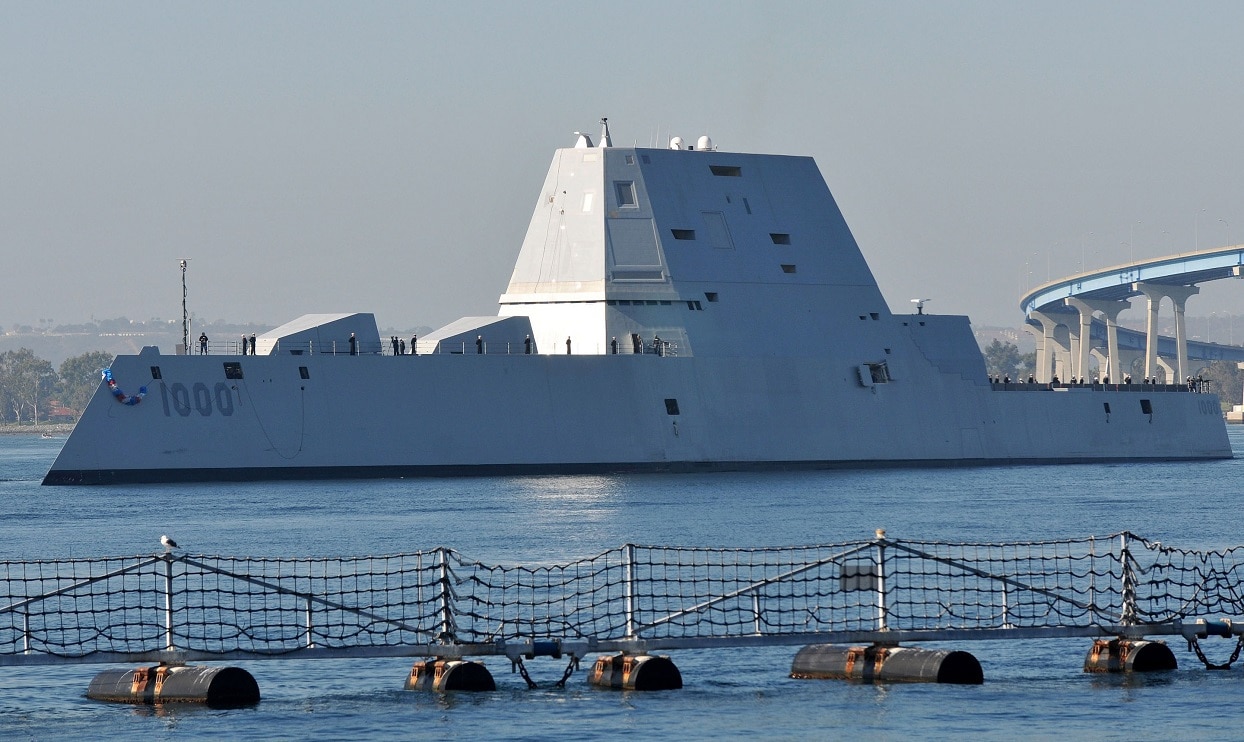
FROM 2016: The U.S. Navy’s newest warship, USS Zumwalt (DDG 1000) passes Coronado bridge on its way to Naval Base San Diego. Zumwalt is the lead ship of a class of next-generation multi-mission destroyers, now homeported in San Diego. (U.S. Navy photo by Petty Officer 3rd Class Anthony N. Hilkowski/Released)
In short, the Navy plan could once again fall victim to the siren song of “divest to invest”—but the investments are for unproven or even questionable capabilities that take up drydock space, naval architects, and manpower that could be used for needed and proven platforms such as destroyers, submarines, and aircraft carriers.
An optimal naval plan would be one that ordered three Virginia-class submarines per year to support the U.S. Indo-Pacific strategy and meet AUKUS obligations, as well as at least two destroyers per year to meet fleet needs. It would be one that produced one ballistic missile submarine per year—and also produced unmanned drones to augment—but not replace—traditional surface combatants.
The long-range planned numbers of warships are concerning. Getting the mix right between large manned warships augmented with capable unmanned warships is vital.
Failing to execute smart industrial planning promptly for balanced naval shipbuilding is a recipe for the collapse of American naval power and potentially losing a war with China. A balanced fleet requires sustained or increased orders of manned warships such as submarines, frigates, destroyers, and aircraft carriers just as much or more than any unmanned system.
About the Author:
Robert Peters is a Senior Research Fellow for Strategic Deterrence in The Heritage Foundation’s Allison Center for National Security. Wilson Beaver is a Senior Policy Advisor for defense budgeting at Heritage.