
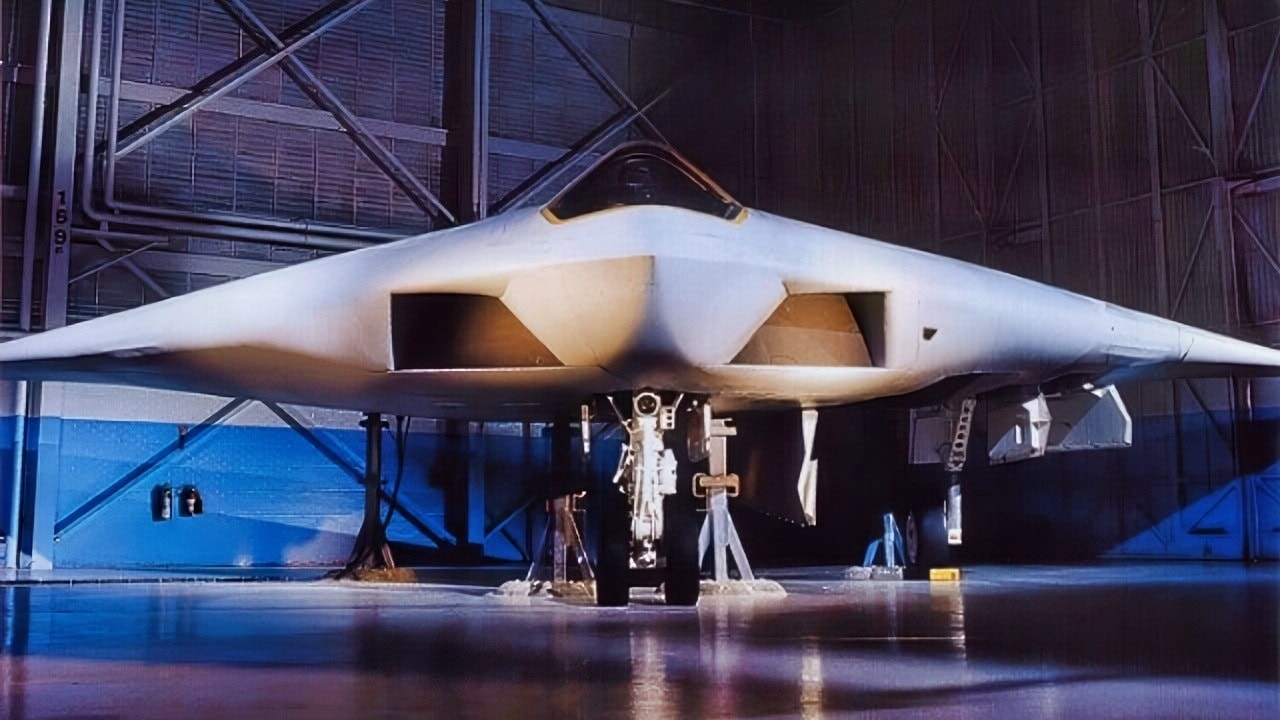
On January 7, 1991, Secretary of Defense Dick Cheney canceled the A-12 Avenger II, the stealth flying wing that was supposed to replace the A-6 Intruder on every American aircraft carrier deck. Ten days later, Desert Storm opened with F-117s threading Baghdad’s air defenses untouched, demonstrating to the world exactly the capability the Navy had just lost. The cancellation was the largest contract termination in Pentagon history at the time; it helped destroy McDonnell Douglas and spawned litigation that ran for 23 years. Those facts are well documented. The more interesting question is the one this column has been asking about 1991’s other great aviation decision, the YF-23: what would the force look like today if it had gone the other way? For the A-12, the answer touches everything — the carrier’s reach, the Super Hornet’s existence, the industrial base, and the entire modern debate over whether aircraft carriers can survive a war with China.
The Advanced Tactical Aircraft: What The A-12 Was Supposed To Be
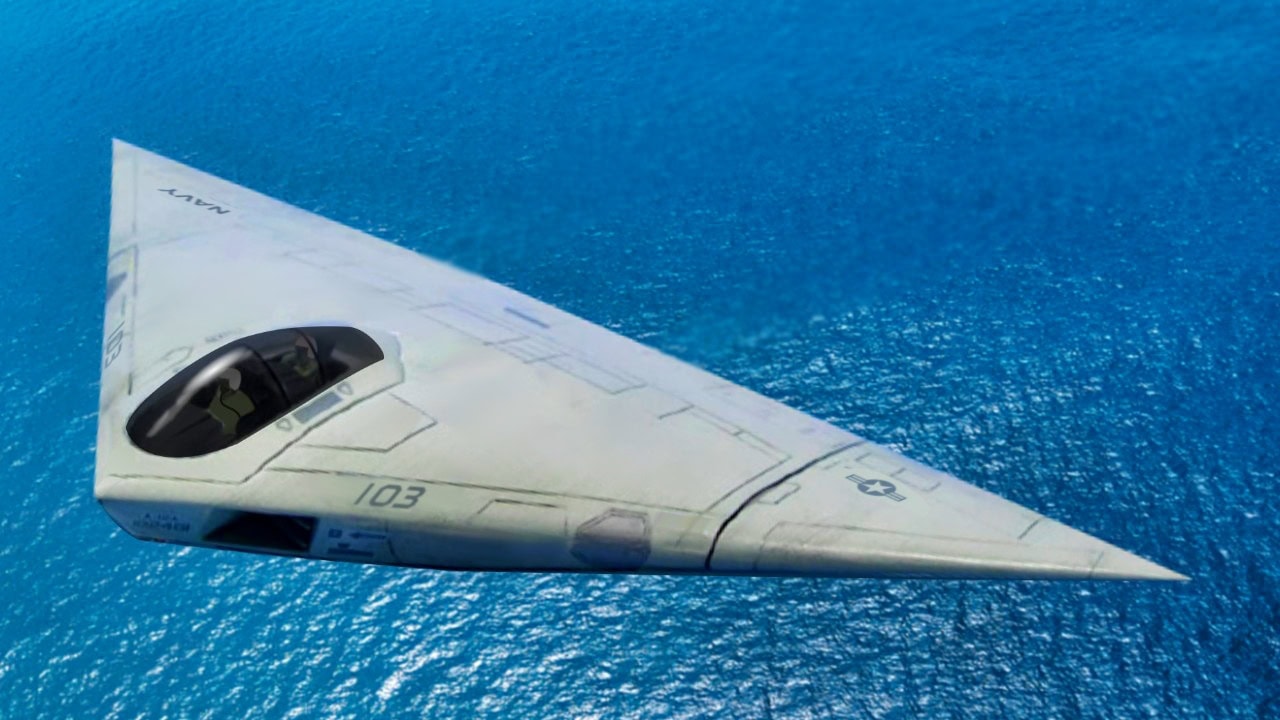
A-12 Avenger II. Image Credit: Creative Commons.
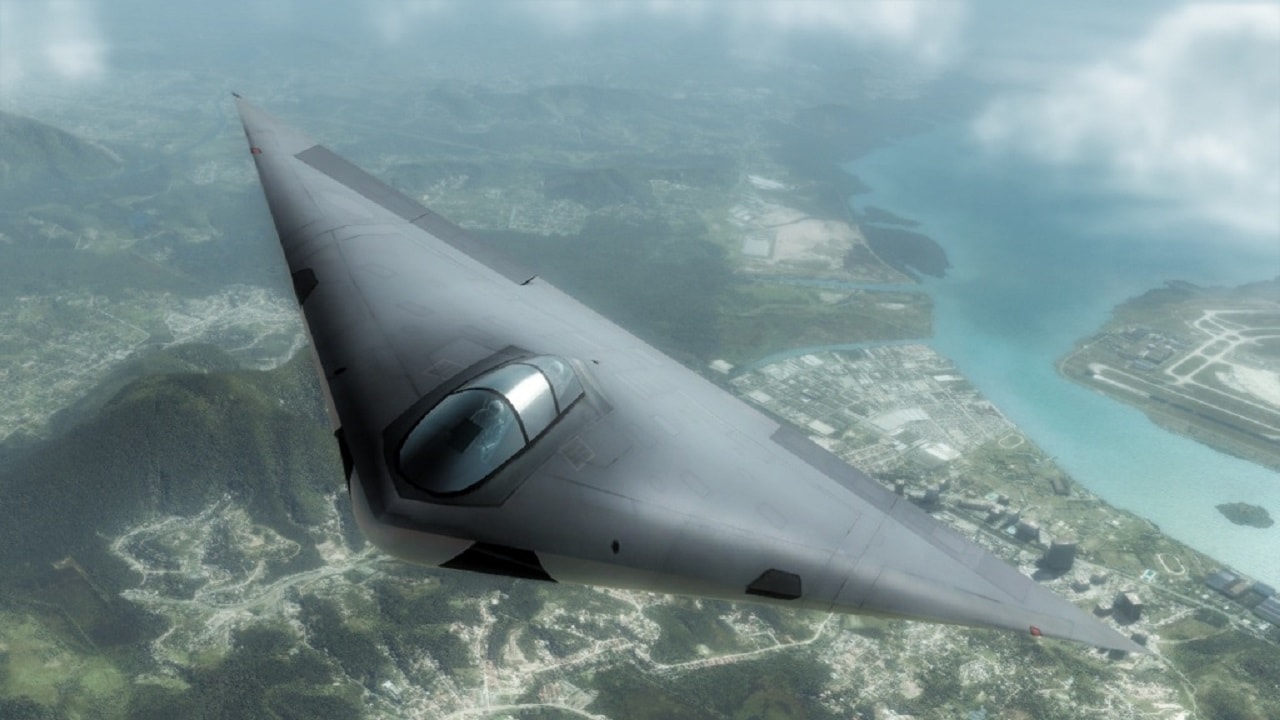
A-12 Avenger II. Image Credit: Creative Commons.
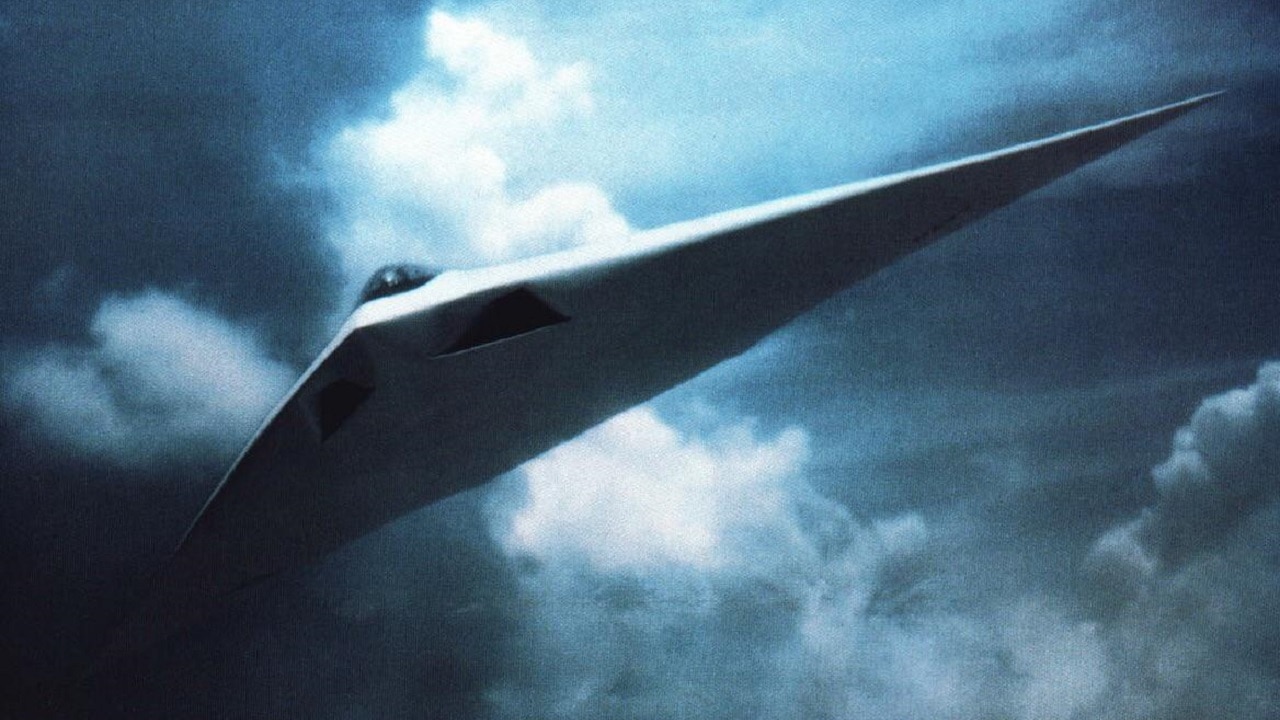
A-12 Avenger. Image Credit: Creative Commons.
The Navy began the Advanced Tactical Aircraft program in 1983 to replace the A-6 Intruder with a long-range, low-observable strike aircraft, selecting the McDonnell Douglas–General Dynamics team in 1988. Their design was a pure flying wing — a triangle with a small fuselage, minimal tail surfaces, an internal weapons bay, and a radar cross-section a fraction of the Intruder’s, promising greater speed and altitude than the A-6E with a two-man crew and an electronic-warfare variant planned behind it. The shape earned the nickname that outlived the program, and the scale of the commitment is forgotten today: the Navy initially wanted 620 aircraft, the Marines 238, and the Air Force considered 400 of a variant to replace its F-111s — more than 1,200 stealth bombers across the force, a decade before the Joint Strike Fighter existed.
The contract structure doomed it as much as the engineering did. The Pentagon demanded fixed-price development of an unprecedented stealth aircraft—terms the rival Northrop and Grumman team judged unworkable—and the team declined to bid at all—a warning, in hindsight, from the companies then building the B-2, which understood what stealth development actually cost.
McDonnell Douglas and General Dynamics signed anyway, and a Navy inquiry later found the program in trouble almost from the outset, with the planned buy already pared to 620 by April 1990 even as the Pentagon publicly endorsed it.
The airframe ran thousands of pounds overweight as the composite structures resisted manufacture, the schedule slipped past the planned December 1990 first flight, and the contractors concealed the deterioration until it could no longer be hidden. Cheney’s stated reason for the kill was that no one could tell him how much the program would cost. By the standards of January 1991, the decision was defensible line by line.
The Range Collapse: From The A-6 Intruder To A Short-Legged Fleet
The consequences arrived late, and the first was reached. The A-6 retired in the late 1990s with no successor, and the F/A-18 Hornet in its successive variants became the Navy’s only carrier-based attack aircraft.
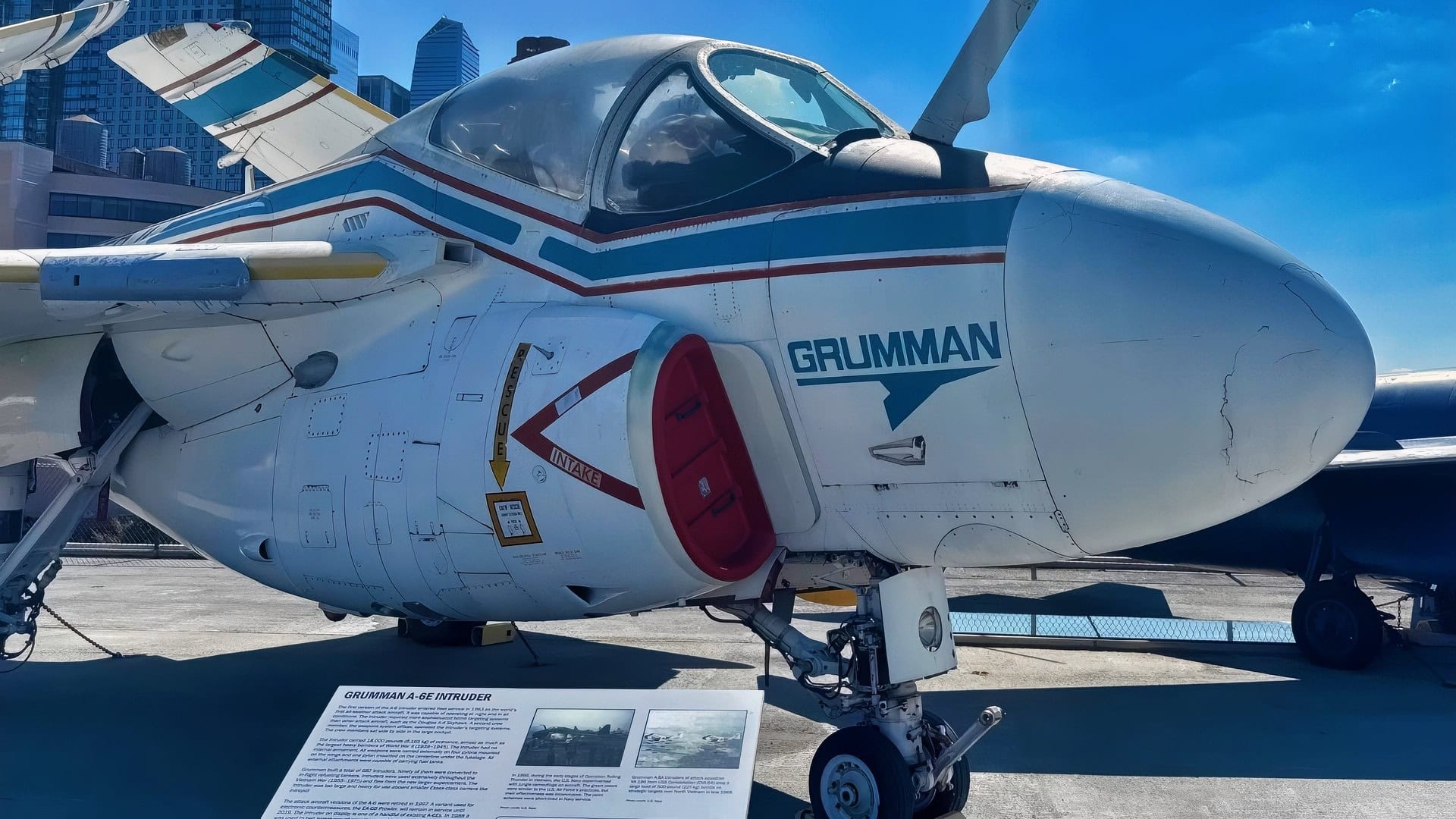
A-6 Intruder Original 19FortyFive.com Image Taken in July 2025.
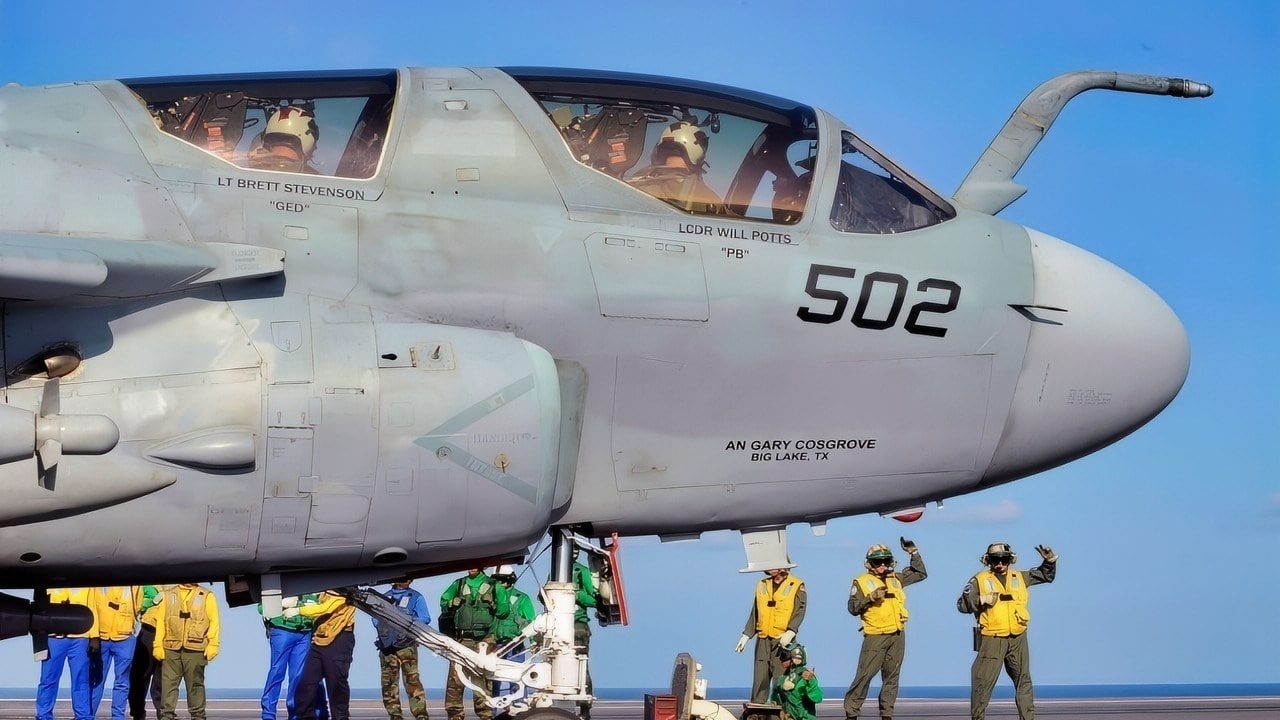
A-6 Intruder U.S. Navy Photo. Image Credit: Creative Commons.
The substitution halved the air wing’s arm. The Intruder was a true long-range, all-weather penetrator, with an unrefueled combat radius in the thousand-mile class; the Hornet family that replaced it operates at roughly half that distance, a number every carrier debate since has orbited. China built its anti-access strategy directly on that arithmetic: the DF-21D and DF-26 ballistic missiles outrange the air wing, so the carrier must either fight from inside the threat ring or stand off beyond the reach of its own aircraft.
An A-12 fleet rewrites that equation at the root. A stealthy penetrator with Intruder-class legs, refined through three decades of upgrades, the way every surviving airframe is, gives the 2026 carrier a strike radius that holds Chinese targets at risk from outside the densest missile coverage. The “carrier killer” missiles still exist in this counterfactual, but the breathless question attached to them — whether the carrier itself is obsolete — loses most of its force, because the obsolescence argument was never really about the ship. It was about the short-legged air wing that the A-12’s cancellation left on its deck.
Twenty-Eight Years Without Stealth At Sea
The second chain is the stealth gap. Between the A-12’s death and the F-35C’s arrival, the Navy operated no low-observable aircraft from its carriers — twenty-eight years during which the Air Force flew the F-117, the B-2, and the F-22 while naval aviation answered modern air defenses with jamming, standoff weapons, and hope. The institutional cost compounded quietly: a generation of naval aviators, maintainers, and planners built no experience in stealth operations, signature management, or the tactics of penetration, expertise the carrier force is only now constructing around the F-35C.
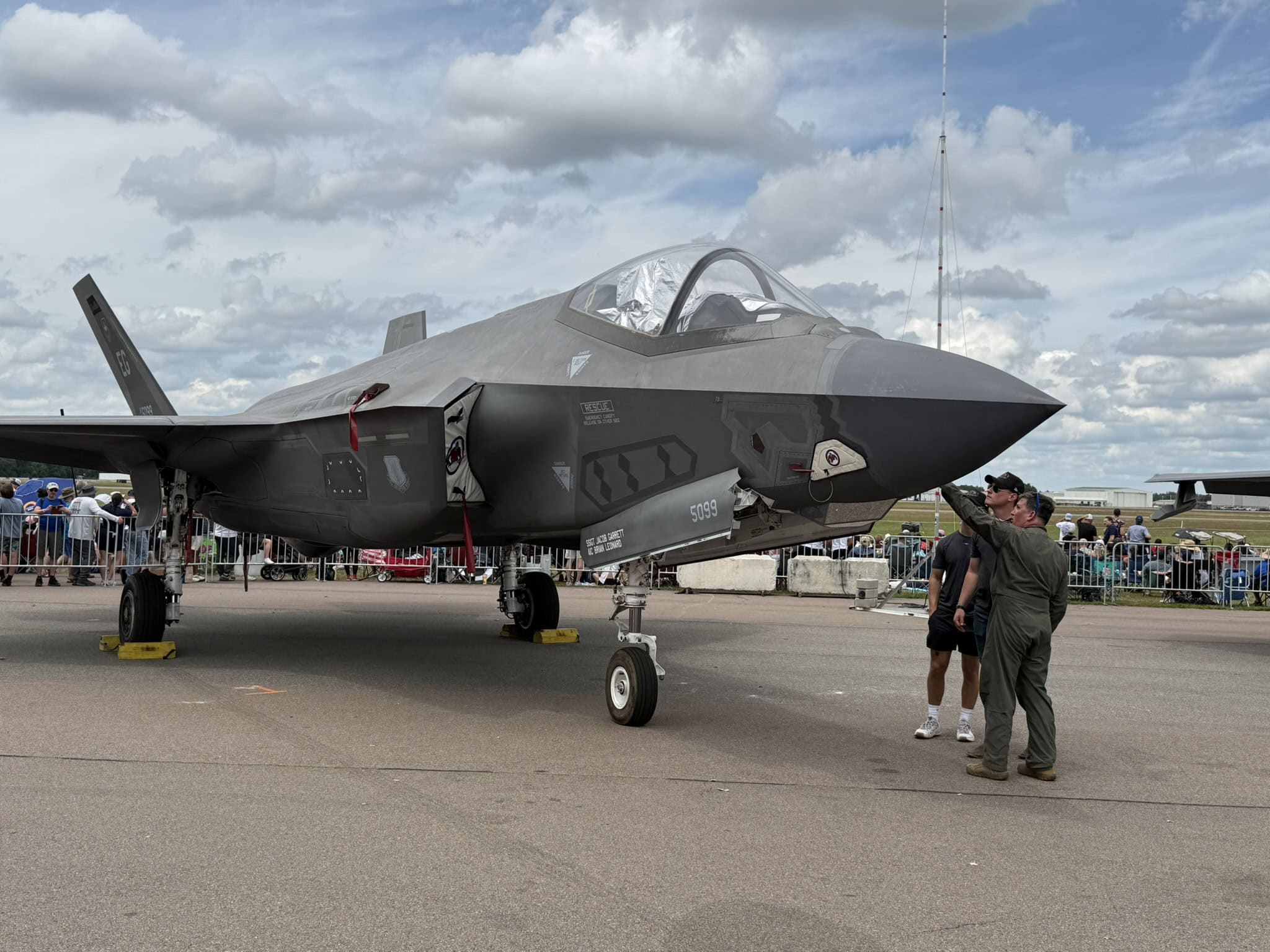
F-35C at Lakeland, Florida Airshow. Image Credit: 19FortyFive.com
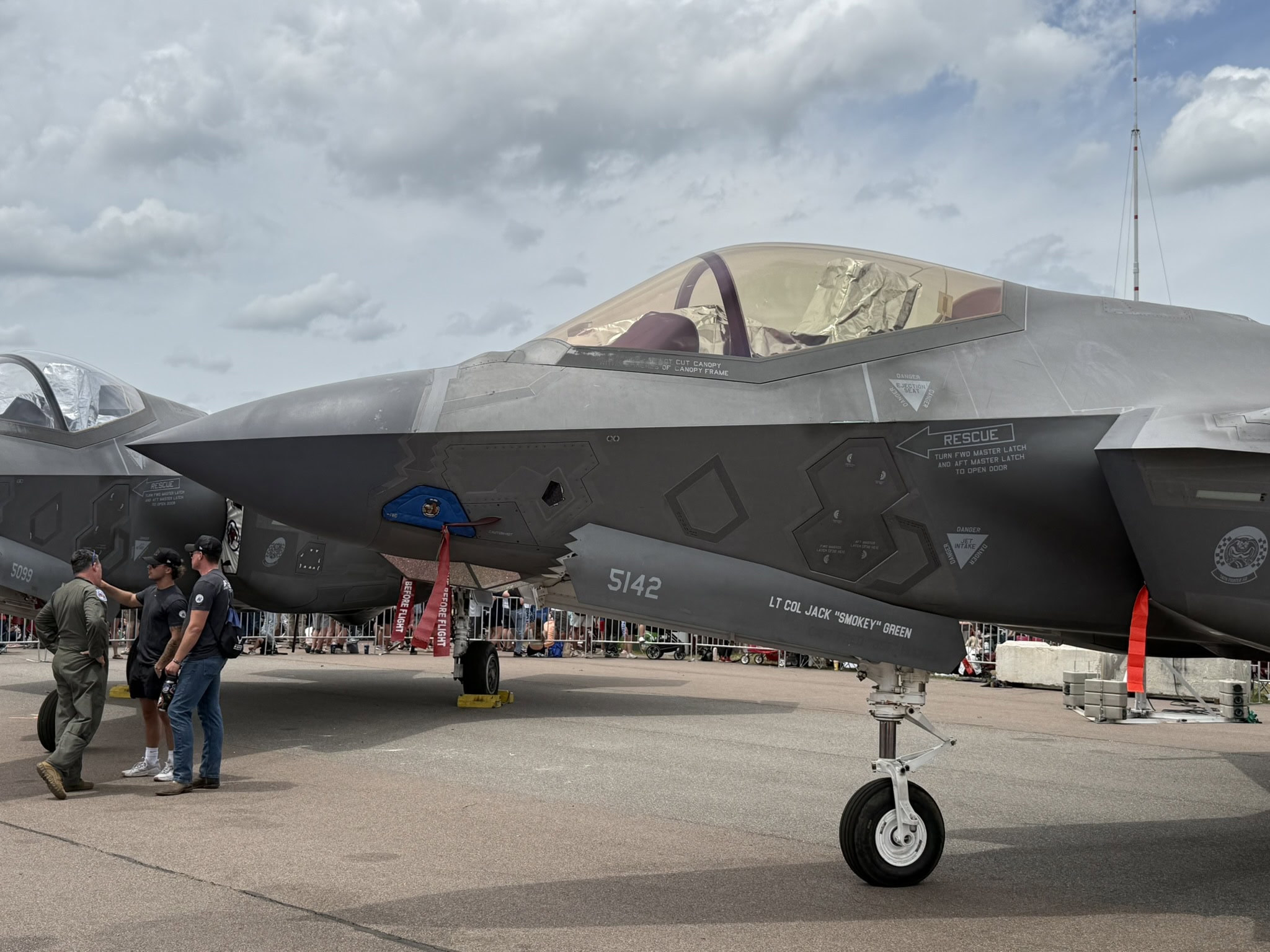
F-35C at Lakeland, Florida Airshow. Image Credit: 19FortyFive.com
With the A-12, the fleet operates organic stealth strike from roughly 2000 onward. Every air campaign of the era — Kosovo, Afghanistan, Iraq, Libya — features carrier-based penetrators opening the door instead of waiting for land-based stealth to do it.
Furthermore, the suppression-of-enemy-air-defenses mission the A-12’s electronic-warfare variant promised would have lived at sea for a quarter century, and the Navy that faces China today would be the service with the deepest stealth experience in the Pacific rather than the newest student of it.
The Super Hornet That Might Never Have Been
The third chain runs through force structure, and it is the strangest to contemplate: the F/A-18E/F Super Hornet exists because the A-12 died. The Super Hornet was the affordable, low-risk gap-filler the Navy reached for when its stealth bomber evaporated, and the gap-filler became the fleet — the strike aircraft, the fighter, the tanker, and, through the EA-18G Growler, the electronic attacker. In the counterfactual, the deck of the 2010s carries A-12s in the strike role, with the fighter mission held by upgraded Tomcats or an earlier navalized stealth fighter, and the all-Hornet monoculture never forms.
The settlement that finally ended the litigation in 2014 carries the irony in full. After five trials and a trip to the Supreme Court, Boeing — which had absorbed McDonnell Douglas — paid the Navy’s claim partly in the form of three EA-18G Growlers, with General Dynamics contributing credits on a destroyer.
The corporate heir of the canceled stealth bomber settled the account in derivatives of the airplane the Navy bought because the stealth bomber was canceled.
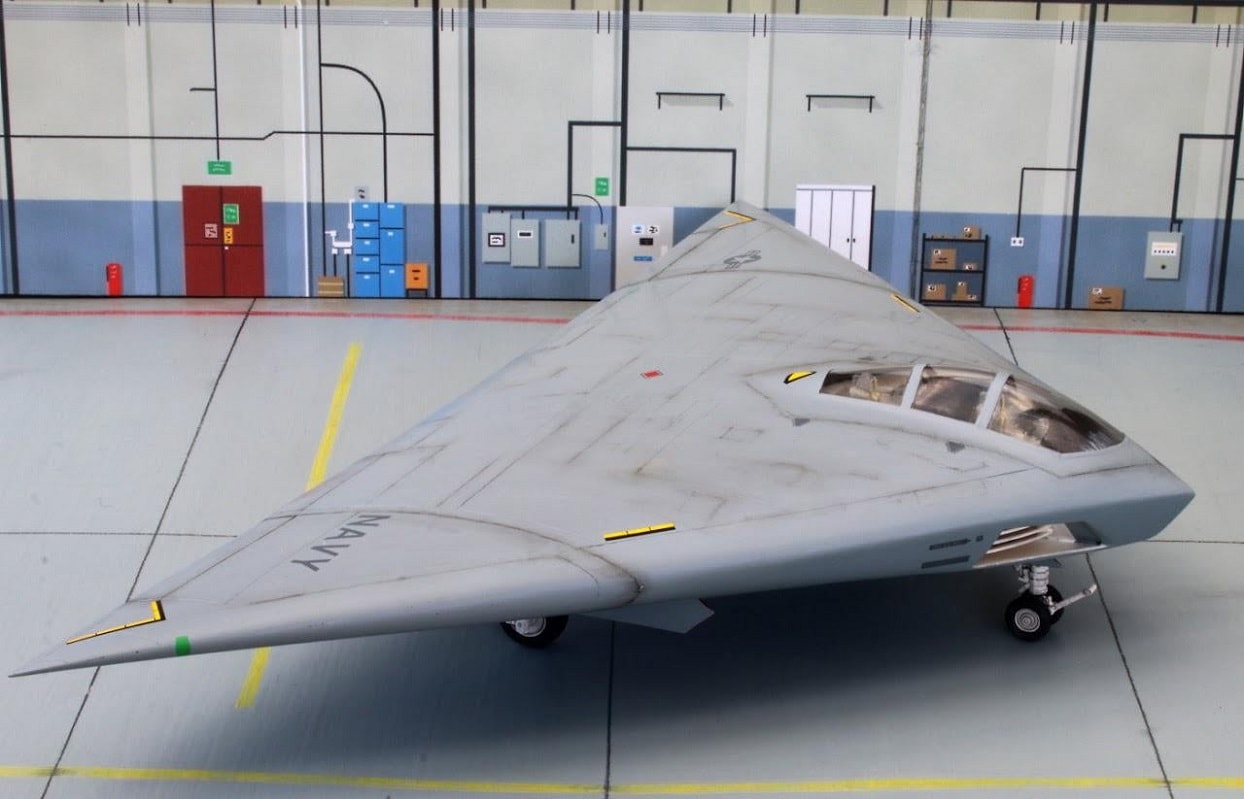
Artist Rendering of A-12 Avenger II. Image: Creative Commons.
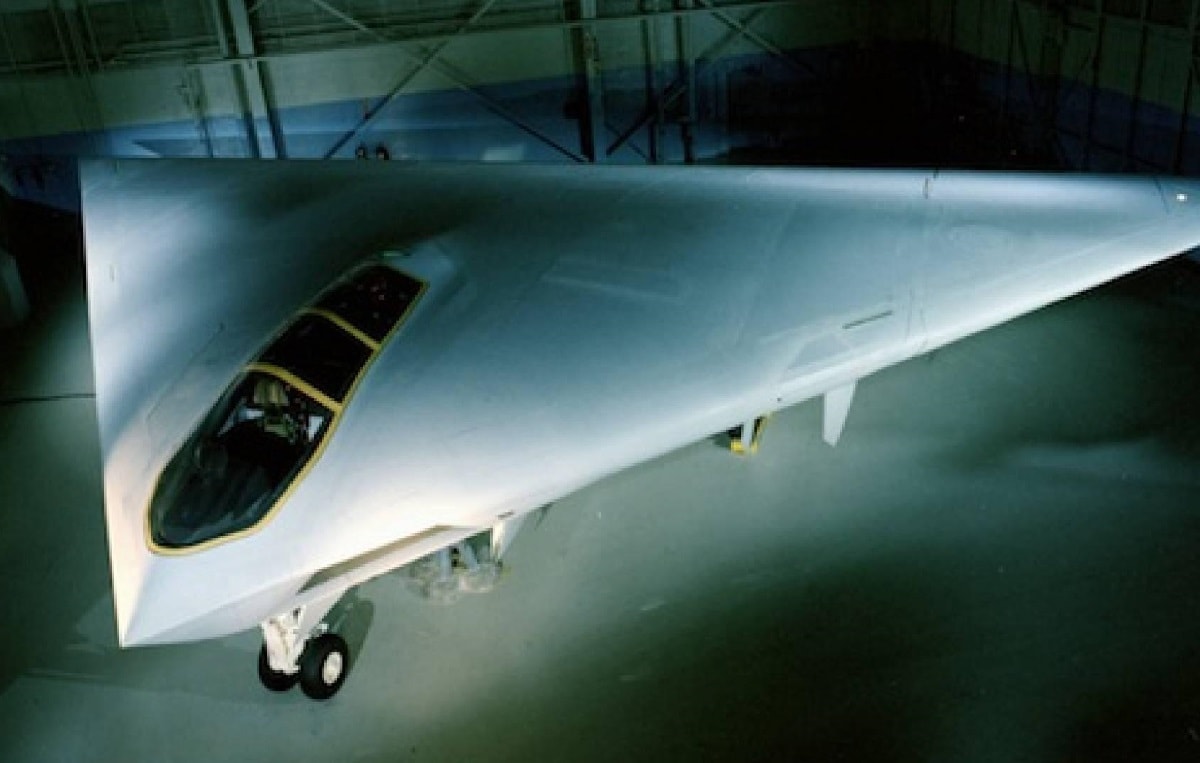
A-12 Avenger II. Image: Creative Commons.
McDonnell Douglas, Boeing, And The Industrial Domino
The fourth chain is industrial and connects directly to this column’s YF-23 counterfactual because the two decisions occurred within four months of each other and at the same company. The A-12’s collapse shattered McDonnell Douglas’s combat-aircraft credibility in January 1991; that April, the MD-partnered YF-23 lost the Advanced Tactical Fighter competition, with the A-12’s stench widely read as a factor in the Air Force’s risk calculus. The double blow set in motion the slide that ended with McDonnell Douglas absorbed into Boeing in 1997, removing one of America’s great fighter houses from the board and accelerating the consolidation that left a single fighter prime — the industrial-base crisis Washington now spends F-47 money trying to reverse.
A surviving A-12 plausibly interrupts the whole sequence. McDonnell Douglas entered the mid-1990s, building the Navy’s frontline bomber in quantity, its engineering teams intact, and its finances stabilized by a program of record.
The Boeing merger may never happen, the Joint Strike Fighter competition unfolds against a deeper field, and the United States enters the 2020s with three living combat-aircraft primes. However, the branches run in detail; the consolidation that policymakers now treat as a strategic vulnerability traces, in meaningful part, to the Fort Worth and St. Louis layoffs of 1991.
The Honest Caveats: A Program That Was Genuinely Failing
The counterfactual owes the reader its limits, and they are larger here than in the YF-23’s case. The YF-23 was a healthy prototype that lost a competition; the A-12 was a sick program that earned its cancellation.
The weight crisis was real, the composite manufacturing problems were unresolved, the contractors hid the truth from their customers, and the fixed-price structure guaranteed that someone would go bankrupt while finishing the job. A continued A-12 most likely delivers late, over cost, in reduced numbers, into the teeth of the post-Cold War drawdown that cut every program it touched. The 1,258-aircraft fantasy was dead regardless; the honest counterfactual buys perhaps a few hundred aircraft arriving in the early 2000s after years more pain.
Nonetheless, the B-2 survived comparable composite crises, comparable overruns, and comparable political fury, and matured into the most valuable aircraft America owns. Even two hundred late, imperfect A-12s — a number resembling the F-22 buy — leaves the Navy of 2026 with long-range stealth strike at sea, the one capability no amount of money has yet restored.
The choice in January 1991 was never between the A-12 as advertised and nothing; it was between years more pain for a flawed airplane and a thirty-five-year hole where the carrier’s reach used to be. Cheney chose the hole for reasons that were sound that morning and have grown more expensive every year since.
From The X-47B To F/A-XX: The Dorito The Navy Keeps Almost Building
The strongest evidence for the counterfactual is the Navy’s own behavior, because the service has spent two decades repeatedly rebuilding the A-12 and flinching. The X-47B demonstrator that landed aboard a carrier in 2013 was a tailless stealth flying wing whose resemblance to the surviving Fort Worth mockup requires no squinting — and the Navy converted that promise into a tanker, the MQ-25, rather than a penetrating bomber.
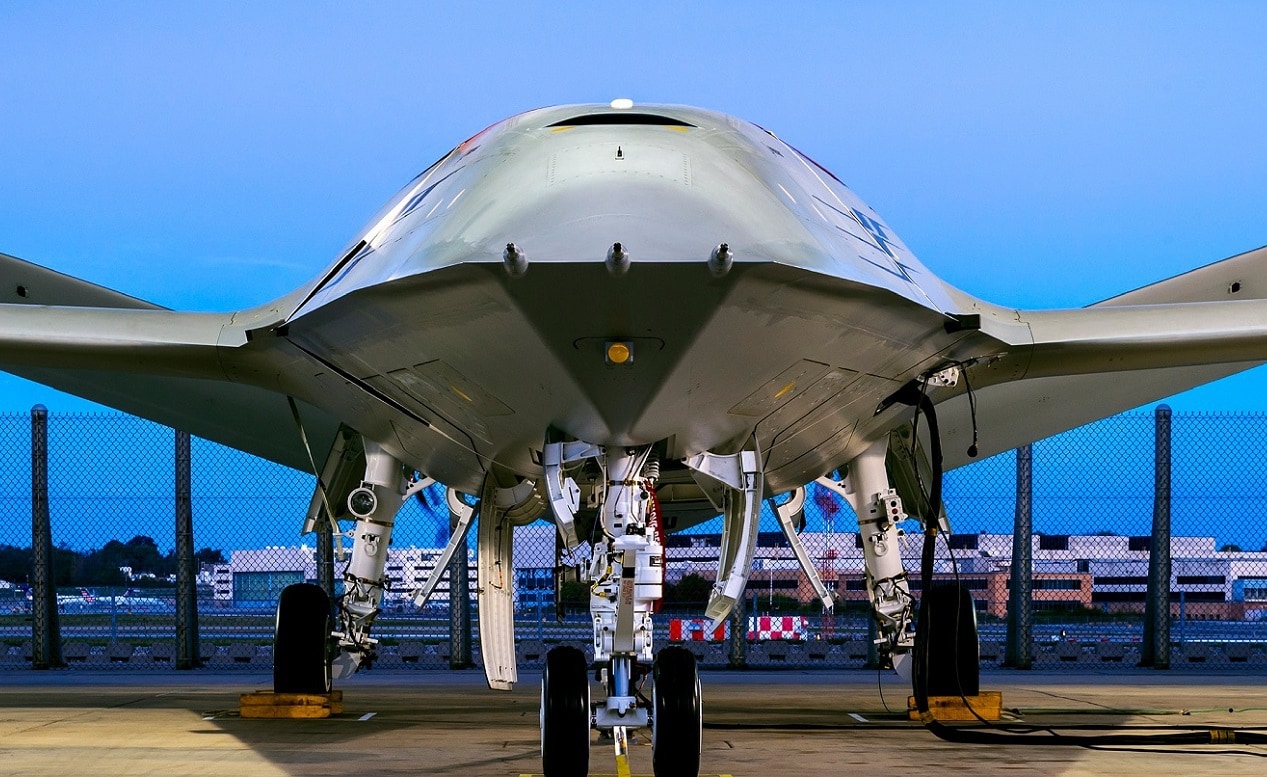
MQ-25. Image Credit – Creative Commons.
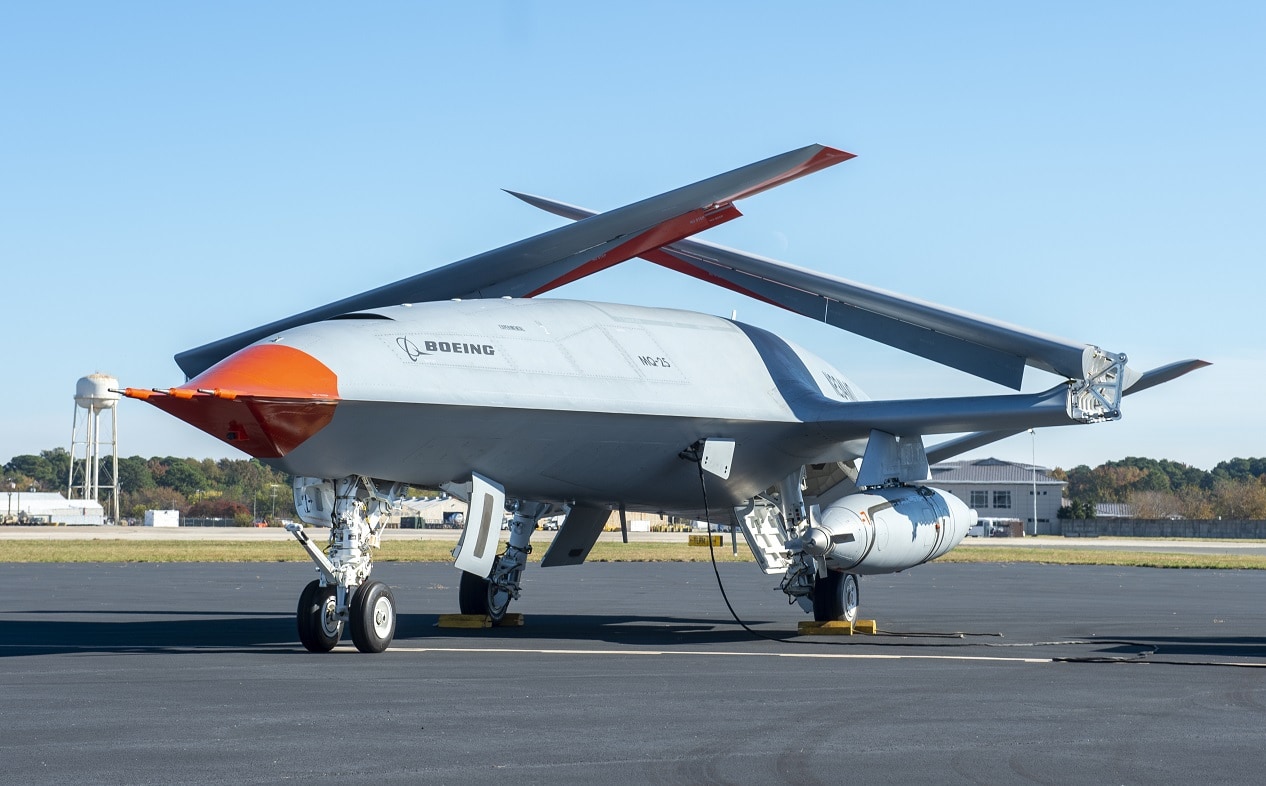
The U.S. Navy and Boeing conducted ground testing of the MQ-25 Stingray at Chambers Field onboard Naval Station Norfolk, Virginia. The MQ-25 Stingray is an unmanned aerial refueling aircraft. (U.S. Navy photo by Mass Communication Specialist 2nd Class Sam Jenkins)
The UCLASS program, before it died the same death. Now the F/A-XX requirements circle the same virtues the Advanced Tactical Aircraft specified in 1983: range, persistence, signature, internal carriage, the airplane that extends the carrier’s reach instead of riding inside it.
Every one of those programs is the institution remembering what it lost. The A-12 was a failed airplane attached to the correct idea, and the Navy has been paying for the airplane’s sins by living without the idea for thirty-five years. The mockup sits outside in Fort Worth (wrapped in protective material as it needs to be restored), the only one ever built, while the fleet it was meant to transform debates its own survivability inside the range rings of a competitor that did not exist when the Dorito died. The force structure America would have is visible in that triangle of plywood and fiberglass. The force structure America has is the bill for canceling it.
About the Author: Harry J. Kazianis
Harry J. Kazianis (@Grecianformula) was the former Senior Director of National Security Affairs at the Center for the National Interest (CFTNI), a foreign policy think tank founded by Richard Nixon based in Washington, DC. Harry has over a decade of experience in think tanks and national security publishing. His ideas have been published in the NY Times, The Washington Post, The Wall Street Journal, CNN, and many other outlets worldwide. He has held positions at CSIS, the Heritage Foundation, the University of Nottingham, and several other institutions related to national security research and studies. He is the former Executive Editor of the National Interest and the Diplomat. He holds a Master’s degree focusing on international affairs from Harvard University.