
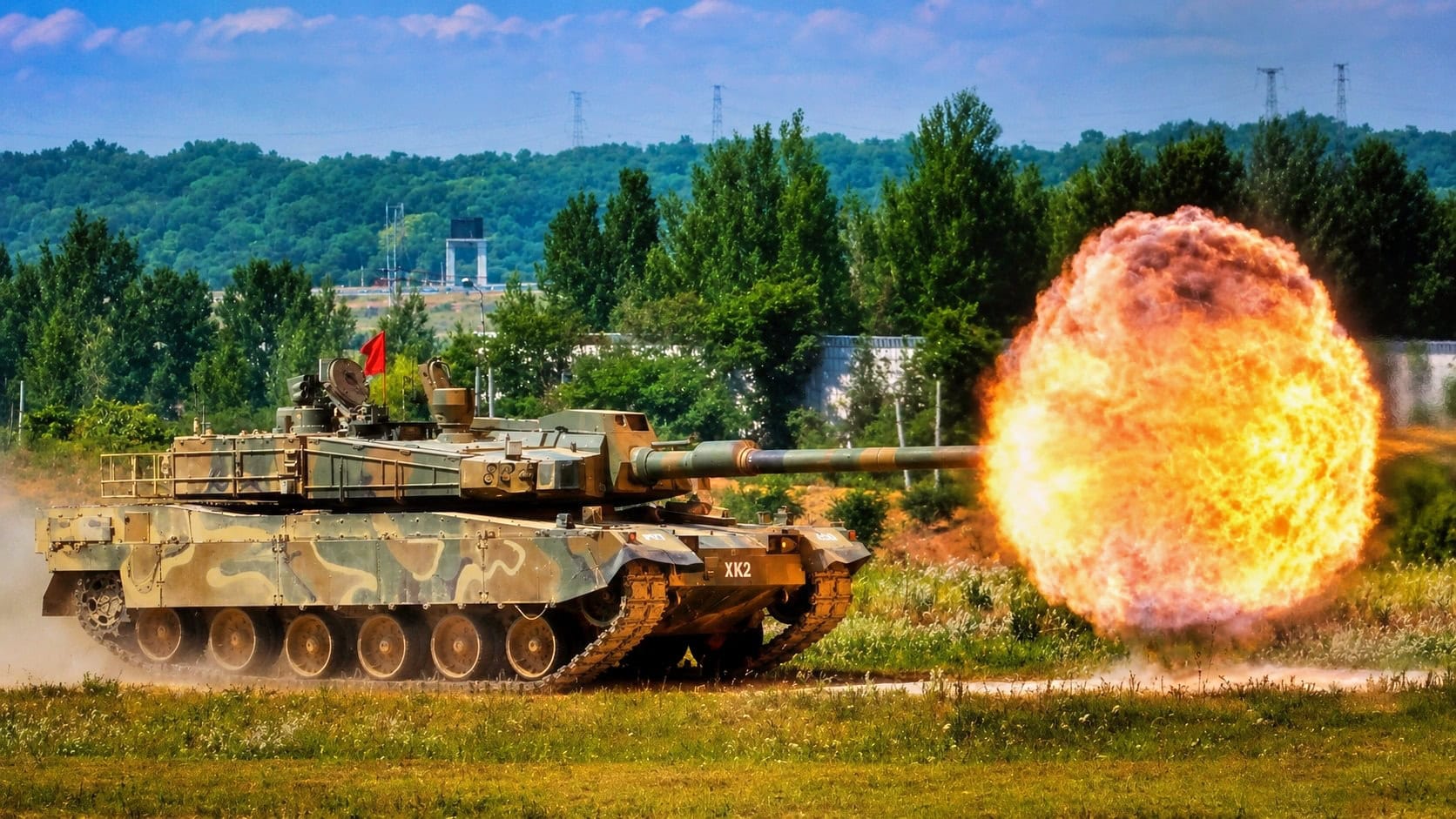
South Korea’s K2 Black Panther became the most sought-after Western tank on earth almost by accident, because in 2022, it could do the one thing European manufacturers could not: deliver now. When Poland gave away its Soviet-era tanks to Ukraine and needed to rebuild its armored force fast, Germany’s Leopard 2 line was dormant and slow to restart — but Hyundai Rotem could start shipping K2s within months. The result is the largest arms-export program in South Korean ground-combat history, a framework for up to 1,000 tanks with hundreds to be built in Poland, and a striking inversion: Hyundai Rotem has dedicated its K2 export production so completely to Poland that analysts warn South Korea’s own army risks waiting behind the export client for its next batch. The K2 is the story of how availability beat prestige in the post-Ukraine arms race — and, in a thread that ties it to Turkey’s Altay, of how even this export juggernaut never fully cleared the one hurdle almost no one clears: the powerpack.
The Tank: A Genuinely Top-Tier K2 Black Panther
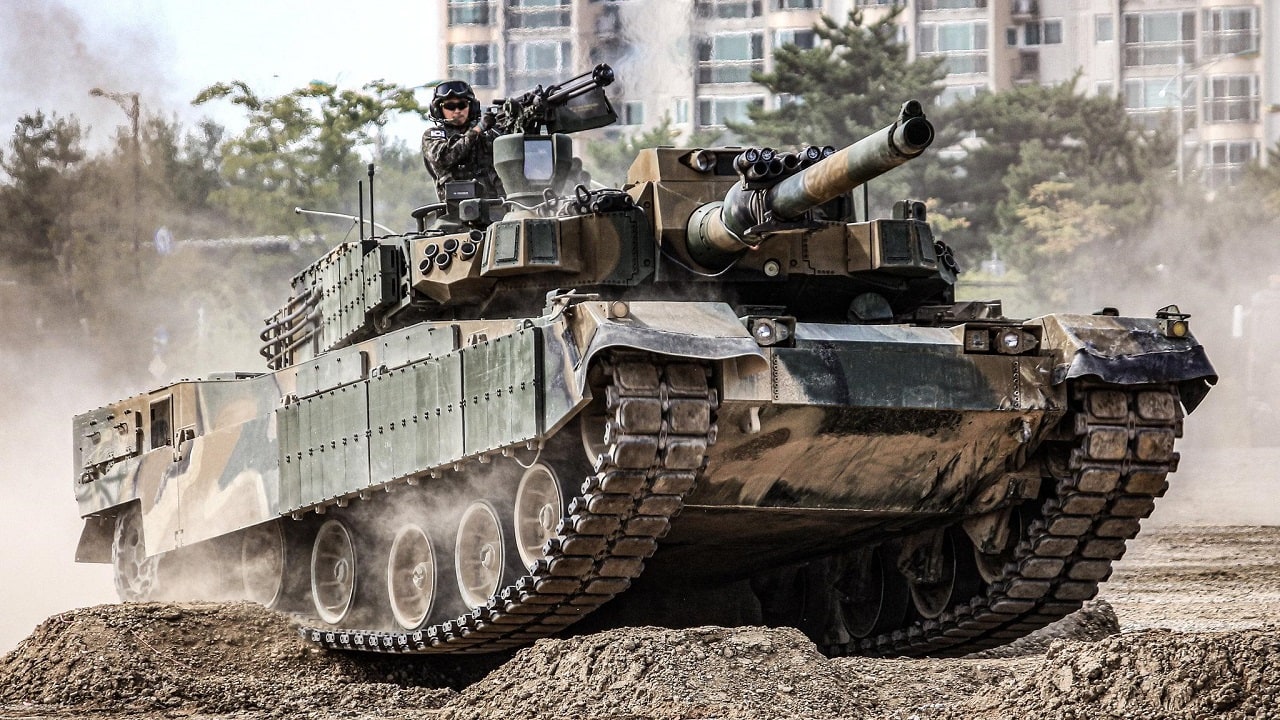
K2 Black Panther. Image Credit: Creative Commons.
The K2 is not a case of a mediocre product winning on price and timing; it is a genuinely excellent tank that also happened to be available. Developed by South Korea’s Agency for Defense Development and built by Hyundai Rotem, it entered service with the Republic of Korea Army in 2016 as a fourth-generation main battle tank built to replace aging M48 Pattons and earlier K1s.
It weighs roughly 56 tonnes, lighter than most Western peers, and carries a 120mm L55 smoothbore gun fed by an autoloader that drops the crew to three. It pairs composite and explosive reactive armor with an active protection system, rides on hydropneumatic suspension that lets it adjust its posture on uneven ground, and is powered to around 70 kilometers per hour by a 1,500-horsepower powerplant.
By any measure, it sits among the best tanks in the world, competitive with the latest Leopard 2, Abrams, and Challenger variants in firepower and mobility, and in some respects ahead of them. That quality matters to the story, because Poland was not settling when it bought the K2 — it was buying a top-tier tank that, unlike its European rivals, could actually be delivered on the timeline a rearming nation needed.
Why Poland Came Knocking: Availability Beat Everything
Poland’s turn to South Korea was driven by a specific and urgent problem. After Russia’s full-scale invasion of Ukraine in 2022, Warsaw donated much of its Soviet-era armor, including its T-72 fleet, to Kyiv, stripping its own army to help a neighbor at war. That left Poland needing to rebuild its tank force quickly and at scale, precisely when European manufacturers were unable to respond.
The Leopard 2 production line had been dormant for years and could not be restarted quickly enough to meet Poland’s timeline, and the Western defense industry as a whole was caught flat-footed by the sudden demand created by the war.
South Korea could deliver where Europe could not. Hyundai Rotem offered immediate availability, a proven tank already in series production, full technology transfer, and local production in Poland — a combination no Western competitor could match on the schedule Warsaw required. South Korea’s defense industry had spent years building exactly this kind of surge capacity, and the K2 was ready to ship. Availability, in the end, beat prestige, beat established supplier relationships, and beat the political comfort of buying European.
The decisive question in the post-Ukraine arms race was not who built the most admired tank but who could deliver working tanks to a customer now, and South Korea was the answer.
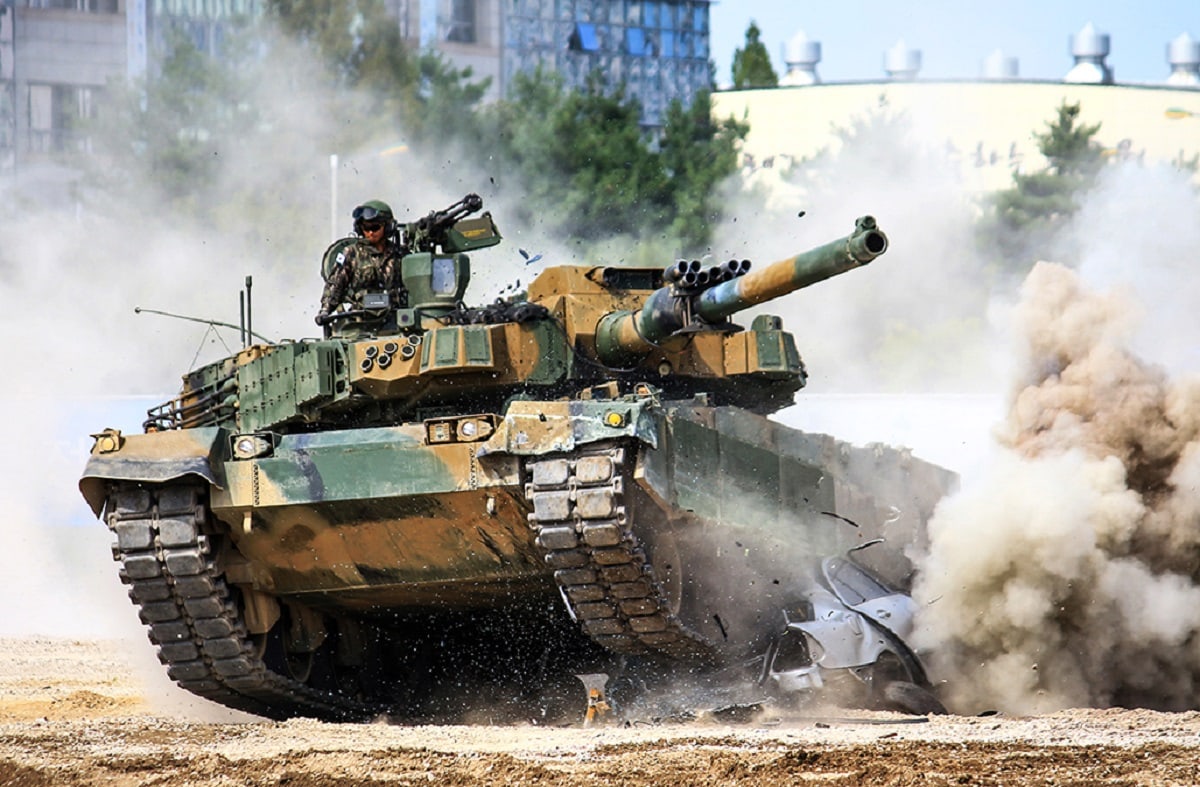
K2 Black Panther. Image: Creative Commons.
The Deal’s Scale: Up To 1,000 Tanks And A Polish Production Hub
The numbers are staggering for a single tank program. In July 2022, Poland and South Korea signed a framework agreement for up to 1,000 K2 tanks, and the following month, Warsaw signed the first executive contract — worth roughly $3.3 to 3.7 billion — for 180 tanks built in South Korea in the K2GF, or “Gap Filler,” configuration. Hyundai Rotem delivered the first ten to Poland in late 2022 and completed all 180 of that first batch by the end of 2025, an extraordinarily fast pace for a major arms transfer.
The second contract deepened the relationship and moved production toward Poland. On August 1, 2025, the two countries signed an executive agreement worth approximately $6.5 billion for 180 additional tanks, with 117 to be built by Hyundai Rotem in South Korea and 63 to be assembled in Poland by the state-owned Polska Grupa Zbrojeniowa at the Bumar-Łabędy facility.
That batch splits into 116 tanks in the Korean-standard K2GF configuration and 64 in the new K2PL variant — a Polish version with reinforced armor, a remotely controlled weapon station, Polish battle-management systems, and NATO-standard communications. Deliveries begin in 2026, the Bumar-Łabędy plant is being upgraded toward an annual output of up to 50 K2PL tanks by 2028, and the K2PL program is intended to run through about 2035, with up to 820 tanks ultimately built in Poland under license. Hyundai Rotem’s plan is for Poland to become the European production and maintenance hub for the K2, positioning Warsaw as a manufacturer and potential exporter rather than just a buyer.
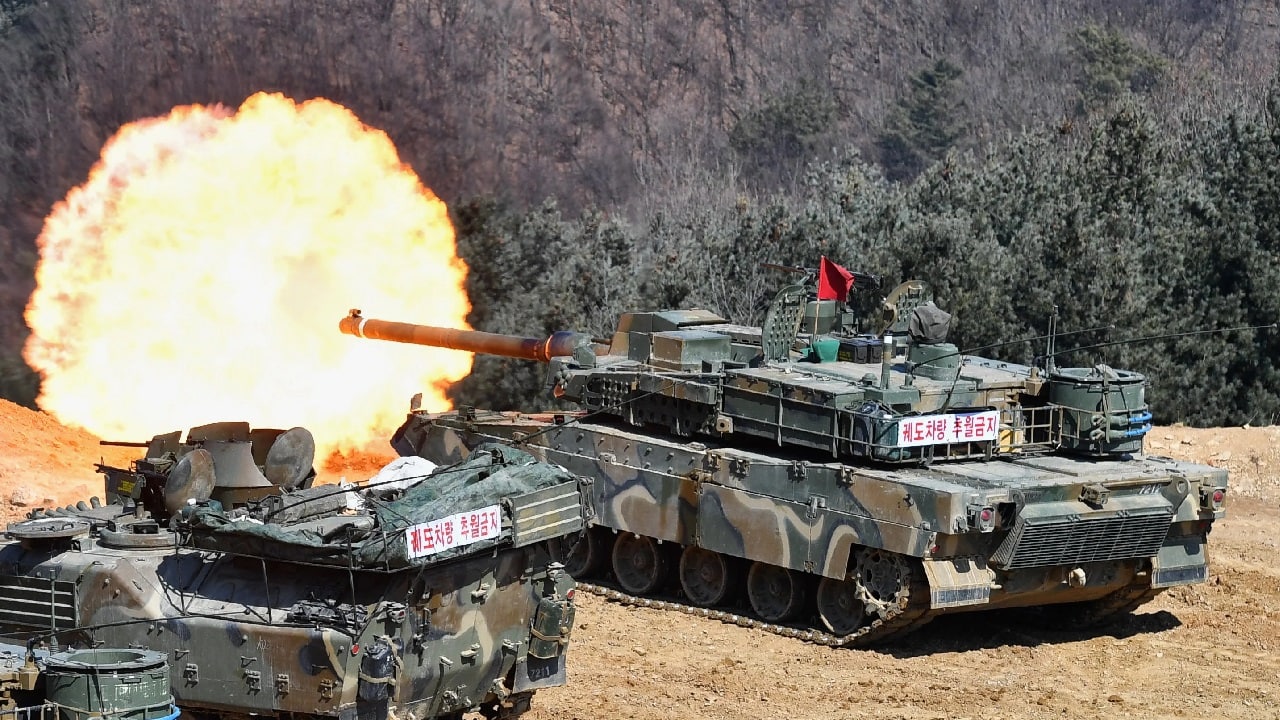
K2 Black Panther. Image Credit: Creative Commons.
The cumulative effect is to make Poland one of the foremost armored powers in Europe. Between its K2 order and its American purchases — roughly 250 M1A2 SEPv3 Abrams and an earlier batch of M1A1s — Poland is building toward a tank fleet of well over a thousand modern main battle tanks, a scale that would put it ahead of every other NATO army in Europe, funded by defense spending climbing toward five percent of GDP.
The Inversion: Korea’s Own Army Behind The Export Client
The most striking feature of the program is what it has done to South Korea’s own priorities. To meet Poland’s urgent timeline, Hyundai Rotem has directed its K2 export production so heavily toward Warsaw that, as of mid-2025, Poland was the only recipient of K2 tanks, and the company’s line was effectively dedicated to the Polish contract. Defense analysts have flagged the direct consequence: that this exclusive focus on a single export client risks deprioritizing South Korea’s domestic procurement unless production is expanded, with the country’s next batch of tanks potentially waiting behind export orders.
It is a remarkable inversion of how arms exports usually work. A tank designed and built to defend South Korea has, in practice, become one mostly for Poland, with Seoul’s army positioned behind Warsaw in the queue for a weapon its own taxpayers funded.
The dynamic could intensify if further export deals materialize — additional orders from Romania, which has tested the K2, or from Egypt and other Middle Eastern customers being courted with a desert-optimized K2ME variant, could push the required production tempo higher still and force South Korea to expand capacity or keep deferring its own deliveries. Export success, in other words, has created a domestic-readiness question that did not exist before the orders started flooding in.
The Engine Wrinkle: Even The Winner Leans On German Propulsion
For all its success, the K2 never fully cleared the hurdle that defines every national tank and fighter program, and the details tie it directly to Turkey’s Altay. South Korea intended the K2 to have a fully indigenous powerpack — the Doosan (now Hyundai Doosan Infracore) DV27K engine paired with an S&T (now SNT) Dynamics EST15K transmission.
Both ran into trouble. South Korea’s procurement agency announced in 2011 that mass production would be delayed because the local powerpack underperformed, and the first production batch was fitted with the German MTU MT883 engine and a Renk transmission — the same combination used in upgraded Leopard 2s — as a stopgap.
The engine problem got solved before the transmission did. Korea managed to fit the domestic DV27K engine to the second production batch, delivered in 2019, but the SNT Dynamics transmission still could not prove its durability, so that batch — and the third, and the K2GF tanks built for Poland — paired the Korean engine with the German Renk transmission after the domestic gearbox failed endurance testing. A fully indigenous powerpack was approved only in September 2024 for the fourth batch. The dependence persists straight into the export program: Germany’s Renk signed a contract in October 2022 to supply 197 transmissions for Poland’s K2s from 2023 to 2025, with an option for 800 more. So even the tanks at the heart of South Korea’s export triumph run, in part, on German propulsion — specifically the transmission, the component Korea found hardest to build.
The Honest Balance: A Real Triumph With Real Wrinkles
The fair assessment gives the K2 and the Poland deal substantial credit. The tank is genuinely combat-credible and technically excellent, and the Polish program is a legitimate industrial triumph that competitors envy — full technology transfer, a European production hub, local manufacturing, and a speed of delivery no Western rival could match.
The availability advantage was real strategic value, not luck; South Korea had deliberately built the surge capacity that let it answer a wartime customer’s needs, and that capability is exactly what made it the winner of the post-Ukraine scramble. Not every customer agreed — Norway weighed the K2 in 2022 and chose the Leopard 2A7 instead, citing its established relationship with the German maker and commonality with other European operators — but Poland’s order alone made the K2 the export story of its generation.
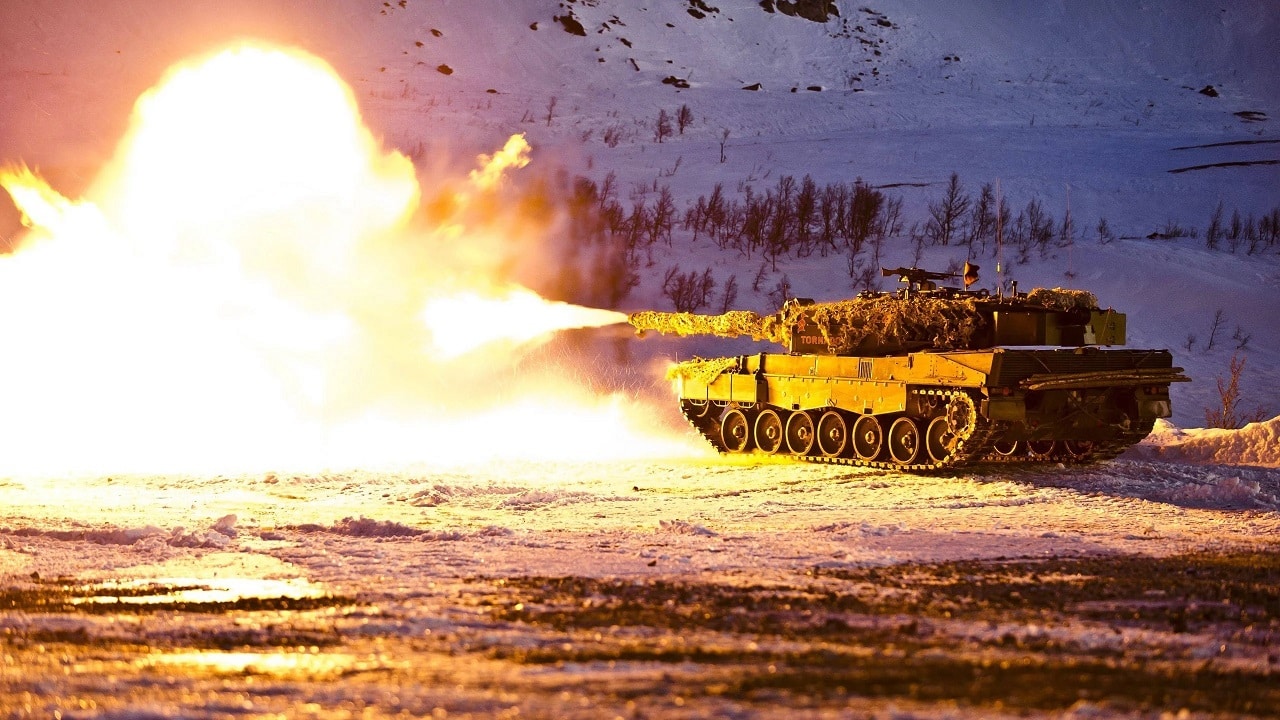
Leopard 2 Tank. Image Credit Creative Commons.
The wrinkles are real, but not fatal. The indigenous-powerpack stumble means “fully sovereign” remains aspirational for the K2 just as it does for the Altay, with the German transmission still in the mix.
The all-in production dedication to Poland poses a genuine concentration risk to South Korea’s own armored readiness. And the second contract did not come smoothly: its value was renegotiated, and its signing had to wait on South Korea’s political transition, after the turmoil that followed President Yoon Suk-yeol’s removal left the deal pending until a new government took office. None of these undoes the achievement — they are the honest texture of an export program that is still, on balance, the most successful in South Korean history.
The Bigger Pattern: The K2 And The Altay, Two Halves Of One Lesson
The K2 and Turkey’s Altay are two halves of the same story about modern armor, and they connect literally, not just thematically. Turkey could not build a tank engine and was left stranded when Germany imposed an embargo on the MTU powerpack it had planned for the Altay. South Korea could build the engine — but only after years of failures, and only the engine, with the transmission remaining a German import far longer.
And it is precisely because Korea had fought its way to a mature DV27K engine that it had one to sell: when Turkey needed to rescue the Altay, it turned to South Korea, and the Altay’s first production tanks now run on the same Doosan DV27K engine that powers the K2. In the end, both tanks leaned on German transmissions, while a Korean engine tied them together.
That is the recurring lesson of the post-Ukraine arms race, and it runs through the fighter programs as much as the tanks — Turkey’s Kaan, India’s Tejas, and Sweden’s Gripen all stalled on engines they could not build.
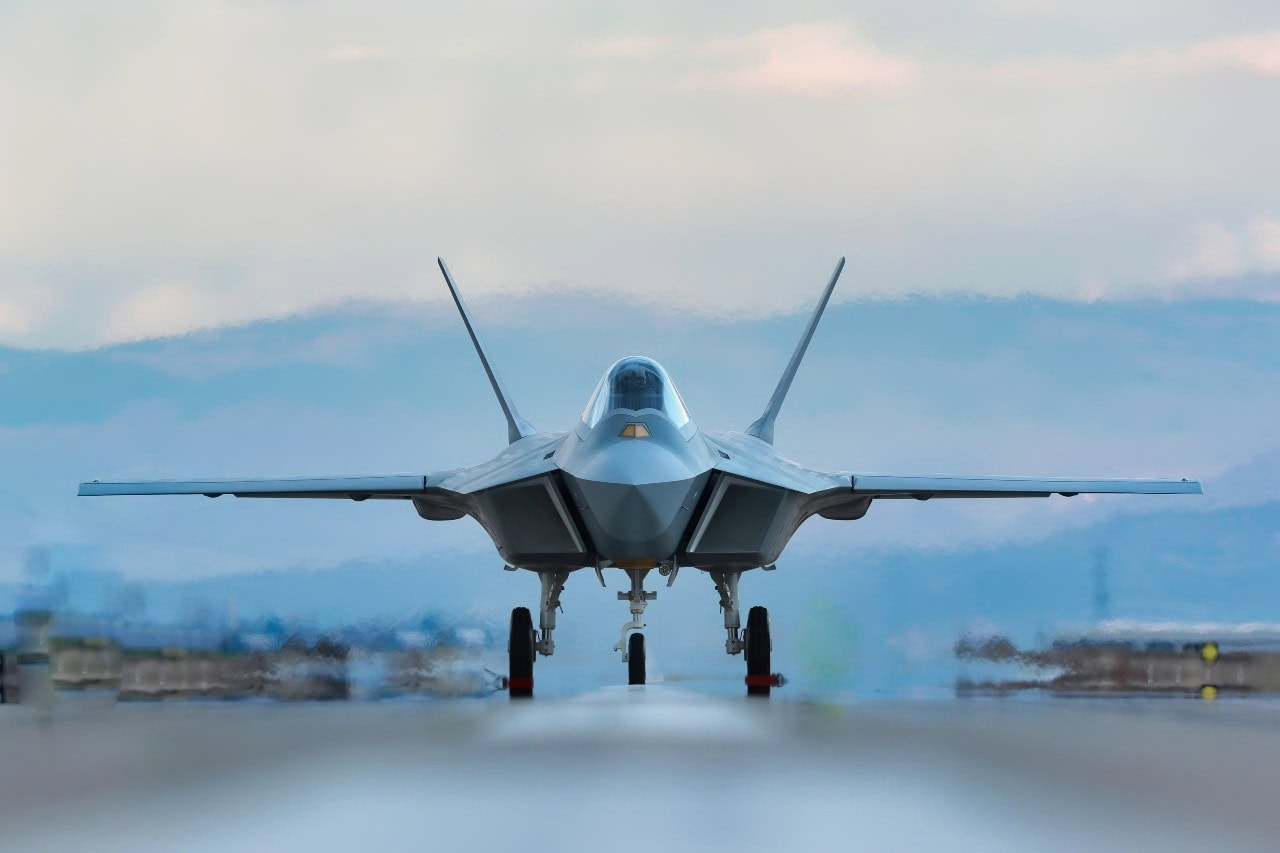
TAI TF Kaan Stealth Fighter
The hull, the armor, the electronics, the gun — those are the achievable parts, the things a capable defense industry can master. Propulsion is the chokepoint almost no one clears cleanly. What the K2 Black Panther added to that lesson is a second axis: in a world where a major war suddenly created urgent demand, the decisive advantage went to whoever could deliver a working tank immediately. South Korea won the European tank market not because it had escaped the engine problem — it had not, quite — but because it could build and ship faster than anyone else. Availability became its own form of power.
The Verdict: The K2 Won By Being Available
South Korea built the K2 Black Panther to defend its own territory, and it ended up reshaping the European arms market because it could do what no Western manufacturer could in 2022 — deliver a top-tier tank, in quantity, now, with the factory know-how thrown in.
The Poland deal, for up to 1,000 tanks, with hundreds built on Polish soil, is the largest export program in the history of South Korean ground combat and the model that other arms exporters are now studying. That Hyundai Rotem has had to point its entire export line at Warsaw, leaving Seoul’s own army waiting, is the clearest possible measure of how completely availability beat every other consideration in the post-Ukraine race.
And yet the engine story is the reminder that even the winner did not fully clear the bar. The K2 Black Panther still relies on German transmission technology, even in the tanks that made South Korea a tank-exporting power, and the fully indigenous powerpack arrived only after more than a decade of stumbles.
That is the same wall Turkey hit with the Altay, the same wall the fighter programs keep hitting — proof that building the vehicle is the part you can win, while building the engine is the part that decides whether you are truly sovereign. South Korea came closer than most, and it parlayed that hard-won progress into both an export juggernaut and the engine that rescued Turkey’s tank.
MORE – The B-2 Spirit Stealth Bomber Crisis Is a Math Problem
MORE – MiG 1.44: Russia’s F-22 Raptor
MORE – China’s Aircraft Carriers Have an Escort Problem
But the lesson holds even for the country that beat everyone to market: you do not fully own a weapon until you own every part of it, and the last part anyone masters is the one that makes it move.
About the Author: Harry J. Kazianis
Harry J. Kazianis (@Grecianformula) was the former Senior Director of National Security Affairs at the Center for the National Interest (CFTNI), a foreign policy think tank founded by Richard Nixon based in Washington, DC. Harry has over a decade of experience in think tanks and national security publishing. His ideas have been published in the NY Times, The Washington Post, The Wall Street Journal, CNN, and many other outlets worldwide. He has held positions at CSIS, the Heritage Foundation, the University of Nottingham, and several other institutions related to national security research and studies. He is the former Executive Editor of the National Interest and the Diplomat. He holds a Master’s degree focusing on international affairs from Harvard University.

