
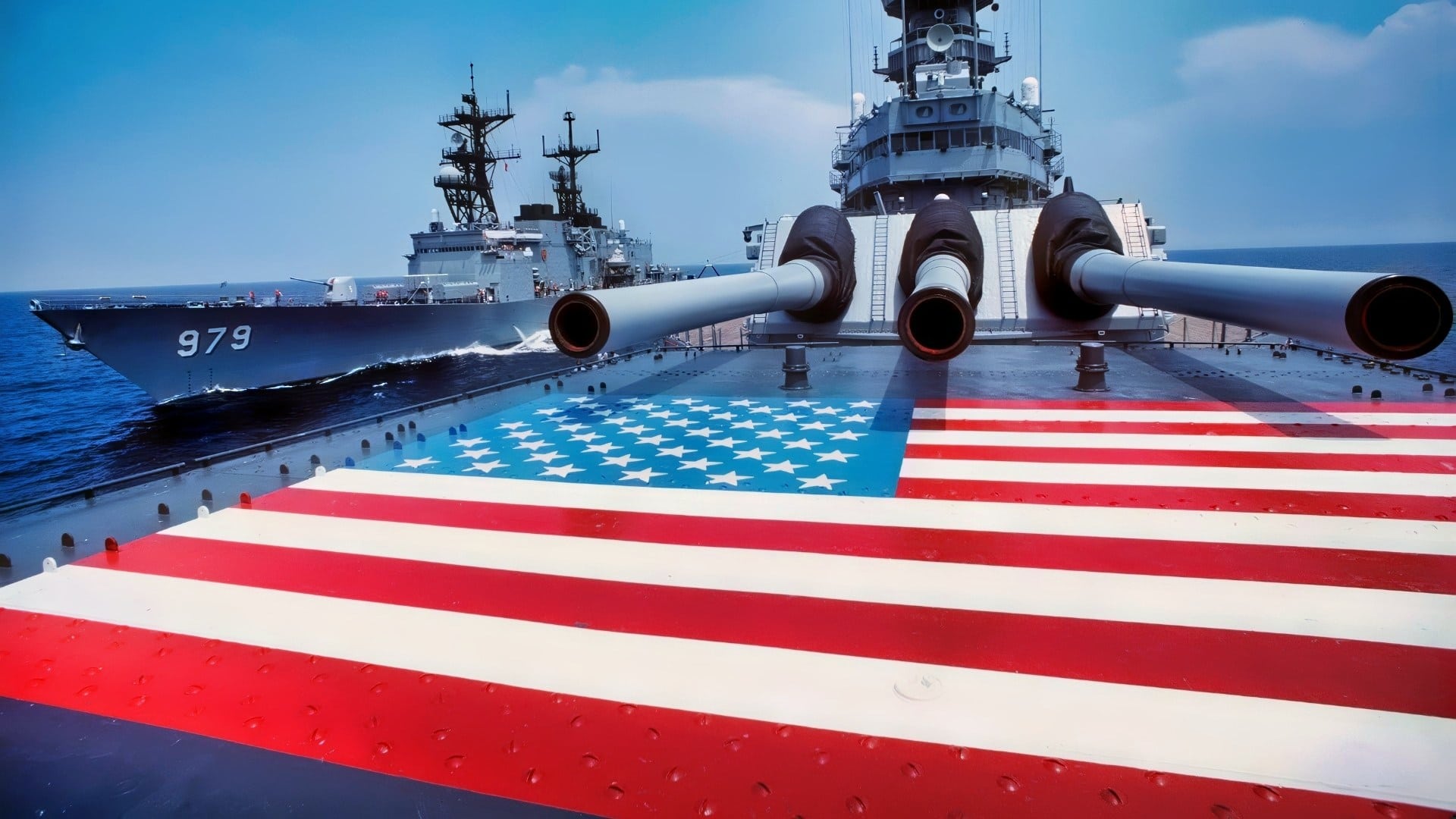
Summary and Key Points: Defense expert Christian D. Orr evaluates the 2026 naval landscape as Operation Epic Fury marks the first U.S. submarine torpedo kill since World War II. This report analyzes the proposed Trump-class BBG(X) battleship, a 21st-century successor to the Iowa-class, designed to carry 128 MK-41 VLS cells, SLCM-N nuclear cruise missiles, and Conventional Prompt Strike (CPS) hypersonics.
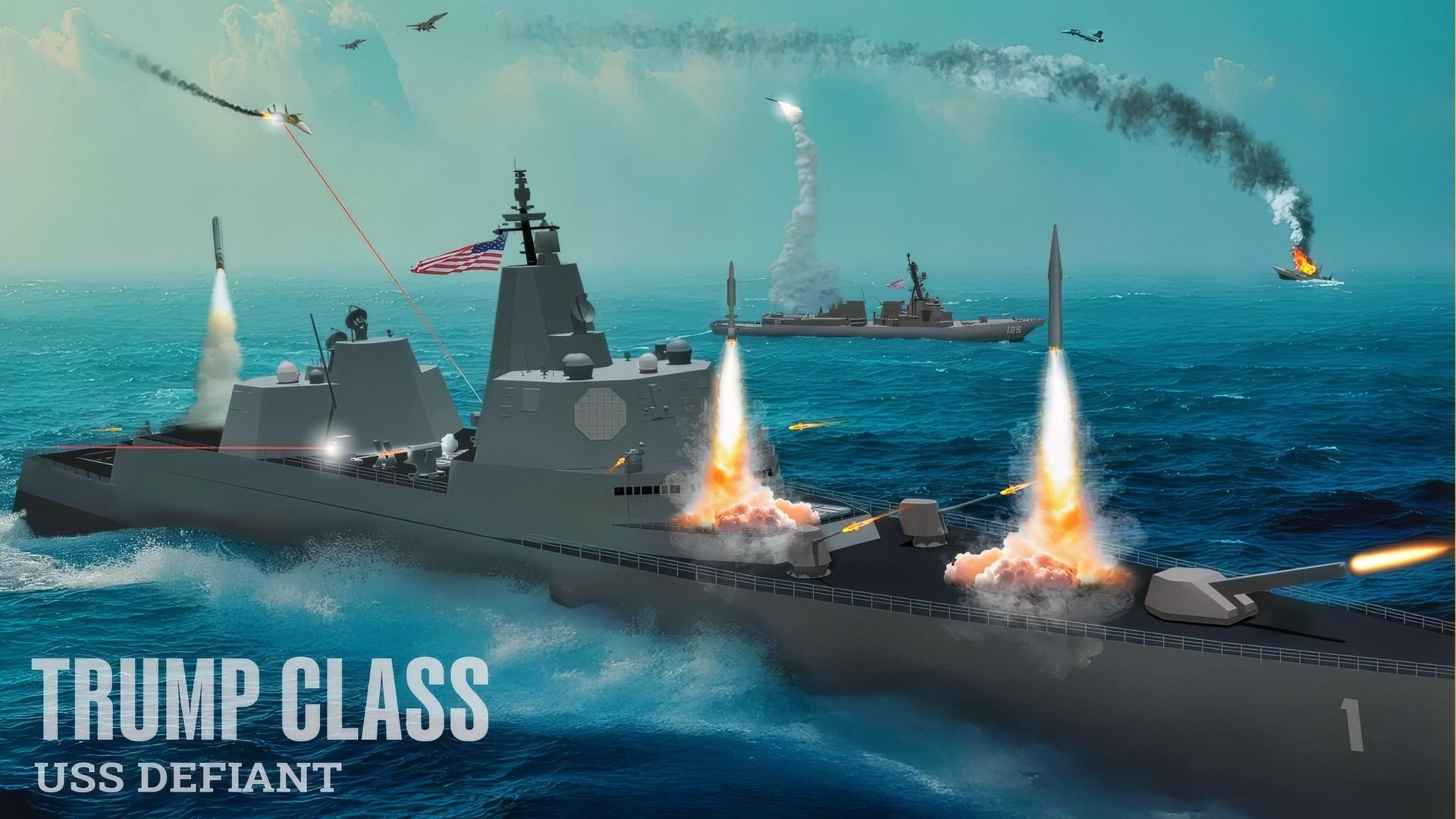
Trump-Class Battleship USS Defiant. Image Credit: Creative Commons.
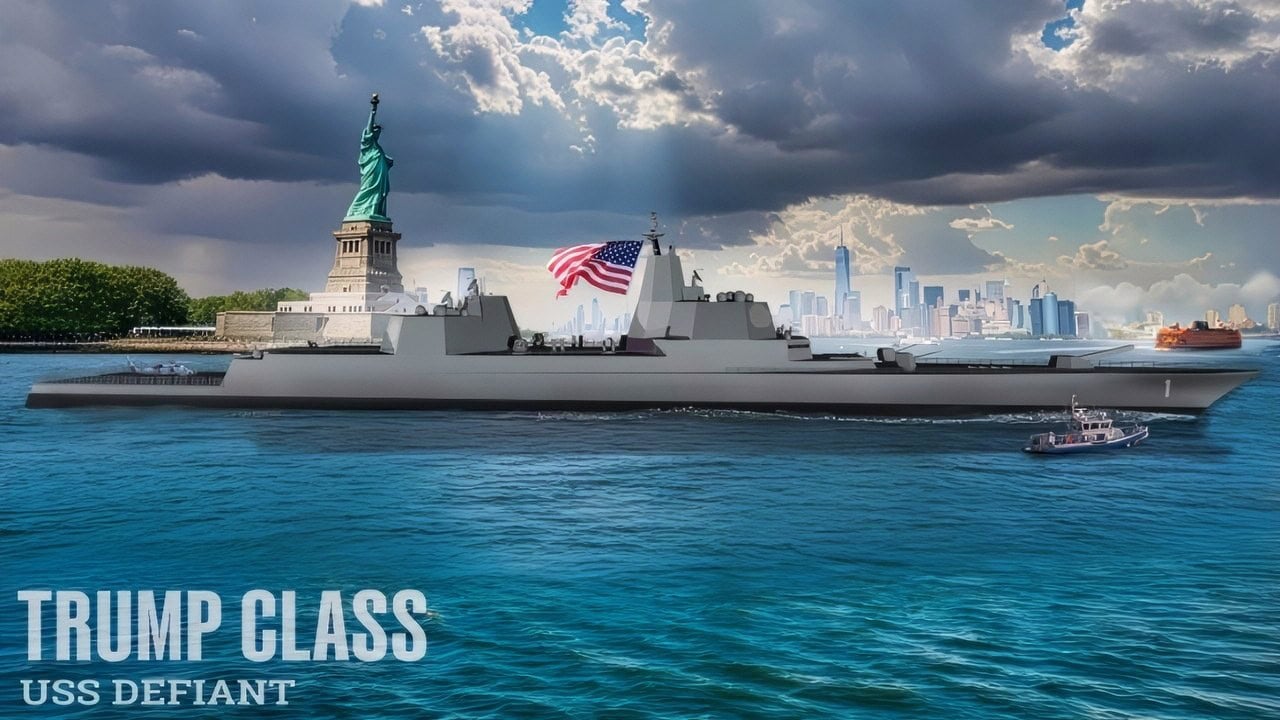
Trump-Class Battleship. Image Credit: Creative Commons/White House.
-Orr explores the technical transition from 16-inch guns to Mach 6 electromagnetic railguns and 300kW lasers.
-He concludes that the BBG(X) addresses the “magazine depth” crisis by providing a survivable, high-mass strike platform for contested environments.
The Return of the Battlewagon: Why Operation Epic Fury is Making the Case for the Trump-Class BBG(X)
As I type these words, Operation Epic Fury/Operation Roaring Lion is now a little over a week old.
In addition to the large-scale killings of senior leaders including Supreme Leader Ali Khamenei himself, one of the most stunning successes of the campaign thus far has been the severe mauling inflicted upon the Islamic Republic of Iran Navy.
Even Operation Praying Mantis in the 1980s didn’t bring the degree of destruction to the IRIN that Epic Fury has.
Among the particularly noteworthy naval successes have been the sinking of the 41,000-tom IRGC drone carrier Shahid Bagheri and the torpedoing of the 1,500-ton Moudge-class frigate IRIS Dena by an unnamed U.S. Navy submarine.
The latter is historically significant, as it marks the first time since World War II that a U.S. submarine has sunk another vessel using a torpedo.
It’s also only the second time that a nuclear-powered fast-attack submarine (SSN) has sunk an enemy warship, with the previous instance being the Royal Navy submarine HMS Conqueror sinking the Argentine Navy cruiser General Belgrano in 1982 during the Falklands War.
Speaking of World War II—Does the Iran War make the case for resurrecting a mighty naval war machine from that era, namely the battleship?
Drawing the Desert Storm Analogy
Of course, this time we would be talking about the proposed Trump-class BBG(X) battleship. But the old Iowa-class still makes for a useful case study of a future role for the BBG(X). They were the last battlewagons to fire their guns and missiles in anger, and they did so against a former adversary of the Iranian regime: the forces of then-Iraqi strongman Saddam Hussein.
During the 1991 Persian Gulf War, the Iowa-class battleships USS Missouri (BB-63) and USS Wisconsin (BB-64) unleashed hell against Iraqi shore targets.

Iowa-Class Battleship at Rest. Image Credit: Creative Commons.
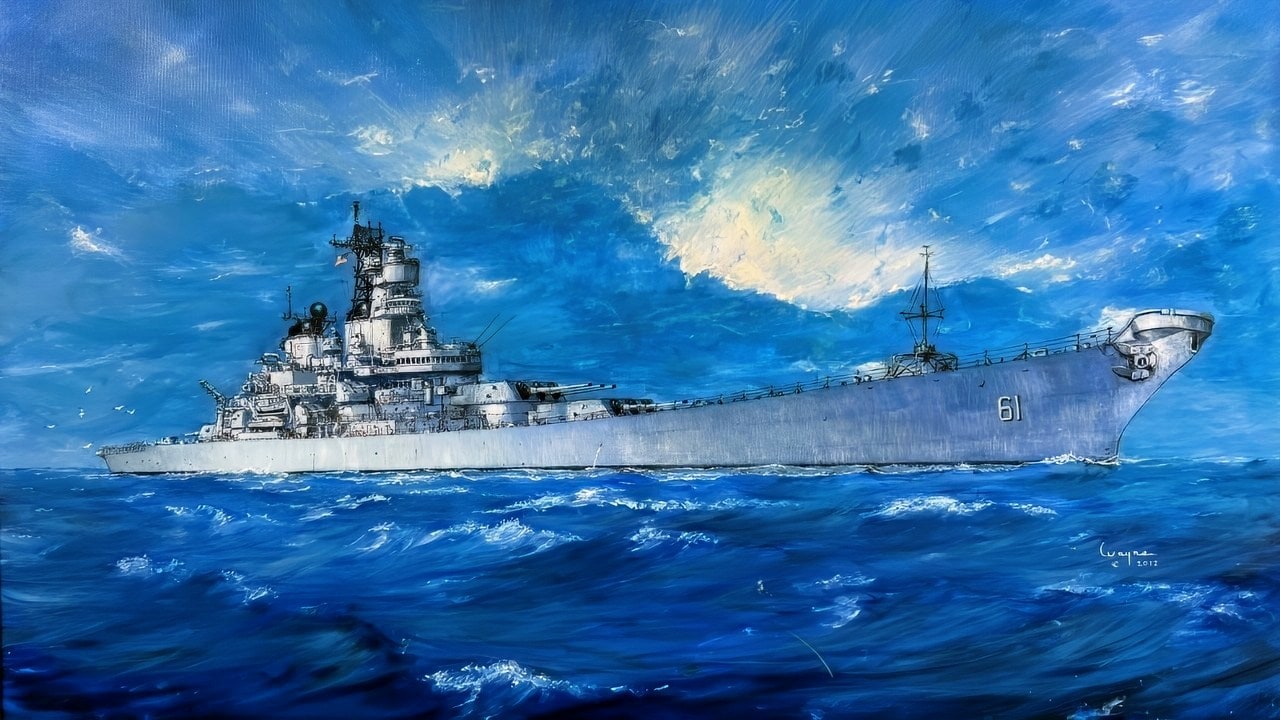
Image taken by Harry J. Kazianis aboard the USS Iowa on August 15, 2025. Image is of a painting of the USS Iowa of the Iowa-Class. USS New Jersey is also a Iowa-Class battleship.
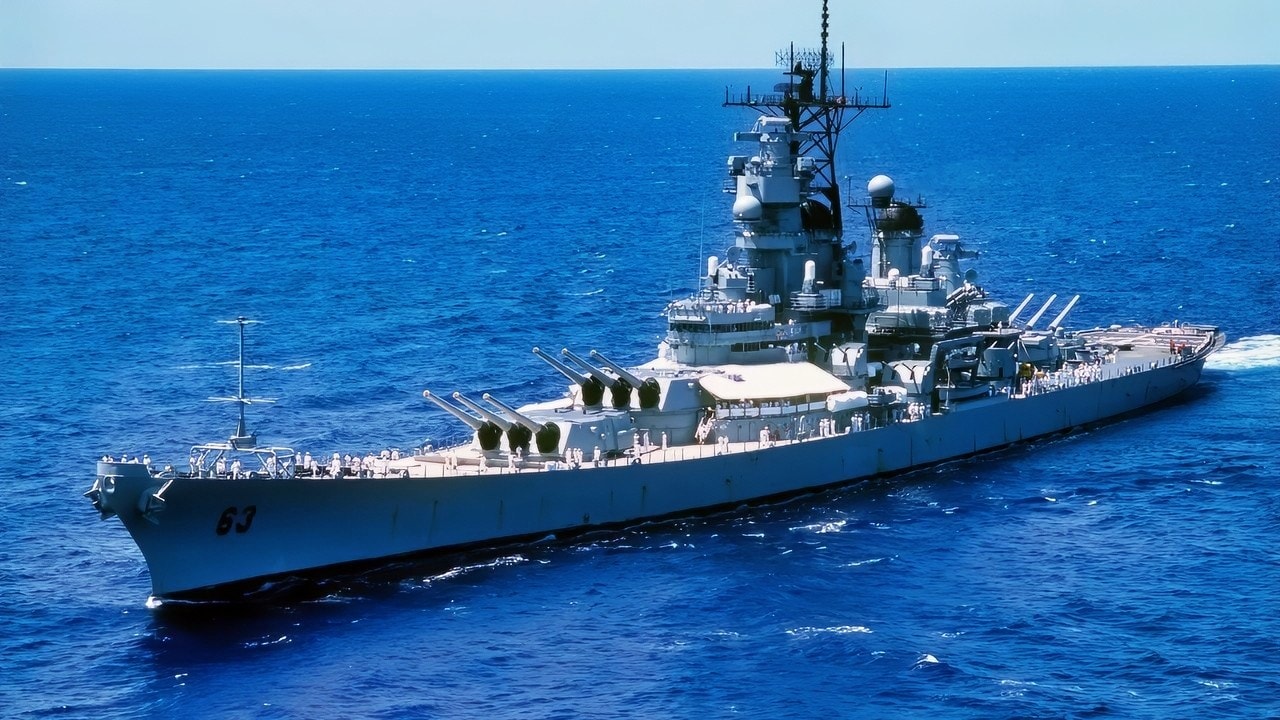
Iowa-Class Battleship Sailing. Image Credit: Creative Commons.
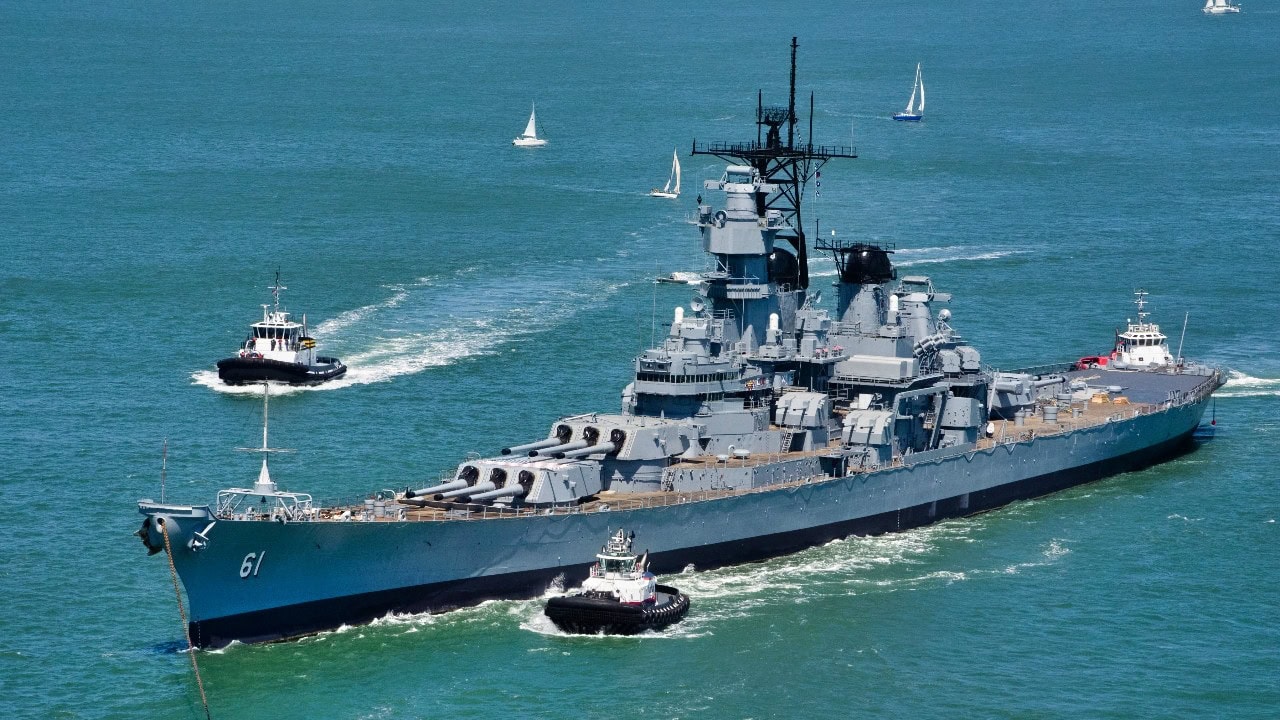
Iowa-Class Battleship Heading Into Port for U.S. Navy. Image Credit: Creative Commons.
In addition to employing their time-honored behemoth 16-inch main guns, these two venerable warships also made good use of the new Tomahawk cruise missiles. BB-63 fired 759 16-inch shells as well as 28 Tomahawks, while BB-64 sank or severely damaged 15 boats, destroyed piers at Khawr al-Mufattah Marina, and obliterated a command complex.
These attacks were devastating, not only in terms of physical destruction, but psychologically as well.
They helped further convince Saddam and his generals that invasion was imminent and would come from the sea by way of an amphibious assault. Then, General H. Norman Schwarzkopf took the Iraqis by surprise with the immortal “left hook” maneuver.
How Would the Trump-Class Battleships Compare
In an alternate universe, if BBG(X) battlewagons were available to take the fight to Iran, they wouldn’t have 16-inchers. They would use other technologies that would be plenty devastating:
-A 32-megajoule electromagnetic railgun that hurls tungsten projectiles at a hypersonic velocity of Mach 6. The sheer kinetic energy generated by these projectiles, along with their accuracy, would presumably more than make up for their lack of bore size and quantity relative to their WWII predecessors.
-A pair of 300kW lasers; conceivably, they could be something along the lines of the High-Energy Laser Weapon System that is being developed as part of the U.S. Department of War’s High Energy Laser Scaling Initiative program to develop high-performance directed energy weapons.
Currently this is being geared toward the U.S. Army’s Indirect Fire Protection Capability-High Energy Laser (IFPC-HEL) program, but I imagine that a little ingenuity can go a long way in building a naval variant. As noted by Army Recognition, “The IFPC-HEL programme focuses on integrating high-energy laser technology into existing defence systems, enabling rapid response and precision engagement of incoming threats. It will improve the armed forces’ combat effectiveness by providing high-power lasers and greater warfighting capability.”
It would be usable against rockets, artillery, mortars, unmanned aerial systems and both rotary and fixed-wing threats.
-The Surface-Launched Cruise Missile-Nuclear (SLCM-N) system. According to a report by NSXTL, “On August 22nd, 2025 Naval Surface Warfare Center, Crane Division, and Navy Strategic Systems Programs (SSP), awarded the SLCM-N prototype effort to five organizations tasked with developing missile prototype designs for the program. Leidos, Raytheon, Lockheed Martin, and Northrop Grumman were awarded as prime contractors for flight system integration and missile development, while Florida Turbine Technologies (Kratos) was awarded for missile technologies development. Each prime contractor leads a team of traditional and non-traditional defense contractors that will spearhead the initial phase of SLCM-N flight system design.”
-128 x MK-41 vertical launch system cells
-12 x Conventional Prompt Strike missile rounds. This deadly weapon system pairs advanced hypersonic missiles with submarines and surface ships to hit high-value targets anywhere in the world within minutes instead of hours.
The Way Forward
The Trump-class project is steaming ahead. As reported on January 16 by Ethan Grossow of Naval News, the project received a major vote of confidence during the Future Fleet Panel at SNA 2026 from Chris Miller, the Executive Director at Naval Sea Systems Command, and Rear Admiral Derek Trinque, the U.S Navy Director of Surface Warfare, among others.
Trinque’s comments are a particular cause for cautious optimism: “’Battleships are obsolete. This is not us blowing the dust off the design of the Montana-class, which was to be a successor to the Iowa-class at the end of World War 2, and then we won World War 2, we didn’t need the Montana-class. It’s true we don’t need that class. This is a ship we do need. … We wound up having conversations about how to do tradeoffs to fit CPS into some of the DDG(X) ships. We were not going to able to do that without either dropping a gun or cutting the VLS capacity in half. And those are terrible choices.’”
There you have it. Maybe President Trump’s Golden Fleet idea isn’t so crazy after all.
And that should make America’s adversaries shudder.
About the Author: Christian D. Orr, Defense Expert
Christian D. Orr is a Senior Defense Editor. He is a former Air Force Security Forces officer, Federal law enforcement officer, and private military contractor (with assignments worked in Iraq, the United Arab Emirates, Kosovo, Japan, Germany, and the Pentagon). Chris holds a B.A. in International Relations from the University of Southern California (USC) and an M.A. in Intelligence Studies (concentration in Terrorism Studies) from American Military University (AMU). He is also the author of the newly published book “Five Decades of a Fabulous Firearm: Celebrating the 50th Anniversary of the Beretta 92 Pistol Series.”